












When one of my loved ones had a fateful fall and became confined to a wheelchair, I realized how limited their movement became. It slowly made them lose their core strength and posture. That’s when I researched ways to promote their core strength.
As surprising as it may sound, core strength isn’t solely about having toned abs. It’s about promoting daily movement, balance, and independence. For wheelchair users, a strong core (abdominals, obliques, lower back, and hip muscles) helps in better posture, transfers, and also injury protection.
Exercises also promote heart health and reduce cardiovascular disease in wheelchair patients. Speaking about this, Professor Glen M Davis, University of Sydney Clinical Exercise and Rehabilitation Unit director, shared his thoughts at the Spinal Cord Injuries Independence Expo.
He said, “Ask a wheelchair user about CVD risk, and often they will say it is the least of their worries. Once they are aware of the benefits and the consequences of not doing regular exercise, such as the clear link between inactivity and serious disease, they will do more physical exercise.”
These seated core exercises are simple to do at home, at your workstation, or at the gym, and there is no need to stand. These exercises are as for varying mobility levels and strengthen your upper body, balance, and stability.
Read More: Back-Friendly Core Workouts That Avoid Crunches
Safety First — Precautions Before You Start Core Exercises

Before starting, remember these crucial safety tips:
- Get Medical Clearance: Always consult a physical therapist or doctor before starting a new adaptive exercise routine.
- Ensure Stability: Lock your wheelchair brakes and make sure you’re seated on a stable surface with good posture.
- Warm Up: Begin with 3–5 minutes of gentle upper body movements like shoulder rolls, arm circles, or deep breathing stretches to prepare your muscles.
- Attention to Form: Make slow, controlled movements and do not hold your breath. Good posture and breathing minimize strain and increase effectiveness.
Note: We advise patients in wheelchairs to do these exercises under the supervision of either a physiotherapist or an expert initially.
1. Seated Pelvic Tilts (For Lower Core Activation)
Seated pelvic tilt is a basic exercise that allows you to feel your core and lower back muscles again. It’s especially useful for people who suffer from stiffness caused by long sitting hours, and helps in better posture and mobility.
How to do it:
- Sit up straight with your feet flat on the floor or resting on your footrest.
- Gently arch your pelvis forward, making a small curve in your lower back.
- Next, arch your pelvis backward, flattening out your lower back against the chair.
- Repeat for 10–15 reps while maintaining steady breathing.
Benefits:
This easy movement engages the lower abdominals, increases spinal mobility, and relaxes stiffness that’s caused due to sitting for longer periods.
2. Seated Side Bends
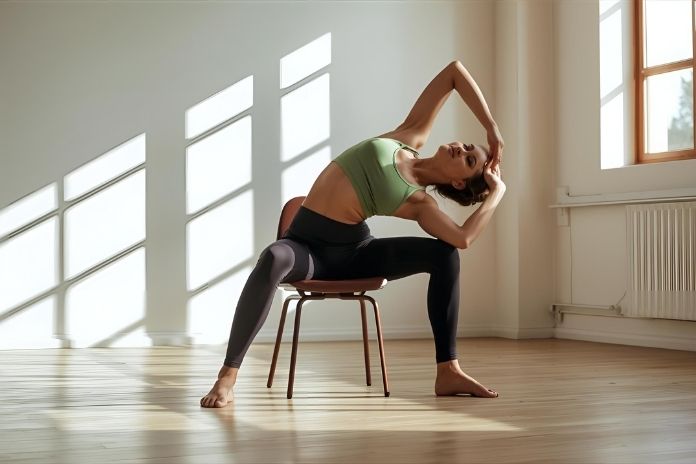
Seated side bends work the sides of your core, that is, the obliques. Obliques are important to maintain posture and trunk stability. Seated side bends also stretch tight muscles that tend to become tight from sitting for extended periods.
How to do it:
- Sit tall with relaxed shoulders and hands on your thighs.
- Slowly lean to one side as though reaching for your hip or wheel, and then come back to the center.
- Alternate sides for 10–12 repetitions each.
Benefits:
This exercise increases side oblique muscle strength on the abdominal sides. It also increases side flexibility and trunk balance, which supports stability for transfers and turns.
Tip: You can add a light object, such as a water bottle, for strength once you feel comfortable holding it.
Read More: Targeting Abs: Daily Exercises for Core Strengthening
3. Seated Torso Twists
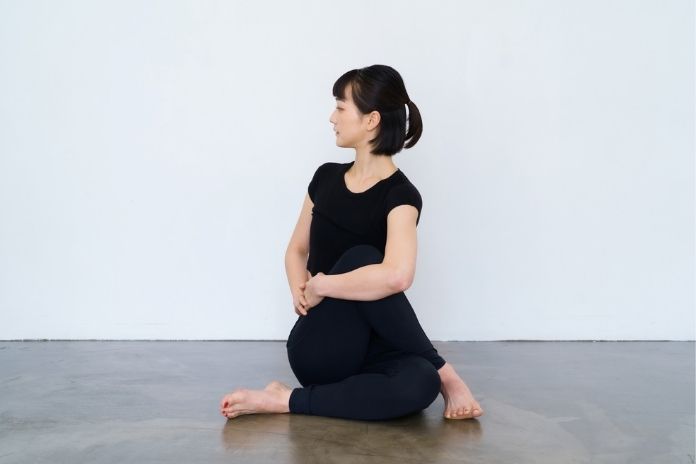
Seated torso twists are a popular exercise for those who are wheelchair-bound. This dynamic movement activates your whole core and improves mobility in your upper spine. It’s great for having a robust and pliable trunk, which is vital for everyday wheelchair movement and upper limb control.
How to do it:
- Sit up straight with your arms crossed in front of your chest.
- Twist your torso to the right, keeping your hips firm.
- Come back to the middle, then twist to the left.
- Do 10–15 slow, controlled twists on each side.
Benefits:
This movement strengthens obliques and spinal rotators to promote trunk stability and control. It improves seated balance and posture with fewer chances for back pain.
Tip: Try this exercise while holding a small resistance ball or weighted object for extra intensity.
4. Seated Forward Crunch (Modified)

If you aim to especially engage your abdominal muscles while sitting, seated forward crunches are for you. It not only simulates the classic crunch but also in a modified version that’s safe, easy, and effective for wheelchair patients.
How to do it:
- Sit up straight with your back straight and feet planted firmly on the floor.
- Put your hands at the back of your head or cross them over your chest.
- Engage your abs and carefully lean forward slightly without tilting your shoulders, and then come back upright.
- Do 10–15 reps.
Benefits:
This exercise develops abdominal and postural strength. It activates the core that is necessary for daily activities such as reaching forward or pushing the wheelchair.
5. Resistance Band Push-Press

Push press using resistance bands is an exercise that trains both upper body strengthening and core activation, thereby turning into a functional full-body exercise. It’s great to improve pushing power and control during wheelchair pushing or transfers.
How to do it:
- Anchor a resistance band underneath your wheelchair, footrest, or solid anchor point.
- Hold the band at shoulder level with elbows bent.
- Push forward or up on the band while bracing your core tight, then slowly return to the beginning.
- Do 10–12 reps per set.
Benefits:
This strengthens the shoulders, triceps, and upper back with activation of the core. It also increases functional strength for pushing, lifting, and everyday wheelchair mobility.
Tip: Begin with a light resistance band and increase gradually as per your strength.
6. Medicine Ball or Water Bottle Twist
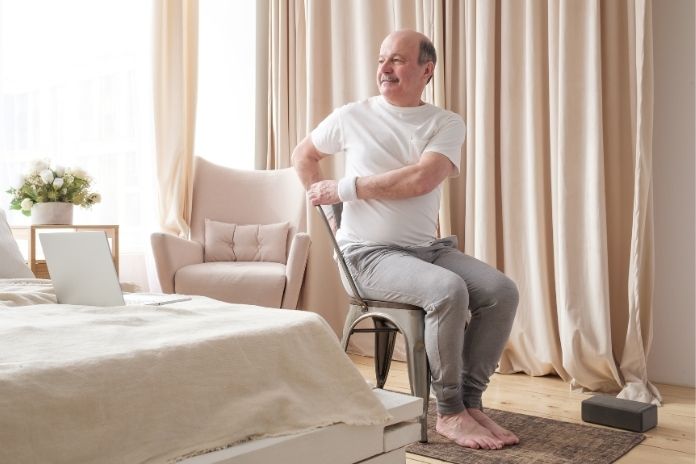
This exercise introduces resistance to your torso twist. This also promotes coordination and strengthening together. It also conditions your body to stabilize in motion, which is useful for upper-body balance and posture.
How to do it:
- Take a small ball, dumbbell, or water bottle near your chest.
- Sit tall and twist slowly side to side with your spine kept straight.
- Do 10–15 reps in total.
Benefits:
It promotes rotational strength, coordination, and trunk stability. Involves both upper body and core muscle groups, which makes it excellent for day-to-day movement control.
7. Seated Knee Lifts (For People With Lower Limb Mobility)

Seated knee lifts address your lower abs and hip flexors to help promote strength in your pelvic area. It’s also a gentle method to improve circulation and muscle activation in the lower half.
How to do it:
- Sit up straight and activate your core.
- Bring one knee up toward your chest, hold for a brief moment, then set it back down.
- Alternate sides and repeat 10–12 reps each leg.
Benefits:
This exercise strengthens lower abs and hip flexors to support pelvic control. It promotes active lower-body movement, which will help improve circulation and balance.
Tip: If there is limited leg movement, imagine the lift and squeeze your core muscles; it still stimulates muscle activation.
Read More: Sit-Up Variations for Weight Loss: Maximize Fat Burn with Core Workouts
Cool Down and Stretch
Once you complete your seated abs exercise, take a few minutes to cool down and release tension:
- Try and do gentle neck rolls and shoulder stretches.
- You can gradually lean to each side to stretch your obliques.
- Opt for deep breathing and light torso rotations to relax the muscles.
- Recheck your posture before finishing. Your shoulders should feel more open, and your spine must be more aligned.
Additional Tips for Core Training Success
- Consistency is key. Aim for 3–4 sessions per week for noticeable strength and balance improvements.
- Progress gradually. Increase reps or add light resistance only when your form feels strong and stable.
- Shake it up. Swap your core training with cardio activities such as wheelchair rolling, arm ergometer exercises, or swimming for total-body conditioning.
- Pay attention to your body, and if you feel pain, dizziness, or muscle fatigue, stop at once.
Key Takeaway
Solid core muscles are extremely important for mobility, balance, and independence for wheelchair users. Through the above repeated adaptive exercises, you can improve posture, avoid strain, and increase overall confidence in everyday activities.
Whether in a home setting or a gym, these wheelchair core exercises make fitness possible, empowering, and sustainable, movement by movement. So if you, or your loved one, uses a wheelchair, do not let it confine you. In fact, make the most of it, and try these exercises, which will help you lead a better and more independent life.
In this Article