












Did you know that every 20 seconds, someone in America suffers an osteoporosis-related fracture? Yet what if 12 minutes of daily practice could help reverse bone loss naturally?
October 20th marks International Osteoporosis Day, bringing attention to a condition affecting millions of Americans. Osteoporosis occurs when bones become weak, brittle, and porous due to calcium deficiency and other factors. In severe cases, bones can become as compressible as a sponge, significantly increasing the risk of fractures.
Health experts attribute bone deterioration to our increasingly sedentary lifestyles, poor dietary habits, and insufficient attention to bone health. While calcium-rich foods are essential for bone health, physical activities, particularly yoga, offer an effective complementary approach to managing osteoporosis and strengthening bones.
Research published in the National Center for Biotechnology Information shows that yoga can prevent and reverse bone loss, with studies demonstrating that a 12-minute daily yoga regimen can reverse osteoporotic bone loss.
A 2018 study investigates yoga’s benefits for bone health in postmenopausal women with osteopenia or osteoporosis. It demonstrates significant improvements in bone mineral density through a 12-minute daily routine of weight-bearing poses such through a 12-minute daily routine of weight-bearing poses such as Tree and Warrior II, with no adverse effects reported.
A 2021 review states that yoga prevents and reverses bone loss in osteoporosis, thereby improving balance, posture, strength, and coordination, reducing falls and fractures. Regular yoga practice has overall bone health.
Here are five powerful yoga positions that will not only strengthen your bones but also improve posture and support osteoporosis management. Studies indicate that integrated yoga practices, including these weight-bearing asanas, help improve bone mineral density.
Read More: From Yoga to Diet: Natural Strategies to Manage Asthma Effectively

Expert Choice: Best At-Home Yoga Studio
Experience over 2,400 world-class yoga classes from the comfort of your home. YogaDownload offers expert-led programs and flexible membership options for every fitness level.
*Purchases through this link support our research at no extra cost to you.
1. Urdhva Mukha Svanasana (Upward Facing Dog Pose)
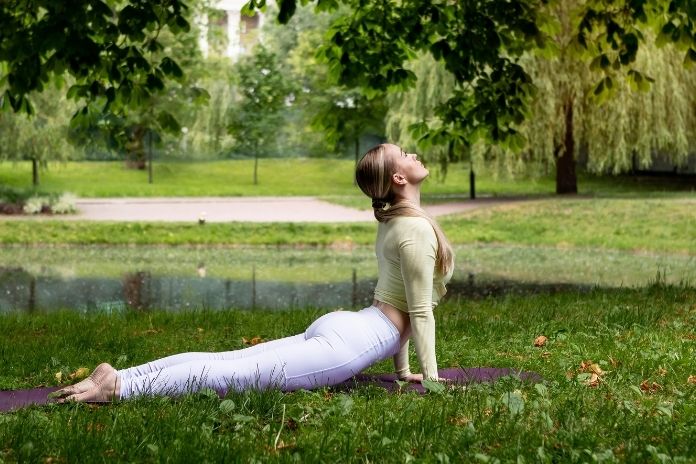
This pose effectively addresses bone disorders by stretching and strengthening the shoulders, hamstrings, hands, calves, arms, and legs.
Directions:
- Begin on your hands and knees, with knees directly below your hips and hands slightly forward of your shoulders
- Spread your palms wide and tuck your toes under
- Exhale and push your knees away from the floor
- Lift your sitting bones toward the ceiling and draw your inner legs up from your ankles into your groin area
2. Trikonasana (Triangle Pose)

This yoga posture helps strengthen bone density, which is particularly beneficial for those with osteoporosis.
Directions:
- Stand with your feet 3.5 to 4 feet apart
- Turn your right foot out 90 degrees and your left foot in 15 degrees
- Align the center of your right heel with the center of your left foot’s arch
- Ensure your weight is evenly distributed on both feet, pressing firmly into the ground
- Keep your torso straight as you hinge at the hip, extending your left hand toward the ceiling and your right hand toward the floor
- Ensure your body bends sideways (not forward or backward), placing your right hand on the floor outside your right foot
- Stretch your left arm straight up, creating a straight line with both arms
- Breathe deeply throughout the pose
- To exit, inhale and bring your arms to your sides, then straighten both legs
Read More: The Ultimate Guide to Yoga Blocks: 6 Options Reviewed
3. Setu Bandhasana (Bridge Pose)
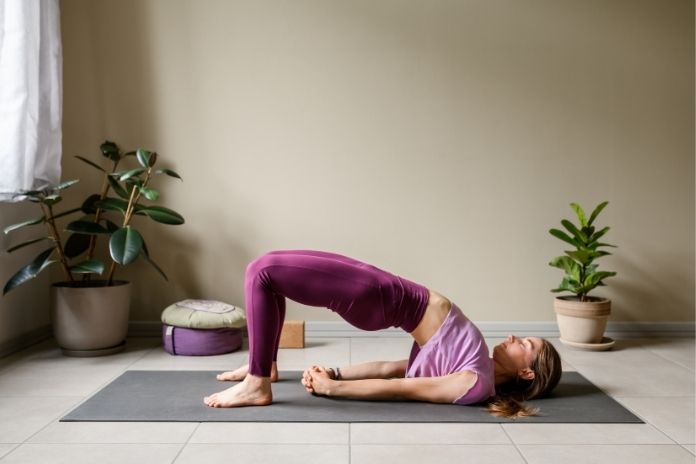
This pose strengthens the spine, one of the areas most affected by osteoporosis.
Directions:
- Lie on your back with knees bent and feet hip-width apart on the floor
- Ensure your knees and ankles are aligned in a straight line
- Place your arms alongside your body with palms facing down
- Slowly lift your hips while gently rolling your shoulders toward your chest
- Support your weight with your shoulders, arms, and feet
- Keep your thighs parallel to each other and to the floor
- Hold the position for up to one minute while breathing easily
- Exhale as you slowly lower back down
Expert Choice: Best At-Home Yoga Studio
Experience over 2,400 world-class yoga classes from the comfort of your home. YogaDownload offers expert-led programs and flexible membership options for every fitness level.
*Purchases through this link support our research at no extra cost to you.
4. Bhujangasana (Cobra Pose)
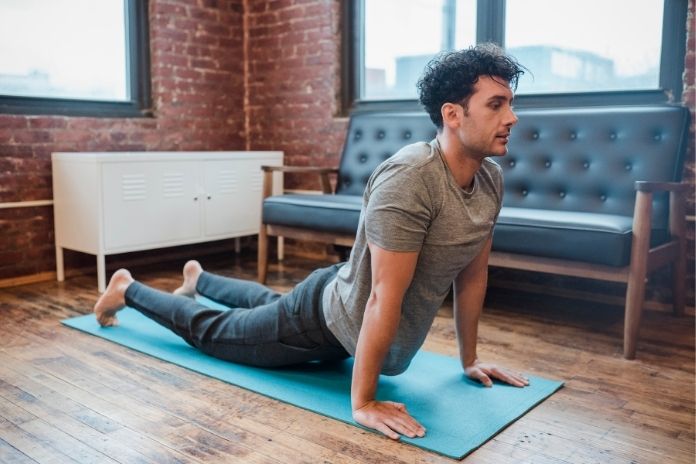
This posture effectively strengthens the entire body, and regular practice significantly improves bone health.
Directions:
- Lie on your stomach with your legs together and the tops of your feet flat on the floor
- Place your hands under your shoulders with palms down
- Keep your elbows close to your torso and parallel to each other
- Slowly lift your head, chest, and upper abdomen while keeping your navel on the floor
- Inhale deeply as you pull your torso up and back, using your hands for support
- Exhale slowly as you lower your chest, abdomen, and head back to the floor
5. Utkatasana (Chair Pose)
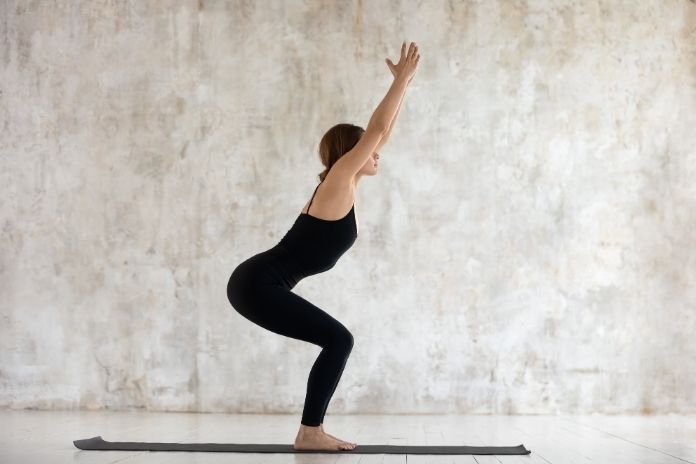
This pose helps maintain bone health and increases bone longevity.
Directions:
- Stand straight with your feet slightly apart
- Extend your arms forward with palms facing down, keeping your elbows straight
- Imagine sitting back into an invisible chair as you slowly bend your knees and lower your pelvis
- Keep your hands parallel to the ground and maintain a straight spine
- Hold the position briefly, ensuring your knees don’t extend beyond your toes
- Breathe steadily throughout the pose
Read More: Why Athletes Swear by Yoga Nidra for Faster Recovery
Important Considerations
Before beginning any yoga practice for osteoporosis management, consult with your healthcare provider, as recommended by medical experts. While these poses can be beneficial for bone health, proper form and gradual progression are essential to prevent injury. Consider working with a qualified yoga instructor who has experience with students managing osteoporosis.
Remember that yoga is most effective when combined with a comprehensive approach to bone health, including adequate calcium and vitamin D intake, weight-bearing exercises, and lifestyle modifications recommended by your healthcare team.
Take Action for Your Bone Health Today
Don’t let osteoporosis control your future. Start incorporating these evidence-based yoga poses into your daily routine and take the first step toward stronger bones. Remember, consistency is key—even 12 minutes a day can make a significant difference.
For many newfound yogis, it can be tempting to try out inversions, arm balances, and other tricky yoga poses you see on social media right from the get-go. But those postures require some serious strength and balance training, which is why Ashley Rideaux, a YogaWorks-certified teacher trainer in Los Angeles, recommends newbies stick with a handful of basic sitting and standing postures.
“The bread and butter of a beginner’s practice are your standing poses,” she says.
Ready to begin your bone-strengthening journey? Consult with your healthcare provider today about adding yoga to your osteoporosis management plan, and consider joining a gentle yoga class designed for bone health in your community.
Practice these yoga positions regularly to support your bone health and overall well-being. With consistent practice, you can work toward stronger bones and better posture while enjoying the mental and physical benefits that yoga provides.
Read More: What Is Somatic Yoga? A Beginner’s Guide to This Gentle Movement Practice
Frequently Asked Questions
Q: How often should I practice yoga for bone health?
A: Research suggests that practicing yoga for just 12 minutes daily can be beneficial for bone health. However, you should start slowly and gradually increase your practice time. Consult with your healthcare provider to determine the best frequency for your individual needs.
Q: Are there any yoga poses I should avoid with osteoporosis?
A: Yes, certain poses that involve extreme spinal flexion (forward bending) or twisting may increase fracture risk in people with osteoporosis. Always work with a qualified instructor and inform them of your condition to ensure safe modifications.
Q: How long before I see results from yoga practice?
A: While you may feel improvements in balance and flexibility within weeks, bone density changes typically take several months to measure. Studies have shown significant improvements in bone mineral density after 6-12 months of regular practice.
Q: Can yoga replace osteoporosis medications?
A: No, yoga should complement, not replace, medical treatment for osteoporosis. Always follow your doctor’s recommendations regarding medications and discuss how yoga can be integrated into your overall treatment plan.
Q: Is yoga safe for someone who has already had osteoporotic fractures?
A: Yoga can be safe and beneficial for people with a history of fractures, but it requires careful modification and professional guidance. Work with both your healthcare provider and a qualified yoga instructor experienced in teaching students with osteoporosis.
Q: What equipment do I need to start yoga for bone health?
A: You’ll need minimal equipment: a yoga mat for cushioning and grip, and possibly props like blocks or straps for modifications. Many poses can be adapted to use a chair or wall for support if needed.
Q: Can men benefit from yoga for osteoporosis prevention?
A: Absolutely. While osteoporosis is more common in women, men can also develop the condition and benefit significantly from yoga’s bone-strengthening effects, improved balance, and fall prevention benefits.

References
- https://pmc.ncbi.nlm.nih.gov/articles/PMC4851231/
- https://pubmed.ncbi.nlm.nih.gov/27226695/
- https://pubmed.ncbi.nlm.nih.gov/34004616/
- https://pubmed.ncbi.nlm.nih.gov/26865770/
- https://www.mayoclinicproceedings.org/article/S0025-6196(11)61711-4/fulltext
- https://newsnetwork.mayoclinic.org/discussion/mayo-clinic-q-and-a-osteoporosis-and-a-bone-healthy-diet/
- https://newsnetwork.mayoclinic.org/discussion/mayo-clinic-q-and-a-osteoporosis-and-supplements-for-bone-health/
- https://www.shape.com/fitness/workouts/yoga-poses-for-beginners
In this Article