



















Sleep has never been viewed as a luxury but as a fundamental necessity for various bodily functions and overall health. Missing a few hours of sleep can leave you feeling groggy, but imagine not sleeping for days. Extended sleeplessness can pose serious and potentially dangerous consequences.
In cases of chronic insomnia or severe sleep deprivation, the consequences of lost sleep extend far beyond simple tiredness. From impaired decision-making and weakened immunity to hallucinations and cardiovascular stress, the effects can be drastic and life-threatening.
This article explores what happens to your body and mind after days without sleep and why prioritizing adequate rest is essential for your health and survival.
How Much Sleep Does One Need?
 Sleep requirements vary from person to person based on factors such as age, health status, and individual biology. According to the National Sleep Foundation’s current recommendations, here are the optimal sleep durations for different age groups:
| Age | Number of Hours Per Day |
| Newborns (0-3 months) | 14-17 hours |
| Infants (4-11 months) | 12-15 hours |
| Toddlers (1-2 years) | 11-14 hours |
| Preschoolers (3-5 years) | 10-13 hours |
| School-age children (6-13 years) | 9-11 hours |
| Teenagers (14-17 years) | 8-10 hours |
| Young adults (18-25 years) | 7-9 hours |
| Adults (26-64 years) | 7-9 hours |
| Older adults (65+ years) | 7-8 hours |
While these are general guidelines, individual needs may vary. Some people function well on seven hours, while others require a full nine hours to feel refreshed and perform optimally.
Also, Read: The Sleep Myth That’s Ruining Your Rest – Why 8 Hours Isn’t for Everyone
The Progressive Effects of Sleep Deprivation
 To understand the impact of prolonged sleep deprivation, let’s examine how sleeplessness affects the body and mind over time, from the first sleepless night to several days without rest.
Buy Novilla Queen Mattress
After 24 Hours (1 Day) Without Sleep
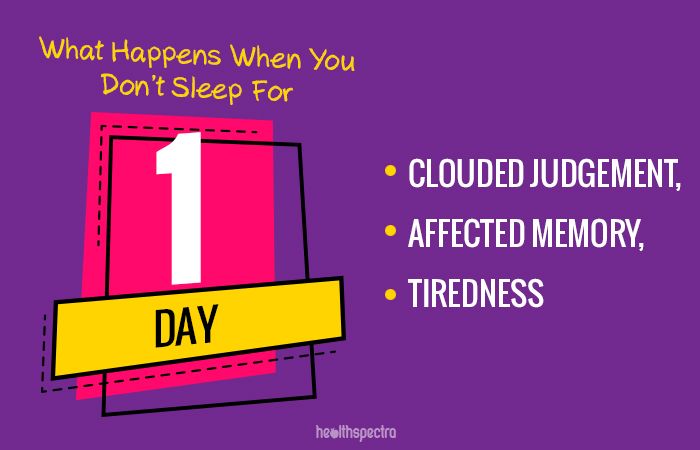 All-nighters are common, especially among students and professionals facing tight deadlines. While adrenaline might keep you alert initially, your body and brain begin experiencing significant strain after just one day without sleep.
Physical and Cognitive Effects:
- Severe Cognitive Decline: Research shows that staying awake for 17-19 hours produces cognitive impairment comparable to having a blood alcohol level of 0.05%. Memory, judgment, and hand-eye coordination are significantly affected.
- Increased Irritability: Mood regulation becomes difficult, leading to heightened stress, frustration, and emotional instability.
- Enhanced Pain Sensitivity: Studies demonstrate that sleep deprivation increases the brain’s sensitivity to pain, making even minor discomfort feel more intense.
- Disrupted Glucose Metabolism: Elevated cortisol levels interfere with blood sugar regulation, reducing energy levels and insulin sensitivity.
- Microsleeps: Brief, involuntary sleep episodes lasting 15-30 seconds occur as the brain attempts to rest. These “zone-outs” can be extremely dangerous, especially while driving or operating machinery.
- Local Sleep Phenomenon: Parts of your brain begin entering sleep states while other areas remain awake, creating a patchwork of consciousness that impairs overall function.
After 24 hours without sleep, attention span, reaction times, and emotional control are significantly compromised, dramatically increasing the risk of accidents and poor decision-making.
After 36 Hours Without Sleep
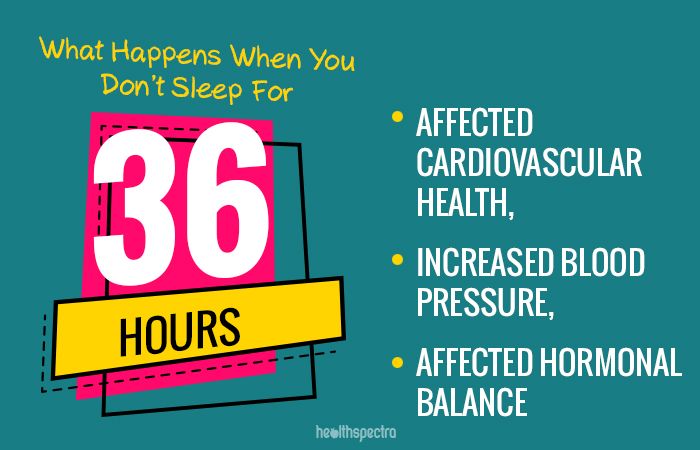 As wakefulness extends beyond 36 hours, the body and brain face even greater physiological stress. While the first 24 hours primarily affect cognitive function, by the 36-hour mark, serious physical changes become apparent.
Physical and Cognitive Effects:
- Cardiovascular Stress: Sleep deprivation elevates cortisol levels, triggering inflammation and affecting heart health. Blood pressure and heart rate increase significantly, raising the risk of cardiovascular complications.
- Hormonal Imbalance: Critical hormones including cortisol, insulin, and ghrelin (hunger hormone) become severely dysregulated, leading to increased stress, emotional instability, and disrupted appetite control.
- Dehydration-like Symptoms: Prolonged wakefulness can cause dizziness, weakness, and balance problems as the body struggles to maintain proper hydration and electrolyte balance.
- Autopilot Mode: The brain begins operating on “autopilot,” allowing routine tasks to be performed without conscious awareness, but severely limiting new memory formation.
- Severe Mood Disturbances: Motivation plummets, mood swings intensify, and information processing becomes severely impaired.
By 36 hours, essential bodily functions including blood pressure regulation, hydration balance, and emotional stability are significantly disrupted.
Buy Beckham Hotel Collection Bed Pillows Standard / Queen Size
Also, Read: Polyphasic Sleeping – Can Shorter Sleep Cycles Improve Productivity?
After 48 Hours (2 Days) Without Sleep
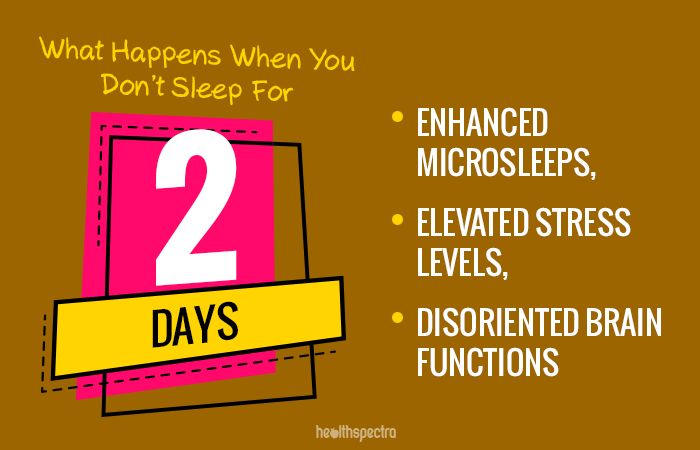 At the 48-hour mark, sleep deprivation effects become severe and potentially dangerous. The body enters a high-stress state with dangerously elevated cortisol levels, leading to anxiety, panic-like sensations, and extreme fatigue.
Physical and Cognitive Effects:
- Immune System Suppression: Research shows that white blood cell counts decrease significantly during extended sleep deprivation, making the body more vulnerable to infections and illnesses.
- Extended Microsleeps: These involuntary sleep episodes can now last up to 2 minutes, creating periods of complete unconsciousness that you may not even realize are happening.
- Severe Cognitive Impairment: Memory lapses, disorientation, and difficulty processing basic information become pronounced. Simple tasks require enormous effort, and reaction times slow dramatically.
- Emotional Dysregulation: The brain struggles to regulate emotions, leading to sudden mood swings, emotional numbness, or complete detachment from reality.
- Persistent Fight-or-Flight Response: The body remains in a constant state of high alert, causing extreme anxiety, jitteriness, and exhaustion.
- Perceptual Disturbances: Vision distortion and mild hallucinations may begin as the brain attempts to cope with extreme exhaustion.
At this stage, normal functioning becomes severely impaired, and sleep transitions from a biological need to an urgent medical necessity.
After 72 Hours (3Days) Without Sleep
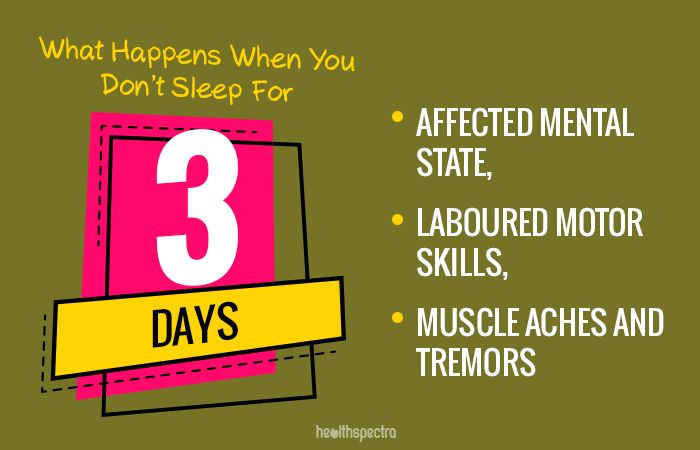 After three days without sleep, cognitive, physical, and emotional capabilities reach a breaking point. The mind and body are in complete disarray, struggling to maintain even basic functions.
Physical and Cognitive Effects:
- Severe Cognitive Breakdown: Thinking ability collapses, problem-solving becomes impossible, and maintaining normal conversation is extremely difficult.
- Motor Function Impairment: Hand-eye coordination deteriorates significantly, leading to clumsiness, muscle tremors, and increased risk of accidents and injuries.
- Uncontrollable Microsleeps: The brain forces increasingly frequent and prolonged involuntary sleep periods, often without the person’s awareness.
- Significant Hallucinations: The boundary between reality and dreams blurs, leading to auditory, visual, and tactile hallucinations. People may hear voices, see things that aren’t there, or experience strange physical sensations.
- Extreme Emotional Dysregulation: Anxiety, paranoia, and irritability worsen dramatically. Some individuals experience depersonalization (feeling disconnected from oneself) or derealization (feeling that the world isn’t real).
- Complete Energy Depletion: The body can barely perform basic functions, with severe muscle aches, dizziness, nausea, and overwhelming fatigue.
At this point, carrying out daily activities becomes nearly impossible, and immediate medical intervention is often necessary to prevent serious health complications.
After 96 Hours (4 Days) Without Sleep
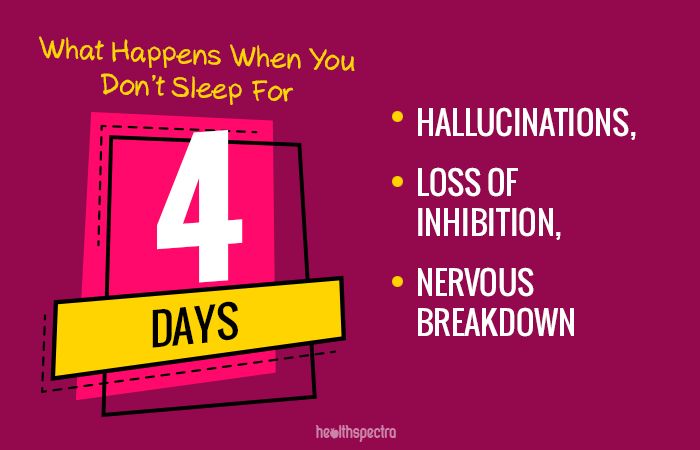 After four days without sleep, most people become severely impaired with rapidly deteriorating cognitive, motor, and emotional functions. The risk of organ failure and psychotic episodes increases significantly.
Physical and Cognitive Effects:
- Complete Cognitive Collapse: Decision-making, concentration, and memory are virtually non-existent. The brain can no longer process or retain information effectively.
- Extreme Emotional Distress: Anxiety, paranoia, and frustration reach dangerous levels. Some experience complete emotional numbness, while others have severe emotional breakdowns.
- Total Physical Exhaustion: Frequent involuntary microsleeps, extreme weakness, and inability to stand or walk normally.
- Psychotic Symptoms: Hallucinations worsen significantly, and paranoia may evolve into delusions. Confusion, disorganized thinking, and temporary psychosis can manifest.
- Nervous System Overload: The body’s inability to cope with chronic stress hormones can lead to nervous breakdown, extreme disorientation, panic attacks, and loss of consciousness.
- Organ System Stress: The immune system becomes severely compromised, creating serious infection risks. Heart rate and blood pressure fluctuate to dangerous levels, potentially causing cardiovascular complications.
At this stage, the body enters survival mode, requiring immediate medical intervention. Continuing without sleep significantly increases the risk of irreversible damage to the brain and other vital organs.
Also, Read: How Sleep Affects Hypertension: Tips for Better Rest
The Limits of Human Endurance: How Long Can You Survive Without Sleep?
 The longest documented case of intentional sleep deprivation occurred in 1964 when high school student Randy Gardner stayed awake for 264 hours (11 days) as part of a science fair project. While he survived without permanent physical damage, he experienced severe hallucinations, paranoid delusions, cognitive impairment, and extreme mood swings that worsened progressively.
Can Sleep Deprivation Be Fatal?
While the exact threshold where sleep deprivation becomes fatal remains unknown, scientists have identified several life-threatening effects of extreme sleep loss:
Potentially Fatal Consequences:
- Severe Cognitive Impairment: After 3-4 days without sleep, hallucinations, paranoia, delusions, and memory loss become severe and potentially permanent.
- Immune System Collapse: Critical immune function deteriorates, dramatically increasing susceptibility to infections and illnesses.
- Cardiovascular and Metabolic Crisis: Chronic sleep deprivation causes dangerous glucose metabolism disruption, unstable blood pressure, and irregular heart rhythms.
- Psychotic Episodes and Nervous System Breakdown: Severe cases can trigger complete mental disorientation and potentially cause long-term brain damage.
Fatal Familial Insomnia: When Sleep Deprivation Kills
Fatal Familial Insomnia (FFI) is a rare genetic disorder that proves prolonged sleeplessness can indeed be fatal. This hereditary condition causes progressive insomnia that cannot be treated. Patients experience worsening hallucinations, cognitive decline, and ultimately organ failure and death within several months to a few years. FFI demonstrates that while acute sleep deprivation rarely kills healthy individuals, chronic inability to sleep can be lethal.
When to Seek Medical Help
Medical attention becomes crucial when sleep deprivation extends beyond 48-72 hours or when experiencing:
- Severe hallucinations or delusions
- Extreme disorientation or confusion
- Dangerous blood pressure or heart rate changes
- Signs of immune system compromise (frequent infections)
- Thoughts of self-harm or complete loss of reality contact
- Inability to perform basic daily functions
Buy OLLY Sleep Gummy, 3 mg Melatonin, L-Theanine, Chamomile, and Lemon Balm Extracts, Blackberry Flavor
The Modern Sleep Crisis
Recent research indicates that sleep deprivation has become a significant public health concern in the 21st century. Chronic sleep deprivation increases the risk of hypertension, heart attack, and stroke, while also affecting glucose metabolism and contributing to the development of type 2 diabetes. Emerging evidence links sleep deprivation to adverse cardiometabolic health and cognitive health, with an increased risk of dementia among older adults.
Conclusion
Sleep is not merely a daily routine—it’s a biological necessity that profoundly impacts both physical health and mental well-being. Even a single night of lost sleep causes measurable cognitive impairment, while chronic sleep deprivation can lead to hallucinations, immune suppression, cardiovascular stress, and potentially life-threatening complications.
While complete sleep deprivation rarely proves fatal in healthy individuals, rare conditions like Fatal Familial Insomnia demonstrate that the inability to sleep can ultimately be lethal. The health risks, impaired decision-making, and survival threats increase dramatically with each day without adequate rest.
If you’re experiencing persistent sleep difficulties or acute sleeping disorders, seeking medical help is essential. Quality sleep isn’t a luxury—it’s a fundamental requirement for maintaining optimal physical and mental health throughout life.
References
- https://www.thensf.org/how-many-hours-of-sleep-do-you-really-need/
- https://sleepresearchfoundation.com/2024/08/28/the-hidden-dangers-of-sleep-deprivation-understanding-causes-effects-and-solutions/
- https://www.ncbi.nlm.nih.gov/books/NBK19961/
- https://health.clevelandclinic.org/happens-body-dont-get-enough-sleep
- https://www.sleepfoundation.org/sleep-deprivation/lack-of-sleep-and-cognitive-impairment
- https://www.frontiersin.org/journals/psychiatry/articles/10.3389/fpsyt.2024.1470976/full
- https://www.cdc.gov/pcd/issues/2023/23_0197.htm
- https://www.cdc.gov/sleep/about/index.html
- https://www.sleephealthfoundation.org.au/sleep-topics/how-much-sleep-do-you-really-need
- https://www.ncbi.nlm.nih.gov/pmc/articles/PMC2656292/
- https://med.stanford.edu/news/all-news/2015/10/among-teens-sleep-deprivation-an-epidemic.html
In this Article