













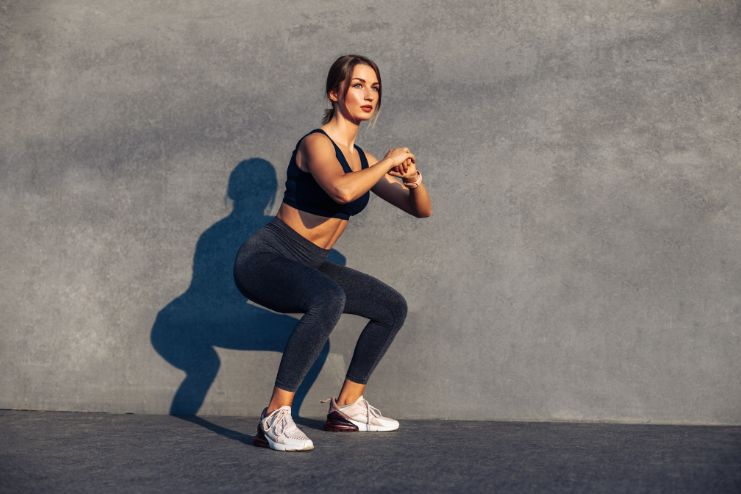
Did you know that over 25% of adults experience knee pain that interferes with their daily activities? Yet many people believe that knee problems mean the end of effective lower body workouts. This couldn’t be further from the truth.
Squatting offers incredible benefits for your body, providing excellent muscle toning and strengthening. If you’ve had to stop squatting because of knee problems, don’t give up entirely.
Research shows that therapeutic exercise is often recommended as a first-line conservative treatment for knee conditions, with exercise therapy ranking as one of the best treatments for knee pain. There are numerous squat alternatives for bad knees that can help you maintain your fitness routine without aggravating your condition.
Transitioning from regular squatting to avoiding it completely due to knee pain can be discouraging. However, the good news is that you have plenty of alternatives. Studies indicate that with knee problems, the largest antigravity muscles like the quadriceps and gluteals often lose strength, making focused exercise plans essential for recovery.
Modified squats for bad knees ensure that your muscle toning doesn’t come to a halt, allowing you to continue working out while protecting your knees from further damage.
If you want to keep training your lower body without compromising your knee health, this guide will walk you through some of the best squat alternatives for bad knees.
Read More: 8 Best Hack Squat Alternatives With Simple Variations
Keep Your Workout Going: Smart Alternatives for Bad Knees
Along with trying these squat alternatives, focus on maintaining a healthy diet and keeping your legs strong, as weak leg muscles can contribute to knee problems. Research demonstrates that strengthening exercises can significantly improve knee function and reduce pain.
“Exercise is one of the most important things you can do for knee pain,” says Dr. Lauren Elson, physical medicine and rehabilitation instructor at Harvard Medical School.
These alternative exercises are simple to practice, but it’s important to understand why each exercise serves as an effective substitute for traditional squats. Only once you understand the reasoning should you begin incorporating these squat alternatives into your routine.
1. Wall Squats with a Stability Ball
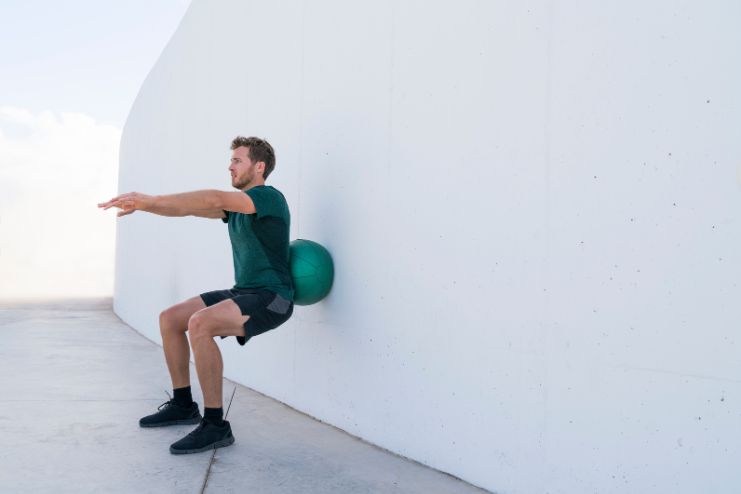
Using a stability ball for wall squats provides excellent back support and reduces strain on your knees. This modification makes squatting much more comfortable and safer for those with knee issues.
In this exercise, you’ll lean against a stability ball placed between your back and the wall, spread your legs, and perform controlled squats with proper support.
Essential Tip: When standing up from the squat position, make sure to stand completely upright and allow your knees to relax. This technique helps prevent knee pain.
Steps:
- Position the stability ball at your lower back against a wall
- Rest your lower back comfortably against the ball
- Spread your legs shoulder-width apart
- Extend your arms forward and look straight ahead
- Lower down slowly without worrying about keeping your back straight—the ball provides adequate support
- Return to standing position in a controlled manner
Perform this exercise three times per week with 10 repetitions per session.
Read More: 5 Effective Knee Strengthening Exercises
2. Leg Extensions Without a Machine
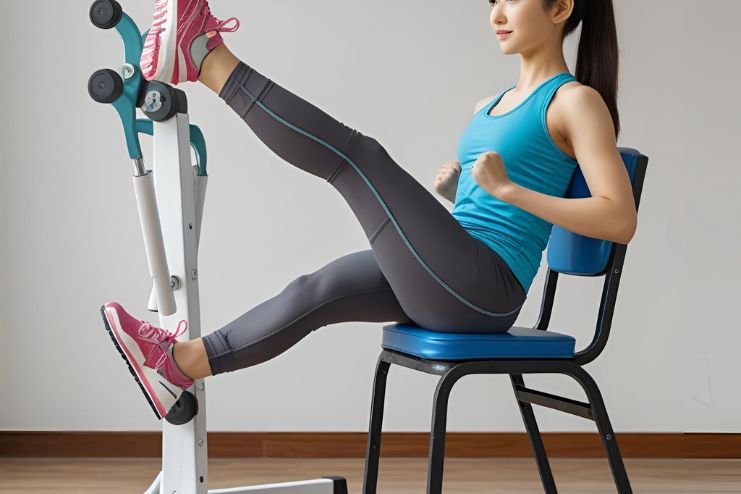
Seated leg extensions help strengthen your quadriceps muscles, which provide crucial support for your knees. This bodyweight version eliminates the need for gym equipment while still delivering effective results. Mayo Clinic research confirms that leg lifts are among the most effective exercises for knee pain management.
Essential Tip: Sit comfortably and move slowly when extending your leg forward. Tighten your abdominal muscles when lifting your leg and release when extending it forward.
Steps:
- Sit upright in a sturdy chair with your back supported
- Place your hands on your thighs
- Slowly lift your right knee upward while tightening your abs
- Extend your leg forward until it’s straight, keeping your toes pointed at a 90-degree angle
- Ensure your thigh and toes form a straight line
- Lower your leg slowly back to the starting position
- Repeat with your left leg
Practice this exercise for 3-4 minutes daily, alternating between legs.
3. Bench Glute Bridge
The glute bridge is one of the most comfortable and effective squat alternatives for bad knees. Instead of placing stress on your knees, this exercise targets your glutes, hamstrings, hips, and core while keeping your knees in a safe position.
Essential Tip: Keep your heels firmly planted, use the bench for support, and tighten your glutes and abs during the movement to maximize benefits and protect your knees.
Steps:
- Lie on your back with your legs positioned near a bench
- Place your heels on the bench with your knees bent
- Rest your arms on the floor with your hands in loose fists for balance
- Using your back and glutes, slowly lift your hips upward
- Create a straight line from your knees to your shoulders
- Hold the position for 30 seconds or as long as comfortable
- Lower your hips slowly and rest briefly before repeating
Perform this exercise 3-4 times per week.
Read More: 13 Benefits of Doing Squats
4. Step-Ups
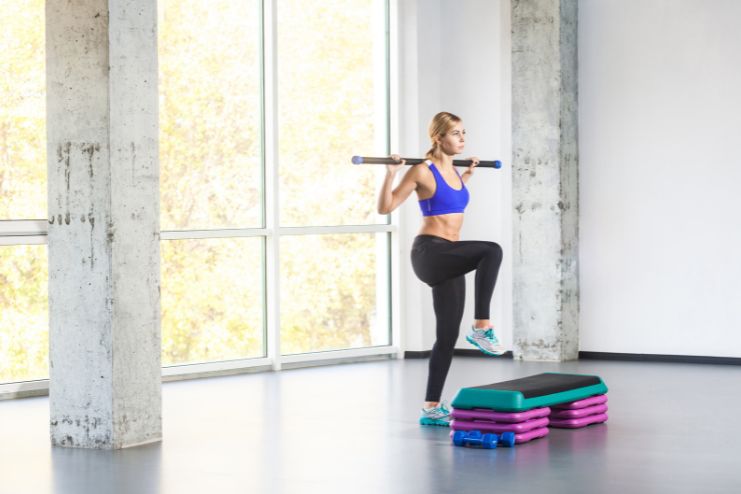
Step-ups are simple yet effective squat alternatives that strengthen your leg muscles without straining your knees. You’ll need a sturdy chair or box that’s the appropriate height for comfortable stepping.
Essential Tip: Choose a step height that doesn’t strain your knees. Move slowly and focus on controlled movements rather than speed.
Steps:
- Place a chair or step in front of you
- Stand a few inches away from the step
- Place your right foot on the chair, ensuring your hips, knees, and ankles are aligned
- Step up, bringing your left foot onto the chair while keeping your back and head straight
- Step back down with your left foot first
- Repeat several times, then switch to lead with your left leg
Perform 5 step-ups on each leg, three times per week.
5. Side-Lying Leg Raises
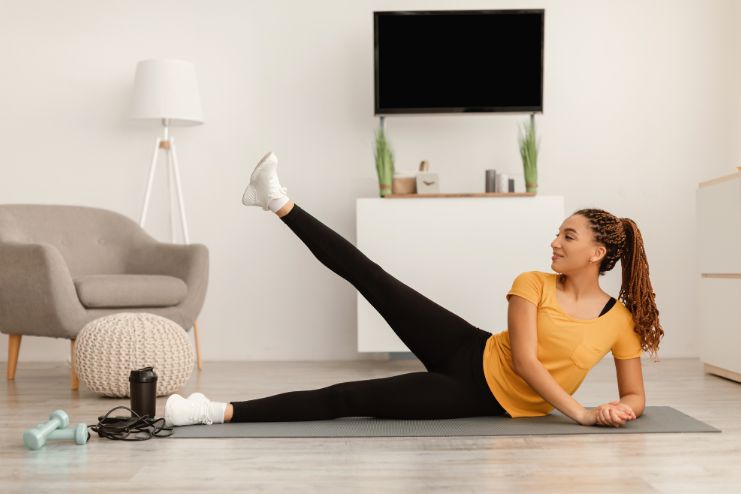
This comfortable alternative works your hip muscles and improves overall leg strength without putting pressure on your knees. The side-lying position eliminates the knee stress that comes with traditional squats.
Essential Tip: Keep your shoes on during this exercise for better ankle stability and control.
Steps:
- Lie on your side on an exercise mat
- If lying on your right side, place your right hand under your head and your left palm on the floor for support
- Keep your body straight and balanced
- Slowly lift your top leg upward, hold for a few seconds, then lower it back down
- Complete the set, then switch sides and repeat with the other leg
Perform 10 repetitions on each side daily.
6. Reverse Lunges
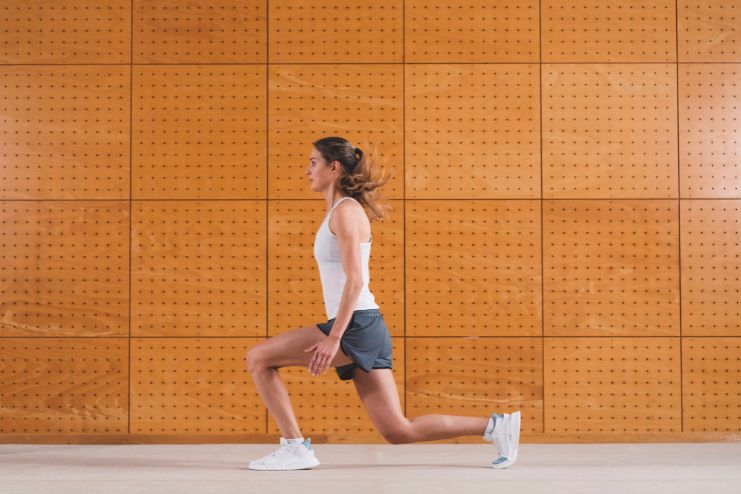
Reverse lunges provide excellent leg and glute strengthening while being gentler on the knees than forward lunges. This exercise allows you to work similar muscle groups as squats with reduced knee stress.
Essential Tip: Maintain an upright posture throughout the movement and place your hands on your waist for better balance and comfort.
Steps:
- Stand straight with your feet shoulder-width apart
- Place both hands on your waist
- Step your left foot backward, keeping your left knee off the floor
- Lower your hips and bring your right thigh forward
- Ensure your right knee stays directly over your ankle
- Keep both legs parallel to the floor
- Hold the position briefly
- Return to the starting position by bringing your left leg forward
- Repeat with both legs alternating
Practice this exercise 3-4 times per week with controlled movements.
Read More: Elephant Walk Exercise: The Stretch That Loosens Tight Hamstrings Fast
7. Stability Ball Hamstring Roll-Ins
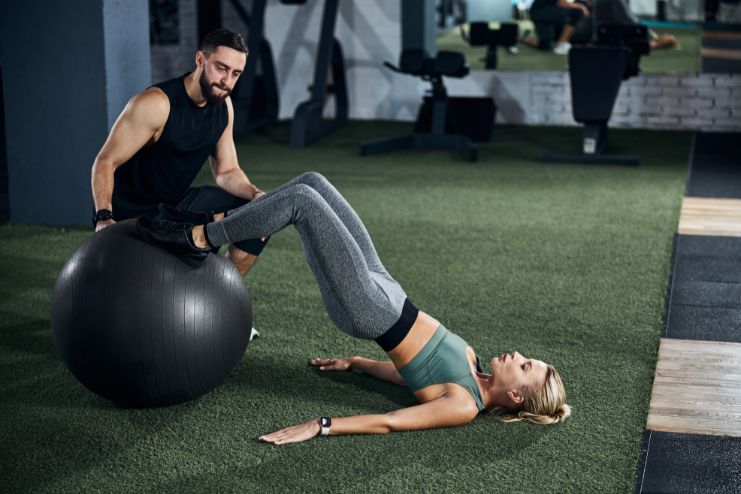
This fun exercise targets your glutes and hamstrings while allowing your legs to rest comfortably on the stability ball. It’s an excellent way to continue strengthening your lower body without knee stress.
Essential Tip: Lift your hips slightly above the floor to maximize the benefits of this exercise.
Steps:
- Lie on your back with a stability ball positioned under your calf muscles
- Place your palms flat on the floor for support
- Using your arms for stability, lift your buttocks up
- Roll the ball toward you by bending your knees and pulling with your legs
- Slowly push the ball back to its original position under your calves
- Repeat the rolling motion as many times as comfortable
Perform this exercise 3-4 times per week.
8. Single-Leg Deadlifts
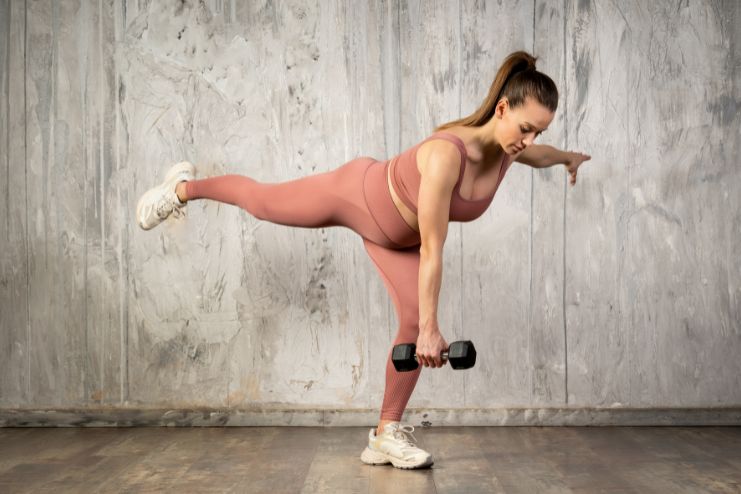
Single-leg deadlifts strengthen your hamstrings and improve balance while being knee-friendly. Since the hamstrings connect to your knees, strengthening them indirectly supports knee health.
Essential Tip: Focus on proper bending technique and avoid rounding your back during the movement.
Steps:
- Stand straight with your feet slightly apart
- Bend forward while reaching toward the ground with your right hand
- Simultaneously, extend your left leg behind you for balance
- Keep your back straight throughout the movement
- Return to the starting position and repeat on the other side
Perform 5-6 repetitions on each side, three times per week.
Read More: How Often Should You Change Your Workout Routine?
9. Prowler Sled Push
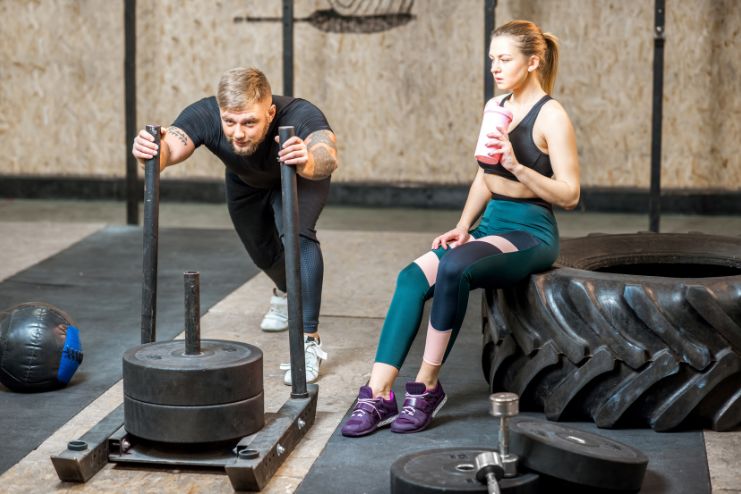
The prowler sled push is excellent for building strong glutes and hamstrings without any impact on your knees. This exercise provides a great alternative for those seeking intense lower-body strengthening.
Essential Tip: Don’t strain your back excessively while moving forward, and stop immediately when you feel fatigued.
Steps:
- Grip the prowler sled handles firmly
- Keep your arms straight and extended
- Bend your body into an effective pushing position
- Apply a steady force and move forward with controlled steps
Push the sled for a few minutes, twice per week.
10. Monster Walks with Resistance Bands
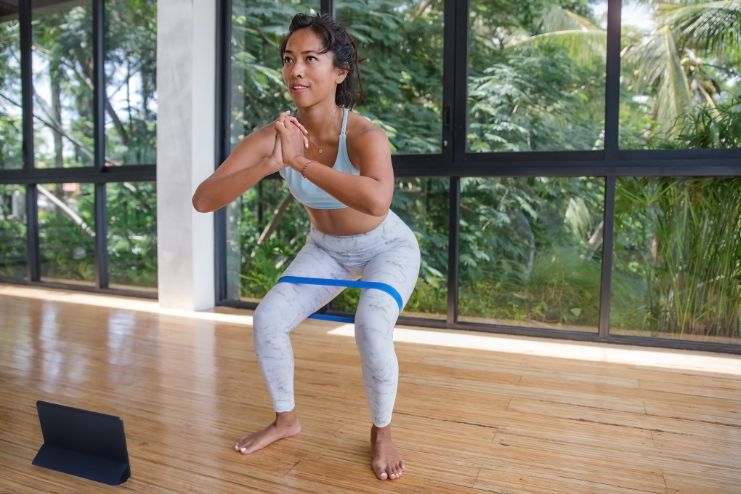
Monster walks with resistance bands strengthen your hips, tone your glutes, and work your legs without requiring any squatting motion. This exercise is perfect for anyone dealing with knee, back, or hip pain.
Essential Tip: Maintain proper posture by keeping your back straight throughout the exercise. Poor form can lead to strain and discomfort.
Steps:
- Place a resistance band around your ankles
- Spread your feet apart to create tension in the band
- Keep your back straight and form fists with your hands in front of you
- Walk forward and backward while maintaining the stretched position
- Keep the band taut throughout the movement
Practice this exercise every other day, walking for 3-4 minutes initially and gradually increasing the duration.
11. Inner Thigh Circles
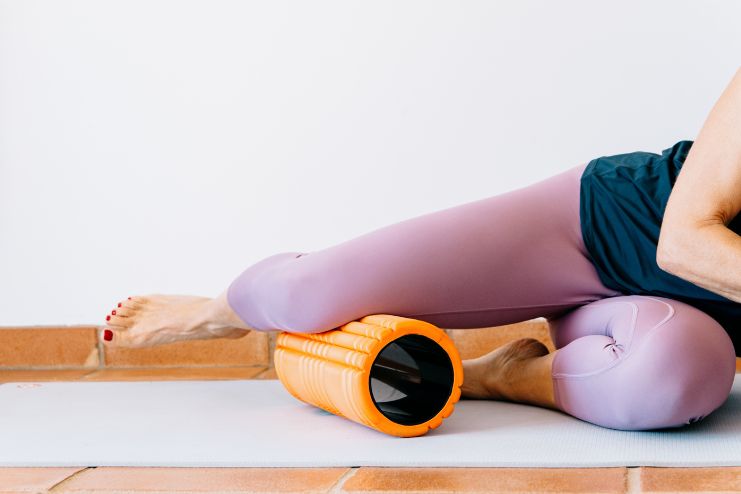
Inner thigh circles can be challenging but offer excellent benefits as a squat alternative. This exercise strengthens your abdominal muscles and tones your thighs without putting stress on your knees.
Essential Tip: Only make circles within your comfortable range of motion. Over-exertion can lead to excessive fatigue.
Steps:
- Lie on your back on an exercise mat
- Extend your legs forward
- Place your hands under your lower back for support
- Lift both legs slightly and spread them apart
- Make slow circular motions, both clockwise and counterclockwise
Perform 5-6 circles in each direction, three times per week.
Read More: How to Strengthen Your Deep Core (Not Just Your Abs)
Conclusion
Squat alternatives for bad knees include exercises and workout variations that provide the same benefits as traditional squatting while protecting your knee joints. Each exercise is designed to strengthen and tone your leg muscles without causing knee pain or aggravation. Clinical studies consistently show that exercise therapy can be as effective as medication for managing knee pain.
When choosing alternative squat exercises for bad knees, prioritize your specific goals. Are you focused on toning your glutes while protecting your knees, or do you simply prefer squat variations because traditional squats cause knee pain?
But if you don’t squat correctly, it can be painful to sore knees. Too many people compensate for sore knees by bending over at the waist, which can lead to a sore back, says Cynthia Harrell, physical therapist and clinical coordinator of the arthritis and osteoporosis programs at the Duke Center for Living at Duke University in Durham, North Carolina.
Review all the squat alternatives presented in this article, then select the modified exercises that best suit your needs and comfort level. This approach will allow you to continue strengthening your lower body regularly while maintaining healthy knees.
Ready to start your knee-friendly fitness journey? Begin with 2-3 exercises from this list and gradually build your routine as your strength improves. Remember to consult with a healthcare provider before starting any new exercise program, especially if you have existing knee conditions. Your knees will thank you for choosing safe, effective alternatives that keep you moving toward your fitness goals.
Frequently Asked Questions (FAQ)
Q: How often should I do these squat alternatives if I have bad knees?
A: Start with 2-3 times per week and listen to your body. Harvard Health recommends doing knee-strengthening exercises at least two days a week to start, ideally working up to every other day. If you experience increased pain or swelling, reduce frequency and consult a healthcare provider.
Q: Can these exercises make my knee pain worse?
A: When performed correctly, these exercises should not worsen knee pain. However, some mild discomfort during the adjustment period is normal. Stop immediately if you experience sharp pain, significant swelling, or pain that persists after exercise. Research shows that therapeutic exercise is generally safe and effective for knee conditions.
Q: Which exercises are best for beginners with knee problems?
A: Start with wall squats using a stability ball, seated leg extensions, and side-lying leg raises. These exercises provide the most support and put minimal stress on your knees while building foundational strength.
Q: How long before I see improvement in my knee pain?
A: Most people notice improvements in knee strength and reduced pain within 4-6 weeks of consistent exercise. Studies indicate that both short-term and long-term benefits can be achieved with regular therapeutic exercise. However, individual results vary based on the severity of your condition and consistency with the program.
Q: Should I use ice or heat after doing these exercises?
A: For acute pain or swelling after exercise, ice for 15-20 minutes can help reduce inflammation. For stiffness or chronic pain, gentle heat before exercise may help improve flexibility. Consult your healthcare provider for personalized advice based on your specific condition.
Q: Can I do these exercises if I have arthritis in my knees?
A: Yes, many of these exercises are excellent for people with knee arthritis. Research demonstrates significant benefits of exercise therapy for knee osteoarthritis. However, you may need to modify the intensity and range of motion. Always consult with your doctor or physical therapist before starting a new exercise program.
Q: What should I do if I don’t have access to a stability ball or resistance bands?
A: Most exercises can be modified using household items. For wall squats, you can use a pillow against the wall. For resistance band exercises, you can use a towel or even perform the movements without equipment, focusing on muscle engagement. The key is maintaining proper form and controlled movements.
Q: Is it normal to feel muscle soreness after these exercises?
A: Mild muscle soreness 24-48 hours after exercise is normal and indicates your muscles are adapting and getting stronger. This is different from joint pain, which should be avoided. If soreness is severe or persists beyond 2-3 days, reduce the intensity of your workouts.
References
- https://pmc.ncbi.nlm.nih.gov/articles/PMC5074793/
- https://newsnetwork.mayoclinic.org/discussion/recommended-exercises-for-knee-pain-depend-on-the-cause-of-the-pain/
- https://pubmed.ncbi.nlm.nih.gov/35442752/
- https://www.health.harvard.edu/pain/take-control-of-your-knee-pain
- https://pmc.ncbi.nlm.nih.gov/articles/PMC4431424/
- https://pmc.ncbi.nlm.nih.gov/articles/PMC8716769/
- https://www.health.harvard.edu/authors/lauren-elson-md
- https://www.linkedin.com/in/cynthia-harrell-03bb918/
- https://www.arthritis.org/health-wellness/healthy-living/managing-pain/joint-protection/how-to-squat-correctly
In this Article