













The human body is programmed to crave sweetness. When resources were limited, our caveman predecessors occasionally had to endure protracted periods of fasting or starvation, so that was helpful. For contemporary Americans, however, who frequently have easy access to a plethora of sugary, calorie-dense snacks throughout the day, it’s not always such a good thing.
America’s continued obsession with sugar has contributed to the rising rate of Type 2 diabetes and also obesity, which are detrimental to overall health and well-being.
Coffee, desserts, sauces, and even nutritious snacks all include sweeteners. We all know that consuming less sugar improves our health, but most individuals don’t have to eliminate sweets from their diet.
Honey and maple syrup are two of the most common and widely consumed natural sweeteners in the world. People commonly use them as a substitute for processed sugar because of their reduced glycemic index. These two are unquestionably better for the human body than cane and processed sugar. However, which is preferable, honey or maple syrup?
We’ll examine the nutritional differences, advantages, disadvantages, and professional recommendations between honey and maple syrup in this article.
Read More: Honey for Glowing Skin – 11 Tricks To Bring Out The Inner Glow
What Are They?
Honey: People commonly breed bees and related insects to generate honey. Bees typically produce honey for use in the winter or during periods of scarcity.
First, bees use their long, tube-like mouthpart to extract liquid nectar from flowering plants, also called angiosperms. They keep this in what is called the “crop,” which is their additional abdomen. By interacting with enzymes that affect the honey’s tone and storage schedule, the collected nectar modifies the concentration in the bee’s abdomen.
Later, honey bees return to the hive and regurgitate the nectar into another bee’s mouth. Bees repeat this process until the honey accumulates in the honeycomb.
The honeycomb’s air is circulated by bees using their wings. They use beeswax to encapsulate the honeycomb after evaporating water, which condenses the honey. The type of flower that provides the nectar might affect honey’s flavor and texture.
Maple Syrup: Conversely, people do not need insects to produce maple syrup. People derive it from trees. For these reasons, honey doesn’t lend itself to a vegan diet; however, maple syrup does.
Farmers harvest maple syrup from maple trees. They primarily use sugar maples (Acer saccharum) and black maples (Acer nigrum) for production, though they occasionally tap red maples (Acer rubrum) as well.
These trees produce a sweet sap just under the bark in the early summer. Workers drill a tap into the tree, collect the sap, and store it in tanks. They then concentrate and evaporate the sap to produce maple syrup.
Infusing pancakes, waffles, pastries, and rich, savory glazes with the dense, caramel-like flavour of maple syrup is magical. In addition to its historical significance, today maple syrup is desirable both for its unique flavour and as a healthy alternative to refined sugar.
“Honey and real maple syrup are very similar in nutritional value, and they both contain trace amounts of some minerals,” says Liz Weinandy, lead outpatient dietitian with the Ohio State University Wexner Medical Center in Columbus. For that reason, Weinandy says that honey and maple syrup are slightly better options than white sugar.
Nutritional Similarities vs. Differences
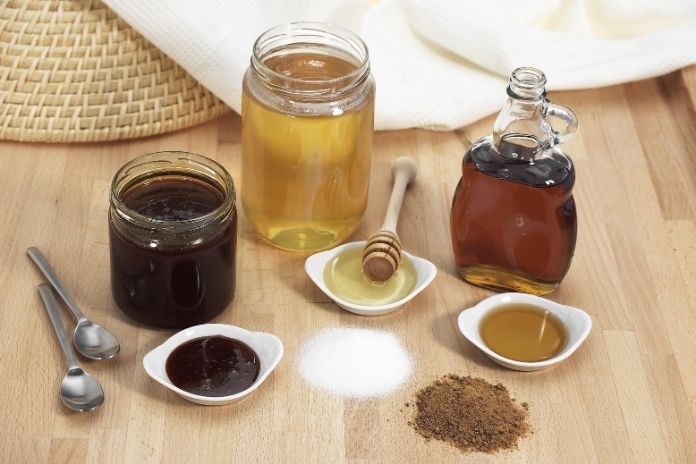
Honey and maple syrup are both considered natural sweeteners; their nutritional compositions differ significantly. We wanted to tell you everything there is to know about them!
Producers use the sap of maple trees to make pure maple syrup, and honey bees gather nectar from flowers to make honey. Although they are both sweet, sticky liquids with a similar viscosity and texture, they differ nutritionally.
Calories: Compared to maple syrup, honey has a few more calories. A serving of 30ml of honey has 130 calories, but a serving of the same amount of maple syrup has 110 calories. While there isn’t much of a difference, adding more of the two sweeteners in baking can increase calories.
Sugar Content: The two also differ in how much sugar they include. There are 13.5 grams of carbs in pure maple syrup. The complex sugar sucrose makes up the majority of 12.4 of those grams. In contrast, honey has around 17.4 grams of carbs, 17.3 of which are fructose. The glycemic index of maple syrup, a more complex sugar than honey, is 54 as opposed to 58 for honey.
Fat: Maple syrup contains a small amount of fat—approx 0.06g per 30ml—and honey is completely fat-free.
Minerals and Vitamins: Both honey and maple syrup contain minerals and vitamins. One of the reasons honey and maple syrup are considered “natural,” whole foods. Honey contains small amounts of Vitamin B6 and Vitamin C. Pure maple syrup contains a good amount of manganese and riboflavin.
Glycemic Index: Pure maple syrup has a glycemic index of 54, while honey has a glycemic index of 58. That means your blood sugar levels will rise more slowly after consuming maple syrup when compared to honey.
Read More: Raw Honey For Sore Throat – All You Need To Know
Health Benefits

Benefits of Honey: People have long valued honey for its uses beyond just sweetening. Honey bees perform complex tasks, including pollinating many flowers and other plants, to create raw honey. Honey is a natural sweetener with anti-microbial effects.
Honey contains the vitamins, minerals, and antioxidant compounds called flavonoids and polyphenols. Antioxidants reduce disease and cell damage by controlling levels of the harmful molecules known as free radicals. People have also used honey as a topical treatment to reduce pain and aid healing in wounds, bronchial asthma, and sore throats.
Research indicates that honey may have prebiotic benefits. Prebiotics are compounds that support gut health by sustaining good bacteria in your gut by encouraging diverse gut microbiota.
Honey is easier to digest than refined sugar, which has very little nutritional value. Thus, honey is a better choice because it is an unrefined sweetener that maintains its inherent benefits.
Benefits of Maple Syrup: Producers make maple syrup from the sap of the sugar maple tree (Acer saccharum). They boil the sap and evaporate the water, leaving behind concentrated sugars that form a thick, sweet syrup.
As far as natural sweeteners go, maple syrup has a relatively high concentration of polyphenols. These compounds have anti-inflammatory, antioxidant, and antidiabetic properties. Maple syrup also contains vitamins, minerals, and organic acids.
One organic acid in maple syrup is abscisic acid, which is a plant hormone and organic acid that may increase insulin sensitivity and maintain normal blood sugar levels. Maple syrup also contains phenolics, which are plant compounds that may help with diabetes regulation.
Culinary Uses & Best Practices
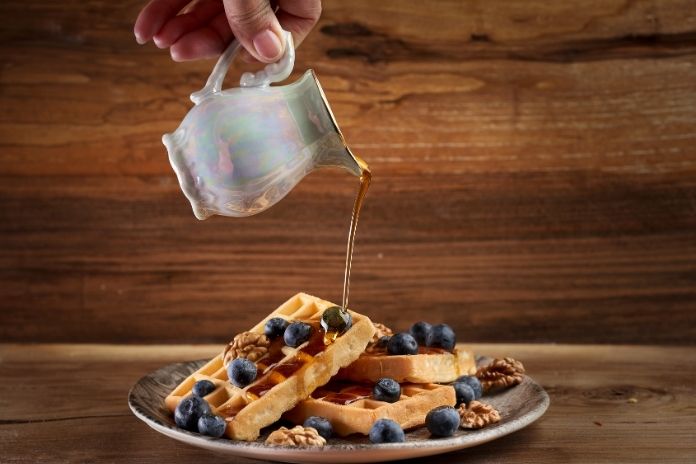
Maple syrup and honey taste different. Therefore, it is entirely up to you and your personal preferences to decide where and how to employ each. The texture of this sweetener may appeal to those who enjoy the earthy flavor of maple syrup. Others may favor honey’s richer structure and floral notes.
While maple syrup’s thinner consistency blends readily into baked goods, honey’s high viscosity makes it ideal for salad dressings and sauces, where it can adhere to other foods.
While raw honey can vary in texture due to changes in its sugar makeup, maple syrup has a smooth, thick viscosity. Honey can appear dense and crystallized or thin and syrupy, depending on the season or the flower that produces it.
The flavor of the maple syrup varies depending on the climate, time of year, and geographic location. Producers use grades to characterize the syrup’s depth of flavor and color. Grades can vary from dark and harsh with a burnt taste to relatively light and pleasant.
Because it comes from a variety of flowers and plants, honey has a similarly varied flavor. Its flavors range from floral and aromatic to sweet, reminiscent of caramel or molasses.
- Use it on waffles or pancakes.
- Make cottage cheese or plain yogurt sweet,
- Pour a sweet glaze on roasted veggies and salmon.
- Use in BBQ sauces, salad dressings, and with other condiments.
Read More: 5 Major Health Benefits of Raw Honey
Potential Concerns & Who Should Avoid
Although honey and maple syrup offer specific health benefits as natural sweeteners, people should use them sparingly because they are still high in sugar. Hazardous germs or pollutants may also be present in natural goods like honey and maple syrup.
Honey:
Because raw honey can contain the bacteria that cause botulism, Clostridium botulinum, it can put infants under one year old at risk for developing botulism. This dangerous bacterial infection assaults the nervous system. Your digestive tract is usually robust enough to defend against the potential levels of Clostridium botulinum in honey after the age of one.
In addition to having high fructose content, honey lacks other essential elements. While fructose is the main sugar found in fruits like apples, they also include substantial amounts of fiber, vitamins, minerals, and antioxidants.
Maple Syrup:
Although maple syrup contains a high concentration of health-promoting polyphenols, its benefits may be outweighed because it consists mainly of sugar and carbohydrates. Diets high in sugar and carbs can contribute to obesity, diabetes, and other health issues. Additionally, producers pass the sap through pipes that may leave residue, so that maple syrup can contain potential pollutants like heavy metals. Additionally, the sap may include potentially hazardous germs.
Which One Should You Choose?

Maple syrup promotes a more consistent insulin and blood sugar response. While honey is natural and contains some micronutrient content, its potential to spike blood sugar may give it an inferior option for people with diabetes.
Both are preferable to syrups or refined sugars, which have little nutritional value and dramatically raise blood sugar levels.
Deciding between honey and maple syrup will depend on your personal circumstances and lifestyle. If your goal is to decrease total calorie value while increasing mineral value, then maple syrup wins.
It has about half the sugar as honey in a tablespoon, with naturally occurring mineral values that can provide a meaningful portion of your diet intakes of essential minerals (zinc, riboflavin, manganese).
That said, honey is a natural go-to for coughs, sore throats, and possibly even mild seasonal allergy relief. It is a common home remedy due to its soothing and potentially antibacterial properties.
Read More: How Honey and Cinnamon Can Help You Lose Weight Naturally
Conclusion
Of course, honey and maple syrup have their place in your dietary lifestyle. You can add honey and also maple syrup to everything you eat, starting with your breakfast cereal and wrapping it up with your evening meat dishes.
Depending on your tastes and dietary goals, you may prefer one over the other, but honey isn’t “better” than maple syrup, nor is maple syrup “better” than honey.
Raw honey and maple syrup are minimally processed plant-based sweeteners that can replace refined sugars in several foods and drinks.
The key takeaways are that honey offers a natural source with a multitude of flavors, and maple syrup contains dextrin and minerals to support blood sugar management. Honey and maple syrup cannot be confused with the phrase “health food”. Both substances contain added sugars, so moderation applies to both.
Consider your dietary needs, tastes, and health goals when you are considering using honey or maple syrup as a sweetener.
References
- https://www.verywellfit.com/maple-syrup-vs-honey-which-is-healthier-5185546
- https://www.health.com/raw-honey-vs-maple-syrup-8757927
- https://health.usnews.com/wellness/food/articles/honey-vs-maple-syrup
- https://www.maplefromcanada.co.uk/maple-syrup-vs-honey/
- https://www.frontiersin.org/journals/nutrition/articles/10.3389/fnut.2022.957932/full
- https://hrs.osu.edu/faculty-and-staff/faculty-directory/weinandy-liz
- https://health.clevelandclinic.org/the-benefits-of-honey-how-to-incorporate-it-into-your-diet
- https://www.aarp.org/health/healthy-living/honey-health-benefits/
- https://foodstruct.com/nutrition-comparison-text/honey-vs-syrups-maple
- https://piorliving.com/honey-vs-maple-syrup-which-is-healthier-for-you/
- https://www.today.com/health/diet-fitness/maple-syrup-vs-honey-rcna205215
In this Article