











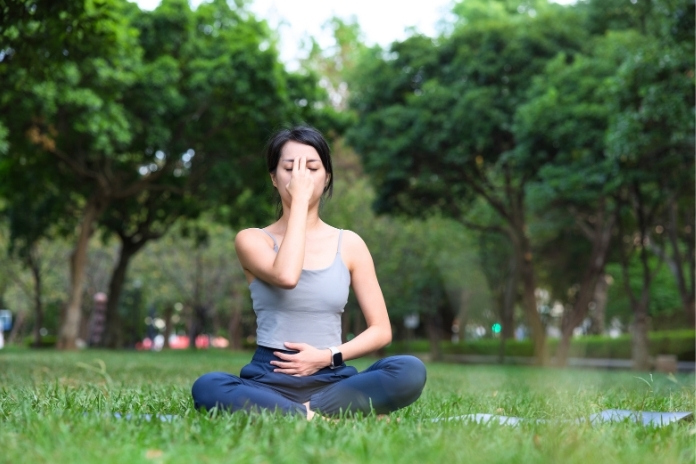
You promise yourself you’ll eat better today. But then work piles up, messages keep buzzing, and before you know it, you’re stress-eating. Eventually, you notice the extra weight seems to settle right around your stomach. This isn’t a failure of willpower; it’s a biological response.
Stress doesn’t just affect your mood; it affects your waistline. When stress is constant, cortisol levels rise, increasing cravings and encouraging fat storage around the abdomen. This is why stress eating and belly fat often go hand in hand.
Pranayama doesn’t directly burn fat, but it addresses the root cause: chronic stress. By calming the nervous system and lowering cortisol, controlled breathing helps reduce emotional eating and mindless snacking. Over time, this creates healthier eating patterns and a body that’s less primed to store stress-related fat.
In this guide, we’ll explore how pranayama works, which techniques are most effective, and how to practice them daily to support stress management and belly fat control.

Expert Choice: Best At-Home Yoga Studio
Experience over 2,400 world-class yoga classes from the comfort of your home. YogaDownload offers expert-led programs and flexible membership options for every fitness level.
*Purchases through this link support our research at no extra cost to you.
Why Belly Fat and Stress Eating Often Go Hand in Hand

If you’ve ever tried dieting while stressed, you know it feels like an uphill battle. The reason isn’t a lack of discipline; it’s biology.
Stress and belly fat are closely connected, and the way your body responds to stress can make fat loss significantly harder. Understanding this link helps explain why traditional dieting often fails under pressure.
The Stress–Belly Fat–Eating Cycle
Chronic stress triggers the body’s fight-or-flight response. In short bursts, this system helps us survive, but when it stays activated for prolonged periods, it creates problems. One of the main culprits is cortisol, the stress hormone. Elevated cortisol has several effects that interfere with weight management:
- Increases appetite: Stress makes your brain crave energy-dense foods.
- Raises blood sugar: Cortisol prompts your liver to release glucose, keeping energy available for immediate action, but when unused, it stores it as fat.
- Promotes abdominal fat storage: The belly is particularly sensitive because abdominal fat tissue has more cortisol receptors than fat in other areas.
This means that under chronic stress, not only does your body hold onto fat more stubbornly, but it also deposits it in the abdominal region, a hotspot for cortisol-driven fat accumulation.
How Stress Drives Emotional and Stress Eating
Stress doesn’t just affect fat distribution; it rewires how you eat. Under tension or pressure:
- Cravings spike, especially for sugary, high-carb, or ultra-palatable foods.
- Hunger and satiety signals become harder to interpret, leading to overeating.
- Impulse control weakens, making it easy to reach for quick comfort foods even when you’re not hungry.
Reviews of human research show that chronic stress generally promotes the wanting, seeking, and intake of palatable, high-fat, energy-dense foods. Stress affects hormonal and reward pathways (including cortisol and the HPA axis), which alter eating behavior and can contribute to weight gain.
Why Addressing Stress is Key
Until stress is managed, fat loss efforts are often stalled, no matter how strict your diet or exercise regimen is. Targeting stress isn’t just about feeling calmer; it has measurable effects on your hormones, appetite regulation, and fat metabolism.
Tools that actively calm the nervous system, such as pranayama, meditation, and mindful breathing, help interrupt this cycle. By lowering cortisol and improving mental clarity, they make it easier to make conscious eating choices and support fat loss over time.
Bottom line: Belly fat and stress eating aren’t simply bad habits; they’re the body’s response to prolonged stress. Addressing the root cause, not just the symptoms, is the smartest approach to sustainable weight management.
What Is Pranayama?

Pranayama is a fundamental practice in yoga that focuses on conscious, controlled breathing. The word comes from Sanskrit, where “prana” means life force or energy and “yama” means control or regulation; together, they signify the regulation of the vital breath. This isn’t just about taking a few deep breaths; it’s a disciplined practice designed to influence both mind and body.
Unlike casual breathing exercises, pranayama emphasizes:
- Awareness of breath rhythm: Paying attention to how air moves in and out of your body.
- Control over inhalation and exhalation: Extending or shortening breaths intentionally.
- Intentional pacing and patterns: Using structured techniques to regulate the nervous system and mental state.
This distinction is important because controlled breathing directly impacts stress physiology, hormonal balance, and emotional regulation. By mastering pranayama, you gain a tool to calm the mind, reduce cortisol levels, and influence how the body responds to stress, key factors in stress eating and abdominal fat accumulation.
Pranayama vs. General Deep Breathing
Not all breathing exercises are created equal. General deep breathing may help you relax temporarily, but it often lacks structure and intention. Pranayama, on the other hand, uses specific breathing techniques to actively shift the nervous system from a stressed, sympathetic-dominant state to a calmer, parasympathetic-dominant state.
According to the Cleveland Clinic, slow and controlled breathing can stimulate the parasympathetic nervous system, which governs rest, digestion, and emotional regulation. For individuals struggling with stress-driven eating, this system is often underactive, making it difficult to control cravings or resist impulsive snacking.
By integrating pranayama into daily routines, you’re not just slowing your breath; you’re training your body to respond to stress differently, improving digestion, hormonal balance, and overall mental clarity. Over time, these physiological shifts can help reduce the drive toward stress eating and support healthier fat distribution.
How Pranayama Affects Stress and Cortisol
To understand why pranayama is effective, it helps to look at the nervous system and how it responds to stress.
Parasympathetic Nervous System Activation
Chronic stress keeps the body in sympathetic dominance, commonly called the fight-or-flight state. This leads to elevated heart rate, heightened alertness, and increased cortisol production. Pranayama helps shift the body toward parasympathetic activation, the “rest-and-digest” mode.
When the parasympathetic system is engaged, it produces:
- Lower heart rate and blood pressure
- Reduced stress reactivity to daily challenges
- Improved emotional regulation and mental clarity
According to Harvard Health Publishing, slow, controlled breathing stimulates the vagus nerve, a critical pathway for calming the nervous system, reducing physiological stress markers, and improving resilience to emotional triggers.
Effects on Cortisol and Emotional Regulation
Cortisol, the primary stress hormone, plays a central role in abdominal fat accumulation and stress-driven eating. Multiple studies in Frontiers in Psychology and the International Journal of Yoga show that regular pranayama practice is linked with:
- Reduced cortisol levels
- Better mood stability
- Lower perceived stress
Dr. Herbert Benson, MD, cardiologist and founder of Harvard’s Mind Body Medical Institute, explains that controlled breathing helps elicit what he termed the “relaxation response,” a physiological state that directly counteracts the fight-or-flight stress response.
He noted that this response is marked by slower breathing, reduced heart rate, and decreased levels of stress hormones, effectively calming the nervous system and mitigating the harmful effects of chronic stress.
Why this matters: a calmer nervous system not only lowers the biological drive toward storing belly fat but also supports better decision-making around food. People practicing pranayama tend to experience fewer cravings, improved impulse control, and more mindful eating habits.
In short, pranayama doesn’t magically burn fat; it modulates the body’s stress response, making it easier to manage both emotional eating and abdominal fat accumulation over time.
Read More: Movement That Soothes: Exercises That Lower Cortisol Naturally
How Pranayama May Help With Stress Eating

Stress eating rarely stems from true hunger. Most often, it’s the result of nervous system dysregulation and emotional triggers. Pranayama helps by creating space between impulse and action.
Enhanced Body Awareness
One of the key benefits of pranayama is improved interoceptive awareness—the ability to sense what’s happening inside your body. Regular practice helps you:
- Notice emotional urges before acting on them
- Pause between impulse and action, allowing conscious choice
- Distinguish true physiological hunger from stress-driven cravings
Research in Mindfulness shows that breath-focused practices strengthen the brain’s impulse-control mechanisms and reduce emotional reactivity. Essentially, pranayama trains your nervous system to respond rather than react.
Emotional Regulation
Anxiety, irritability, and mental tension are major triggers for stress eating. Scientific studies indicate that slow, controlled breathing reduces sympathetic activity while boosting parasympathetic tone, directly influencing mood and reducing the physiological drive for comfort eating.
When stress is managed at its source, your nervous system, cravings, and emotional eating episodes lose their intensity, and your body can respond more appropriately to genuine hunger signals.
A Tool for Nervous System Regulation, Not a Diet Hack
It’s important to note that pranayama does not directly reduce caloric intake or burn fat. Its power lies in helping the body and mind regulate stress responses, which in turn makes healthier eating choices more accessible.
By calming the nervous system, improving interoception, and supporting emotional balance, pranayama gives you greater control over stress-related eating patterns.
In short, when stress is managed at its source, your nervous system, cravings lose their intensity, emotional eating episodes decrease, and your body can respond more appropriately to genuine hunger signals.
Expert Choice: Best At-Home Yoga Studio
Experience over 2,400 world-class yoga classes from the comfort of your home. YogaDownload offers expert-led programs and flexible membership options for every fitness level.
*Purchases through this link support our research at no extra cost to you.
Can Pranayama Help Reduce Belly Fat?
It’s important to set realistic expectations. Pranayama influences the body in ways that indirectly support belly fat reduction:
- Lowering stress hormones prevents cortisol-driven fat storage
- Improving sleep quality supports metabolism and hormonal balance
- Reducing emotional eating patterns makes healthier choices easier
- Supporting insulin sensitivity through stress reduction
According to the Mayo Clinic, stress management is a key factor in controlling central obesity, particularly when combined with proper nutrition and regular physical activity. Pranayama addresses root causes that make belly fat stubborn.
While pranayama is powerful, it is not a standalone weight-loss tool:
- It cannot spot-reduce belly fat or target a specific area of the body.
- It does not replace a calorie deficit created through diet and movement.
- It cannot override the effects of poor sleep, nutrition, or sedentary habits.
It works best as a supportive practice, complementing healthy lifestyle choices and enhancing the effectiveness of diet, exercise, and sleep.
Read More: 4 Breathing Techniques That Help Burn Fat and Control Appetite Naturally
Why Pranayama Works Best as Part of a Broader Approach

Belly fat and stress eating are influenced by multiple factors:
- Stress hormones: Chronic cortisol elevation encourages abdominal fat storage.
- Sleep quality: Poor sleep disrupts hormones that regulate appetite and metabolism.
- Insulin resistance: Elevated blood sugar and impaired insulin response can promote fat accumulation.
- Eating behaviors: Emotional and stress-driven eating often undermines dietary efforts.
Pranayama primarily addresses the stress and nervous system side of this equation. Calming the mind, reducing cortisol, and improving emotional regulation make other healthy habits, like balanced eating, quality sleep, and regular exercise, much easier to maintain.
This is why many people who feel “stuck” despite dieting notice meaningful progress only after integrating stress management into their routine.
Pranayama Techniques Often Linked to Stress and Weight Regulation
Here’s a high-level overview of breathing practices that influence stress and support healthier eating habits. This is informational, not a step-by-step guide.
- Slow Diaphragmatic Breathing: Encourages deep belly breathing, activates the vagus nerve, and shifts the nervous system toward parasympathetic dominance.
- Alternate-Nostril Breathing (Nadi Shodhana): Balances both hemispheres of the brain, reduces anxiety, and supports emotional regulation.
- Extended Exhalation Breathing: By lengthening the exhale relative to the inhale, this technique calms the nervous system and reduces physiological arousal.
According to Dr. Sat Bir Singh Khalsa, PhD, Assistant Professor of Medicine at Harvard Medical School, “Slow breathing techniques can help shift the autonomic nervous system from the sympathetic ‘fight or flight’ state to the parasympathetic ‘rest and digest’ state, reducing stress and helping individuals respond more thoughtfully to emotional triggers.”
How Often Do You Need to Practice to See Benefits?
The key is consistency over intensity. Short, regular sessions are far more effective than occasional long or strenuous practice.
Research indicates:
- Stress awareness improves within weeks of consistent practice.
- Eating behaviors gradually shift as emotional regulation strengthens.
- Physiological benefits accumulate over time, including lower cortisol and improved heart rate variability.
There’s no instant transformation. The benefits are subtle at first: reduced tension, calmer responses, and slightly better decision-making, but they compound over weeks and months, supporting a sustainable approach to stress, eating, and abdominal fat management.
Read More: 7 Breathwork Techniques to Calm Your Nervous System and Reset Your Mind
Who May Benefit Most From Pranayama

Pranayama is particularly effective for people who:
- Experience chronic stress: Those whose nervous systems are frequently in “fight-or-flight” mode.
- Struggle with emotional or stress eating: Individuals who eat in response to anxiety, boredom, or frustration rather than true hunger.
- Carry excess weight centrally: Belly fat often responds to stress hormones, making it a target for stress-focused interventions.
- Feel wired but tired: People who are mentally active but physically exhausted, struggling to relax or sleep well.
It’s especially useful for those who are disciplined with diet and exercise but still notice stubborn belly fat due to stress-driven patterns. In these cases, pranayama addresses a hidden factor that diet and movement alone may not fully solve.
When Pranayama Alone Is Not Enough
Breathwork is a supportive tool, not a cure-all. Certain conditions require professional guidance to ensure safety and effectiveness.
Consider medical or nutritional support if you experience:
- Persistent weight gain despite consistent lifestyle changes.
- Symptoms of insulin resistance, such as frequent hunger, fatigue, or high blood sugar.
- Hormonal imbalances that affect metabolism (thyroid, cortisol disorders, or polycystic ovary syndrome).
- Severe anxiety, depression, or eating disorders.
In these scenarios, pranayama should complement, not replace, professional care. It works best when integrated into a broader health strategy.
How to Combine Pranayama With Other Healthy Habits
Pranayama is most effective when paired with lifestyle practices that target the root causes of stress-related belly fat:
- Nutrition and Blood Sugar Balance: Eating balanced, consistent meals stabilizes glucose and reduces cortisol-driven cravings. Avoiding long gaps between meals helps prevent stress-induced snacking.
- Regular Movement: Exercise improves insulin sensitivity, supports metabolic health, and enhances stress resilience. Activities like strength training, walking, or yoga complement pranayama by addressing multiple physiological pathways.
- Sleep and Recovery: Adequate sleep regulates cortisol, aids fat metabolism, and improves appetite control. Breathwork before bed can support relaxation and higher-quality sleep.
Integration matters more than perfection. Small, consistent habits, combined with stress-focused practices like pranayama, outperform extreme routines. The key is creating a system where stress regulation, nutrition, movement, and rest all reinforce each other for sustainable results.
Final Takeaway
Belly fat and stress eating are closely linked through stress hormones, nervous system dysregulation, and emotional patterns. Chronic stress raises cortisol, increases appetite, and encourages fat storage around the abdomen. Emotional triggers can override normal hunger signals, making stress-driven eating feel automatic.
Pranayama works by calming the nervous system rather than burning calories. It helps reduce cortisol, improve emotional awareness, and create a pause between cravings and action. Over time, this makes it easier to make healthier food choices and resist stress-driven snacking.
Pranayama is most effective as part of a broader approach. When combined with balanced nutrition, regular movement, and sufficient sleep, it helps break the stress–eating cycle. Small, consistent practice compounds over time, building resilience and healthier habits.
Long-term results come from alignment, not extremes. Nutrition, exercise, rest, and mindful breathing work best together. Pranayama enhances these efforts by regulating stress, improving focus, and supporting sustainable changes.
The real transformation isn’t instant. It’s gradual, cumulative, and rooted in managing stress, building habits, and supporting your body’s natural rhythms.
References
- Kailash Healthcare. (n.d.). Indian diet blueprint: 7-day plan to beat belly fat & high sugar.
- Torres, S. J., & Nowson, C. A. (2007). Relationship between stress, eating behavior, and obesity. Nutrition, 23(11–12), 887–894.
- HealthyFood.com. (n.d.). Cortisol diet: Can you really eat to beat stress and belly fat?
- Baylor Scott & White Health. (n.d.). Cortisol & belly: How stress can impact your weight and what you can do about it.
- Apollo 24/7. (n.d.). Diet for menopause: How to reduce cortisol & belly fat.
- Oshi Health. (n.d.). Stress belly.
- Howard Health & Wellness. (n.d.). How high sugar diets fuel cortisol, belly fat, and fatigue.
- Johns Hopkins Medicine. (n.d.). Tips to manage stress eating.
- Shathayu Retreat. (n.d.). Stress-induced obesity.
- Nutrisense. (n.d.). Stress and weight gain.
- Khalsa, S. B. S., & Coauthors. (2020). Yoga and mindfulness as therapeutic interventions: Evidence and mechanisms. Frontiers in Psychiatry, 11, 467.
- Mayo Clinic. (2023). Stress basics.
- Laborde, S., Mosley, E., & Thayer, J. F. (2018). Heart rate variability and cardiac vagal tone in psychophysiological research: Recommendations for experiment planning, data analysis, and data reporting. Frontiers in Psychology, 9, 213.
- Guendelman, S., Medeiros, S., & Rampes, H. (2025). Mindfulness-based interventions for emotional eating: A systematic review. Mindfulness, 16, 1–17.
- Benson, H. (2010, November 10). Using the relaxation response to reduce stress. Harvard Health Publishing.
- Harvard Health Publishing. (n.d.). Try this: Take a tactical breather.
- Cleveland Clinic. (n.d.). 4‑7‑8 breathing: Relaxation technique.
- Epel, E., & colleagues. (2017). Stress, eating, and weight: Insights from psychoneuroendocrinology. PMC, 5373497.
In this Article