












Ever wonder why some people seem to effortlessly grow, change, and thrive, while others stay stuck in the same patterns for years? The difference isn’t luck or willpower. It’s the small, consistent habits that quietly reshape what they believe about themselves.
Big transformations don’t happen overnight. They come from tiny, intentional actions repeated until they become part of who you are. And that includes your core beliefs—those deep-seated ideas about who you are, what you can achieve, and what you deserve.
Here’s the good news: changing them doesn’t require hours of journaling or a week-long retreat. Just five to ten minutes a day can be enough to rewire your brain. Neuroscience shows that repeated experiences strengthen new neural pathways and fade old ones. Each small practice tells your brain, “This is the new normal.”
The secret is consistency, not intensity.
You’re not trying to force a massive shift overnight. You’re training your mind to think, feel, and act from a healthier, more empowered place. A simple daily routine, tracked in a planner or belief-challenge calendar, can make this journey visible and deeply rewarding.
In this article, we’ll share a few powerful daily exercises designed to help you transform your core beliefs and build the inner foundation for lasting change. Let’s get started.
Read More: Embracing Imperfection: The Beauty of Self-Acceptance and Authenticity
Morning Practice: New Belief Affirmation
The first few minutes of your waking state are when your mind is most receptive. Your mind is transferring from the subconscious, relaxed theta state of sleep to crisp wakefulness.
It is said that the first seven minutes after waking up are essential to set the tone of the day, due to increased neuroplasticity and emotional influence. That’s why one of the most potent daily core belief routines is a morning affirmation ritual, which directs your mind filter for the rest of the day.
How to do it:
- Sit or stand comfortably, breathe deeply, and vocalize your new belief.
- Anchor it with a single piece of evidence from the previous day.
- Make it brief; two or three minutes max.
For Example:
- Old belief: “I never follow through.”
- New belief: “I’m a person of my words.”
- Yesterday’s evidence: “I finished my walk even when I felt exhausted.”
By adding evidence to your core belief, you condition your brain to catch the difference between thought and action.
This provokes cognitive dissonance when your old belief rears its head later in the day. This is when your mind begins to choose the new, right belief.
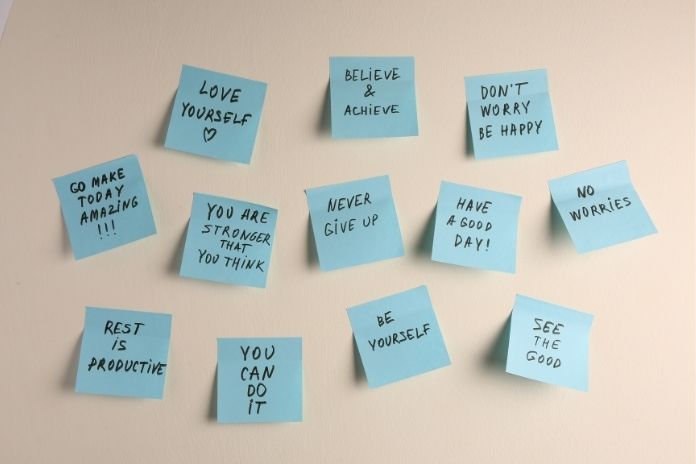
Pro Tip: Put your affirmation on a Post-it note near your mirror or bed. When you repeat it each morning, you’re not forcing positivity; instead, you’re reconditioning attention on what’s already real but often overlooked.
Mid-Day Practice: Belief Check-In

Old thinking has a way of sneaking back in during the busy middle of the day, when you’re not so alert. A belief check-in breaks the cycle by promoting awareness of what’s driving your emotions and decisions in the moment.
How to do it:
- Program a soft and gentle phone reminder at lunch or mid-afternoon.
- When it beeps, pause for one minute. Ask yourself:
- What am I believing about myself right now?
- Is this kind of thinking useful or limiting?
- What healthier alternative can I assume in place of this?
For example: You’re trying to contribute at a meeting and catch yourself going, “I’ll sound dumb.” Acknowledge it without judgment, and replace it with, “I have valuable thoughts, and sharing them helps the team.”
This break-in conditions your cognition. This is your ability to observe your own mind. Through cognitive restructuring techniques, the more you catch an old belief in the act, the less its grip on your behavior holds. Each check-in breaks the habitual link between belief and response.
The goal isn’t perfection. It’s noticing sooner, adapting faster, and bouncing back with compassion. That’s real cognitive change.
Evening Practice: Evidence Logging

Each night, your brain reviews the day and decides what to retain. Unfortunately, negativity bias ensures that we’ll recall more of what didn’t work than what did.
Quin’c’allen Jones, ACSW, Mental Health Program Director at Clear Recovery Center, shares that negative core beliefs can make you feel unworthy of having a good life.
He says, “At times, a constant inner dialogue is created full of negative thoughts, self-criticism, and a persistent sense of not being good enough. In turn, negative core beliefs contribute to negative emotions such as sadness, anxiety, anger, or shame, which can make it difficult to experience positive emotions.”
Evidence logging helps prevent this by consciously writing down evidence in support of your new belief.
How to do it:
- At night, write down three things in your day that contradict your old belief or support your new one.
- Keep it simple–these can be tiny victories or quiet affirmations.
- Take five minutes to reflect, not judge.
For Example:
- Old thought: “People don’t value me.”
- New thought: “I add value wherever I go.”
- Evidence: A colleague said thank you for my help, my friend asked for my opinion, and I made someone laugh today.
Why this matters: The act of recording positive evidence teaches your brain to notice it more often. Over time, your attention shifts naturally from self-criticism to self-recognition.
Weekly reflection: On Sundays, review your entries. You’ll likely find consistent themes that prove that your self-image is gradually shifting from doubt to self-trust.
Read More: Dopamine Hacks: 7 Strategies to Increase Your Motivation and Reward System
Weekly Practice: Belief Strength Rating

Belief change isn’t always visible, so having measurable feedback helps keep us motivated. A belief strength rating gives structure to your growth.
How to do it:
- Once a week, rate your old belief strength and new belief strength on a scale from 0–100.
- Record both in a notebook or on a spreadsheet.
- Notice the trends, and do not aim for perfection.
For Example:
- Week 1: “I’m not confident” = 90; “I’m growing in confidence” = 10.
- Week 4: Old core belief = 60; New core belief = 40.
- Week 8: Old core belief = 30; New core belief = 70.
Prepare for ups and downs. Old habits often resurface during periods of stress or fatigue. However, keeping track of your numbers allows you to see the overall trend, which is typically positive.
Why it works:
- Measure the inner change that results in externalized motivation.
- Seeing progress is sustained by plateaus.
- It makes the nonlinear transformation normal.
- Celebrate small wins. Any change in belief works quietly before it becomes apparent.
Belief-Aligned Action Practice

You can’t just think your way into new beliefs. You have to act your way into them. Taking small, consistent steps that align with your desired identity bridges the gap between intention and embodiment.
How to do it:
- Choose one small action each day that supports your new belief.
- Keep it realistic, measurable, and aligned with your life context.
Some Examples:
New belief: “I’m disciplined.”
Action: Stick to your daily walk even when you’re not feeling motivated.
New belief: “I’m worthy of love.”
Action: Accept a compliment without deflecting it.
New belief: “I’m resilient.”
Action: Try again after a small failure instead of giving up.
Behavioral psychology indicates that action validates belief through the self-perception theory: we determine who we are through what we do. If your behavior aligns with your new character, your brain will reset your inner dialogue to match.
Start with small steps and gradually make them more difficult. You’re not faking confidence. Ensure that you’re practicing it until it’s second nature.
Thought Interruption Practice
Even with good habits, unwanted old thoughts might show up. A thought interruption is a subtle method that trains your mind to switch quickly when that happens.
How to do it:
- The moment the limiting belief arises in your thoughts, say “Stop” or “Pause” to yourself.
- Slowly and firmly breathe.
- Replace the old belief with your desired new one.
- Get back to your task, bearing the new perspective in mind.
Example:
- Old belief: “I always mess things up.”
- Interrupt: “Stop.”
- I’m learning and improving each time.”
This exercise increases cognitive flexibility so that you can switch perspectives at will. Your default response softens and becomes self-soothing over time.
To make it more powerful, pair this with a body cue. It can be a deep breath, hand on heart, or finger pressing together. The body cue puts together the new belief both emotionally and cognitively.
Conclusion: Progress Over Perfection
Shifting your underlying beliefs isn’t about fixing yourself; it’s about finding the you that was always capable, worthy, and strong. Start with tiny steps. Choose a couple of practices that work for your speed and increase gradually.
There will be some days when you forget or don’t show up to do the work. That’s fine. What matters is that you return. With every repeat, no matter how small, you create a new neurological pathway and move one step closer to the thinking you want.
Deep transformation isn’t about intensity; it’s about regularly showing up with self-compassion. Monitor your growth, observe the gradual shifts, and honor progress, not perfection.
Change is not that sudden burst of insight and revelation; it happens in the mundane, everyday choices you make about what to believe, how to respond to yourself, and what to tune into. Start today, calculate your wins, and let consistency, rather than intensity, be your greatest strength.
References
- https://smowl.net/en/blog/cognitive-flexibility/
- https://thedecisionlab.com/reference-guide/psychology/self-perception-theory
- https://www.psychologytoday.com/us/blog/yes-you-can/202103/why-we-fall-back-into-old-habits-when-were-tired-or-stressed
- https://www.linkedin.com/pulse/limiting-self-beliefs-gino-demaio-7cxpe
- https://thebetteryouinstitute.com/negative-bias-overcome-negative-thinking/
In this Article