












Reaching your 40s is a turning point for the way that your body adapts to movement, exercise, and recovery. Metabolism decreases on its own, lean muscle mass reduces, and joints are less forgiving. Even if you’ve been exercising for decades, the habits that worked for you in your 20s and 30s might no longer be sustainable.
Workouts that once energized you can now leave you sore for days, and activities that seemed effortless, like carrying groceries upstairs or recovering quickly after a long run, need more and more effort.
This change means we must reconsider fitness in terms of longevity and function. Functional fitness is about the type of strength, mobility, and balance you require not only to appear fit but to live on your own, prevent injuries, and age well.
By performing exercises that are similar to natural movements, you create the physical toughness to prosper in your 40s, 50s, and beyond. In this article, let us understand how we can work towards being a fitter person even after 40.
Why Functional Fitness Matters After 40

Here’s why functional fitness is important to maintain after 40:
- Preserves muscle and strength to counteract age-related decline
- Improves mobility and flexibility, making daily activities easier
- Promotes brain health and coordination through movement
- Reduces the risk of chronic conditions like diabetes, heart disease, and osteoporosis
- Builds endurance, balance, and stability.
What Changes in Your Body After 40?
After 40, the body undergoes predictable changes and shifts that make functional fitness all the more important:
- Sarcopenia: Sarcopenia is when you face muscle loss after age 40. Adults lose 3–5% of muscle mass every decade past midlife, and strength reduces even more quickly. This makes things like climbing stairs, carrying boxes, or even getting up from the floor more difficult over time. If left untreated, sarcopenia is a leading cause of frailty in old age.
- Bone Density Loss: Women are particularly at greater risk after menopause, but both genders lose minerals from bones. Reduced bone density increases the risk of fracture and may result in osteoporosis if not addressed.
- Joint Stiffness:Stiffness of joints and reduced recovery time are other challenges once you hit 40. As the cartilage is reduced and synovial fluid diminishes, joints become stiffer. Recovery from exercise or injury is also slow due to hormonal changes and fewer cellular repair processes.
- Hormonal and Metabolic Changes: Reduced testosterone and estrogen levels lead to weight gain, declining energy, and decreased metabolism. Insulin sensitivity also tends to decrease, allowing it to be easier to gain weight around the belly.
Dr. Vonda Wright is a double-board-certified orthopedic surgeon in Florida who helps famous athletes, including Olympians and World Rugby Sevens players, to make their performance better.
“About 12% of US adults older than 50 have osteoporosis, and 43% have low bone mass, a precursor to osteoporosis, according to the National Center for Health Statistics. But exercising greatly decreases the risk,” Wright said. “Musculoskeletal aging and healthy aging are a lifelong pursuit,” she said. “Just show up every day for yourself.” She added that “70% to 80% of how we age is due to lifestyle choices.”
The combination of these changes highlights why exercise for healthy aging needs to be purposeful. Disregarding them hastens deterioration, but the proper fitness strategy preserves independence, vibrancy, and a good quality of life.
Read More: Shed Pounds Fast: 6 Effective Workouts You Can Do at Home
What Is Functional Fitness (and Why It’s Different)?
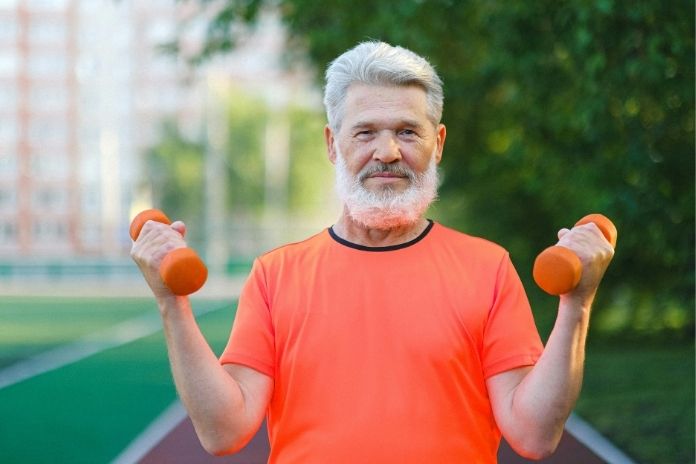
Functional fitness is more than a recent phenomenon. It’s a training philosophy that gets your body ready for the challenges of everyday life. Unlike training that’s solely for aesthetics (such as building a six-pack) or high-performance athletics (such as completing a marathon), functional fitness is about strength and mobility in the real world.
It’s focused on movement patterns you do daily:
- Push and Pull: Opening heavy doors, lifting laundry baskets, or tugging a suitcase.
- Hinge: Stooping down to retrieve something without injuring your back.
- Squat: Sitting and standing, picking things up from the floor.
- Rotate: Turning to reach something from behind the seat of your car.
- Carry: Cradling groceries, bags, or even kids securely.
When you train these patterns, you do more than build muscle. These help you build balance, coordination, and toughness. That leads to fewer injuries, greater independence, and the ability to remain active for years to come.
For people over 40, functional fitness is all about adjusting training intensity to current recovery ability. We must do this while creating the type of strength and mobility that promotes longevity.
Core Pillars of Functional Fitness Over 40
Here are a few significant pillars of functional fitness over 40:
Strength Training After 40:

Strength training is the foundation of functional fitness. It directly counteracts sarcopenia, supports bone health, and promotes metabolic well-being. Strength training two to three times a week has been shown through research, as per research, that adults who strength train not only retain muscle mass but also gain strength well into their 70s and 80s. This makes strength training after 40 an absolute necessary if one wishes to age healthily.
Best practices:
- Add compound exercises such as squats, deadlifts, push-ups, and rows.
- Try and use resistance bands, dumbbells, barbells, or even bodyweight. Remember, progress over the tool is what counts.
- Focus on working major muscle groups two times per week with moderate to heavy weights.
- Prioritize form above all else, and then gradually increase resistance.
The benefits extend beyond the muscle. Strength training maintains bone mineral density, ranking it among the strongest factors against osteoporosis. It also increases resting metabolic rate and slowing weight gain that is typical of midlife.
Mobility Exercises for Aging:
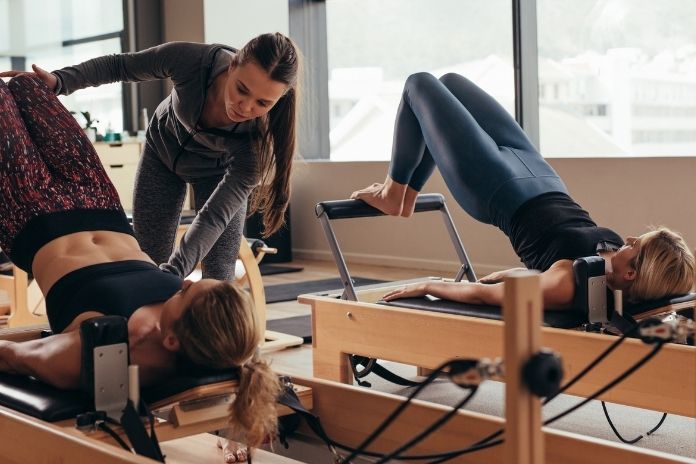
Mobility is the capacity to move the joints through their entire range of motion with control. It usually declines as we grow old, until suddenly it becomes impossible to squat low or twist easily. Mobility exercises for older adults are necessary to lubricate the joints, make connective tissues strong, and keep muscles flexible.
Best practices:
- Start exercises with dynamic stretches like leg swings, arm circles, and hip openers.
- Include yoga or Pilates once or twice a week to improve flexibility and mind-body awareness.
- Apply mobility drills that focus on trouble spots such as the hips, shoulders, and thoracic spine.
- Stretch major muscle groups following workouts when the body is warm.
Regular mobility training reduces stiffness, enhances posture, and prevents injury so you can move with freedom both in workouts and in daily activities.
Read More: 10 Best Fitness Gadgets of 2025 That Actually Work
Balance and Stability:
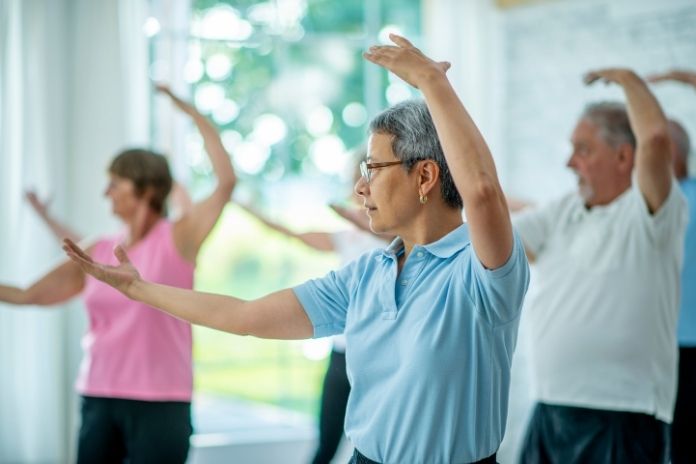
Falls are a major source of injury among older adults, and balance will deteriorate sooner than most of us know. Balance training after the age of 40 tightens the small stabilizing muscles, refines proprioception (your body’s position sense), and reduces the risk of a fall.
Best practices:
- Stand on one leg for 30 seconds at a time.
- Add a few lunges, single-leg deadlifts, or split squats into your workout.
- Use equipment such as a stability ball, Bosu trainer, or even an uneven surface to test coordination.
- Try tai chi or yoga, both of which focus on stability and awareness.
Both of these exercises promote balance as well as trust in moving, which prevents hesitation that so often leads to tipping.
Cardiovascular Endurance:

Though strength and mobility are important, strength training sharpens your heart, lungs, and brain. A decline in cardiovascular health depends highly on age and can be corrected with aerobic training.
Best practices:
- Make sure to add at least 150 minutes of moderate aerobic exercise to your weekly routine, including brisk walking, cycling, or swimming.
- Add short periods of interval training for effectiveness. You can try switching between varying between fast and normal walking.
- Select joint-friendly activities if you have stiffness or pain, for example, rowing or elliptical training.
- Strength training maintains blood pressure balance, insulin sensitivity, and brain functioning, and thus it is a must in any exercise regimen for a long life.
Sample Functional Fitness Routine for 40+
Here’s the best way you incorporate all the above in your daily exercise routine.
Warm-up (5 minutes):
- Dynamic stretching (leg swings, arm circles, hip circles).
- Light cardio, such as marching in place or light jogging, to raise the heart rate.
- Main circuit (repeat 2–3 times)
- 10 squats (strength + mobility)
- 30-second plank (core stability)
- 10 push-ups (upper body strength)
- 10 lunges each leg (mobility + balance)
- 1-minute brisk walk or jog in place (cardio)
Cool-down (5 minutes):
- Light static stretches for hips, hamstrings, and shoulders.
- Deep breathing or mindfulness to aid recovery.
- If push-ups are challenging, do them on an incline against the countertop or a wall. If lunges are hard on the knees, replace them with step-ups.
- Incorporate resistance bands, light dumbbells, or additional circuit rounds as you increase capacity.
This format is effective, safe, and versatile. It is perfect for adults aged 40+ who wish to have strength, endurance, and joint-friendly motion without sacrificing hours at the gym.
Read More: Hobby-Based Movement: Turning Everyday Activities into Fitness Opportunities
How to Stay Fit After 40: Practical Tips
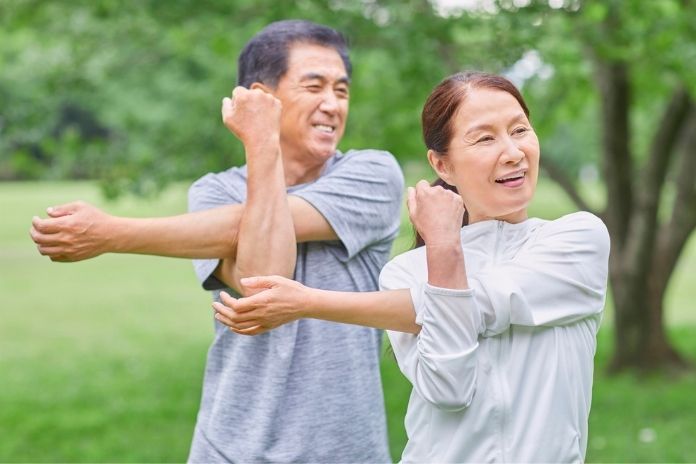
Staying fit after 40 is not difficult. All you need to do is focus on consistency rather than intensity. Working regularly is better than sporadic periods of intense work.
- Recover intelligently. Rest, hydration, and nutrition become increasingly more important as recovery slows with age. Treat rest days with importance.
- Don’t neglect protein. Adults 40 and older tend to require higher levels of dietary protein to aid in muscle repair. Set a goal for 20–30 grams per meal.
- Listen to your body. Leran to distinction between normal workout discomfort and pain indicating injury.
- Make it fun. Select something you enjoy, be it weight lifting, yoga, trail hiking, or dancing, so you will be consistent.
Why Functional Fitness Is the Best Anti-Aging Workout Routine
While alone, it may be better than isolated bodybuilding or perpetual cardio, functional fitness is a complete approach. It combines flexibility and strength training, balance training for mature adults, and endurance work into a single routine or workout that targets the body as a system. This makes it the best anti-aging exercise program, not by turning back the clock, but by achieving the highest quality in the years to come.
Research indicates that adults who combine resistance, mobility, balance, and endurance training help with slower biological aging, greater independence, and lower risk for chronic disease. Functional fitness isn’t running from old age; it’s preparing for life in the decades to come.
Conclusion
Past 40, it’s not as much about vanity as vitality. The correct strategy saves muscle, keeps joints loose, maintains balance, and heart and brain health. By prioritizing functional fitness after 40, you get your body ready not only to exercise in the gym but to function in everyday life.
It’s never too late to start. Whether you’re new to exercise or returning after years away, functional training can be scaled to any level. Commit to strength training after 40, integrate mobility exercises for aging, sharpen your balance, and protect your heart with endurance work.
The reward isn’t just a healthier body. It’s the freedom to move, live, and age on your own terms.
References
In this Article