














If you’re chasing that post-workout burn, the kind that keeps your heart pounding and your muscles humming hours after you’ve stopped, you’re probably torn between two heavy-hitters: HIIT (High-Intensity Interval Training) and MetCon (Metabolic Conditioning).
Both come with big promises: full-body engagement, short but brutal sessions, maximum effort, and a calorie inferno that doesn’t quit when the clock does. But here’s the catch: they’re often used interchangeably, even though they’re built differently. And depending on your goals, one might serve you better than the other.
So which one actually burns more calories? Which has the stronger afterburn effect (EPOC)? Which leads to better fat loss? And what kind of workout structure should you follow to get the results you want?
This guide cuts through the noise. We’ll break down the science, compare calorie burn and metabolic impact, unpack the physiological benefits, and give you sample workouts for both styles. Whether you’re aiming to shred fat, boost endurance, or squeeze in the most effective workout in the least amount of time, you’ll walk away knowing exactly where to start.
What Is HIIT (High-Intensity Interval Training)?

HIIT, or High-Intensity Interval Training, is exactly what it sounds like: short, explosive bursts of effort followed by quick recovery phases. It’s fast. It’s intense. And when done right, it leaves your heart pounding, your muscles shaking, and your metabolism revved for hours.
At its core, HIIT is about alternating between near-maximal effort and brief rest or active recovery. These intervals are designed to push your body well beyond its comfort zone, then let it partially recover before doing it all over again.
Format Example:
- 30 seconds of all-out sprinting.
- 60 seconds of walking or slow jogging.
- Repeat for 15–25 minutes.
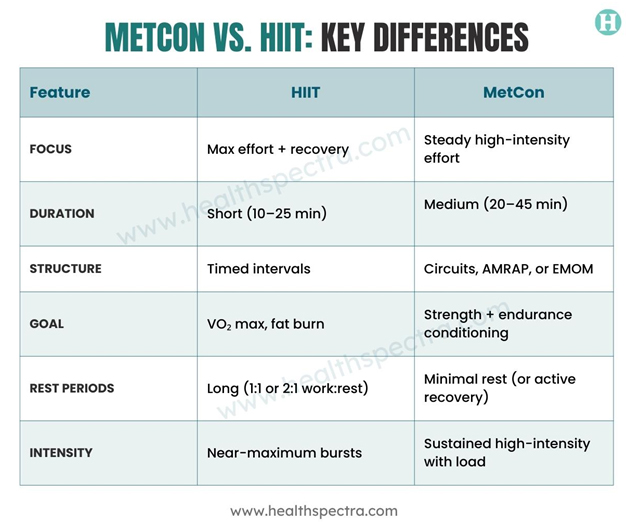
That might sound simple, but don’t be fooled, the key is intensity. You should be working at 80–95% of your max effort during those work intervals. This format trains your heart, lungs, and muscles to perform under stress, recover quickly, and repeat, which mimics the demands of many real-world and athletic situations.
Why HIIT Works
What makes HIIT so effective is how it targets both aerobic and anaerobic systems. You’re not just building endurance, you’re training your body to recover faster, burn fat more efficiently, and increase your VO₂ max (the max amount of oxygen your body can use during intense exercise).
But perhaps the biggest draw? The afterburn effect, or EPOC (Excess Post-Exercise Oxygen Consumption). Your body continues to burn calories for hours after the session ends as it works to restore oxygen levels, remove metabolic waste, and repair tissues. This makes HIIT especially powerful for fat loss, even with shorter sessions.
Backed by Research
A 2024 systematic review showed that overweight/obese women doing three HIIT sessions per week experienced roughly a 20 % improvement in insulin sensitivity within 10 weeks.
Another study on type 2 diabetes management highlights that HIIT promotes rapid enhancements in skeletal muscle oxidative capacity, insulin sensitivity, and glycemic control.
A 2025 meta-analysis for combat sport athletes confirmed that HIIT effectively enhances both aerobic and anaerobic performance, including peak and mean power output.
Typical Duration: 10–25 minutes (excluding warm-up and cool-down)
Primary Focus:
- Cardiovascular endurance
- Fat burn
- Speed and power output
Whether you’re sprinting, cycling, jumping, or rowing, if you’re going all-in, backing off, and repeating, you’re doing HIIT. It’s intense, efficient, and brutally effective when executed with intent.
Read More: HIIT vs. Endurance Training: Choosing the Best for Your Fitness Goals
What Is MetCon (Metabolic Conditioning)?
MetCon, short for Metabolic Conditioning, is a training method designed to push your body’s energy systems to the limit by combining cardio, strength, and endurance into one continuous, full-body workout. Think of it as organized chaos, high volume, minimal rest, and movements that test both your lungs and your muscles.
Unlike HIIT, which typically follows strict work-to-rest intervals focused on max effort, MetCon workouts are more fluid. They’re often built as circuits, blending multiple compound exercises back-to-back with minimal rest, challenging your strength, stamina, and grit all at once.
Format Example:
- 3 rounds of 5–6 exercises
- 15 reps each
- Minimal rest between moves
A single session might look like this:
Kettlebell swings, Jump squats, Push-ups, Dumbbell thrusters, Mountain climbers, and 200m sprint. Repeat. Sweat. Survive.
The point? Keep your heart rate elevated, muscles under tension, and lungs working hard, with consistent effort across a longer time frame.
Why MetCon Works
MetCon targets multiple energy systems, especially the phosphagen (short, explosive energy) and glycolytic (medium-duration, high-intensity) pathways. This means you’re building not just cardiovascular endurance, but also muscular stamina and overall work capacity.
Where HIIT peaks and recovers, MetCon maintains intensity over a longer duration. It’s less about max-effort spikes and more about sustained, full-body fatigue, the kind that builds grit and long-term conditioning.
Backed by Research
A Study in the Journal of Sports Science & Medicine – Feito et al. (2018) examined High-Intensity Functional Training (HIFT) over 16 weeks and found significant improvements in strength, metabolic conditioning performance, and body composition.
A Study in Frontiers in Physiology – Curovic et al. (2025) showed that high-volume, low-rest resistance work increases muscular endurance and triggers beneficial metabolic adaptations through local metabolic stress.
Typical Duration: 20–45 minutes
Primary Focus:
- Full-body performance
- Muscular endurance
- Cardiovascular conditioning
- Strength under fatigue
If HIIT is a sprint, MetCon is a grind. It doesn’t let up; it tests your limits through volume, variety, and pace. Ideal for anyone looking to boost total-body fitness, burn serious calories, and train with intensity over time.
 Which Burns More Calories?
Let’s get to the heart of the debate: which one burns more calories?
In the Short Term (Per Session):
- MetCon often burns 400–600+ calories in 30–45 minutes, depending on body weight and effort level. The longer duration and compound movement patterns allow for sustained calorie expenditure.
- HIIT, while shorter, can still burn 250–400 calories in a 15–25 minute session. Shorter doesn’t mean less effective; it’s just more condensed.
According to a study in the Journal of Strength and Conditioning Research, energy expenditure during MetCon was higher than HIIT when measured minute-for-minute over sessions of equal intensity [Journal of Strength and Conditioning Research].
However, MetCon burns more total calories per session because it usually lasts longer.
EPOC (Afterburn Effect):
EPOC, excess post-exercise oxygen consumption, is your body’s way of restoring itself after intense activity. The higher the intensity, the more oxygen your body needs after you stop working out, which translates into additional calorie burn.
After working out at a high intensity, your body needs to take in oxygen at a higher rate than it did pre-exercise so it can cool down, repair itself, and return to its resting state. “This requires the body and metabolism to work at a higher rate, so it continues to burn calories,” Cris Dobrosielski explains. The exact amount will vary for each person, but research from ACE notes that EPOC can increase calorie burn by six to 15 percent.
- HIIT is famous for its high EPOC effect. Even 20 minutes of true HIIT can spike metabolism for up to 24 hours.
- MetCon can also trigger significant EPOC, especially when it includes heavy lifts and minimal rest. The larger volume and longer time-under-tension add cumulative stress to the body, extending calorie burn post-workout.
Bottom line? HIIT might edge out MetCon slightly in terms of afterburn, but MetCon can catch up, or even surpass, when session length and intensity are pushed hard enough.
Which Format Is Better for Fat Loss?
Here’s the thing: fat loss isn’t just about burning the most calories in a session. It’s about what you can do consistently, how your body responds, and how well it fits into your lifestyle. But let’s break down how HIIT and MetCon each stack up when the goal is fat loss.
HIIT: Compact Power
- Time-efficient: You get a lot done in very little time, making it perfect for tight schedules.
- Boosts EPOC: The “afterburn” effect keeps your metabolism elevated post-workout.
- Improves insulin sensitivity: Helps your body handle carbs better, which can indirectly aid fat loss.
- Minimal equipment needed: Bodyweight HIIT can be done anywhere, no excuses.
Fat Loss Impact: Studies (like the Sports Medicine Review) show HIIT reduces fat mass and waist circumference, especially in overweight individuals. It’s particularly effective when paired with a calorie-controlled diet and performed 3–5 times a week.
Read More: The Science Behind LISS vs. HIIT: Which Workout Is Best for Your Goals?
MetCon: Total-Body Burn
- Longer duration = higher total burn: You’re moving for 30–45 minutes at a challenging pace.
- Multi-system engagement: Taps into aerobic and anaerobic zones, which increases metabolic demand.
- Compound movements = more muscles worked: This drives up total caloric expenditure.
- Builds strength and muscular endurance: Which boosts your resting metabolic rate over time.
Fat Loss Impact: Because MetCon often involves lifting, sprinting, and jumping in a single session, it leads to significant energy output, and if you’re fueling wisely and recovering well, this format supports long-term fat loss and muscle retention.
So, Which One’s Better?
It depends on your goals and preferences:
- Pressed for time or new to training? HIIT’s your go-to.
- Crave variety, intensity, and strength gains? MetCon brings more firepower.
- Want a hybrid? Alternate both throughout the week, HIIT on weekdays, MetCon on weekends.
Bottom Line: Both can help burn fat, just in different ways. HIIT hits hard and fast. MetCon builds total-body capacity and sustains fat loss in the long term. The best format is the one you’ll actually do, consistently.
Which Should You Choose?

No single format is objectively “better”; it all depends on your goals, schedule, and fitness level.
Choose HIIT If:
- You have 10–20 minutes to work out.
- You want fast, intense bursts.
- You’re training without access to weights.
- Your primary focus is endurance, VO₂ max, or quick fat burn.
Choose MetCon If:
- You enjoy circuit-style, compound movements.
- You want strength + cardio in one.
- You can dedicate 30–45 minutes per session.
- You want well-rounded conditioning that transfers to real-life strength and stamina.
In fact, both methods can be combined in a weekly program, HIIT 2–3x/week, MetCon 2–3x/week, for maximal results without burnout.
Common Mistakes That Kill Your Burn
Here’s the thing: just because a workout feels hard doesn’t mean it’s effective. A lot of people unknowingly sabotage their own progress by misapplying HIIT or MetCon principles. So if you’re putting in the sweat but not seeing results, it might be one of these:
- Confusing HIIT with random circuit training.
HIIT is about short bursts of maximum effort followed by controlled rest. Jogging lightly between burpees isn’t HIIT, it’s cardio. If you can hold a conversation during the “work” phase, you’re not hitting that intensity sweet spot.
- Taking too much rest during MetCon.
MetCon isn’t meant to be comfortable. It’s designed to push your threshold across multiple energy systems. Resting too long between exercises breaks the flow and kills the metabolic stress you’re supposed to be building.
- Ignoring proper form.
When you’re gassed, it’s easy to get sloppy. But bad form doesn’t just risk injury, it reduces muscle engagement and limits the workout’s effectiveness. You’re better off slowing down than powering through with garbage reps.
- Skipping warm-ups and cooldowns.
Jumping into HIIT cold is asking for a pulled muscle. And finishing a MetCon without bringing your heart rate down? That’s a recipe for dizziness or burnout. Respect the prep and recovery; they make your workouts more sustainable.
- Doing both HIIT and MetCon back-to-back, every day.
More isn’t better. Recovery is when your body actually gets stronger. Without enough rest, your performance dips, and your progress stalls. Build in off days or lighter sessions.
Nail the basics, stay consistent, and don’t just “go hard”, go smart.
Sample Full-Body Workouts

To understand how these two formats feel in real time, here are two full-body sample workouts.
MetCon Sample (30 Minutes)
- 15 goblet squats (moderate weight)
- 10 push-ups
- 15 kettlebell swings
- 20 alternating jump lunges
- 20 mountain climbers
Optional Finisher: 400m run or 1-minute high knees
This workout keeps your heart rate elevated while building muscular endurance.
HIIT Sample (20 Minutes)
- Sprint (treadmill or ground)
- Burpees
- Jump squats
- Plank to push-up
- Jump rope
Cool down: 3–5 minutes walking + stretching
This format focuses on explosive movement and short bursts that trigger EPOC.
Read More: Thursday Thrill: High-Intensity Cardio Circuit
Final Thoughts
When you put HIIT and MetCon side by side, it’s not about which one is “better.” It’s about what fits your goals, your time, and your ability to stay consistent. That’s the real driver of fat loss and fitness progress.
HIIT is designed for intensity. You’re in, you go hard, and you’re done, all in under 30 minutes. It’s ideal for people with tight schedules or those who want to spike their heart rate and burn calories fast. Plus, its afterburn effect means your body keeps burning long after the workout ends. It’s efficient, demanding, and easy to adapt without equipment.
MetCon, on the other hand, is a full-spectrum workout. It challenges your strength, stamina, and endurance in a single session. You’ll engage more muscle groups, move through compound lifts and functional exercises, and stay in motion longer. This means a higher overall energy burn, improved muscular endurance, and a deeper impact on both aerobic and anaerobic systems. If you’ve got more time and want a well-rounded performance boost, MetCon delivers.
The truth? You can’t go wrong with either, as long as you’re consistent. That’s what really changes your body composition. Not one-off workouts, not chasing the trendiest routine, but showing up, staying focused, and giving your best effort every time.
So whether you’re sprinting through HIIT intervals or powering through a MetCon circuit, make it count. Your workout doesn’t need to be perfect. It just needs to happen. The results will follow.
References
- https://nutritionsource.hsph.harvard.edu/high-intensity-interval-training/
- https://www.webmd.com/fitness-exercise/high-intensity-interval-training-hiit
- https://en.wikipedia.org/wiki/High-intensity_interval_training
https://health.clevelandclinic.org/think-you-cant-do-high-intensity-interval-training-think-again - https://www.physio-pedia.com/High_Intensity_Interval_Training
- https://www.medicalnewstoday.com/articles/327474
- https://www.nike.com/in/a/what-is-hiit-workout
- http://www.webmd.com/fitness-exercise/what-is-metabolic-conditioning
- https://www.onepeloton.com/en-AU/blog/metabolic-conditioning
- https://www.nike.com/in/a/what-is-a-metcon-workout
- https://www.acefitness.org/about-ace/press-room/in-the-news/8504/what-is-metabolic-conditioning-and-should-i-add-it-to-my-training-runner-s-world
- https://www.womenshealthmag.com/fitness/a19982446/metcon-workouts-metabolic-conditioning/
In this Article