














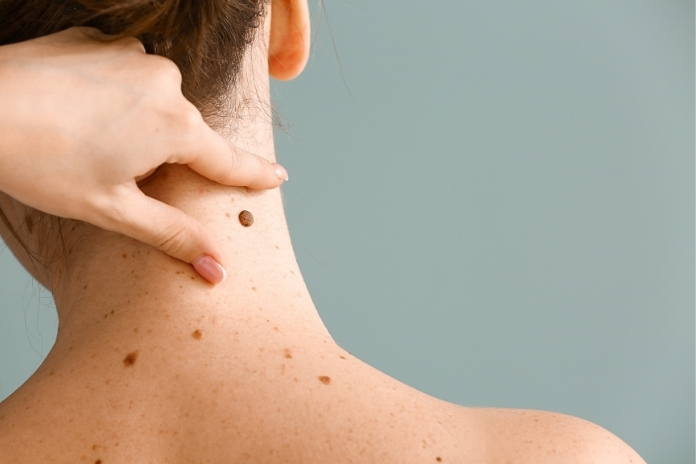
Moles are harmless. Right? We all have them, and they are pretty much of no significance, unless we need to fill an ‘identification marks’ column anywhere. However, moles on certain parts of the body, or moles of a specific type, can mean so much more than that. Let us take a closer look at all the details and understand the moles better.
Moles, or melanocytic nevi, are small groups of skin cells that produce melanin, the pigment. Moles are very common and harmless in most individuals. Everyone has between 10 and 40 moles all over their skin, especially on sun-exposed areas. They are flat or raised very slightly, light brown to dark brown, and they remain the same for many years.
However, moles are not always benign. While most are harmless for a lifetime, others experience changes that mark the beginning of the development of melanoma, a dangerous and at times lethal skin cancer.
Melanoma occurs when melanocytes multiply without control and infiltrate the surrounding tissue. The earlier melanoma is detected, the higher the chance of complete recovery, and therefore, being alert and checking skin frequently is essential.
Dermatologists globally suggest the ABCDE rule. This rule is a simple way to recognize moles and skin lesions. Each letter represents a significant feature: Asymmetry, Irregular border, Color variation, Diameter more than 6 millimeters, and Evolution or change.
Besides the ABCDE features, other symptoms like pain, itching, bleeding, and new moles in adulthood also indicate the need for medical treatment. In this article, we’ll explore the ABCDE rule to better understand whether the moles on our skin require special medical attention.
Read More: How to Identify Cancerous Moles: Signs You Shouldn’t Ignore
1. Asymmetrical Moles (“A” in ABCDE)

A healthy mole will be symmetrical. That is, if you draw a line in the middle, both sides would be the same, both in terms of shape and size. Asymmetry occurs when one side of the mole does not resemble the other. This is because abnormal melanocytes form in an irregular, haphazard way.
Asymmetry is the initial sign of potential melanoma in the future. Mole cancer becomes asymmetrical when cells develop abnormally, so one side bulges, spreads or looks different more than the other. These changes might be subtle initially, but a slight asymmetry is significant.
When you check yourself, look for moles in which the two halves are not identical in shape, thickness, or color. If a mole is irregular or not even, it must be examined by a dermatologist right away. Asymmetry by itself is not always proof that cancer is present, but it is a good reason for suspicion, especially when combined with other warning signs.
2. Moles with Irregular Borders (“B” in ABCDE)

The borders of a normal mole are usually even, smooth, and sharp. However, an irregular border mole may have zag borders, in short, asymmetrical. These are irregular, due to the melanocytes growing beyond their original site into surrounding skin tissue in an uncontrolled way.
Border irregularity is an important diagnostic feature since benign moles will typically be sharply defined, whereas malignant cells have a tendency to invade surrounding skin. Such blurred or jagged borders make the mole seem like it is “spilling” into surrounding skin.
When you check your moles, examine the edges for fuzziness, irregularity, or indentations. Well-defined edges on moles are less likely to be problematic, but any change in edge shape should be taken into consideration. Your dermatologist is able to examine these changes more clearly with a dermatoscope, a medical magnifying glass.
Read More: Sun Safety Tips: Protecting Skin Health to Prevent Cancer
3. Several Colors within a Single Mole (“C” in ABCDE)
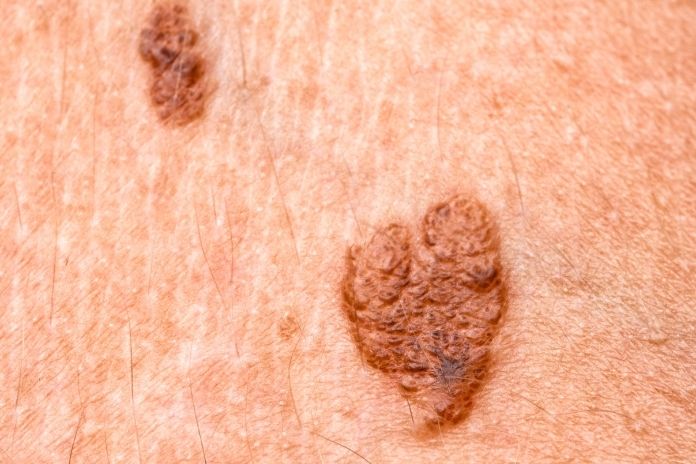
A normal mole would typically be one, solid color of tan, brown, or black. Moles that are multicolored or multishaded, especially if they are patchy or unusually pigmented, are suspect. Color change is in browns, blacks, tans, reds, whites, or even blues.
Irregular pigmentation is normally caused by melanocytes depositing different amounts of melanin in the other regions of the mole. In melanoma, pigment cells grow in different depths and in irregular patterns, leading to an irregular or mottled appearance.
When checking your moles, look closely at any that are more than one color or have new patches of lighter or darker color. This is particularly true if the mole used to be an even color and now it has new colors. Performing a mole screening helps us under
4. Diameter More Than 6 Millimeters (“D” in ABCDE)
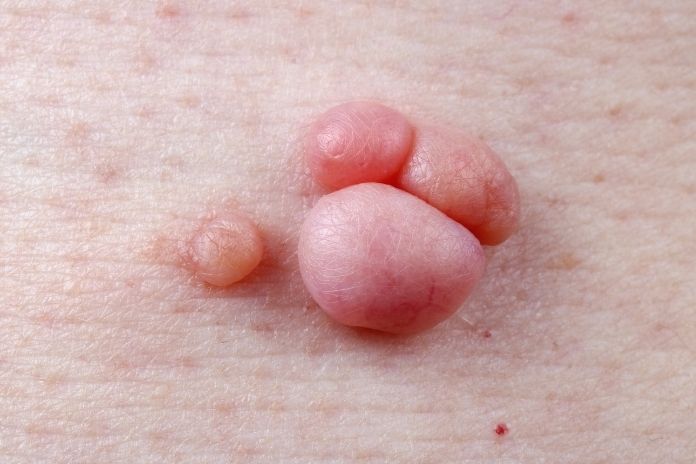
The size and shape of a mole may also be a good clue as to what it is. While some benign moles are bigger than 6 millimeters in diameter, most melanomas are 6 millimeters or more at the time of detection. The 6-millimeter size is roughly the same as the diameter of a pencil eraser.
Larger moles have a greater potential to be bothersome, especially if they grow progressively larger. Abrupt growth in size is a sign of uncontrolled cell growth. Other modifications in shape, border, or color typically accompany such growths.
It is quite simple to check. Just look at your skin, measure the size of any mole that feels weird or bothers you. If it is larger than 6 millimeters or is increasing, it is worth seeking medical opinion. Melanomas early on tend to be small, so measurement should always be accompanied by other ABCDE characteristics.
Read More: The Ultimate Guide to Removing Skin Tags: Safe and Simple Solutions
5. Emerging or Changing Moles (“E” in ABCDE)
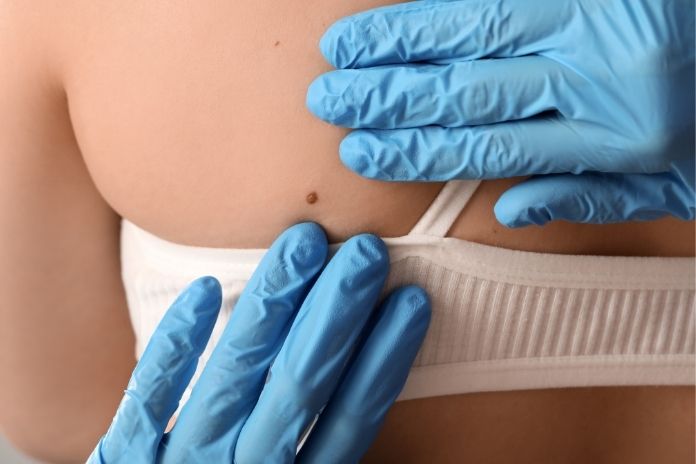
Evolution is any change that can be seen in the mole over time. Evolution can be growth, shape change, color change, new texture, or the development of symptoms such as itching or bleeding.
Evolution is also one of the most important warning signs for melanoma because cancerous tumors grow abnormally. Even a mole that is otherwise normally shaped and colored can be harmful if it begins to evolve.
When you examine yourself, take a look at the appearance of your moles each month. A good tip is to take high-quality photos of your skin every few months and compare them to spot any changes, so you won’t miss something little. Any evolving mole should be brought to a dermatologist as soon as you spot it.
6. Painful, Itchy, or Bleeding Moles

While the ABCDE rule is all about visual alterations, physical symptoms also matter. A painful, bleeding, or sore mole without injury can be a sign of deep skin cancer.
Pain or tenderness is caused when cancer cells invade deeper layers of the skin and affect the nerves surrounding the area. Itching is caused by inflammation or irritation due to abnormal cell growth. Bleeding or crusting is caused when the skin surface of the mole is deformed by abnormal cell growth.
These symptoms should never be ignored, especially if they occur unexpectedly. While some benign moles can become irritated by rubbing against clothing, recurring pain or sudden bleeding needs an urgent visit to the doctor.
7. New Moles Developing After Age 30

Preteens and teens will get most of their moles. It is less common for new moles to appear during adulthood, and if they do, they should be monitored closely.
New moles above the age of 30 may be benign skin growths, but may also indicate melanoma or other skin diseases. It is more likely that the new mole is different from your other moles, or if it meets any of the ABCDE criteria.
If you develop a new mole later in life, especially on skin exposed to the sun, have it examined by a dermatologist. It is particularly necessary for individuals who have a history of skin cancer or a family history of skin cancer.
Conclusion
Moles are a normal feature of human skin, but an abnormality in their color, texture, or shape could be the first indicator of serious disease, for example, melanoma. Rachel Kushner Rosenstein, M.D., Ph.D., affiliated with Hackensack University Medical Center says “When a patient notices something new and concerning, it is always good to bring that to your doctor’s attention,” she adds, “You may not always need to call for everything new, because you will often start to recognize the normal, benign spots that come up and are new.”
If you know and apply the ABCDE rule that includes Asymmetry, Border irregularity, Color variation, Diameter over 6 millimeters, and Evolution, you can identify dangerous moles on your skin.
In addition to these warning signs, watch for other suspicious signs such as pain, itching, bleeding, or new moles after the age of 30. Perform regular self-examinations, ideally every month, and undergo annual skin checks, especially if you have several moles, fair skin, or a history of sunburn.
Skin cancer, including melanoma, is extremely curable if it is caught early. Awareness and early medical examination of suspicious moles are important to skin and health care measures. So, the next time you notice moles suddenly or they start bleeding and itching, it is time to visit the dermatologist first!
References
- https://www.uchealth.com/en/conditions/moles-and-benign-skin-growths
- https://www.aad.org/public/diseases/a-z/when-is-a-mole-a-problem
- https://www.pinebeltderm.com/abcdef-s-of-changing-moles-melanoma
- https://www.tri-valleydermatology.com/blog/1317627-the-abcde-rule-for-identifying-suspicious-moles
- https://kidshealth.org/en/teens/melanoma.html
In this Article