















Imagine reaching for your medicine cabinet every time a headache strikes, only to find that the relief is temporary and the cycle continues. What if there were a natural, drug-free approach that could not only ease your current pain but also help prevent future headaches from occurring?
Headaches are among the most common health complaints, affecting millions of Americans daily. While over-the-counter medications provide quick relief, many people are seeking natural alternatives to manage their pain. Yoga, an ancient practice combining physical postures, breathing techniques, and meditation, has emerged as a promising complementary therapy for headache relief.
The Science Behind Yoga for Headaches
Recent research supports yoga’s effectiveness in managing headaches. Studies have shown that yoga can significantly decrease headache intensity, frequency, anxiety, and depression scores, and reduce the need for symptomatic medication. A systematic review found preliminary evidence of short-term efficacy of yoga in improving headache frequency, headache duration, and pain intensity, mainly in patients suffering from tension-type headaches.
Specific yoga poses can target tension and stress, which may be contributing to your migraines. Certain poses can help boost circulation and improve blood flow to your brain, which may lessen any pain or throbbing sensations. Additionally, yoga therapy has been shown to enhance vagal tone and decrease sympathetic drive, improving cardiac autonomic balance.
Read More: The Ultimate Guide to Yoga Blocks: 6 Options Reviewed

Expert Choice: Best At-Home Yoga Studio
Experience over 2,400 world-class yoga classes from the comfort of your home. YogaDownload offers expert-led programs and flexible membership options for every fitness level.
*Purchases through this link support our research at no extra cost to you.
How Yoga Helps with Headaches
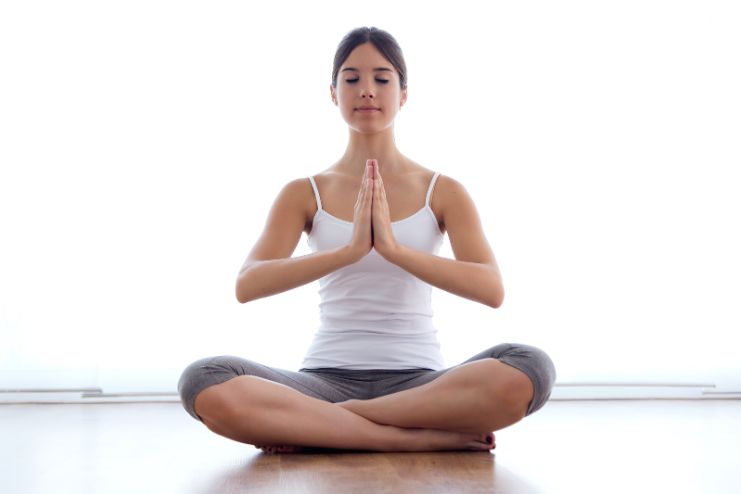
Yoga addresses headaches through multiple mechanisms:
Stress Reduction: Many headaches are triggered by stress and tension. Yoga’s combination of physical movement, breathing exercises, and mindfulness helps activate the parasympathetic nervous system, promoting relaxation and reducing stress hormones.
Improved Circulation: Certain yoga poses enhance blood flow to the brain and help relieve tension in the neck, shoulders, and scalp—common areas where headache-related tension accumulates.
Muscle Tension Relief: Poor posture and muscle tension, particularly in the neck and shoulders, can contribute to headaches. Yoga poses help stretch and strengthen these areas, reducing muscular imbalances.
Mind-Body Awareness: Regular yoga practice increases body awareness, helping you recognize early headache triggers and respond proactively.
Effective Yoga Poses for Headache Relief
11. Big Toe Pose (Padangusthasana)
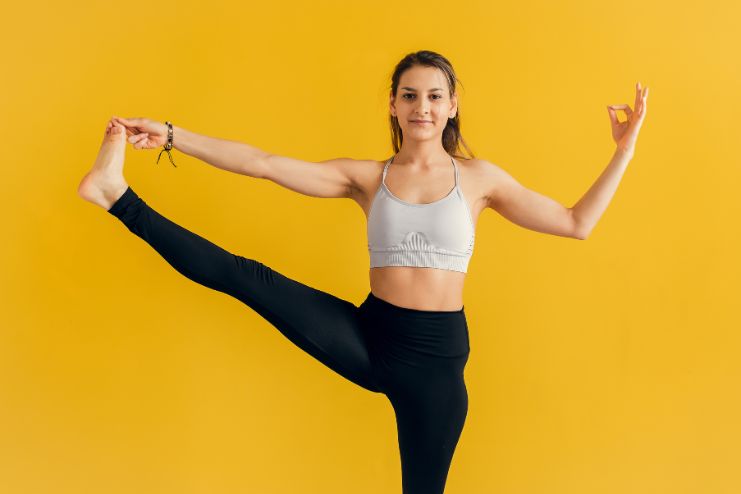
This accessible forward fold helps calm the nervous system and improve circulation to the brain. The inversion aspect of this pose can help relieve tension headaches by promoting blood flow to the head and neck region.
Benefits: Reduces blood pressure, stretches the hamstrings and calves, calms the nervous system, and may help alleviate headaches and insomnia.
How to Practice: Stand with feet hip-width apart, hinge at the hips, and fold forward. If possible, grasp your big toes with your fingers. If that’s not accessible, rest your hands on your shins or use blocks under your hands for support.
22. Corpse Pose (Savasana)
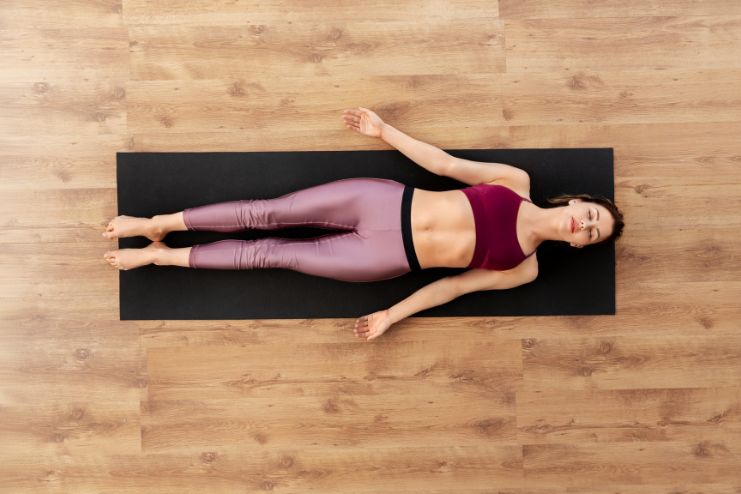
Often considered the most important pose in yoga, Savasana promotes deep relaxation and stress relief. This restorative pose allows the nervous system to reset and can be particularly effective for tension headaches.
Benefits: Calms the brain, reduces stress and anxiety, helps alleviate depression-related headaches, combats fatigue, and promotes better sleep.
How to Practice: Lie flat on your back with arms at your sides, palms facing up. Allow your feet to fall open naturally. Close your eyes and focus on releasing tension from every part of your body, starting from your toes and moving upward.
33. Dolphin Pose (Ardha Pincha Mayurasana)
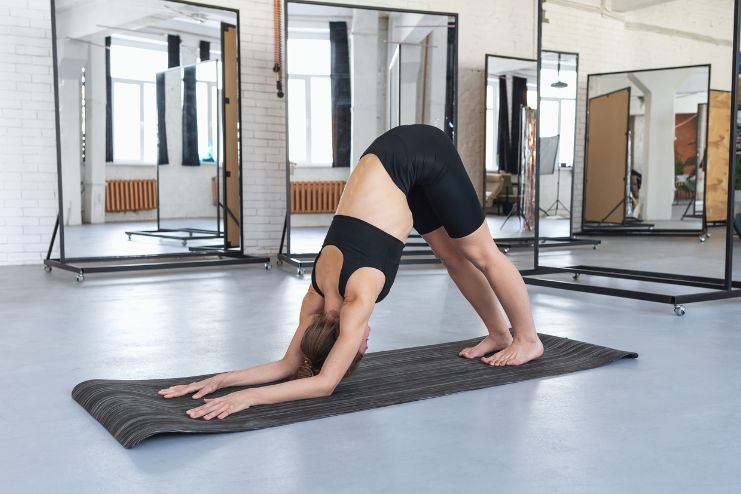
This strengthening pose helps improve circulation while building upper body strength. The mild inversion can help relieve stress and tension that contribute to headaches.
Benefits: Strengthens the shoulders and arms, improves circulation, reduces stress, may help with menstrual discomfort, and can alleviate headaches, insomnia, and back pain.
How to Practice: From hands and knees, place your forearms on the ground with elbows shoulder-width apart. Tuck your toes under and lift your hips up and back, creating an inverted V-shape. Keep your head relaxed between your arms.
44. Bridge Pose (Setu Bandhasana)
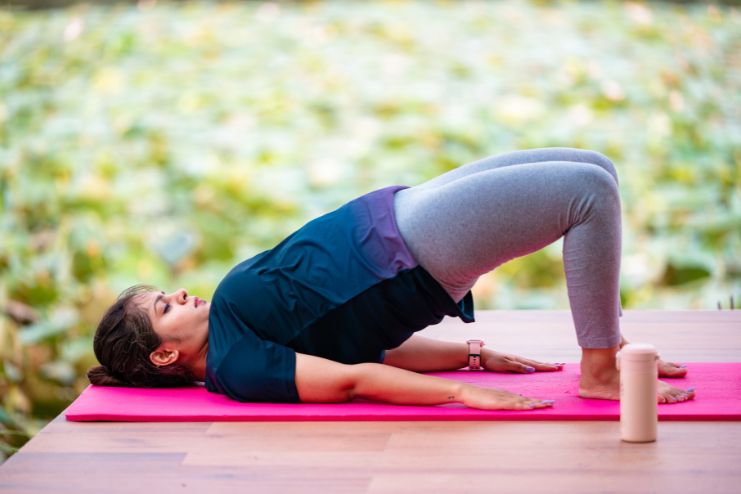
This gentle backbend helps counteract the forward head posture that often contributes to tension headaches. It also promotes relaxation while gently stimulating the nervous system.
Benefits: Reduces anxiety and fatigue, helps alleviate back pain and headaches, improves circulation, and promotes better sleep. Regular practice can help create a healthy, rejuvenating glow.
How to Practice: Lie on your back with knees bent and feet flat on the floor, hip-width apart. Press through your feet and lift your hips, creating a bridge shape. Keep your shoulders grounded and avoid turning your head while in the pose.
Read More: Wednesday Wellness: Mid-Week Yoga Flow
Expert Choice: Best At-Home Yoga Studio
Experience over 2,400 world-class yoga classes from the comfort of your home. YogaDownload offers expert-led programs and flexible membership options for every fitness level.
*Purchases through this link support our research at no extra cost to you.
55. Reclining Hero Pose (Supta Virasana)
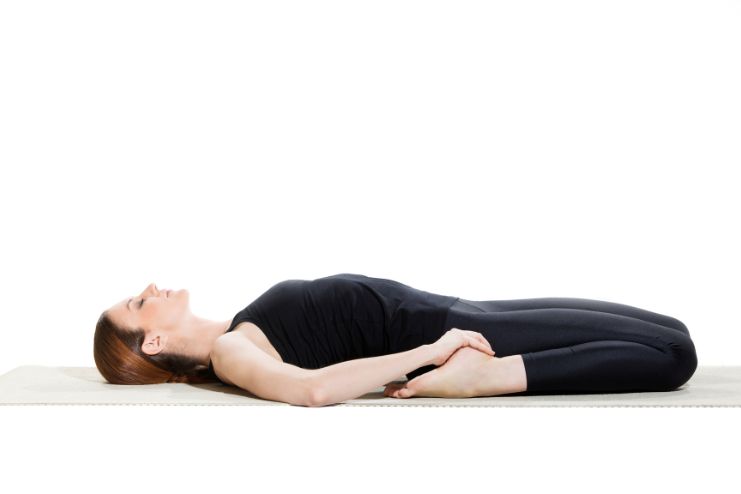
This restorative pose provides a gentle backbend while stretching the front body and promoting relaxation. It can be particularly helpful for digestive issues that sometimes accompany headaches.
Benefits: Stretches the entire front body, aids digestion, may help relieve headaches and menstrual discomfort, and promotes relaxation.
How to Practice: Begin in Hero Pose (sitting on your heels). If this is uncomfortable, place a bolster or pillows between your calves and thighs. Slowly lean back, supporting yourself with your hands, and eventually rest your back on the floor or a bolster. Use props as needed to ensure comfort.
Additional Beneficial Poses
6Cat-Cow Pose (Marjaryasana-Bitilasana)
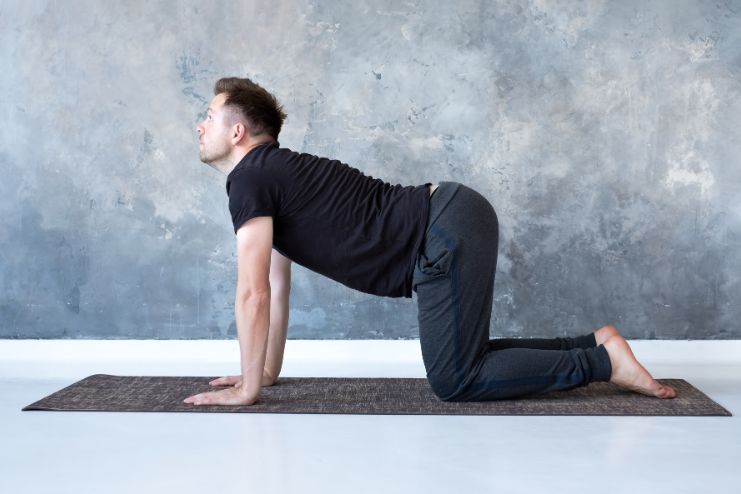
This pose brings gentle extension and flexion to the entire back of the body (from the tailbone to the neck/skull), helping to relieve tension that can contribute to headaches.
7Head-to-Knee Pose (Janu Sirsasana)
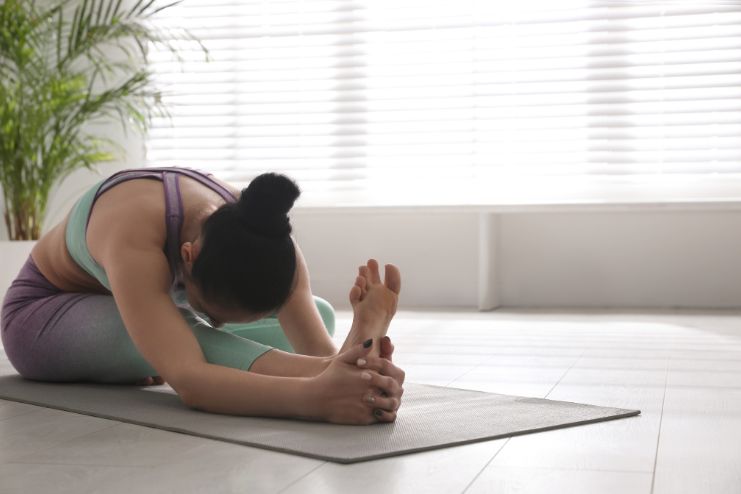
This pose is appropriate for students of any level and combines a forward bend with a spinal twist, making it excellent for stress relief and promoting circulation.
8Child’s Pose (Balasana)
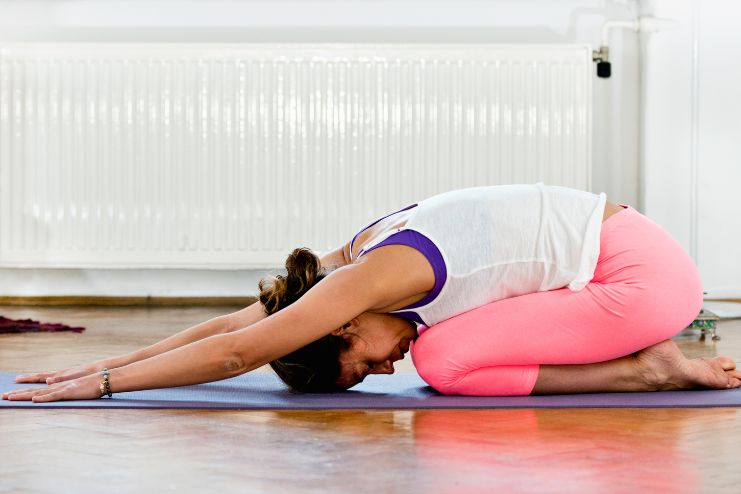
This restorative pose helps calm the nervous system and provides a gentle stretch for the back and shoulders, areas where tension often accumulates.
Important Considerations
Consult Your Healthcare Provider: While yoga can be an effective complementary therapy for headaches, it’s important to consult with your healthcare provider, especially if you experience frequent or severe headaches. Research has found that yoga can help lessen the frequency and pain level of migraine headaches when used as an additional therapy to other medical treatments.
Start Slowly: If you’re new to yoga, begin with gentle poses and gradually build your practice. Listen to your body and avoid poses that cause discomfort or increase your headache.
Timing Matters: When you feel a headache coming on, an alternative (and healthier) approach to popping a pill could be taking some yoga time out. However, if you already have a severe headache, very gentle poses or rest may be more appropriate.
Create a Routine: Research consistently shows that yoga can help give headache and migraine sufferers some extra relief, making it a great supplement to their pain-fighting arsenal. Regular practice, even just 15-20 minutes daily, can be more effective than occasional longer sessions.
Building Your Practice
Start with 5-10 minutes of gentle yoga daily, focusing on poses that promote relaxation and stress relief. Pay attention to your body’s response and gradually increase the duration and intensity of your practice as you become more comfortable.
Consider keeping a headache diary to track potential triggers and note how your yoga practice affects your headache patterns. This can help you identify which poses are most effective for your specific needs.
Remember that yoga is a complement to, not a replacement for, proper medical care. If you experience frequent, severe, or sudden-onset headaches, consult with your healthcare provider to rule out underlying conditions.
9Conclusion
Yoga offers a natural, accessible approach to managing headaches that addresses both physical tension and emotional stress. Research has found that patients who participated in yoga therapy had significantly shorter duration and lower intensity of headaches at 12 weeks compared to baseline, providing evidence for yoga as a clinically useful treatment for tension headaches.
By incorporating these gentle poses into your daily routine, you may find relief from headaches while also improving your overall well-being, flexibility, and stress management skills. The key is consistency and patience as you develop your practice and discover which poses work best for your individual needs.
Ready to start your headache-free journey? Begin with just 10 minutes of gentle yoga daily, focusing on the poses that feel most comfortable for your body. Track your headache patterns and notice how regular practice affects your symptoms.
Remember, small, consistent steps often lead to the most significant transformations. Your path to natural headache relief starts with a single breath and one simple pose—why not begin today?
10References
- https://pmc.ncbi.nlm.nih.gov/articles/PMC4540885/
- https://pubmed.ncbi.nlm.nih.gov/31667736/
- https://pmc.ncbi.nlm.nih.gov/articles/PMC4097897/
- https://pmc.ncbi.nlm.nih.gov/articles/PMC6971819/
- https://pmc.ncbi.nlm.nih.gov/articles/PMC5433113/
- https://pmc.ncbi.nlm.nih.gov/articles/PMC7080891/
- https://pmc.ncbi.nlm.nih.gov/articles/PMC9015090/
- https://www.mayoclinic.org/diseases-conditions/tension-headache/symptoms-causes/syc-20353977
- https://pmc.ncbi.nlm.nih.gov/articles/PMC8857456/
In this Article