













What if we told you there’s a type of carbohydrate that can actually help you lose weight instead of gaining it? Sounds too good to be true, right? Well, prepare to have your mind changed about carbs forever.
The keto and low-carb diet trends have generated considerable buzz due to their impressive weight loss results. If you’ve struggled with weight loss in the past, the resistant starch diet plan could be your solution.
Let’s be honest, forcing people to completely eliminate carbohydrates when it’s been their main food source is unrealistic. That’s where resistant starch comes in. This unique form of carbohydrate acts more like fiber and offers significant health benefits. Curious how? Keep reading.
By the end of this guide, you’ll have comprehensive knowledge about resistant starch foods and understand both their benefits and potential side effects.
Read More: The Truth About Reheating Leftovers: Safety, Nutrition, and Taste
What is Resistant Starch?
Resistant starch, as the name implies, is a type of starch that doesn’t get digested in the traditional way within the small intestine. Instead, it travels through your digestive system largely unchanged and functions similarly to soluble fiber. It’s later fermented in the large intestine.
Here’s the key: resistant starch helps you maintain your current weight rather than directly causing weight loss. It acts as a weight maintenance tool, which is precisely what makes the resistant starch diet plan so effective.
“This carb has similar weight loss benefits to dietary fiber because they function very similarly in the digestive tract”, explains Morgan Porpora, RD, LDN, a nutritionist and founder of Good Nutrition.
As a result, resistant starch “increases fullness and may reduce your overall calorie intake,” says Lindsay Malone, MS, RDN, an instructor in the Department of Nutrition at Case Western Reserve University School of Medicine.
Types of Resistant Starch

There are four main types of resistant starch, though only three occur naturally—the fourth is artificially created through chemical processes. Understanding these types helps you identify which foods will give you the most benefits.
Type 1: Physically Protected Starch
This type is naturally resistant because it’s trapped within fibrous cell walls that your digestive enzymes can’t easily break down. Think of it as starch that’s locked away in a protective shell.
Common sources: Whole grains, seeds, legumes (beans, lentils, chickpeas), and nuts
Type 2: Naturally Resistant Starch
Found in certain raw, unprocessed foods, this starch has a molecular structure that naturally resists digestion in your small intestine.
Common sources: Raw potatoes, green (unripe) bananas, plantains, and raw oats
Type 3: Retrograded Starch (The “Cooling Effect”)
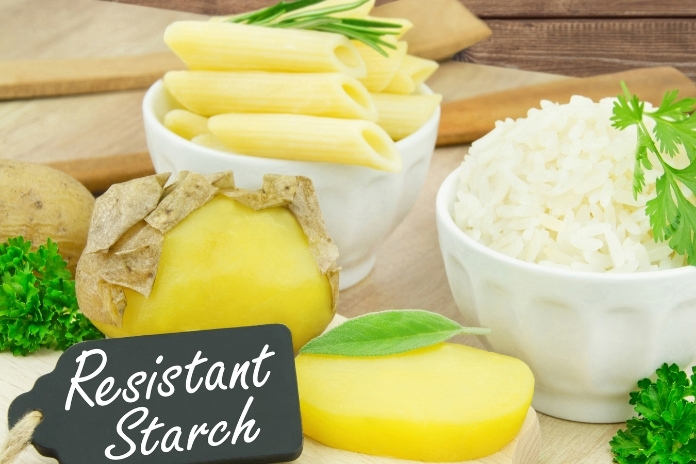
Here’s where it gets interesting—this type forms when you cook starchy foods and then let them cool completely. The cooling process changes the starch structure, making it resistant to digestion. This is the easiest type to create at home!
Common sources: Cooked and cooled rice, cooked and cooled potatoes, cooked and cooled pasta, and day-old bread
Pro tip: Gentle reheating won’t destroy most of the resistant starch, so you can still enjoy these foods warm.
Type 4: Modified Starch
This is the only artificial type, created through chemical modification in food processing facilities.
Common sources: Processed foods and supplements (best to stick with natural sources when possible)
Quick Reference: Types of Resistant Starch
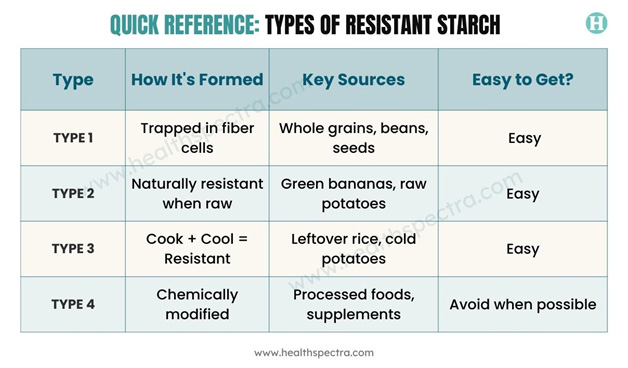 Pro Tip: Type 3 is your best friend—cook your rice, potatoes, or pasta, then let them cool in the fridge overnight. Reheat gently and enjoy the benefits of resistant starch!
Read More: Healthy Carbs to Eat After a Workout (with Recipes)
How Does Resistant Starch Work?
While resistant starch isn’t a new concept, research into its benefits has grown rapidly in recent years, revealing significant impacts on weight management and overall health.
Since resistant starch isn’t digested like regular carbohydrates, it travels through your digestive system unchanged and behaves like soluble fiber. This prevents the typical blood sugar spikes and weight gain associated with regular carb consumption.
When resistant starch reaches the large intestine, it undergoes fermentation. This process releases beneficial compounds that improve overall body function.
Research shows that consuming resistant starch helps you feel full longer, reducing hunger pangs and preventing unnecessary cravings. It also promotes fat burning and can switch your liver into a fat-burning state, making it an effective tool for weight management.
Health Benefits of Resistant Starch

Understanding the benefits of resistant starch can be confusing—after all, we’re often told that carbs are bad for weight loss, yet here we’re promoting a specific type of carbohydrate. The key difference lies in how resistant starch functions in your body.
1. Regulates Blood Sugar Levels After Meals
Post-meal blood glucose spikes are normal but can become problematic. Resistant starch foods help regulate these levels by:
- Slowing carbohydrate digestion and absorption
- Promoting glycogen storage in the liver and muscles
- Reducing insulin resistance risk
This regulation of glucose helps maintain stable blood sugar levels throughout the day.
2. Helps Manage Type 2 Diabetes
The number of adults who have diabetes cases increased from 108 million in 1980 to over 422 million in 2014—an alarming trend.
Research suggests resistant starch foods may help treat Type 2 diabetes by:
- Preventing insulin resistance
- Improving insulin sensitivity
- Reducing blood fat levels
One study found that those consuming resistant starch daily showed:
- 34% reduction in oxidative stress markers
- 29% decrease in insulin levels
- 9% improvement in glycated hemoglobin
3. Reduces Blood Triglycerides and Cholesterol
High levels of triglycerides and cholesterol increase the risk of heart disease. Research shows resistant starch can:
- Inhibit dietary fat absorption
- Lower overall cholesterol levels
- Reduce low-density lipoprotein (LDL or “bad” cholesterol)
4. Prevents Heart Disease Risk
With 17.9 million global deaths annually from cardiovascular disease (31% of all deaths worldwide), heart health is crucial.
Resistant starch supports heart health by:
- Reducing cholesterol levels
- Eliminating excess body fat
- Improving overall cardiovascular markers
Read More: Is Sourdough Bread Good for You? Benefits, Nutrition, and How It Compares to Other Breads
5. Slows Chronic Kidney Disease Progression
Chronic kidney disease has a significant impact on health and life expectancy. Research indicates resistant starch may help by:
- Reducing inflammation and oxidative stress
- Lowering harmful metabolites like indoxyl sulfate in dialysis patients
- Supporting overall kidney function
6. Reduces Appetite and Cravings
One major weight loss challenge is controlling appetite and cravings. Resistant starch helps by:
- Boosting levels of peptide YY, an appetite-reducing hormone
- Promoting satiety and fullness
- Reducing overall daily food consumption
Studies show that people who consume resistant starch for 24 hours eat significantly less food throughout the day.
7. Promotes Better Gut Health
Resistant starch acts as a prebiotic, feeding beneficial gut bacteria. This promotes:
- Better digestion
- Enhanced immune function
- Reduced cancer risk
- Overall improved gut microbiome balance
Read More: Gut Health and Diet: Foods that Promote a Healthy Digestive System
8. Relieves Leaky Gut Syndrome
Leaky gut syndrome damages the intestinal barrier, which affects immune function and increases the risk of disease. Resistant starch helps by supporting the production of short-chain fatty acids, which:
- Supporting beneficial gut bacteria
- Producing short-chain fatty acids
- Strengthening intestinal barrier function
9. Reduces Oxidative Stress
Modern lifestyles expose us to excessive free radicals, leading to oxidative stress and increased cancer risk. Resistant starch combats this by:
- Activating antioxidant genes like Nrf2, SOD, and glutathione peroxidase
- Protecting blood vessels from high blood sugar damage
- Reducing overall inflammation
Read More: Fermented vs. Pickled Foods: Which Is Better for Your Gut Health?
10. Supports Vitamin D Levels
Vitamin D deficiency affects numerous body functions. Resistant starch helps by:
- Promoting mineral and vitamin reabsorption from food
- Preventing vitamin D loss through urinary excretion
- Supporting overall vitamin D balance
11. Balances Effects of High-Meat Diets
Red meat consumption increases heart disease and cancer risk by:
- Disrupting colon DNA structure
- Promoting IGF-1 protein expression linked to tumor growth
Resistant starch counteracts these effects by increasing butyrate production and promoting the growth of beneficial Lactobacillus bacteria.
12. Enhances Brain Function
Research shows resistant starch benefits extend to brain health by:
- Improving glucose responsiveness in the brain
- Enhancing motor coordination
- Reducing cortisol (stress hormone) levels
How to Add Resistant Starch to Your Diet

Many people unknowingly consume foods containing resistant starch. Natural sources include:
Type 1 Sources:
- Whole grains
- Legumes (beans, lentils, chickpeas)
- Seeds
Type 2 Sources:
- Raw potatoes
- Green (unripe) bananas
- Plantains
Type 3 Sources:
- Cooked and cooled potatoes
- Cooked and cooled rice
- Cooked and cooled pasta
While artificial resistant starch exists, natural sources are always preferable. Start slowly and consult your healthcare provider before making significant dietary changes.
Read More: How Carb Cycling Can Help You Lose Weight Without Cutting Carbs Completely
Potential Side Effects
Like any dietary change, consuming excessive amounts of resistant starch can cause side effects. Common issues include:
- Bloating
- Gas (flatulence)
- Abdominal discomfort
- Indigestion
- Heartburn
- Worsening of irritable bowel syndrome symptoms
Key tip: Start with small amounts and gradually increase to allow your digestive system to adjust.
Read More: The Benefits of Eating Fermented Rice (A Forgotten Superfood)
Conclusion
If you’re struggling with weight loss, diabetes, or gut health issues, incorporating resistant starch could be a game-changer. Try adding a green banana to your morning smoothie or letting your cooked rice cool before eating it.
Remember to consume resistant starch in moderation, maintain an active lifestyle, and consult healthcare professionals when making significant dietary changes. This balanced approach will help you maximize benefits while minimizing potential side effects.
Ready to transform your relationship with carbs? Start by incorporating one serving of resistant starch into your daily routine. Your gut (and waistline) will thank you for making this simple but powerful change.
Frequently Asked Questions (FAQ)
Q: How much resistant starch should I eat daily?
A: Start with 5-10 grams per day and gradually increase to 15-20 grams. This allows your digestive system to adjust and minimizes side effects, such as bloating and gas.
Q: Can I eat resistant starch if I have diabetes?
A: Resistant starch may actually help manage blood sugar levels, but you should consult your healthcare provider before making any significant dietary changes, especially if you’re on diabetes medication.
Q: Does reheating cooled potatoes or rice destroy the resistant starch?
A: Gentle reheating typically retains most of the resistant starch formed during cooling. However, avoid high-temperature reheating for the best results.
Q: Can children and pregnant women eat resistant starch foods?
A: These are natural, whole foods that are generally safe for most people. However, pregnant women should consult their doctor before making significant dietary changes.
Q: How long does it take to see benefits from resistant starch?
A: Some people notice improved satiety and digestion within a few days, while blood sugar and weight management benefits may take several weeks to become apparent.
Q: Is resistant starch suitable for people with IBS?
A: While resistant starch can improve gut health, it may initially worsen IBS symptoms in some people. Start with very small amounts and monitor your response.
Q: Can I take resistant starch supplements instead of eating whole foods?
A: While supplements are available, whole food sources provide additional nutrients and fiber. Natural sources are generally recommended over processed supplements.
Q: Will resistant starch interfere with my medications?
A: Resistant starch foods are generally safe, but if you’re on blood sugar medications, monitor your levels closely as resistant starch may enhance your medication’s effects. Always consult your healthcare provider.
References
- https://www.ncbi.nlm.nih.gov/pmc/articles/PMC6316739/
- https://www.ncbi.nlm.nih.gov/pubmed/21530804
- https://www.who.int/news-room/fact-sheets/detail/diabetes
- https://www.ncbi.nlm.nih.gov/pubmed/27733521
- https://www.ncbi.nlm.nih.gov/pubmed/28298535
- https://www.ncbi.nlm.nih.gov/pubmed/26655398
- https://www.who.int/cardiovascular_diseases/en/
- https://www.ncbi.nlm.nih.gov/pubmed/19857367
- https://www.ncbi.nlm.nih.gov/pmc/articles/PMC4260945/
- https://journals.plos.org/plosone/article?id=10.1371/journal.pone.0114881
- https://www.ncbi.nlm.nih.gov/pubmed/23818307
- https://www.linkedin.com/in/lindsaymalone
- https://www.womenshealthmag.com/weight-loss/a19964628/resistant-starch/
- https://www.clinicaladvisor.com/news/worldwide-diabetes-prevalence-has-quadrupled-since-1980/
- https://www.mdpi.com/1422-0067/26/16/7753
In this Article