














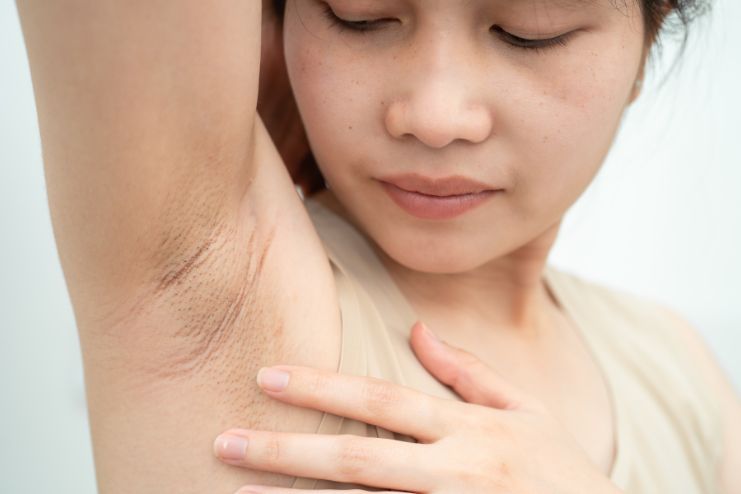
Discovered a lump in your armpit? You’re not alone. Most people will experience an armpit lump at some point, and the vast majority are completely harmless.
A group of lymph nodes in your underarm region may swell for several causes, some benign and some more serious, such as breast cancer. Reassuringly, 80% of all suspected breast cancer lumps end up being non-cancerous.
“While most of these lumps are benign, it’s essential to be aware that they could also signal something more serious, such as cancer,” says Salvatore Nardello, M.D., a surgical breast oncologist and medical director of the Breast Center at Melrose Wakefield Hospital and Tufts Medical Center Community Care in Stoneham, MA. “Understanding the causes, symptoms, and when to seek medical attention with your doctor is crucial for timely diagnosis and effective treatment.”
What Are Armpit Lumps?
An armpit lump is typically a swollen lymph node located under your arm. Lymph nodes are small, bean-shaped structures that are part of your lymphatic system—they help fight infections and strengthen your immune system.
Armpit lumps can range from small and barely noticeable to larger, more obvious masses. While both men and women can develop armpit lumps, women often experience more concern due to the potential connection with breast cancer.
Most armpit lumps are harmless, but some may indicate underlying health conditions that require medical attention.
Read More: Gua Sha for Lymphatic Drainage: Does It Work Beyond Skincare?
Common Causes
Armpit lumps can develop for various reasons:
Infections:
- Viral infections
- Bacterial infections
- Fungal infections
Skin-related causes:
- Allergic reactions to antiperspirants or deodorants
- Irritation from shaving
- Cysts
More serious conditions:
- Breast cancer
- Leukemia (blood cancer)
- Lymphoma (lymphatic system cancer)
- Lupus (autoimmune disease)
Other causes:
- Lipomas (benign fatty tumors)
- Reactions to certain vaccinations
Armpit Lumps in Women
For women, armpit lumps can sometimes indicate breast cancer, as breast tissue extends into the armpit area.
It’s important for women to perform regular breast self-examinations to detect any changes early.
Keep in mind that breast tissue naturally changes during your menstrual cycle, often feeling lumpier and more tender in the days leading up to your period.
For the most accurate self-examination, check your breasts and armpit area 3-7 days after your period ends.
Read More: 14 Early Signs Of Breast Cancer – Know The Risks Before
When to See a Doctor
Seek medical attention if your armpit lump:
- Doesn’t go away within a few days
- Continues to grow
- Becomes painful
- Is accompanied by other symptoms like fever, night sweats, or unexplained weight loss
Diagnosis
Your doctor will typically start with a physical examination, checking the lump’s size, texture, and whether it’s painful when touched. They’ll also examine other lymph nodes in your body.
Depending on their findings, your doctor may recommend additional tests:
- Complete Blood Count (CBC) – measures white and red blood cells
- Imaging tests – chest X-ray, mammogram, or ultrasound for a clearer view
- Biopsy – removal and testing of a small tissue sample
- Allergy testing – if an allergic reaction is suspected
Treatment Options
Treatment depends on the underlying cause:
For infections:
- Oral antibiotics for bacterial infections
- IV antibiotics for severe cases
- Antifungal medications for fungal infections
For allergic reactions:
- Antihistamines or other allergy medications
- Avoiding known triggers (certain deodorants, fabrics, etc.)
For benign conditions:
- Many lipomas and viral-related lumps require no treatment
- Monitoring for changes
For cancer: Treatment may include surgery, chemotherapy, or radiation therapy, depending on the type and stage.
Home care:
- Apply warm or cold compresses to reduce discomfort
- Over-the-counter pain relievers as needed
- Always consult your doctor before trying home remedies
Read More: What is Low Lymphocyte Count or Lymphocytopenia
Conclusion
While most armpit lumps are benign and resolve on their own, it’s important not to ignore persistent or growing lumps. The lymphatic system plays a crucial role in your immune function, so any changes warrant attention.
Early detection and proper medical evaluation ensure you receive appropriate treatment if needed. When in doubt, consult your healthcare provider for peace of mind and proper care.
Ready to take action? If you’ve found a lump that concerns you, don’t wait.
Schedule an appointment with your healthcare provider today. Early evaluation is always better than wondering “what if.”
Frequently Asked Questions
Q: How long should I wait before seeing a doctor about an armpit lump? A: If a lump doesn’t go away within 2 weeks, continues to grow, feels hard, or is accompanied by other symptoms like fever or weight loss, see your doctor promptly. For women, any new armpit lump should be evaluated relatively quickly.
Q: Can deodorant or antiperspirant cause armpit lumps? A: Yes, allergic reactions to ingredients in deodorants or antiperspirants can cause swelling and lumps. Try switching to a different product and see if the lump resolves. However, if the condition persists, consult your doctor.
Q: Are armpit lumps more common in women? A: Both men and women can develop armpit lumps with similar frequency. However, women may be more aware of them due to breast self-examinations and the potential connection to breast cancer.
Q: Can I get an armpit lump after a vaccine? A: Yes, vaccines can sometimes cause temporary lymph node swelling in the armpit, especially on the side where you received the shot. This usually resolves within a few weeks.
Q: What does a cancerous armpit lump feel like? A: Cancerous lumps are often hard, fixed in place, and painless. However, these characteristics can vary, which is why any persistent lump should be evaluated by a healthcare professional rather than self-diagnosed.
Q: Can stress cause armpit lumps? A: While stress doesn’t directly cause armpit lumps, it can weaken your immune system, making you more susceptible to infections that might cause lymph node swelling.
Q: Should I be worried if both armpits have lumps? A: Lumps in both armpits could indicate a systemic condition like an infection, autoimmune disease, or other condition affecting your whole body. This warrants prompt medical evaluation.
Q: Can exercise cause armpit lumps? A: Intense exercise can sometimes cause temporary swelling due to increased lymphatic flow, but persistent lumps after exercise should be evaluated by a doctor.
References
- https://www.cancer.gov/about-cancer/diagnosis-staging/staging/sentinel-node-biopsy-fact-sheet
- https://my.clevelandclinic.org/health/symptoms/22745-armpit-lump
- https://www.mayoclinic.org/diseases-conditions/swollen-lymph-nodes/symptoms-causes/syc-20353902
- https://www.ncbi.nlm.nih.gov/books/NBK65744/
- https://www.mayoclinic.org/tests-procedures/breast-exam/about/pac-20393237
- https://blog.dana-farber.org/insight/2020/07/should-i-worry-about-a-lump-under-the-armpit/
- https://pmc.ncbi.nlm.nih.gov/articles/PMC10522642/
- https://www.healthcentral.com/article/is-this-underarm-lump-serious-five-ways-to-tell
- https://www.tuftsmedicine.org/doctor/salvatore-nardello
In this Article