














That scratchy throat hits you first thing in the morning, but is it just a cold, or are you dealing with something more serious? Knowing the difference could save you days of unnecessary suffering and help you get the right treatment faster.
Cold and flu are among the most common ailments that disrupt our daily routines and keep doctors busy throughout the year. When kids get sick, they miss school and outdoor activities—though many might secretly enjoy the excuse to stay home with their smartphones, content with a runny nose and sore throat while avoiding homework.
For working adults, however, dealing with the flu at the office can be a nightmare. Modern workplaces with their centrally air-conditioned environments create sealed environments where germs and infections circulate continuously among everyone present.
Cold and flu are often mistaken for one another since they share several common symptoms. However, they are distinct diseases caused by different viruses, though both primarily affect the respiratory system. In this article, we’ll provide a clear breakdown of the key differences between cold and flu.
Read More: Sneezing and Sniffling? How to Know If It’s a Cold or Allergies
Cold vs. Flu: What Causes Them?

1The Common Cold
The cold is a mild viral infection of the upper respiratory tract and is typically caused by rhinoviruses. These viruses thrive in the slightly cooler temperatures of the nasal passages (about 91–95°F or 33–35°C).
There are over 100 known types of rhinoviruses, making it difficult for the body to build long-term immunity. These viruses differ in their surface protein content, known as serotypes. That’s why colds are so common—and why you can catch several in a single year.
Cold viruses are highly contagious and spread easily through direct contact, respiratory droplets, and contaminated surfaces. Touching your face with unwashed hands is a fast track to infection.
2The Flu (Influenza)
Influenza, or the flu, is a more aggressive respiratory virus that can affect the nose, throat, and lungs. It spreads rapidly, especially in enclosed environments like schools and offices, through airborne droplets and contact with contaminated surfaces.
There are three main types of flu viruses that infect humans: Type A, B, and C. Type A tends to cause the most severe seasonal outbreaks.
Unlike the cold, the flu is often preventable through annual flu vaccines, which help your immune system recognize and fight off the virus more effectively.
Read More: 15 Easy Yet Effective Cold and Flu Remedies
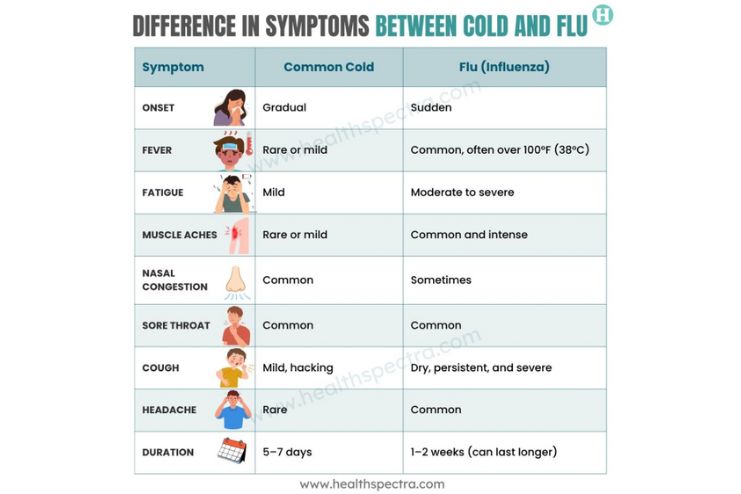
Difference in Symptoms Between Cold and Flu
“Because the common cold and the flu have overlapping symptoms, it’s easy to mistake one for the other,” says Dr. Victoria Kang, urgent care physician at Cedars-Sinai.
Here’s a handy guide to differentiate between a cold and the flu.
Treatment Options

3Cold Treatment
There’s no cure for the common cold, and most treatments focus on relieving symptoms:
- Decongestants to reduce nasal swelling
- Pain relievers(like ibuprofen or acetaminophen)
- Hydration and rest to support your immune system
Pro tip: Washing your hands frequently and avoiding close contact with infected individuals helps reduce your risk.
4Flu Treatment
For the flu, antiviral medications like oseltamivir (Tamiflu) can reduce symptom severity and duration if taken within the first 48 hours of symptom onset.
Other supportive treatments include:
- Fever reducers (acetaminophen, ibuprofen)
- Fluids and electrolytes
- Rest and isolation to prevent spread
Prevention: Annual flu vaccination is your best defense. It reduces your risk of infection and lowers the chance of severe complications like pneumonia.
Read More: 20 Effective Home Remedies for Cold for Fast Recovery
Natural Remedies to Soothe Cold and Flu Symptoms
These home remedies may help ease symptoms and support your body’s healing process for both cold and flu:
- Garlic– Contains allicin, known to strengthen the immune response.
- Honey– Contains antibacterial and antiviral properties that soothes sore throats and may reduce coughing. Choose raw or organic varieties.
- Green tea– Packed with antioxidants that support immunity.
- Licorice root– May relieve throat irritation and nasal congestion.
- Vitamin C-rich foods– Citrus fruits, bell peppers, and leafy greens help fuel your body’s defense system.
Note: Natural remedies can offer relief, but they are not a substitute for professional medical care when needed.
Prevention Is Still the Best Cure
Whether it’s a cold or flu, prevention starts with a few simple, science-backed habits:
- Wash your hands often with soap and water.
- Avoid touching your face, especially the nose and mouth.
- Disinfect high-touch surfaces during cold/flu season.
- Get plenty of sleep, eat a balanced diet, and exercise regularly.
- Consider the annual flu vaccine, especially if you’re in a high-risk group (young children, elderly, immunocompromised).
According to Dr. Jonathan Grein, Cedars-Sinai’s director of hospital epidemiology, everyone 6 months or older should get an annual flu shot before flu season starts.
Read More: Summer Cold: Causes, Symptoms, and Treatment
Take Control of Your Health Today
Understanding the differences between cold and flu empowers you to make better health decisions. While both illnesses are common, recognizing the warning signs early can help you choose the right treatment approach and prevent complications.
Remember, prevention is always your best defense. Practice good hygiene, consider an annual flu vaccination, and maintain a healthy lifestyle to keep your immune system strong.
Don’t let cold and flu season catch you off guard. Consult with your healthcare provider about the best prevention strategies for you and your family, and always seek medical attention if symptoms persist or worsen.
5References
- https://www.ncbi.nlm.nih.gov/pmc/articles/PMC4311828/
- https://pubmed.ncbi.nlm.nih.gov/25561542/
- https://www.cdc.gov/flu/about/viruses-types.html
- https://www.who.int/news-room/fact-sheets/detail/influenza-(seasonal)
- https://www.cdc.gov/yellow-book/hcp/travel-associated-infections-diseases/influenza.html
- https://pubmed.ncbi.nlm.nih.gov/22280901/
- https://www.ncbi.nlm.nih.gov/pmc/articles/PMC3609166/
- https://www.ncbi.nlm.nih.gov/pmc/articles/PMC5707683/
- https://www.cedars-sinai.org/provider/victoria-kang-2883881.html
In this Article