













Mango lovers, this one’s for you!
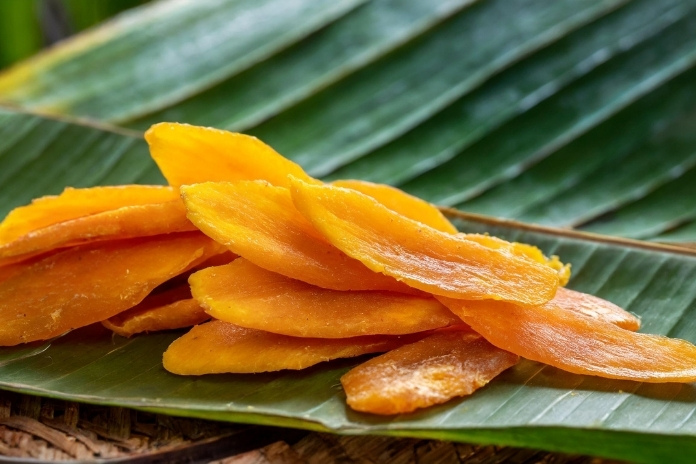
When fresh mangoes are out of season, I turn to their chewy, sweet cousin: dried mango. It’s a colorful, tasty snack that feels like candy but comes with a few nutritional twists.
In this article, we’ll break down what dried mango really offers – from fiber and antioxidants to natural sugars and portion pitfalls, plus how to enjoy it in smart, delicious ways.
What is Dried Mango?

Let’s first understand what a dry mango is, how it is made, and how it differs from fresh mango.
Dried mango is made by removing the water content from fresh mango slices. This can be done in several ways:
- Sun-Dried: The traditional way to dry fruit is by simply laying the mango slices outside in the sun for a couple of days. The method is completely natural, but some nutrients (vitamin C) will lose their value in the sun and heat.
- Oven-Dried: This refers to using controlled heat to accelerate the fruit’s drying. Although this method is effective and consistent, it may also impair heat-sensitive nutrients such as vitamin C.
- Freeze-Dried: This is the best method for preserving nutrients, as it removes water in a vacuum and at low temperatures. This method retains virtually all vitamins, antioxidants, and flavor.
Removing water will change the texture, flavor, and nutritional density of the fruit. For instance, dried mango is much chewier, has a more intense sweetness, and has a higher caloric value than a fresh mango. For context:
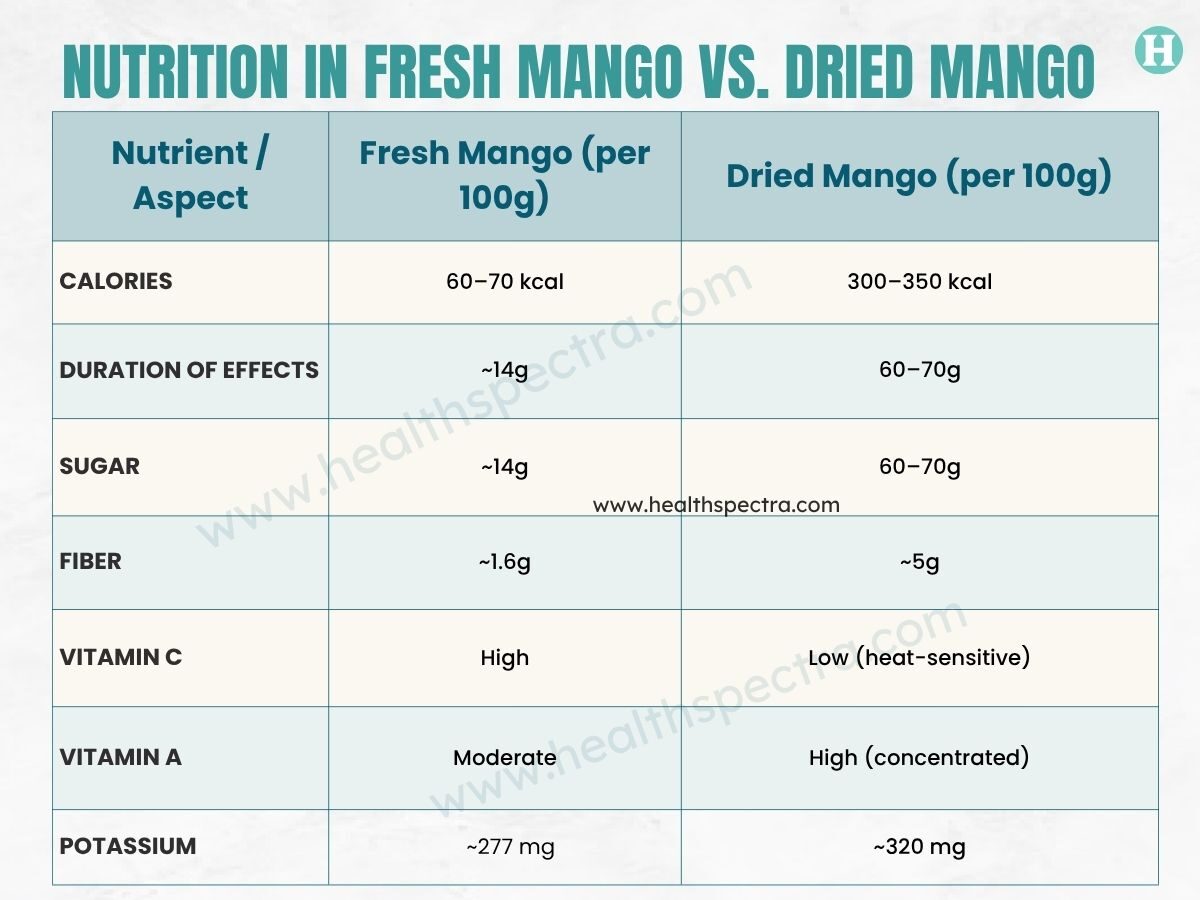
- 100g fresh mango: ~60 kcal, 14g sugar
- 100g dried mango: ~300 kcal, 70g sugar
Although the drying process will cause dried mango to lose some water-soluble nutrients, such as vitamin C, it will still be a nutrient-dense, convenient snack with fiber, beta-carotene, and antioxidant nutrients. Dried mango has a great shelf life and is an excellent travel-friendly snack, too.
Read More: The Power-Packed Benefits of Dried Fruits and Nuts: A Complete Health Guide
Dried Mango Nutrition Facts (per 40g serving)
A serving size of about 40g (approximately ¼ cup) packs a potent nutritional punch. On average, dried mango provides the following:
- Calories per 40g: 126
- Carbohydrates: 32.64g
- Sugars: 30.08g
- Fiber: 2.1g
- Protein: 0.59g
- Fat: 0.31g
Health Benefits of Dried Mango
Dried mango has a vivid color, gummy texture, and a naturally sweet taste. It is a convenient on-the-go snack—eat it plain, mix it with trail mix, or use it as a topping for your breakfast bowl. While dried mango is often considered a healthy replacement for sugar-laden candy, it is more nuanced than that.
Dried mango provides several health benefits, as long as it’s eaten in moderation:
1. High in Antioxidants:
Beta-carotene and polyphenols found in dried mango help support the body’s cells against oxidative stress.
Beta-carotene can be converted to vitamin A in the body, which supports immune function, skin health, and normal vision. Polyphenols can reduce inflammation, support cardiovascular health, and prevent chronic diseases.
2. Good for Digestive Health:
Dried mango has dietary fiber that can contribute to bowel regularity and support the gut. Fiber also contributes to satiety and fullness to help manage overeating.
Further, when eaten with nuts, seeds, or yogurt, dried mango provides additional benefits, as those foods help slow sugar absorption and maintain fullness for longer.
3. Promotes Healthy Skin and Vision:
Vitamin A and carotenoids protect your eyes and skin health. Eating dried mango in moderation can help:
- Promote night vision
- Support skin health, repair, and elasticity
- Protect against age-related eye conditions
4. Natural Source of Quick Energy:
The carbohydrates in dried mango provide a quick energy boost from a natural source. This can be useful for:
- Snacks to eat before or after a workout
- Energy boost during the day
- Trail mixes and other pre- and post-workout foods
Read More: Top 7 Healthy Snacks on the Go: Portable and Nutrient-Rich Foods and Snack Options
Potential Downsides of Dried Mango
Although there are some pros to dried mango, there can also be cons. Here are a few of the disadvantages:
- High sugar and caloric density, especially when eating large amounts, increase the risk of weight gain and potentially cause a spike in your blood sugar levels.
- Added sugars and preservatives, as some brands add syrups or sulfites to dried mango, so it is important to pay attention to this if it is something you are sensitive to.
- Loss of vitamin C, when fruit is dried; it goes through a process of degradation, and heat may cause loss of vitamin C.
How to Choose and Eat Dried Mango the Healthy Way

Dried mango can be a nutritious snack if you choose wisely and eat mindfully. Here are some smart tips to help you enjoy it without going overboard on sugar or calories:
Choose the Right Product:
- Look for unsweetened and preservative-free options. The only ingredient should be mango – no added sugars, syrups, or sulfur dioxide.
- Opt for freeze-dried mango when possible. It often retains more nutrients compared to traditionally dried versions.
Watch Your Portion:
- Dried mango is calorie- and sugar-dense. Stick to about 30–40g (¼ cup) per serving to keep it balanced and beneficial.
Snack Smart:
- It’s a great on-the-go option for travel or busy days – just be mindful of the portion.
- Add it to oatmeal, smoothies, yogurt bowls, trail mix, or homemade granola bars for a natural boost of fiber, flavor, and antioxidants.
Pair for Better Balance:
- Combine with protein or healthy fats like nuts, seeds, or yogurt – to slow down sugar absorption and keep you fuller longer.
Maya Vadiveloo, Ph.D., RD, is an Associate Professor in the Department of Nutrition at the University of Rhode Island. She shares her thoughts on the right pairing.
“One thing that is nice about mango is that people do combine it with different things, like salsa, and it can also be combined with a lot of vegetables. A great way to reduce your total calories is to combine fruits with some of the non-starchy leafy vegetables and make an interesting salad,” she said. “Or add some mango salsa to your fish.”
Fresh vs Dried Mango – Which One Is Better?
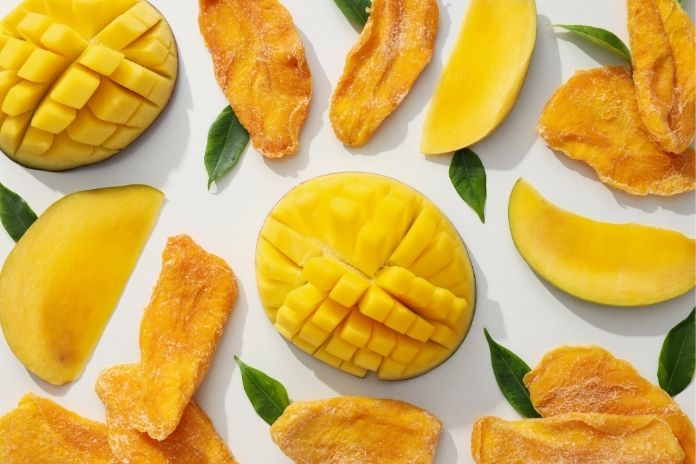
Both fresh and dried mango have their own advantages.
Fresh mangoes can help you stay hydrated, have fewer calories, and are a good source of vitamin C, which is beneficial for the immune system and hydration. Fresh mangoes are a great snack, can be chopped for salads, or used in smoothies.
In a study, participants ate either fresh mango, dried mango, or white bread on successive days. Eating fresh mango made participants feel fuller for longer than either dried mango or white bread. Eating fresh mango also led to more stable blood glucose levels. While dried mango was a little better than white bread when it came to fullness, fresh mango still performed the best.
Dried mangoes are higher in sugar and calories (and beta carotene) and make great energy-dense snacks. It’s important to eat a reasonable portion of dried fruit to avoid eating excess sugar, especially if you are having it as a snack.
An interesting article authored by Shyla Cadogan, RD, compares the nutrition of fresh and dried fruits. She shares, “Watch out for dried fruit that has sugar added, such as candied varieties. Dried fruit is often inherently sweeter since the sugar is in a concentrated state, so you really don’t need to add any additional sugar that doesn’t already come with it naturally.’’
Here’s a nutritional comparison of fresh and dried mango.
 Read More: What Happens When You Stop Eating Sugar?
When to Avoid or Limit Dried Mango
Dried mango may not be for everyone:
- Those who have diabetes or are insulin-resistant
- People on low-calorie or weight-loss diets
- Sensitive to sulfites or preservatives
In summary, dried mango is a healthy and convenient snack, as long as they are not sweetened, consumed in sensible portion sizes, and combined with complementary foods for balanced nutrition.
Conclusion
So, is dried mango healthy? Yes, if you enjoy it in moderation. Dried mango offers fiber, antioxidants, vitamin A, and a quick source of energy, making for an easy, nutritious snack. Once again, be careful with portion sizes, especially if you are monitoring your sugar levels or pursuing weight loss, as it can be high in sugar and calories.
You can make the best use of dried mango and not overeat it by choosing unsweetened/dried mango that has no “preservatives,”. Also, consider pairing dried mango with a protein or a healthy fat, and enjoying it as a snack sometimes.
In addition, consider using the freshest mango and mixing it with dried mango or fresh mango with other fruit can help add healthy flavor and practicality to your dietary routine while also striking the right balance!
Dried Mango FAQs
-
Is dried mango a healthy snack?
Yes, dried mango can be a nutritious snack when eaten in moderation. It provides dietary fiber, antioxidants, beta-carotene, and vitamin A, which benefit digestion, eye health, and immunity. However, since it is calorie- and sugar-dense, it is important to stick to the recommended serving sizes to avoid unnecessary sugar intake.
-
Does dried mango have added sugar?
Many commercial dried mango brands add sugar or syrup for extra sweetness and to help preserve color. These added sugars increase calories and can cause a spike in blood sugar. Here are tips to avoid added sugar:
- Look for “unsweetened” or “no added sugar.”
- Read the ingredient label; ideally, the only ingredient should be mango.
-
Can diabetics eat dried mango?
Diabetics can incorporate dried mango into their meal plan, but portion control is very important. Due to the high concentration of sugars in dried mango, eating protein or healthy fats at the same time—such as nuts, seeds, or Greek yogurt—can slow sugar absorption and limit blood sugar spikes. Recommended serving: 30 – 40g ( ≈ ¼ cup)
-
Is dried mango good for weight loss?
Dried mango can fit into a weight-loss plan, but only when you are mindful of portion size:
- The high amounts of sugar and calories in dried mango can lead to overeating easily.
- Consuming it with foods high in protein or fiber can increase feelings of satiety.
- If you are looking for a lower-calorie and more hydrating option, fresh mango is best.
-
How much dried mango should be consumed in a day?
A reasonable daily serving is 30–40g (about ¼ cup). This amount provides nutrients and antioxidants without too much sugar or calories. Eating more than this regularly might contribute to weight gain or blood sugar fluctuations.
-
What is the difference between freeze-dried mango and regular dried mango?
- Freeze-dried mango: Retains more nutrients, antioxidants, and color from the fruit, because it has been dried using low heat, in a vacuum. The texture is often lighter and crisp.
- Regular heat-dried mango: Loses some heat-sensitive nutrients such as vitamin C, texture is more chewy, and may contain added sugar or preservatives in some cases.
References
- https://www.megawecare.com/good-health-by-yourself/nutrition/dried-mango
- https://ayoubs.ca/blogs/news/dried-mango
- https://www.andeantaste.com/en/blog-en/is-dried-mango-a-candy-debunking-the-biggest-myths/
- https://www.sciencedirect.com/science/article/pii/S1018364722005511
- https://sindhidryfruits.live/blogs/know-your-nuts/the-benefits-of-eating-dried-mangoes
- https://myhealthmeter.com/blog/details/surprising-health-benefits-of-mangoes
In this Article