







The searing, stinging, and throbbing pain from hemorrhoids can make even the simplest activities like sitting, walking, or using the bathroom a source of agony. Whether internal or external, hemorrhoids can leave you feeling sore, swollen, and desperate for relief. The good news? You don’t have to suffer in silence.
From soothing home remedies to natural solutions that reduce inflammation, there are effective ways to relieve pain and accelerate recovery. This comprehensive guide explores the causes, symptoms, diagnosis, and treatment options for hemorrhoids to help you find relief and return to comfort.
What are Hemorrhoids?
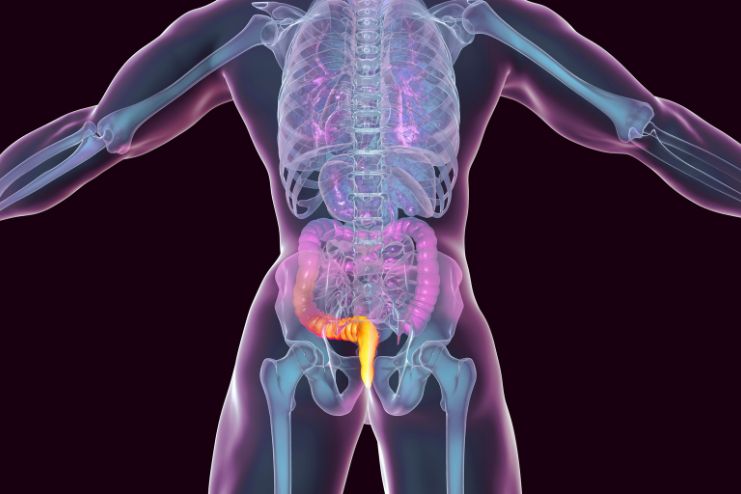
Hemorrhoids are swollen and inflamed veins in the anus and lower rectum. They can appear as swollen lumps near or inside the anus, causing burning, itching, sharp pain, and discomfort, especially when sitting or during bowel movements. While external hemorrhoids are more common and typically cause greater discomfort, both types can significantly impact daily life.
If you experience persistent symptoms, consulting a healthcare provider is recommended for proper diagnosis and treatment, as rectal bleeding may indicate other conditions such as colorectal cancer or inflammatory bowel disease.
Read More: Coconut Oil for Hemorrhoids | How to Get Rid of Hemorrhoids
Types of Hemorrhoids:
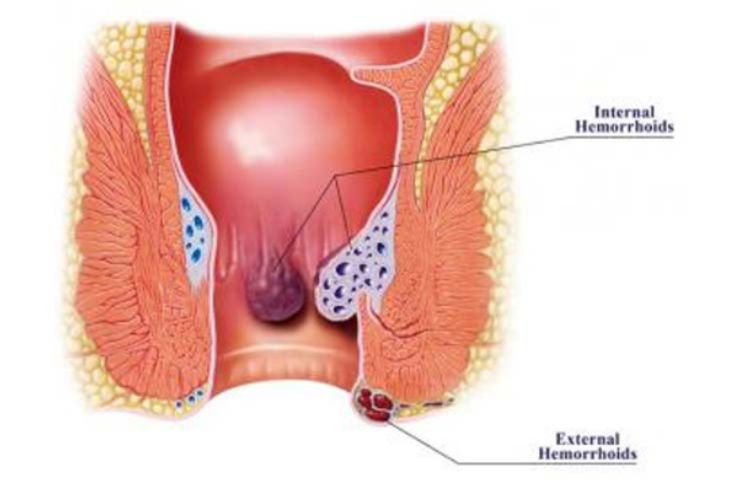 Hemorrhoids are categorized based on their location and severity, with each type requiring different treatment approaches.
Internal Hemorrhoids
- Located within the rectum and cannot be seen from the outside
- Generally painless, but may cause bright red bleeding during bowel movements
- Can swell and prolapse(protrude beyond the anal opening), causing discomfort and a feeling of fullness
- Mild prolapsed hemorrhoids often retract spontaneously, while severe cases may require medical intervention
External Hemorrhoids
- Develop under the skin around the anal opening and are often visible
- Cause itching, burning, swelling, and pain, particularly when sitting for extended periods
- Can become irritated by clothing or excessive wiping, increasing discomfort
Thrombosed Hemorrhoids
- Occur when a blood clot forms inside an external hemorrhoid
- Cause severe pain, swelling, and a hard, bluish lump near the anus
- May require medical treatmentthrough drainage or minor surgical removal
- While the clot may dissolve naturally, the accompanying pain and inflammation can be debilitating
Prolapsed Hemorrhoids
- Internal hemorrhoids that protrude outside the anus
- Mild cases retract after bowel movements, while severe ones remain outside and may need manual replacement
- Cause discomfort, mucus discharge, and a sensation of incomplete bowel evacuation
Read More: Understanding Pelvic Health: Common Issues and Maintenance Tips
Hemorrhoid Symptoms
External Hemorrhoids
- Persistent anal itching and burning that may inflame surrounding skin
- Pain or soreness, especially when sitting, that worsens with prolonged sitting or bowel movements
- Visible swelling or painful lumps around the anus
Internal Hemorrhoids
- Bright red rectal bleeding visible on toilet paper, in the toilet bowl, or on stool
- Prolapse through the anal opening, causing pain and hygiene difficulties
- Pressure or fullness in the rectum, creating a sensation of incomplete evacuation
Because rectal bleeding may be caused by other conditions such as colorectal cancer or inflammatory bowel disease, a medical assessment should be obtained in the event of persistent symptoms.
Read More: Is Baking Soda for Constipation – Does it work?
Causes of Hemorrhoids

Early detection of hemorrhoids can be avoided to avoid further complications. Pain, itching, and swelling are common signs, while various factors can be the cause of the condition itself. Here are the things that you should know about the symptoms and causes of hemorrhoids.
Several factors contribute to hemorrhoid development:
- Straining during bowel movements: Excessive pushing increases pressure in the rectal veins
- Prolonged toilet sitting: Extended time on the toilet stresses rectal veins
- Chronic constipation or diarrhea: Both conditions irritate the rectal area and strain veins
- Low-fiber diet: Insufficient fiber leads to harder stools that are difficult to pass
- Aging: Weakening tissues that support rectal veins make hemorrhoids more common with age
- Pregnancy: Increased pelvic pressure during pregnancy can trigger hemorrhoid development
- Heavy lifting: Repeated straining during weightlifting or physical activities raises rectal vein pressure
Understanding these causes helps in both prevention and effective treatment planning.
Read More: Always Tired? Uncover the 11 Hidden Causes Behind Your Fatigue!
What Do Hemorrhoids Feel Like?
If you’re wondering how hemorrhoids feel, it depends on their severity. Experts categorize hemorrhoids into four stages based on their progression.
Grade 1 (First Stage)
- Slightly enlarged hemorrhoids that remain inside the anus
- May cause mild rectal bleeding and occasional irritation
- Generally cause minimal discomfort
Grade 2 (Second Stage)
- Hemorrhoids that protrude during bowel movements but retract automatically
- May cause bleeding, itching, irritation, or mild pain
- Symptoms worsen with straining
Grade 3 (Third Stage)
- Hemorrhoids that prolapse and require manual repositioning
- Cause moderate to severe pain, itching, and swelling
Grade 4 (Fourth Stage)
- Permanently prolapsed hemorrhoids that cannot be pushed back inside
- May contain blood clots and cause intense pain, swelling, and difficulty with daily activities
- Can lead to rectal prolapse, requiring immediate medical attention
Diagnosis of Hemorrhoids
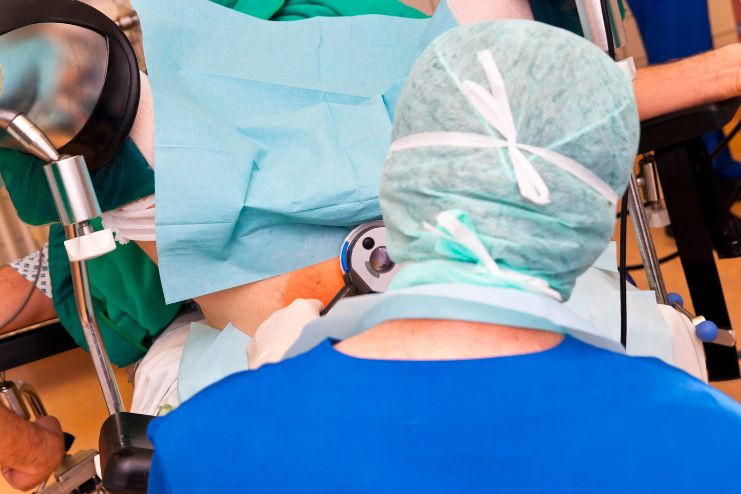
Proper diagnosis is essential to rule out other conditions with similar symptoms, such as anal fissures, rectal polyps, or colorectal cancer.
Physical Examination
External hemorrhoids can be diagnosed through visual inspection of the anal area, while internal hemorrhoids require further examination.
Digital Rectal Exam (DRE)
A healthcare provider inserts a lubricated, gloved finger into the rectum to check for abnormal swelling, tenderness, or lumps, helping assess internal hemorrhoids and exclude other conditions.
Anoscopy or Sigmoidoscopy
These procedures use a small, lighted tube inserted into the rectum to provide clear visualization of internal hemorrhoids and evaluate the condition’s severity.
Colonoscopy
Recommended when rectal bleeding is present to rule out serious digestive conditions like colorectal cancer or inflammatory bowel disease, especially for individuals over 50 or those with a family history of colon-related diseases.
Treatment Options for Hemorrhoids
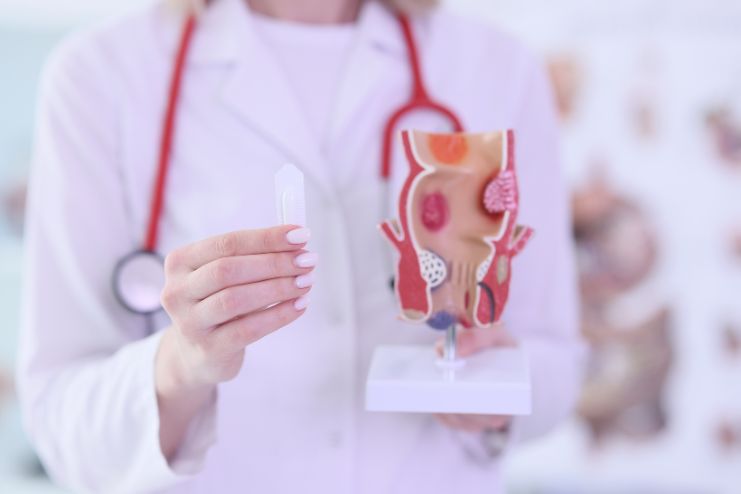
Treatment approaches vary based on hemorrhoid location, severity, and individual patient factors.
Conservative Treatment (Initial Management)
Dietary Modifications
- Increase fiber intake to 20-30 grams daily through whole grains, fruits, and vegetables
- Maintain adequate hydration with at least 8 glasses of water daily to soften stools
- Use bulk-forming laxatives like psyllium husk when dietary fiber is insufficient
Symptom Management
- Take warm sitz baths for 10-15 minutes, 2-3 times daily, to reduce swelling and irritation
- Apply topical treatments containing hydrocortisone, witch hazel, or lidocaine for short periods
- Use stool softeners like docusate sodium to minimize straining
Lifestyle Adjustments
- Avoid prolonged sitting and straining during bowel movements
- Respond promptly to bowel urges to prevent constipation
Minimally Invasive Procedures
Rubber Band Ligation (RBL)
- The most effective outpatient procedure that cuts off the blood supply, causing hemorrhoids to shrink and fall off within days
- Quick procedure with minimal recovery time
Sclerotherapy
- Chemical injection that hardens blood vessels, causing hemorrhoids to shrink over time
- Less painful but may require multiple sessions
Infrared Coagulation (IRC)
- Heat therapy that destroys hemorrhoidal tissue with low complication rates
- Non-surgical procedure performed in a medical office
Electrocoagulation
- Uses electric current to coagulate and shrink hemorrhoids by cutting off the blood supply
- Particularly effective for internal hemorrhoids
Surgical Options (For Severe or Recurrent Cases)
Hemorrhoidectomy
- Surgical removal of large or thrombosed hemorrhoids provides definitive treatment
- Most effective option, but requires a longer recovery period
Stapled Hemorrhoidopexy
- Repositions prolapsed internal hemorrhoids while cutting off the blood supply
- Faster recovery time but slightly higher recurrence rate
Hemorrhoidal Artery Ligation (HAL)
- Uses Doppler ultrasound to locate and ligate hemorrhoidal arteries
- Minimizes symptoms while preserving anal tissue
How to Prevent Hemorrhoids?

Effective hemorrhoid prevention involves:
- Maintaining adequate hydration to prevent hard stools
- Avoiding excessive straining during bowel movements
- Responding promptly to bowel urges
- Exercising regularly to prevent constipation
- Limiting prolonged sitting periods
- Consuming fiber-rich foods, including brown rice, pears, oatmeal, bran, and carrots
Read More: Top 10 Popular Myths About Hydration Busted!!
Conclusion: Find Relief and Take Control
While hemorrhoids can be painful and disruptive to daily life, they are highly treatable with the appropriate approach. Whether dealing with internal or external hemorrhoids, relief is available through home remedies, lifestyle modifications, and medical interventions.
Conservative treatments like warm sitz baths, topical medications, increased dietary fiber, and proper hygiene can provide significant symptom relief. More severe cases may benefit from medical procedures such as rubber band ligation or sclerotherapy.
Prevention remains the best strategy. Staying hydrated, eating fiber-rich foods, avoiding prolonged sitting, and exercising regularly can significantly reduce hemorrhoid risk. If you experience persistent symptoms, don’t delay seeking professional medical advice for proper diagnosis and treatment. Take action today to return to a comfortable, pain-free life.
References
- https://www.aafp.org/pubs/afp/issues/2018/0201/p172.html
- https://www.ncbi.nlm.nih.gov/books/NBK537182/
- https://www.ncbi.nlm.nih.gov/books/NBK500009/
- https://emedicine.medscape.com/article/775407-clinical
- https://emedicine.medscape.com/article/1948001-overview
- https://www.ncbi.nlm.nih.gov/books/NBK459324/
- https://www.niddk.nih.gov/health-information/diagnostic-tests/colonoscopy
In this Article