




















Neck pain and muscle aches are more than just minor discomforts—they can signal underlying issues such as spinal misalignment, nerve impingement, or degenerative conditions if left unaddressed. Chronic neck pain may also be linked to herniated discs or persistent postural imbalances.
While various treatments and supplements are available, many provide only temporary relief or come with side effects. Increasingly, yoga is recommended as a safe, effective, and natural approach for long-term neck pain management.
Yoga, an ancient mind-body practice, not only helps reduce neck pain but also improves posture, flexibility, and overall body alignment. These asanas can also alleviate tension headaches, boost circulation, and calm the nervous system. By combining movement with mindful breathing, yoga offers a holistic solution for neck pain and muscle stiffness.
Read More: How To Get Rid Of Neck Pain? 14 Effective Remedies And Exercises
Benefits of Yoga Poses for Neck Pain
Yoga doesn’t only temporarily relieve pain; it corrects the underlying causes, such as bad posture, muscular stiffness, and tension. Here’s how it does it:
- Enhances the Functional Capacity of Neck Muscles:
Regular practice strengthens and increases the mobility of neck muscles, reduces pain, and enhances control over head and shoulder movements.
- Restores Flexibility and Posture:
Yoga realigns the cervical spine and corrects slouching, helping maintain a natural posture and preventing future strain.
- Relieves Tension, Anxiety, and Stress:
Emotional tension—and its opposite—are common causes of chronic neck pain. Yoga’s deep breathing and soothing stretches ease the nervous system, abate mental tension, and physically unwind the neck and shoulder muscles.
- Provides Long-Lasting Neck Pain Relief:
Research shows that yoga significantly reduces chronic pain in the neck and shoulders. It improves circulation, enhances oxygen delivery to tight muscles, and promotes deep relaxation and recovery.
Best Yoga Asanas to Relieve Neck Pain
Practice these poses daily for 10–30 minutes to strengthen muscles, improve posture, and release tension in the neck, shoulders, and upper back.
1. Tadasana (Mountain Pose)
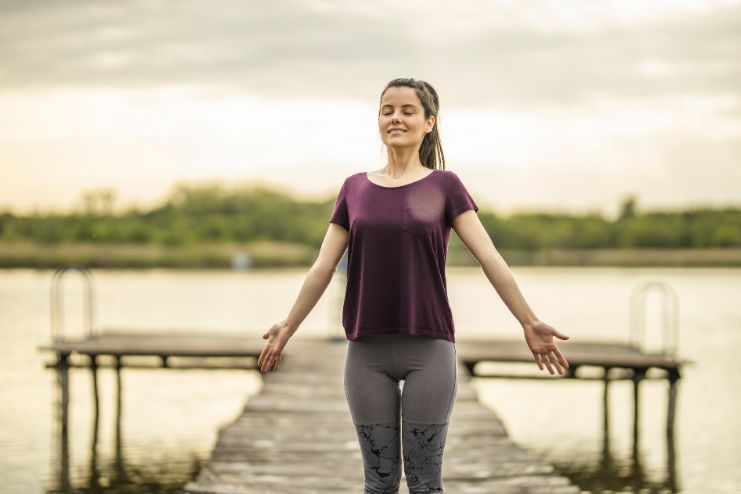
This foundational standing pose promotes alignment and balance, helping correct posture, especially for those experiencing “tech neck” or slouching.
How to Do It:
- Stand with feet hip-width apart.
- Engage your thighs, gently tuck your pelvis, and draw your belly in.
- Lift your chest and elongate your spine, reaching the crown of your head upward.
- Keep your chin slightly tucked and gaze forward.
- Breathe deeply and hold for 30–60 seconds.
2. Seated Mountain Pose

Seated mountain pose is ideal for individuals who work long hours sitting down.
This adaptation of Tadasana readjusts spinal alignment when seated and provides immediate relief from neck and shoulder tension during work hours.
How to Do It:
- Sit with feet flat and hip-width apart.
- Place your palms on your thighs.
- Straighten your back, lengthen your neck, and stretch your rib cage upward.
- Breathe deeply and hold for 30–60 seconds.
Read More: Acupressure Mats: Can Lying on Spikes Improve Your Sleep & Pain?
3. Bhujangasana (Cobra Pose)
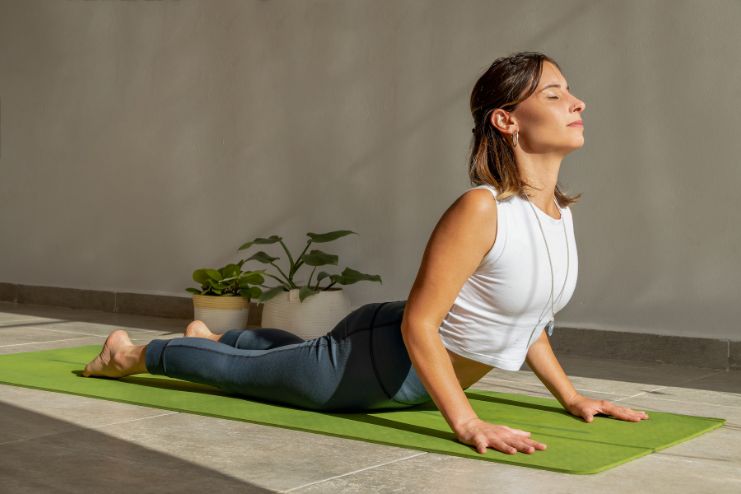
Bhujangasana strengthens back muscles and eases cervical tension. This gentle backbend lifts the chest and energizes the upper spine. It’s particularly helpful in reversing the forward slouch created by sitting long hours in front of a computer.
How to Do It:
- Lie on your stomach with feet together and palms under your shoulders.
- Keep your elbows close to your body.
- Inhale, lifting your head and chest using your back muscles (not just your hands).
- Keep shoulders relaxed and gaze forward or slightly upward.
- Hold for 15–30 seconds, then exhale and lower down.
4. Marjaryasana-Bitilasana (Cat-Cow Pose)
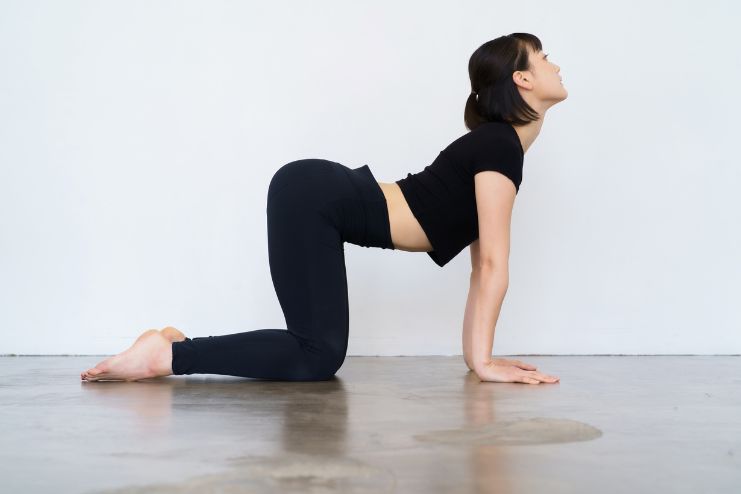
Cat-Cow Pose is a gentle, flowing sequence that improves spinal flexibility and mobility. This dynamic movement massages the entire spine, releases tension in the neck and upper back, and enhances overall range of motion. It also helps synchronize breath with movement, promoting relaxation and body awareness.
How to Do It:
- Start on your hands and knees, with wrists aligned under shoulders and knees under hips.
- Cow Pose (Bitilasana): Inhale deeply, dropping your belly toward the mat as you lift your chest, head, and tailbone toward the ceiling. Gaze slightly upward, opening the front of your body.
- Cat Pose (Marjaryasana): Exhale, rounding your spine toward the ceiling. Tuck your chin to your chest and draw your tailbone under, gently stretching the back of your neck and spine.
- Continue to flow smoothly between Cat and Cow poses, matching each movement to your breath. Repeat for 5–6 slow, mindful rounds.
This sequence is especially effective for releasing stiffness and improving mobility in the neck, shoulders, and back.
Read More: Can Standing Desks Reduce Your Risk of Chronic Back Pain?
5. Angel Wings
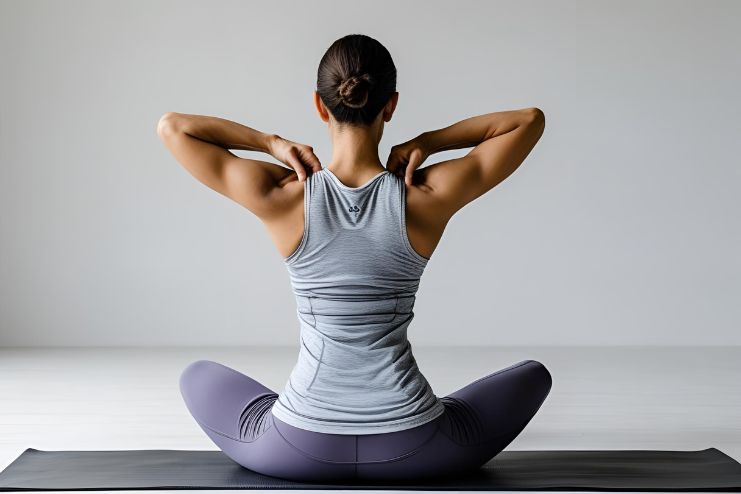
Angel wings exercise releases tension from the shoulders and improves circulation. This pose targets scapular mobility and upper-back release. It slowly releases tension in the trapezius muscles and enhances blood circulation in the shoulders and neck.
How to Do It:
- Sit or stand with a straight back.
- Bend your elbows and place your fingertips on your shoulders.
- Inhale as you roll your elbows outward and back, squeezing the shoulder blades.
- Exhale as you roll your elbows forward.
- Continue slow rotations for 30–60 seconds in each direction.
6. Naukasana (Boat Pose)
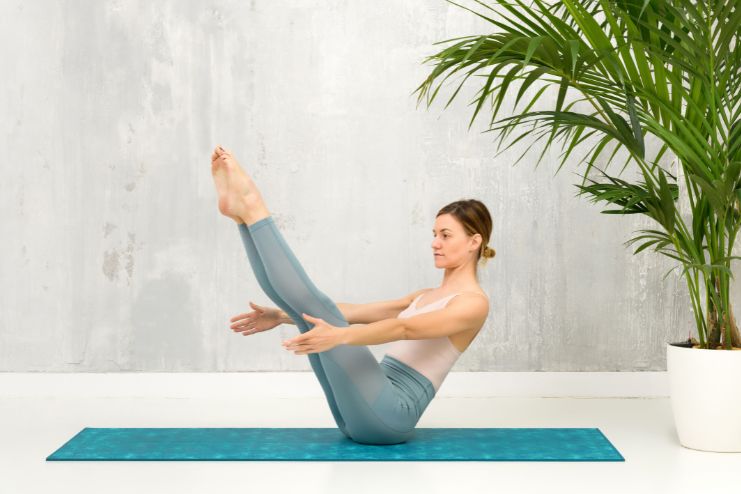
Naukasana strengthens core and neck stabilizers—helpful in cervical support. Postural control improves, and the deep neck flexors, as well as the spine, become strengthened with Boat Pose. It’s also helpful for cervical spondylosis.
How to Do It:
- Sit with legs extended and spine straight.
- Place your hands behind you for support.
- Lean back and lift your legs at a 45-degree angle.
- Stretch your arms forward, parallel to the ground.
- Keep your spine long and chest lifted.
- Hold for 15–30 seconds, breathing steadily, then lower down.
Final Thoughts: Build a Stronger, Pain-Free Neck—Naturally

Neck pain affects sleep, movement, and even mental clarity. While painkillers may offer short-term relief, they don’t address underlying issues like poor posture or muscle weakness.
Yoga provides a natural and effective path to lasting relief. With regular practice, these poses can:
- Improve posture and muscular support
- Release tension in the neck, shoulders, and upper back
- Boost circulation and reduce inflammation
- Calm the nervous system and lower stress
Just 10–30 minutes of daily practice can bring both immediate relief and long-term prevention. Over time, you’ll develop the strength, flexibility, and awareness needed to keep your neck healthy and pain-free.
Unroll your mat, breathe deeply, and give your neck the care it deserves—with yoga.
References
- https://www.bajajfinserv.in/insurance/health-benefits-of-naukasana
- https://performancemedicine.com.au/angel-wings
- https://www.tummee.com/yoga-poses/bidalasana
- https://www.yogicwayoflife.com/the-seated-mountain-pose
- https://www.netmeds.com/health-library/post/tadasana-in-yoga-uses-benefits-and-the-steps-to-do-mountain-pose
- https://www.baselorthopaedics.com/neck-pain-in-seniors-exploring-causes-and-solutions
In this Article