















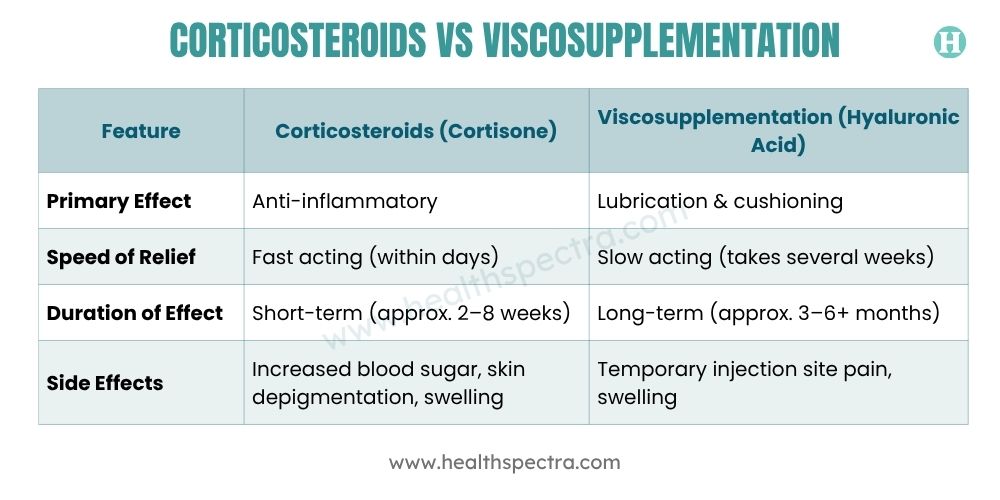
- Corticosteroid injections reduce inflammation quickly and relieve knee pain within days.
- Viscosupplementation lubricates the joint, improving cushioning and mobility for months.
- Both injections may delay knee replacement, depending on the severity of osteoarthritis and its symptoms.
Knee osteoarthritis is one of the top reasons people deal with ongoing pain and have trouble moving around. As the cartilage in the knee wears down, simple things like walking, climbing stairs, or just standing for a while start to hurt.
For many people, doctors eventually recommend total knee arthroplasty (TKA), or knee replacement surgery. Still, not everyone wants to jump straight into an operation. Plenty of folks look for ways to manage the pain and put off surgery as long as possible.
For this reason, before considering surgery, doctors frequently suggest knee injection options for osteoarthritis. Cortisone injection (corticosteroids) and viscosupplementation are among the most commonly used treatments.
This article covers the science behind corticosteroids vs viscosupplementation, how each injection works, research on their potential for knee injection to delay surgery, and how patients can select the best knee injection before knee replacement.
Read More: 7 Best Shower Chairs After Knee Surgery
Why Patients Turn to “Joint Shots” Before Knee Replacement
Osteoarthritis, a disorder in which the cartilage that cushions and protects the joints gradually deteriorates, is one type of joint pain that can be effectively treated with intra-articular steroid injections (IASI).
Osteoarthritis wears down cartilage, allowing the bones to rub against each other and damage the joint, causing pain. The most prevalent type of arthritis, osteoarthritis, primarily affects the spine, fingers, thumbs, hips, knees, or toes and is a significant cause of disability in older persons.
Initially, non-steroidal anti-inflammatory drugs (NSAIDs) such as aspirin, ibuprofen, and naproxen are used to reduce inflammation. In contrast, analgesics such as acetaminophen (commonly known as Tylenol) are used to manage pain.
A corticosteroid injection into the joint, however, may occasionally be beneficial for both temporary pain reduction and increased joint mobility if you have not found adequate pain relief with these treatments.
Many patients first use medication, physical therapy, and lifestyle modifications to control their symptoms. However, these methods could no longer offer adequate alleviation if the illness worsens. An intra-articular injection can be an important part of osteoarthritis (OA) management for patients who want to stay active. This can delay knee injection surgery.
What Corticosteroid Injections Do — Fast Relief, Short Window

Since cortisone is a kind of corticosteroid, cortisone injections are another name for steroid injections. Steroid injections come in a variety of forms and can be used for a wide range of purposes.
Cortisone injections are typically used to treat musculoskeletal disorders, including pain in joints, tendons, muscles, and the spine. These injections target joint inflammation, a major cause of pain in osteoarthritis.
Steroid shots, people usually call them cortisone shots, help ease pain and swelling in all sorts of joints: knees, shoulders, hands, ankles, you name it. Doctors also use them for stubborn back or neck pain, especially when a herniated disc is stirring up inflammation.
Whether the problem’s in your neck, middle back, or lower back, cortisone injections target those irritated spots. Sometimes, they go straight into the facet joints along the spine to calm things down and help you move with less pain.
What Viscosupplementation (Hyaluronic Acid) Does — Lubrication and Cushioning

The term “viscosupplementation” refers to the injection of hyaluronic acid. A naturally occurring component of joint fluid that helps with lubrication is hyaluronic acid. It permits the joint’s cartilage-covered articulating surfaces to move smoothly. “Gel shots” are a common term for hyaluronic acid injections.
Hyaluronic acid injections are recommended for the treatment of knee arthritis that has not improved with non-surgical measures such as bracing, physical therapy, anti-inflammatory drugs, and corticosteroid injections.
Your joints are lubricated and shock-absorbed by hyaluronic acid. The natural hyaluronic acid in the joint degrades in OA patients, increasing discomfort and friction.
Viscosupplementation helps by injecting this gel-like material into the knee:
- The injection replaces any lost lubrication.
- Decrease inflammation.
- Boost the mobility of your joints.
- Postpone the need for surgery.
The molecular weight and formulation of various HA products differ, which could affect their effectiveness and duration of activity. Studies demonstrate that high-molecular-weight HA, such as hylan G-F 20, provides longer-lasting relief than lower-molecular-weight formulations.
Corticosteroids vs Viscosupplementation — Side-by-Side Comparison
Read More: Why Your Knees Hurt When Climbing Stairs (Even if You’re Young)
What the Latest Research Says About Surgery Delays
A patient may put off surgery for a variety of reasons. What is important is what happens to the body the longer the necessary treatment is delayed, regardless of whether the cause is a personal financial condition or a phobia of medical facilities.
Many orthopedic disorders are progressive by nature, including meniscus injuries, rotator cuff tears, and severe arthritis. No amount of relaxation or pain relief can stop the damage once the underlying structure starts to erode.
If surgery is postponed, this degeneration can persist, leading to:
- Increased loss of mobility and stiffness in the joints.
- Muscle atrophy or weakness.
- Increasing inflammation and pain.
Following surgery, healing takes longer and may not fully restore strength or range of motion if these secondary problems arise. Your body naturally adjusts by shifting the workload to another joint or muscle group when one is damaged.
Over time, this may result in new pain in other locations, such as shoulder issues from not using one arm, or hip or back strain following a knee injury. For patients hoping to find the best knee injection before knee replacement, the choice often depends on individual circumstances rather than a single universal solution.
Which Injection Is Right for You?

It’s not always easy to decide between a cortisone shot vs hyaluronic acid. Each injection serves a different purpose in OA management.
Physicians could suggest corticosteroids if:
- You’re extremely inflamed.
- You require immediate pain treatment.
- Your swollen knee restricts your mobility.
Viscosupplementation, on the other hand, would be preferable if:
- There is mild to moderate osteoarthritis.
- You desire relief that lasts longer.
- Your objective is to delay total knee replacement naturally.
Read More: How to Protect Your Knees During Workouts: Tips Every Active Person Should Know
Safety and Timing Considerations
Doctors should administer injections cautiously despite their widespread use.
Among the crucial safety factors are the following:
- Due to the danger of infection risk after steroid injection, avoid scheduling surgery within three months of the injection.
- When it comes to the intervals between injections, heed your doctor’s advice.
- Keep an eye out for any potential negative effects.
The following are possible adverse effects of intra-articular injection therapies:
- Transient swelling.
- Injection site discomfort.
- Uncommon allergic responses.
Beyond Injections — Proven Ways to Delay Knee Surgery
Injections are useful for relieving symptoms, but they are most effective when used in conjunction with other therapies. Many doctors emphasize that delaying total knee replacement naturally requires a comprehensive approach. Strong scientific evidence supports the following tactics.
Low-Impact Knee Exercises: Exercise is typically the last thing on your mind when your knees hurt and feel stiff. However, knee exercises are just one of the numerous ways that mobility can help you manage your joint discomfort.
Reducing Weight to Ease Knee Strain: Will weight loss alleviate knee pain? Losing even 10% of your body weight can reduce knee discomfort. You can relieve 4 pounds of pressure on your knees by removing just 1 pound.
Physical Therapy for Knee Pain: Knee discomfort may affect your strength, balance, and mobility. Physical therapy can help you resume your favorite activities if knee discomfort has prevented you from doing so.
A Knee Brace Rather Than a Knee Replacement: Strain on your knee joint during walking or standing can cause knee pain. Knee braces do a couple of important things.
Mainly, they keep your knee steady and help align the joint, giving your knee a chance to heal and take it easy. It’s smart to work with your physical therapist to find a brace, off-the-shelf or custom, that actually fits you well.
Joint Supplements for Knee Pain: Glucosamine and chondroitin are dietary supplements taken by certain individuals with knee pain. These compounds, which are present in cartilage, help preserve its structure and delay its degradation in joints.
Read More: Top 5 Orthopedic Knee Pillows to Alleviate Discomfort and Improve Sleep
Conclusion
When you’re dealing with knee osteoarthritis, everyone’s looking for ways to ease the pain and put off surgery as long as possible. Two options often come up: corticosteroid vs viscosupplementation injections. They work differently, but both can help people stay active and manage their symptoms.
Corticosteroid shots come in handy when pain suddenly flares; they kick in quickly, knocking down both pain and swelling. Viscosupplementation takes a different approach, focusing on lubricating the joint. Some people find this gives them relief that sticks around longer.
Injections are not a long-term remedy for arthritis, though they can be useful for knee injections to delay surgery. The severity of osteoarthritis, general health, and individual treatment objectives all influence the best course of action. Patients can select the best course of action by speaking with an orthopedic specialist.
References
- Weill Cornell Medicine. Intra-articular steroid injection.
- Summit Orthopedics. Facet joint injection.
- Hospital for Special Surgery. (2024, November 25). What to know about knee gel injections.
- Hospital for Special Surgery. (2023, December 12). What you should know about cortisone shots.
- Raleigh Hip & Knee. Viscosupplementation.
In this Article