











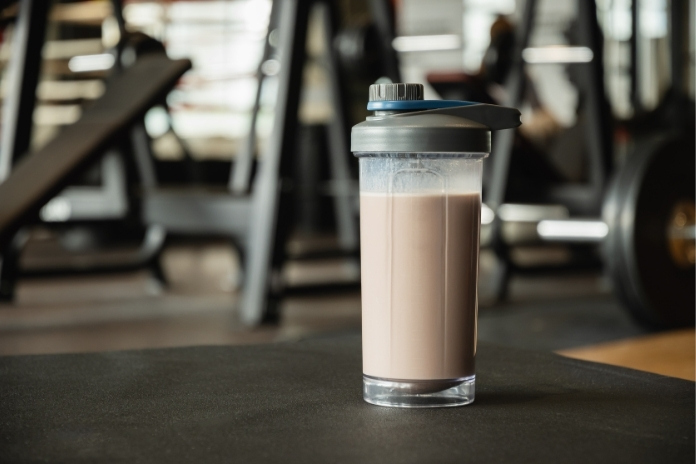
Are you bloated after hitting your macros and smashing your workout? Welcome to “milkshake bloat,” the tight, gassy, or uncomfortable feeling some people experience after a whey protein shake.
We’re living in the age of protein shakes. Whether someone lifts weights, runs occasionally, or is simply trying to lose weight, protein powders have become a daily staple. They’re quick, convenient, and designed to support muscle recovery and nutrition. But if your post-workout shake leaves you feeling bloated or uncomfortable, you’re definitely not alone.
In this article, we’ll break down the real reasons behind whey-related bloating, the ingredients most likely to cause it, and how different types of whey affect digestion.
Read More: Shake Up Your Protein Game: 7 Delicious Protein Shakes Available on Amazon
What Exactly Is “Milkshake Bloat”?
The accumulation of air or gas in your body, particularly in your intestines, when you ingest protein, is known as protein bloating. As you might expect, this results in discomfort, gas that may be humiliating and uncomfortable, and the sensation that someone is blowing air into your stomach.
Manufacturers frequently combine the whey protein with lactose, artificial sweetener, thickener, and flavorings in fitness shakes. These substances can be hard for some people to digest. Fermentation can occur in the gut when the body struggles to break them down, leading to gas, bloating, or discomfort.
However, if you have a bloated stomach for longer than 3 weeks or experience bloating more than 12 times a month, the NHS advises seeing your doctor.
The 4 Hidden Reasons Your Protein Shake Is Causing Bloat

Protein smoothies are not all made equal. Despite being promoted as straightforward recovery beverages, many contain ingredients that can subtly interfere with digestion. One of these four hidden elements could be the cause of your frequent post-shake sensations of tightness, gassiness, or discomfort.
1. The Lactose Factor—Even If You’re Not Intolerant
Whey is high in lactose and one of the most popular protein sources in protein shakes. To be absorbed into the bloodstream, lactase enzymes typically break down lactose into glucose and galactose.
However, because they lack these lactase enzymes, people who are lactose intolerant end up with undigested lactose in their stomachs. This lactose is fermented by gut bacteria, leading to the production of fluid and gas in the gastrointestinal system.
Nausea, diarrhea, and bloating may result from this. With an estimated 65% of adults worldwide being lactose intolerant, this is not uncommon. However, this percentage is lower in Western nations. For instance, 36% of Americans have lactose sensitivity. Consider moving to different protein sources if you experience bloating and are lactose intolerant.
2. The “Franken-Sweetener” Effect
Many protein powders include sugar alcohols like sorbitol and xylitol or artificial sweeteners such as sucralose or acesulfame potassium. These can cause bloating even when they cut calories.
Some people experience gas, bloating, and even diarrhea as a result of their digestive system’s inability to break down sugar alcohols. Similarly, not everyone will tolerate high levels of artificial flavors, thickeners, or emulsifiers.
3. Gums and Thickeners That Bulk Your Belly
Corn fiber, carrageenan, and xanthan gum are examples of ingredients that can improve a product’s taste or texture. However, these ingredients often come with a price, particularly bloating, gas, and digestive discomfort in sensitive individuals.
Gums are simply fibers that the body cannot digest. Although the body may tolerate relatively small amounts, consuming larger quantities, especially when taken rapidly in liquid form, can make the belly feel full and cause gas.
Read More: 15 Homemade Protein Shakes For Weight Loss You Should Try
4. The Speed (and Air) Problem
It’s not always the ingredients that cause the problem. Sometimes it’s simply the way you drink your protein shake. Many people down their protein drink in a single gulp right after a workout, especially when they’re in a hurry. This rushed habit can force excess air into your digestive tract, leading to bloating or stomach discomfort.
The issue may get even worse if the shake isn’t mixed properly. Using a low-quality shaker or not blending long enough can leave behind the undissolved powder lumps. Your stomach then has to work even harder to break the clumps down, and the trapped air in poorly mixed shakes can make you feel heavy and very uncomfortable.
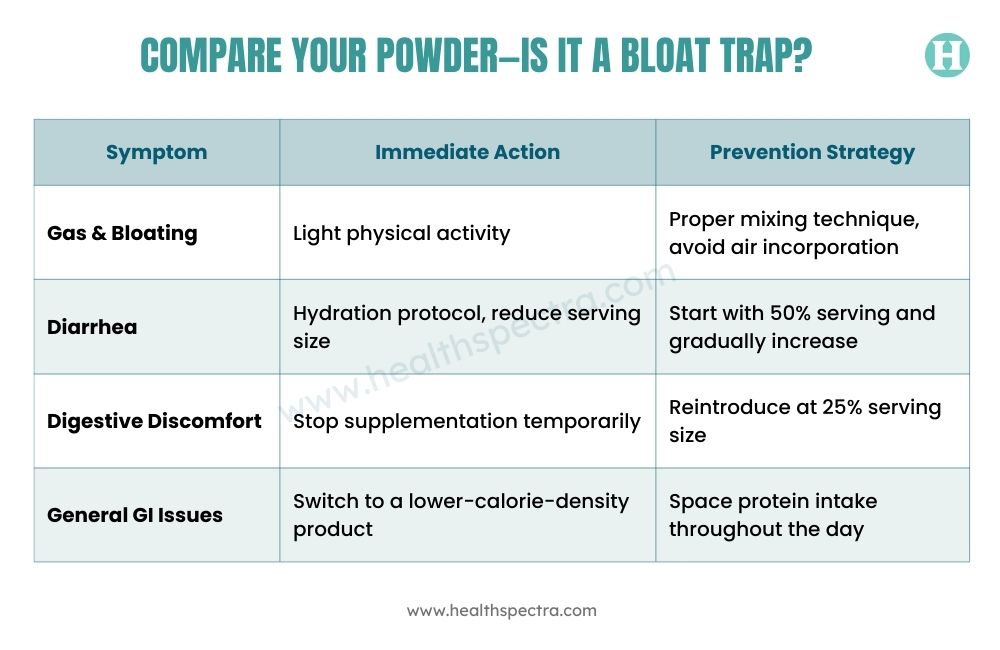
Compare Your Powder—Is It a Bloat Trap?
 How to Reclaim Your Post-Workout “Glow”
There are a few easy changes you can make if your protein shake leaves you feeling bloated rather than energized. Making wiser ingredient choices and adjusting your shake’s intake will help you boost digestion and reap the benefits of recovery without discomfort.
Choose Smart Formulations
The kind of protein powder you select has a significant impact on how your body responds to exercise. Many protein powders contain flavoring compounds, sugar alcohols, colors, artificial sweeteners, fillers, and other unsavory additives. Choose a simpler list of ingredients.
A premium protein should be enhanced with specific ingredients that actively promote digestion and absorption to deliver the most gut-friendly experience possible. Use plant-based substitutes, such as rice or pea protein.
Adjust How You Consume
Just as crucial as the ingredients in your protein shake is how you consume it. Allow the smoothie to settle for around 30 to 60 seconds after combining your protein. By allowing the foam to settle, you can swallow less air. It is a straightforward mechanical problem.
You also swallow too much air when you down any liquid, including protein shakes. This trapped air in your digestive tract can directly cause bloating and gas. You should take your time and drink your smoothie slowly for about 5 to 10 minutes.
Support Digestion Naturally
Simple lifestyle changes can make it easier for your body to absorb protein from protein shakes. Consider taking a leisurely 10-minute walk after drinking your smoothie. By promoting digestion and helping trapped gas pass through the digestive tract, light exercise lowers pressure and bloating.
Dehydration also makes it harder for the body to perform digestive functions. The problem isn’t even your protein powder; it’s your body’s inability to get enough water and electrolytes. Your body compensates for low water content by retaining more water, leading to bloating. Therefore, one of the most important ways to prevent bloating is to stay hydrated.
When Bloating Signals Something More

It’s normal to feel bloated after a protein shake, but if you have severe or ongoing pain, it could be a sign of a digestive problem. If your digestive problems make it hard for you to work, talk to people, exercise, or sleep, you should see a doctor. It is especially important if you are losing weight for no reason or are suddenly very tired.
You should see your doctor immediately if you see blood in your stool, have severe stomach pain, or have diarrhea that lasts more than three days. These signs show the person isn’t just having a rough patch. They probably have a real disease, and their trouble adjusting is more serious than usual.
Suppose you keep getting symptoms after eating all sorts of protein-rich foods, not just one brand of powder. That’s a big warning. It’s not just a simple issue with protein powder. Your digestive problems run deeper than that.
Read More: Protein Powder in Coffee: How to Do It, Why It Works, and What to Watch Out For
Conclusion
Do protein shakes make you feel bloated? The honest answer is that it can, but it doesn’t have to. If you are lactose intolerant, are sensitive to artificial sweeteners, or eat a lot of protein in one sitting, you may be more likely to get bloated. Lots of people drink protein shakes every day without any stomach issues.
The trick is to watch your protein intake, pay attention to what you’re mixing in, and pick a protein source that works for you. When you get that right, protein shakes actually help you hit your health and fitness goals.
References
In this Article