














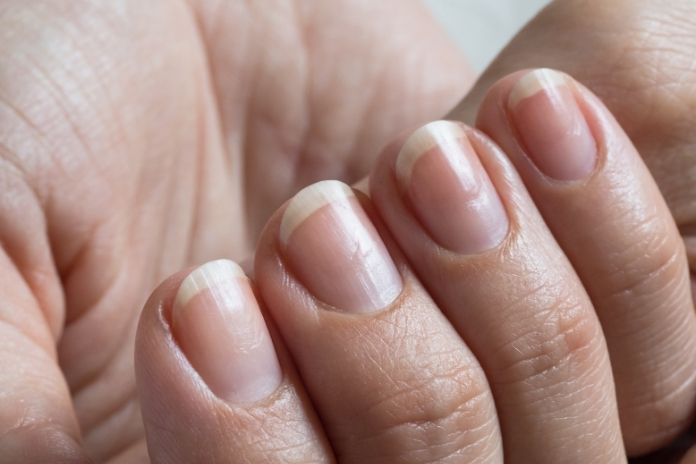
We readily forget our nails, but they protect our sensitive fingertips and help us pick up small objects. Changes in nail appearance sometimes provide essential evidence of your health.
For instance, certain medical conditions can cause noticeable changes in the nails.
Small pits in the nails, known as nail pitting, can occur naturally, but they may also signal underlying autoimmune disorders. Nail pitting is not a disease in itself but rather a sign in the body that indicates some transition is taking place.
In this article, we’ll discuss the common causes of nail pitting, the various conditions related to it, symptoms to expect, how doctors diagnose it, what treatments can be used, and when to see a doctor.
Read More: What Your Fingernails Reveal About Your Health: 11 Key Indicators
What Is Nail Pitting?
Nail pitting is a condition where tiny dents appear on the nail’s surface. Typically, the “pits” or dents are small, around the size of a pinhead. Damage to the nail matrix may result in nail pitting. The unique cells that form new fingernails or toenails make up the nail matrix. A portion of your nail matrix is visible.
Your nail matrix includes the lunula, the white crescent at the base of your nail. However, because it is hidden by your cuticle and nail base, the remainder of your matrix is invisible.
What Does Nail Pitting Look Like?
Small, pin-like pits may sometimes appear on the nail surface, making it look different than before. Some nails may have deeper dips, while others may have shallower ones. One or more nails can exhibit these characteristics. Sometimes the pits are tiny and difficult to view. At other instances, you may have so many that your nails resemble a thimble’s surface.
What Causes Nail Pitting?

The nail matrix is a layer of cells that forms your nail plate. Keratinocytes that go through keratinization within the nail matrix flatten to form the hard nail surface.
The nail plate is pushed forward and grows as the matrix produces new keratin. Inflammation or injury may interfere with this process.
“Nail pitting can sometimes be seen in people as a normal finding, meaning it’s not related to any underlying condition,” said Dr. Maria Robinson, a board-certified dermatologist and GoodRx contributor. She added, “It can also be seen in skin conditions, like psoriasis, alopecia areata, chronic eczema, and lichen planus.”
Let’s explore the conditions that can lead to nail pitting in greater detail:
Psoriasis
An autoimmune condition called psoriasis causes your skin cells to divide quickly. Skin cells, particularly those in the nail matrix, are attacked by the immune system. As a result, the body produces immature keratinocytes that are unable to perform their regular functions. Pits appear as the damaged cells in the nail grow.
PsA, often known as inflammation of the skin and joints, which often affects individuals with psoriasis, can result in nail pitting.
Alopecia Areata
Alopecia areata, an autoimmune condition, causes the immune system to target hair follicles. Although it can also affect nails, it usually affects the hair follicles on the face and scalp.
Alopecia areata sufferers may observe nail abnormalities such as nail pitting, brittle nails, weak nails, or rough nails. Nail pitting is the most often observed nail alteration, occurring in about 30% of individuals with alopecia areata.
Read More: How To Stop Biting Nails? 10 Ways To Get Rid Of This Bad Habit
Eczema and Chronic Dermatitis
The development of microscopic fluid-filled blisters on the hands and feet characterizes dyshidrotic eczema. Stress, harsh soaps, or shampoos frequently cause this condition.
When the problem is persistent, frequent inflammation can affect nail growth, eventually leading to pitting visible on the nails.
Trachyonychia (Twenty-Nail Dystrophy)
The most characteristic sign of trachyonychia is brittleness of the nails with diffuse longitudinal ridging, sometimes followed by pitting of the nail plate, a roughened nail plate, or loss of luster.
Any number of nails may be affected in trachyonychia, commonly known as “rough nails” or “sandpaper nails.” Trachyonychia involving all 20 nails is known as “twenty-nail dystrophy.”
Other Less Common Causes
Reactive Arthritis: An autoimmune condition known as reactive arthritis develops days to weeks following a gastrointestinal or genitourinary tract infection.
Bloodstream bacteria trigger an immune response that recruits cytotoxic T cells that damage the joint lining. Changes in the nails are among the possible symptoms unrelated to the joints.
Sarcoidosis: When the immune system overreacts and forms granuloma clusters, it is called sarcoidosis. Although they can develop in any organ, these immune cells usually originate in the lungs.
Sarcoidosis rarely causes nail abnormalities. When it does occur, it is typically because the illness has spread across the entire body.
Can Nail Pitting Occur Without Any Symptoms?
Nail pitting, too, can sometimes happen in isolation. Occasionally, it is an early or subclinical sign of an autoimmune or inflammatory disease. There may be immune activity occurring internally in some autoimmune conditions before any obvious signs appear in the skin, joints, or other organs.
The nails will show even subtle changes before obvious signs and symptoms appear because of the nail’s slow growth and the effects of any change in the nail matrix.
It explains why some people develop nail pitting even when they are in perfect health and have no joint pain, skin rashes, or hair loss.
How Doctors Diagnose the Cause of Nail Pitting
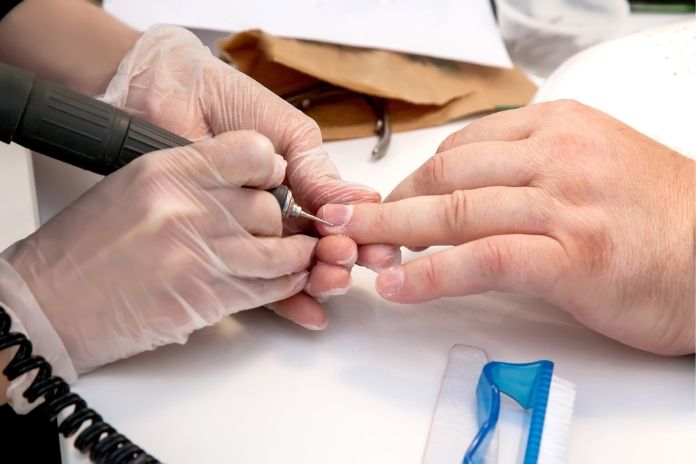
A healthcare provider may be able to diagnose nail pitting simply by looking at your nail beds. To determine the cause of nail pitting, they will also review your symptoms and history. Since nail pitting can occur in several different conditions, you may need diagnostic tests.
Blood Tests: Look for possible genetic risk factors and signs of inflammation.
Imaging Test: If it suspects sarcoidosis, it looks for lung scarring and inflammation.
Nail Biopsy: Taking a tiny piece of the nail matrix is a nail biopsy.
Nail Clippings Sample: To determine whether it is psoriasis or a nail fungus infection, take nail clippings and put them under a microscope.
Read More: How to Remove Dead Toenails: Causes, Symptoms and Treatment
Is Nail Pitting Treatable?
Your doctor will address any underlying cause of nail pitting. It might be challenging to cure nails with topical medications alone. Your healthcare provider may recommend one or more of the following topical and oral medications:
Topical Drugs: Topical steroids or vitamin D derivatives can help reduce inflammation in the nail matrix and correct nail abnormalities.
Steroid Injections: Some people require injections of steroids beneath their nails. Reducing inflammation brings the steroids closer to the nail matrix.
Laser Treatments: To help the nail matrix grow new, healthy nails, laser therapy uses various wavelengths of light.
These treatments may also help those with single nail pitting or nail pitting without any accompanying symptoms of another illness.
Can Nail Pitting Be Reversed?
Nail pitting can be improved, but because the nails grow very slowly, reversal will take time. Toenails grow even slower than fingernails, which grow about three millimeters each month. Hair, for example, grows rapidly compared to nails, so it may take months for any improvement in the texture or appearance of nails to be visible. Rather than simply focusing on the nails, the solution is to address the underlying cause.
When doctors adequately treat the underlying disease, nail pitting often improves. For instance, managing psoriasis, eczema, or other inflammatory conditions can help the nail matrix function normally again, which will eventually lead to smoother nail growth.
Read More: How to Remove White Spots on Nails
When Nail Pitting Is a Red Flag
While nail pitting is generally harmless, certain kinds of red flags may indicate a disease. Rapidly appearing and worsening pitting can indicate an active inflammation or flare-up, which could be autoimmune. Do not ignore sudden changes, especially when several nails become affected at once.
Joint pain with nail pitting is another red flag. Early diagnosis is essential to avoid irreversible joint damage in psoriatic arthritis and other inflammatory joint diseases. Nail pitting associated with unexplained hair loss could signal a systemic autoimmune disease or alopecia areata.
When to See a Doctor for Nail Pitting
Even though nail pitting isn’t a serious condition, you should still report any changes you see in your nails to your healthcare provider. To help manage the issue, it’s critical to identify its root cause and receive the appropriate treatment.
What Nail Pitting Does NOT Mean

Pits are frequently indicators of any underlying inflammatory or autoimmune conditions, most commonly psoriasis, psoriatic arthritis, eczema, alopecia areata, or connective tissue disorders. These may signify a problem with the nail matrix where growth occurs, not just the nail surface.
It indicates that nail pitting is not a simple injury that goes away on its own, and normal aging or vertical ridges do not typically cause it.
Read More: Health Tips for Stronger Nails
Conclusion
Even if you think nail pitting is just a cosmetic issue, it can be a marker of a deeper health condition. Most commonly, it’s linked with psoriasis. You must keep in mind it’s a symptom, often pointing to an inflammatory or autoimmune condition, rather than a disease in its own right. It’s good to notice it early, as it may appear before other symptoms arise.
Making informed health choices and easing any unnecessary anxiety are the two goals of being aware of the potential causes, associated diseases, and available treatments.
References
- Giordano, C., MD, & Pinto-Garcia, P., MD, MPH. (2023, December 8). What Causes Nail Pitting, and Do You Treat It?.
- Cleveland Clinic. (2025, November 4). Nail pitting: What it looks like, causes & treatment.
- Courtney Battaglia, RN. (2026, January 8). Everything you need to know about nail pitting.
- WithPower. Inside nail pitting.
- Clinical Advisor. (2009, February 11). Nail pitting causes.
- Jarvis, T. A. (2023, November). Pitting of nails: The causes and how to fix it.
- Chen, S.-W., & Jarrett, P. (2023, September). Trachyonychia.
In this Article