
The midday slump does not present itself dramatically. It emerges quietly. Work slows down. Tabs stay open longer than needed. Small tasks feel strangely heavy. You are not sleepy exactly, but you are no longer sharp either. This happens even to people who eat “clean,” sleep reasonably well, and exercise.
The mistake most people make is assuming this dip means something is wrong with discipline, motivation, or routine. In reality, the midday slump is a normal biological downshift, and most modern solutions make it worse because they try to override the body instead of understanding it.
This article is not about hacks. It is about why the slump exists, why it feels harsher today than it did in earlier generations, and how to reduce it without forcing constant alertness that the body never intended to maintain.
What the Midday Slump Actually Is (and Why It Shows Up Every Day)
Your energy does not move in a straight line from morning to night. It fluctuates in predictable cycles. Between roughly 1 PM and 4 PM, the brain naturally reduces alertness. This is part of the circadian rhythm, not a reaction to food alone. Even people who skip lunch experience this dip in midday energy.
In many cultures, this rhythm was acknowledged rather than resisted. The Spanish siesta is one well-known example in which workdays were structured to accommodate the natural drop in alertness rather than fight it.
For us, what has changed is not the dip; it is the environment around it. Today, that same biological window coincides with:
- Long seated hours
- Continuous screen exposure
- High cognitive load
- Expectation of uninterrupted productivity
So the dip feels like underperformance instead of physiology.
The Most Common Causes of the Midday Slump (And Why They Stack Together)

The slump rarely comes from one factor. It is usually layered fatigue.
1. Blood Sugar Spikes and Crashes After Lunch
Lunch is not the main problem, but unstable digestion is.
Meals that are high in refined carbohydrates and low in protein create a fast insulin response. Energy rises briefly, then drops sharply.
What people feel as “sleepy” is actually unstable brain fuel. The brain prefers slow, steady glucose delivery. When supply fluctuates, attention drops first, not muscles.
This is why people say, “I ate enough, but I still feel drained.” The issue is not calories. It is how fast that energy enters and leaves the bloodstream.
2. Circadian Rhythm and Cortisol Drop
Cortisol quietly keeps you alert. It peaks in the morning and declines throughout the day.
By afternoon, this decline is expected. But when your sleep is irregular or shallow, the drop becomes steeper.
The result is not sleepiness; it is reduced mental resilience. Tasks feel harder, not impossible. This is why people with “adequate” sleep still feel afternoon fatigue.
3. Dehydration and Electrolyte Imbalance
Fatigue from dehydration is understated. It feels dull. Mild dehydration reduces circulation efficiency. The brain gets slightly less oxygen and glucose delivery.
Focus weakens before thirst appears. Many people mistake this for boredom or burnout.
4. Mental Fatigue and Cognitive Saturation
Mental fatigue is not about hours worked. It is about decision density. By afternoon, you have already:
- Made dozens of decisions
- Processed continuous notifications
- Switched tasks repeatedly
This creates decision fatigue and attention depletion. By afternoon, the brain shifts into conservation mode. Adding more stimulation at this point often produces diminishing returns.
Why Coffee Often Makes the Midday Slump Worse
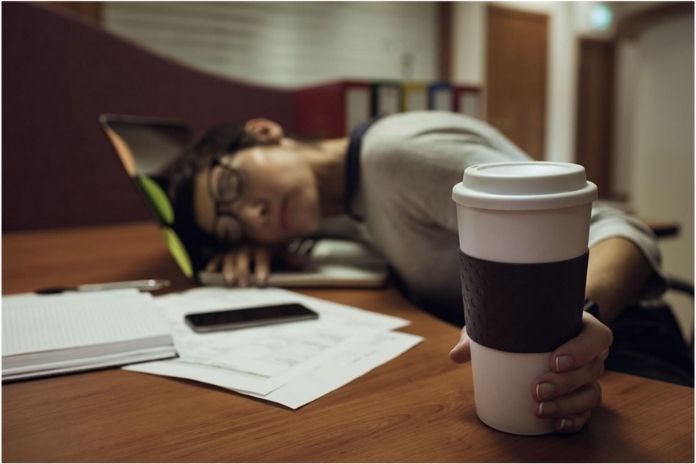
Coffee does not give you energy. It delays the sensation of fatigue. When caffeine is added during the natural circadian dip, it:
- Blocks fatigue signals (adenosine) without restoring capacity
- Creates a rebound drop later
- Pushes sleep debt into the night
Also important: caffeine raises cortisol slightly. Drinking coffee when cortisol is already falling creates a sharper contrast later.
This is why the afternoon coffee works once, then stops working, then creates dependence. The body adapts to repeated interference. This pattern is well recognised in sleep medicine.
“If we’re coping with the post-lunch dip by drinking caffeine, our body is going to require more caffeine over time to get the same effect,” says Dr. Anthony Reffi, a behavioural sleep specialist. “And that’s going to negatively affect our ability to sleep at night.”
What to Eat to Prevent the Midday Slump (Without Eating “Light”)

1. Lunches That Stabilise Energy
The aim is not to have smaller meals. It is to slow down digestion, for sustained, balanced energy release.
A stabilizing lunch has protein as its primary component, fibre to slow absorption, and fat to extend the release of energy.
Meals that digest too fast demand compensation later, usually through caffeine or sugar. So, avoid lunches that are:
- Mostly refined grains
- Very large portions
- High sugar with low protein
2. Smart Afternoon Snacks
Snacks are not about boosting energy. They are about preventing collapse. Good examples:
- Fruit with nuts
- Yogurt with seeds
- Boiled eggs
- Roasted chickpeas or similar legumes
The purpose is to smooth energy, not stimulate it. Protein-focused snacks stabilise blood sugar without triggering insulin fluctuations. Sugar-only snacks sharpen the crash that follows.
Movement: The Most Ignored Antidote to Afternoon Fatigue

Stillness deepens the feeling of tiredness. Short, low-effort movement improves glucose handling, increases blood flow, and restores alertness signals. Some effective options you can try:
- Short walk after lunch
- Standing and stretching every hour
- Light stair climbing
This improves oxygen delivery to the brain and reduces neural fatigue. Five minutes of movement often outperforms another cup of coffee because it changes physiology, not perception. This benefit does not require structured exercise.
“Too busy to get to the gym or yoga studio? Take a walk, it improves blood flow to your head,” says Dr. Roxanne B. Sukol, a preventive medicine expert. Even brief, low-effort movement sends a signal of wakefulness to the brain without taxing already depleted energy reserves.
Hard workouts in the afternoon are not required. In fact, they may worsen exhaustion for desk-based workers.
Light, Air, and the Quiet Role of Environment

Artificial lighting confuses your circadian timing. Poor posture restricts breathing. Stale air reduces oxygen efficiency. None of these alone causes fatigue, but together, they magnify the slump.
Exposure to natural light and brief fresh air resets alertness more reliably than stimulation. Helpful adjustments:
- Sit near a window if possible
- Step outside briefly after lunch
- Maintain upright posture
Energy is not only food and sleep. It is sensory input.
Power Naps and Why They Often Fail at Work

Short naps can help, but only if they stay short.
Anything longer than 30 minutes risks sleep inertia, where the brain enters deeper stages and wakes feeling disoriented. Many people think naps do not work for them when, in reality, they exceed the optimal duration.
Quiet rest without sleep can provide similar recovery without inertia. But, quiet breaks without screens allow the brain’s default mode network to reset. That reset improves creative thinking and attention later.
Habits That Train the Body to Crash Harder Over Time
The body adapts to patterns. Some habits that deepen the slump include:
- Skipping breakfast regularly
- Eating heavy lunches late
- Irregular sleep timing
- Long uninterrupted sitting
These do not show immediate effects, but they slowly reshape your energy rhythms.
Read More: Top Anti-Fatigue Mats for Standing Desks: Improve Posture, Reduce Pain, and Boost Comfort
Building a Midday Routine That Respects Biology
A routine does not eliminate the dip. It reduces its depth, making focus easier to recover. Energy improves when the body stops compensating. It improves when the body knows what is coming next. Uncertainty costs energy.
This is not optimisation. It is alignment.
- Eat at consistent times
- Anchor lunch with protein
- Move briefly after eating
- Hydrate steadily, not in large volumes
- Use caffeine early or avoid it altogether
Read More: Best Energy Supplements for Chronic Fatigue: What the Science Shows and How to Choose
When Midday Fatigue Is Not Normal
Occasional afternoon fatigue is expected. Daily, disabling fatigue is not. Possible contributors include:
- Iron deficiency
- Blood sugar dysregulation
- Thyroid imbalance
- Chronic sleep debt
If lifestyle changes do not improve your symptoms, visit your doctor to investigate.
Read More: Perimenopause Fatigue: Causes and Energy-Boosting Tips
Final Thoughts: The Midday Slump Is Not the Enemy
The midday slump is not something to eliminate. It is something to reduce and work around.
When you stop forcing constant alertness and start respecting natural rhythms, productivity improves quietly, without stimulation, guilt, or burnout.
The most effective strategies are usually boring: food structure, light, water, movement, timing. Boring habits create stable energy. Stimulants only mask instability.
Key Takeaways
- The midday slump is a biological downshift, not a flaw.
- Fighting it with stimulation deepens long-term fatigue.
- Blood sugar stability matters more than meal size.
- Movement restores capacity better than caffeine.
- Research still lacks individualised circadian-fatigue profiling; most guidance remains generic.
References
- Marshall, M. (2023, April 12). Energy & Fatigue. Harvard Health.
- Monk, T. H. (2005). The Post-Lunch Dip in Performance. Clinics in Sports Medicine, 24(2), 15–23.
- Osburn, C. (n.d.). Boosting Energy and Vitality in the Afternoon. Retrieved January 15, 2026
- Restivo, J. (2024, December 4). Can a quick snooze help with energy and focus? The science behind power naps – Harvard Health. Harvard Health.
In this Article