














Most people’s first mistake with retinol is not choosing the wrong product but using it too often, too soon. Retinol is one of the most researched and effective ingredients in skincare, but it is also one of the most misunderstood.
The frequency of use matters even more than the strength of the label. Getting this balance right means fewer flakes, calmer skin, and faster long-term results.
If you have ever applied retinol nightly only to wake up with red, tight, or peeling skin, you are not alone. The right usage schedule depends on your skin type, goals, and how quickly your skin builds tolerance, not on how ‘strong’ or ‘expensive’ your product is.
This article breaks down dermatologist-guided schedules for every skin type, strength level, and skin goal, plus practical tips to build tolerance safely.
“When it comes to retinol, slow and steady wins the race start by incorporating it into your nighttime skin care routine once or twice per week before moving on to everyday use.”
— Joshua Zeichner, MD, Associate Professor of Dermatology and Director of Cosmetic and Clinical Research at Mount Sinai Hospital
How Often Should You Use Retinol in General?
Most dermatologists agree that applying retinol two to three nights a week is ideal when starting. This schedule allows your skin to adapt while still building tolerance over time. Think of it as training your skin; consistency beats intensity.
Everyone’s goal is different, but nightly use is something you work up to, not where you start. Early patience often prevents future irritation that could force you to stop using retinol altogether.
Gentle and consistent use supports the retinoid receptors in the skin, helping your barrier adjust to increased cell turnover.
Read More: Best Retinol Serums for Wrinkle Reduction & Skin Renewal: Top Picks for Every Skin Type
Why Using Retinol Too Often Can Backfire
Using retinol too frequently at the beginning can overwhelm your skin’s barrier and cause unnecessary damage.
When used too often, retinol can cause:
- Skin Barrier Disruption: Overuse strips away natural lipids, leading to dryness and increased sensitivity.
- Increased Irritation and Peeling: This is not a sign of “purging” but rather your skin’s reaction to stress.
- Acne Flares Mistaken for Purging: True purging occurs only in breakout-prone areas. If it spreads elsewhere, your frequency is too high.
- Delayed Results: Forcing your skin through irritation can set back progress instead of helping it.
Overuse often triggers a negative cycle of dryness and inflammation that makes you stop before results appear. The key is a balanced frequency that keeps your skin calm and consistent.
Retinol Frequency Based on Skin Type
Different skin types require different introduction schedules. Matching your skin’s tolerance helps you get maximum results with minimal irritation.
Sensitive Skin Or Retinol Beginners
Start one to two times a week, with at least two nights between applications. Use a moisturizer before and after applying retinol to cushion the skin.
If you notice stinging or flaking more than two days after use, that means your skin needs a slower progression. Only increase the frequency once your skin feels comfortable after every application.
Normal To Combination Skin
Most people with this skin type can begin with two to three nights weekly. After four to six weeks with little to no irritation, move to every other night.
Allow your skin to adapt gradually before stepping up strength or frequency. Progress means maintaining comfort, not speed.
Combination To Dry Skin
Start with two nights per week using a buffered application (moisturizer first). Dry areas like cheeks often flake first, while your T-zone may tolerate more.
Focus on hydration with ceramide-rich creams and avoid increasing frequency until both dry and oily areas feel balanced. This skin type benefits most from the pea-sized amount rule to prevent patchiness.
Oily Or Acne-Prone Skin
Oily skin types may tolerate retinol slightly better because natural oils help minimize dryness. Start at two to three nights weekly and observe how your skin reacts.
If you are using retinol for acne, you may notice an initial increase in breakouts during the first few weeks. This stage, called “purging,” usually settles in about four to six weeks as skin renewal stabilizes.
Read More: Can You Eat the Skin on Butternut Squash? What You Should Know
How Retinol Strength Affects How Often You Should Use It
Not all retinols are created equal. Retinol strength determines frequency and tolerance. The following table provides a practical guide.
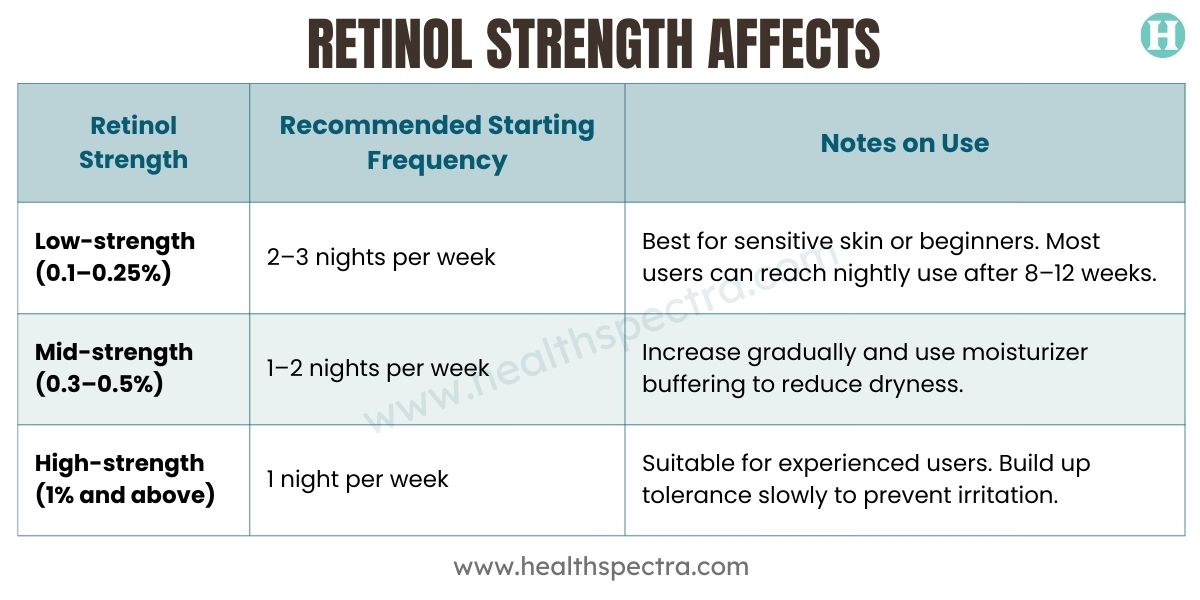 Even products labeled as gentle can cause problems if used too much too soon. A higher concentration requires a slower rhythm, not stronger courage.
Retinol for Acne vs. Retinol for Anti-Aging: Does Frequency Change?
Although acne and anti-aging treatments serve different goals, both rely on retinol’s ability to boost cell turnover and strengthen deeper skin layers.
- For Acne: Retinol unclogs pores, reduces inflammation, and helps regulate oil production. Starting slowly prevents irritation that could make breakouts worse.
- For Anti-Aging: Retinol boosts collagen formation and smooths fine lines. Increased frequency may improve results once tolerance is firmly established.
In both cases, overuse leads to dryness that can offset all progress. The frequency of use should be guided by your skin’s comfort, not cosmetic impatience.
Read More: Why Is My Skin Suddenly Very Dry Even Though I Use Moisturizer — Underlying Reasons & What To Do
Can You Use Retinol Every Night?

Your skin must fully adapt before you can use retinol every night. Nightly use should be a long-term goal, not the initial plan. Most people achieve tolerance after several months of patience and stepwise increase.
You are likely ready for nightly use when:
- Your skin no longer peels or feels tight between applications.
- You have used retinol for at least 8-12 weeks consistently without irritation.
- You can apply it under moisturizer without dryness the next morning.
If you notice rawness, stinging, or unusual breakouts, go back to alternate nights. The goal is a smooth balance between activity and recovery.
How to Increase Retinol Use Safely
A safe increase in retinol frequency combines consistency with observation. Here is a practical progression plan most dermatologists recommend.
- Start Slow: Apply retinol once, then skip the next two or three nights for about four weeks.
- Step Up Gradually: Once your skin feels comfortable, move to every other night.
- Reach Nightly Use Only When Ready: After several weeks of irritation-free use, you may try using it nightly.
Buffering Method
Apply a light moisturizer before adding retinol. This process, called “buffering,” reduces irritation by adding a protective layer without blocking absorption.
Apply On Dry Skin
Always wait 15 to 20 minutes after cleansing before applying retinol. Applying it on damp skin increases absorption and irritation risk.
Know When To Pause
If redness, stinging, or scaling appear, stop retinol for several days and use barrier-repairing creams. Skipping a week will not undo progress but will protect your skin’s long-term health.
Read More: 6 Dermatologists Recommended Skin Care Routine – Decoding The Best From Professionals!
How Long It Takes to See Results Based on Frequency
Retinol results appear slowly but steadily. Frequency affects how quickly improvements become visible.
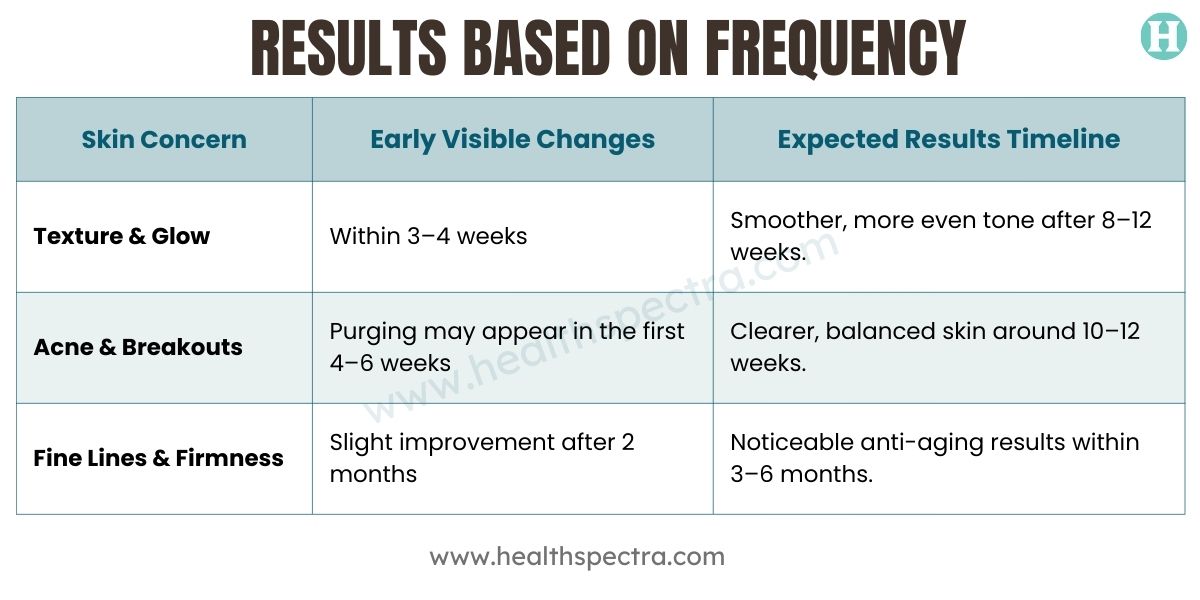 Retinol works at the cellular level, and improvement often builds gradually. Results last longer and look more natural when you stay consistent with moderate use.
When to Reduce Retinol Frequency or Stop Temporarily
Even experienced users sometimes need short breaks from retinol. Skin tolerance varies with weather, product layering, and stress levels. You should reduce frequency or pause use if you notice:
- Persistent Burning or Stinging: Ongoing discomfort signals that your barrier is compromised.
- Eczema-Like Symptoms: Patches of flakiness or redness are early warning signs that your skin needs rest.
- Compromised Barrier: If your skin feels tight, dull, or sore, focus on hydration until strength returns.
- Seasonal Shifts or Harsh Climates: Cold or dry weather can reduce your skin’s resilience, making slower use more appropriate.
Taking breaks will not erase results. Instead, it helps maintain consistent progress and skin health over time.
Read More: Are Pore Strips Bad for Your Skin? Dermatologists Explain
Key Takeaway: The Best Retinol Frequency Is the One Your Skin Can Tolerate
Learning how often to use retinol is not about following one universal rule. It is about understanding how your skin responds to gradual change. Most people do best starting with two or three nights a week, increasing only when their skin feels calm and comfortable.
A strong barrier equals better results. Protecting your skin’s barrier helps unlock retinol’s full potential. Think of retinol as long-term skin training. The real progress happens over several months, not weeks, and consistency matters more than intensity.
Whether you are treating acne, texture, or signs of aging, the right retinol schedule helps you achieve healthy, balanced skin that continues to improve with time.
References
- Kafi, R., & Kafi, R. (2007). Improvement of naturally aged skin with vitamin A (retinol). JAMA Dermatology, 142(12), 1453–1458.
- Darlenski, R., & Fluhr, J. W. (2022). Retinoids in the treatment of skin aging: An overview of clinical efficacy and safety. Clinics in Dermatology, 26(6), 579–589.
- Darlenski, R., Nikolowski, J., & Fluhr, J. W. (2022). Use of retinoids in topical antiaging treatments: A focused review of clinical evidence for conventional and nanoformulations. Clinical, Cosmetic and Investigational Dermatology, 15, 2235–2249.
- Baldwin, H., & Tan, J. (2022). Effects of topical retinol on photodamaged skin: A vehicle-controlled study. Journal of Cosmetic Dermatology, 21(11), 5023–5032.
- Kong, R., Cui, Y., Fisher, G. J., Wang, X., Chen, Y., Schneider, L. M., & Majmudar, G. (2024). A comprehensive review of the strategies to reduce retinol-induced irritation. Journal of Cosmetic Dermatology.
- Zouboulis, C. C., & Bettmann, D. (2017). Why topical retinoids are mainstay of therapy for acne. Dermatologic Therapy, 30(3), e12243.
- Rouvrais, C., Black, A., & Boyer, P. (2020). A clinical anti-ageing comparative study of 0.3 and 0.5% retinol serums: Fine lines/wrinkles and other photodamage endpoints. Skin Pharmacology and Physiology, 33(2), 102–112.
- Tran, D., Townley, J. P., Barnes, T. M., & Greive, K. A. (2024). Efficacy and tolerability of topical 0.1% stabilized retinol in photoaged skin: A randomized split-face clinical study. Journal of Cosmetic Dermatology, 24(5), 789–797.
- Fluhr, J. W., Gloor, M., & Lazzerini, S. (1999). Tolerance profile of retinol, retinaldehyde and retinoic acid under maximized and normal use conditions. Skin Pharmacology and Applied Skin Physiology, 12(1-2), 104.
- Zasada, M., & Budzisz, E. (2021). Anti-irritant strategy against retinol based on the genetic deletion of skin irritation gene. International Journal of Molecular Sciences, 22(23), 12698.
- Guilliams, J. (2024). A dermocosmetic regimen is able to mitigate skin sensitivity induced by retinol. Journal of Cosmetic Dermatology.
- Kafi, R., Kwak, H. S., Schumacher, W. E., Cho, S., Hanft, V. N., Hamilton, T. A., Cooper, J. J., Voorhees, J. J., & Kang, S. (1998). Improvement of naturally aged skin with vitamin A (retinol). Archives of Dermatology, 134(12), 1453–1458.
- Kim, J., Kim, H., & Park, M. (2024). Mitigation of retinol‐induced skin irritation by physiologic lipids and ceramides. Journal of Cosmetic Dermatology, 23(4), 567–575.
- Berson, D. S., Cohen, J. L., Rendon, M. I., Roberts, W. E., & Stoler, E. P. (2018). Clinical and histologic findings after use of a novel retinoid delivery system. Journal of Cosmetic Dermatology, 17(4), 641–648.
In this Article