
















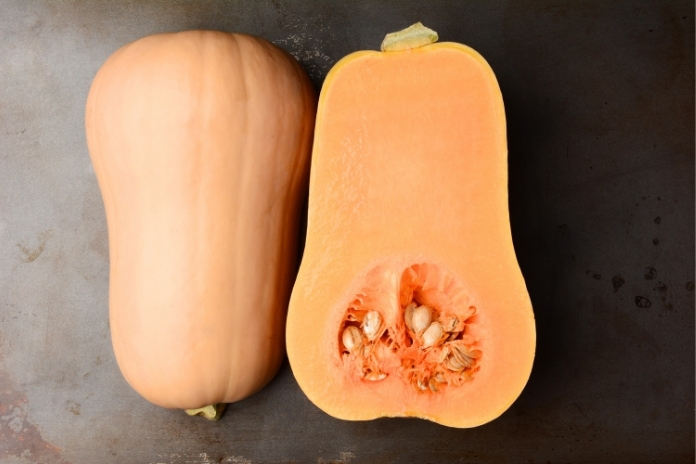
Yes, you can eat butternut squash skin, but whether you want to depends on a few things.
The skin is perfectly safe to consume, but its texture may depend on how the squash is cooked, and definitely on its maturity. With older or larger squash, the skin may be too thick or rigid, making it unpleasant to eat. In those cases, it’s better to peel it before cooking.
If you’re making soups, purees, or other dishes that require blending the squash, peeling is recommended for a smoother texture. For roasting or baking, especially small or young butternut squash, you can skip peeling: wash well, slice, and roast skin-on.
In this article, we’ll explore what’s actually inside the outer shell, its edible qualities (taste and texture).
Read More: Why Fall Foods Like Pumpkin and Squash Are Nature’s Multivitamins
Is Butternut Squash Skin Edible and Safe to Eat? Yes — But With Conditions
Yes, you can eat the skin of butternut squash, according to Victoria Shore, the Executive Chef at Thompson Savannah’s. However, Shore wouldn’t recommend eating the skins from the grocery store or non-organic squash, as these squash can be treated or waxed.
But the skin of butternut squash is undoubtedly not to everyone’s taste. Most people find it challenging to eat, as it can be leathery, stringy, and difficult to pull apart or chew. It can also aggravate certain food allergies.
Some people may experience an allergic reaction to the peel and meat of butternut squash. Squash contact can cause contact dermatitis in some people, though this is rare. Although the exact squash chemical causing the reaction is yet unknown, underreporting may make the allergy more widespread than most people think.
What’s in the Skin of Butternut Squash?
A diet high in fruits and vegetables can generally improve blood pressure, lower the risk of heart disease and stroke, prevent certain types of cancer, reduce the risk of eye and digestive issues, and help regulate blood sugar levels, which can aid in controlling appetite.
Butternut squash stands out as a versatile vegetable packed with powerful health benefits.
The skin of butternut squash is a source of fiber, which supports digestion and helps you feel full longer, says Lauren Manaker, MS, RDN, LD. “Like the inside of the squash, it also contains antioxidants like beta-carotene, which converts to vitamin A,” she said. “[This] supports eye health and immune health.”
Additionally, the skin provides phenolic antioxidants, says Janelle Bober, MS, RDN, a registered dietitian with Dietitian Live. “There are some studies that have shown the phenolic compounds present in many squashes help with antioxidant activity, especially compared to the flesh of the squash,” she said.
Some cultures have long used butternut squash to treat conditions such as diabetes, high blood pressure, cancer, high cholesterol, and inflammation. However, these uses were based on custom rather than scientifically validated remedies.
Read More: Rainbow Eating: What It Means and How It Benefits Your Body
When the Skin Makes Sense to Eat — and When It Might Not
The type of squash and the cooking method both significantly affect whether you should eat the skin. Though not usually, the skin can often be both palatable and edible.
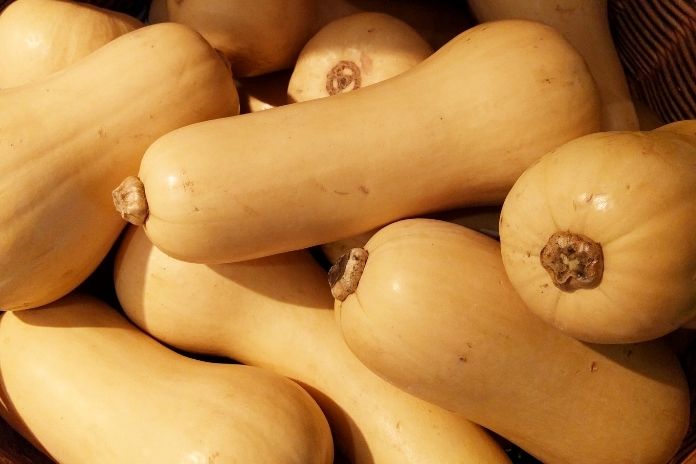
When preparing a small or young butternut squash, the skin is generally edible, as these squashes have relatively thin skins that tend to be tender and delicious when cooked. The squash may be baked or roasted whole or in large wedges, which helps caramelize the skin and make it chewy rather than tough.
Leaving the squash skin on is an excellent way to minimize food waste if that’s a concern for you. Plus, it makes good sense from a nutritional standpoint, as the skin provides fiber and nutrients.
At other times, however, it’s not preferable to eat the skin.
Older squashes, which are often much larger, may have thick, leathery skins that are tough to chew and can have a stringy texture. Jessica Randhawa, chef and owner of The Forked Spoon, told Health that there are a number of drawbacks to eating the skin of butternut squash.
These include:
- Irritating the skin and being potentially allergenic.
- Leathery skin.
- Chewy consistency.
- Includes residue from pesticides (if not organic).
- Causing an uneasy stomach.
- It is unsuitable for specific recipes (such as purees).
Consume the skin if:
- You’re utilizing squash from the farmers’ market or organic produce that hasn’t been processed or waxed.
- It is young and petite, when the squash’s skin is typically thinner and easier to chew.
- You’re roasting or baking it – dry heat softens the skin and gives it a nice, slightly crisp feel.
Ignore the skin if:
- You are using squash that is non-organic and store-bought, and might be treated or coated.
- It has a thick, leathery skin that remains tough after cooking, and it is larger or older than other squashes.
- When you’re looking for a smooth texture in soup and purees.
How to Prepare Butternut Squash Skin for Eating
The texture and flavor of the skin can be significantly altered by proper preparation if you intend to eat it. To begin, thoroughly wash the squash under running water to remove any residue, wax, or dirt. This step is very crucial for food safety and flavor, as the skin comes into direct contact with the ground and is sometimes treated for storage.
If you want to try butternut squash skin, Bober suggests scrubbing it well, oiling it, generously salting it, and cutting it into smaller pieces to reduce its chewiness. “The top methods to cook the skin include high-heat roasting at around 425 degrees Fahrenheit. It’ll give you crisp edges and soften the skin and the flesh. It’ll be a little bit sweeter as well.”
If you don’t want to eat the skin but don’t want to peel it either, cook the squash with the skin on, then cut out or scoop out the flesh.
To Begin:
- Turn your oven on to 400 degrees Fahrenheit.
- Wash your squash thoroughly.
- You should rinse and thoroughly pat the skin dry, since you’ll be eating it.
- Cut off the bottom ends and stem.
- Place one of the squash’s flat ends on the cutting board after turning it upright.
Regarding the Skin:
- To remove the peel from the squash, carefully cut along the squash’s edge using a sharp knife.
- If you are very uncomfortable using a knife, you can also use a vegetable peeler.
- To ensure the chips are crispy, try to get as little squash as possible with the peeled skin.
- Larger chunks will not crisp up as well as smaller ones.
To prepare the Seeds:
- Cut the squash lengthwise in half.
- Scoop out the seeds with a spoon. Additionally, be sure to scrape out all of the stringy membrane.
- Separate the seeds from the stringy membrane by using your hands and washing them.
The Seasonings:
- In a bowl, toss all the butternut squash seeds and skin.
- Pour some olive oil over it. Season with salt and pepper.
- You can add more spices if you want. Try the smoked paprika and curry powder!
How to Roast the Skin and Seeds of Squash:
- Line a baking sheet with the seeds and skin.
- And roast till nice and crispy, 15 to 20 minutes!
- The seeds and skin will become extra crispy and dry if you can turn off the oven and leave it in while it cools.
Here are some other ways to cook the squash:
- Roasting and then mashing it.
- Making a soup by roasting and pureeing.
- Pressure-cooking it to soften the texture.
- Braising it slowly to tenderize the skin.
- Thinly slicing and sautéing speeds up the cooking of the skin.
- Try thinly slicing and swapping butternut squash fries for traditional potato fries.
Read More: 23 Foods With Electrolytes You Must Include In Your Diet TODAY
Butternut Squash Curried Soup:
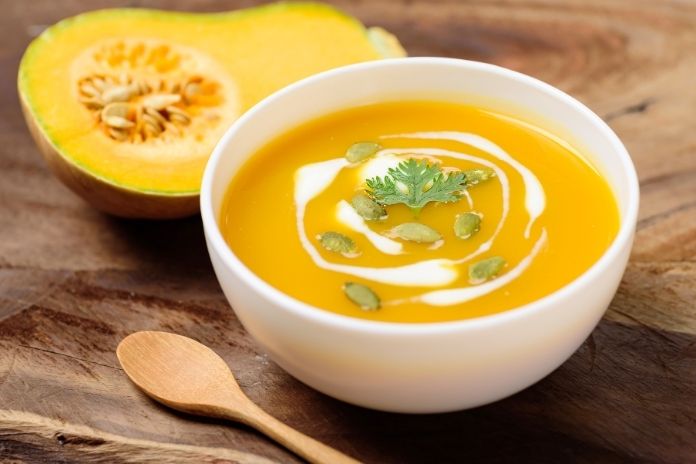
Cooking Method:
- First, cut off the stem and lower ends. To make the squash stand up straight, turn it on one end.
- Gently run the blade of a sharp knife along the length of the squash to remove the skin.
- If you are uncomfortable using a knife, consider using a vegetable peeler instead.
- Cut the squash in half lengthwise after peeling it.
- Remove the stringy membrane and seeds by scraping them out (roast the skin and seeds as mentioned in the section above).
- Next, cut the squash into cubes.
- Add the diced squash, curry powder, onion, and garlic to a large pot.
- To soften and infuse the squash with the spices, steam it for approximately five minutes.
- After that, add the stock and cook for another ten minutes.
- Pour in some of the coconut milk and mix and blend into a puree.
- Once done, serve hot.
Conclusion
The skin of butternut squash may not seem special, but it offers surprising nutritional value — it’s rich in fiber, minerals, and antioxidants that can add both texture and health benefits to your meal. However, not all squash skins are worthy of your plate. The edibility of squash varies with size, age, and cooking method.
If you want to try eating it, choose small, young squashes, wash them well, and roast or simmer them until the skins are deliciously tender. With each bite, you’ll experience a delightful contrast of sensations and an increase in nutrients.
But if the skin feels too stringy and hard, peel it off, or remove the flesh with a spoon after cooking.
References
- Alex Delany (2017, November 6). Can you eat squash skin? Well, that depends. Bon Appétit.
- Gordon, S. (2025, November 5). Can you eat the skin on butternut squash? Health
- Stacey Lastoe (2024, October 13). Can you eat butternut squash skin? Southern Living
- Erica Sweeney (2023, November 2). Can you eat the skin of butternut squash and other winter squashes? Yahoo News
- Kathleen Ferraro. Don’t throw out your butternut squash skin — it might be the healthiest part. MSN.
- The Nutrition Source. Winter squash. Harvard T.H. Chan School of Public Health.
- Sheela Prakash (2015, December 1). The winter squash skins that are edible (and those that are not). Epicurious.
- Tastythriftytimely. How to get the most from your butternut squash.
In this Article