










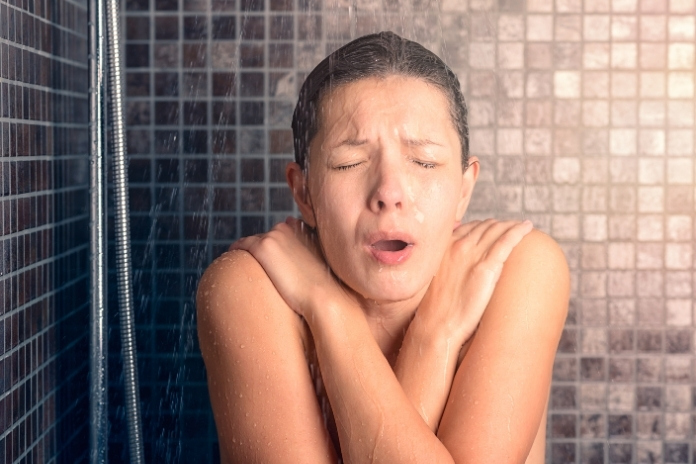
From pro athletes dunking in ice tubs to wellness influencers preaching the power of cold showers, cold exposure has gone mainstream. The idea is simple: brief contact with cold water can jolt your body, sharpen your mind, and speed up recovery. But here’s the thing, not all cold exposure is created equal. A quick cold shower at home and a full-body ice bath after a grueling workout may look similar on social media, yet they place very different demands on your body.
Both approaches are said to reduce muscle soreness, boost circulation, and improve mental resilience, but the evidence isn’t one-size-fits-all. Some benefits are backed by research, others are still speculative, and certain groups should think twice before trying either. The key is understanding how cold stress actually works, what studies say about the differences between showers and baths, and whether the promised payoffs outweigh the risks for you.
This article breaks it down clearly: the physiology of cold exposure, what science supports, who should avoid it, and practical, doctor-backed guidance to help you decide if a cold shower, an ice bath, or maybe neither, is the right tool for your goals.
The Science of Cold Exposure (Quick Primer)

Cold exposure triggers an immediate physiological cascade. On contact with cold water, your skin vessels constrict (vasoconstriction), lowering local blood flow and reducing inflammation and swelling in the area. When you warm back up, those vessels dilate (vasodilation), which can increase circulation and help clear metabolic byproducts. That push–pull, constrict, then dilate, is a core reason people use cold for recovery.
Cold also activates the sympathetic nervous system: you get a spike in adrenaline, noradrenaline, and cortisol that produces a short-lived alerting effect and releases endorphins. Professor Mike Tipton, a leading researcher in cold-water physiology, sums it up: “That sudden change in skin temperature evokes the fight-or-flight response … you’ll see cortisol, adrenaline, noradrenaline increasing.”
Bottom line: cold has plausible mechanisms (less swelling, altered nerve signaling, hormonal activation) that can reduce perceived soreness and improve alertness, but how big and durable those effects are depends on dose, timing, and the person.
Cold Showers: Benefits, Limits, and Best Use Cases
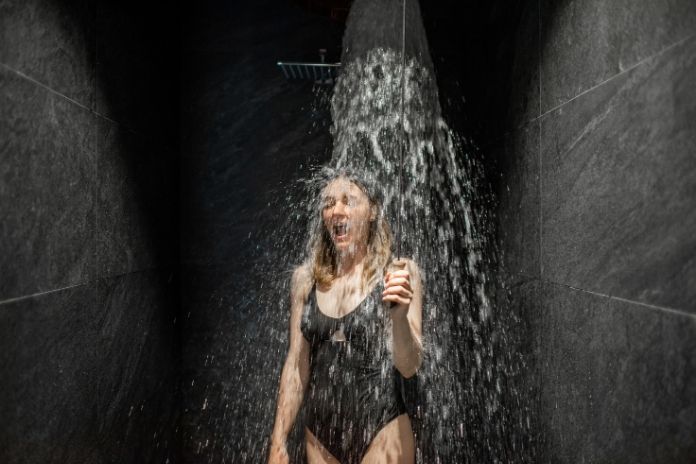
Cold showers are inexpensive, easy, and low-barrier: turn the tap and you’re in. Evidence for routine cold showers points more to general wellness and mood benefits than to deep muscular recovery for high-level athletes. In a randomized trial from the Netherlands, people who introduced brief hot-to-cold showers reported fewer sick-leave days, suggesting system-wide benefits like improved tolerance to stressors, not necessarily faster muscle healing.
What cold showers reliably offer:
- A quick nervous-system “wake up”, alertness, improved focus, and a short-term mood lift.
- Mild reduction in muscle soreness after light workouts, useful if your training is moderate or you want daily maintenance.
- Very low risk for healthy people when kept brief and not extremely cold.
“Some of the most supportive research regarding the benefits of cold showers shows the potential to decrease pain and inflammation and improve muscle recovery after exercise,” says Melissa Young, MD, of the Cleveland Clinic.
Drawbacks:
A cold shower’s surface cooling is less uniform and less deep than immersion; it generally doesn’t lower muscle or core temperature as effectively as a full ice bath. That makes it less effective for heavy DOMS (delayed-onset muscle soreness) after very intense training or competitions.
Best for: daily wellness, quick post-commute refresh, light workout recovery, and people experimenting with cold exposure without equipment.
Read More: 18 Health Benefits Of Cold Shower – Kick-Start Your Body Functions
Ice Baths: What They Do, and What They Don’t
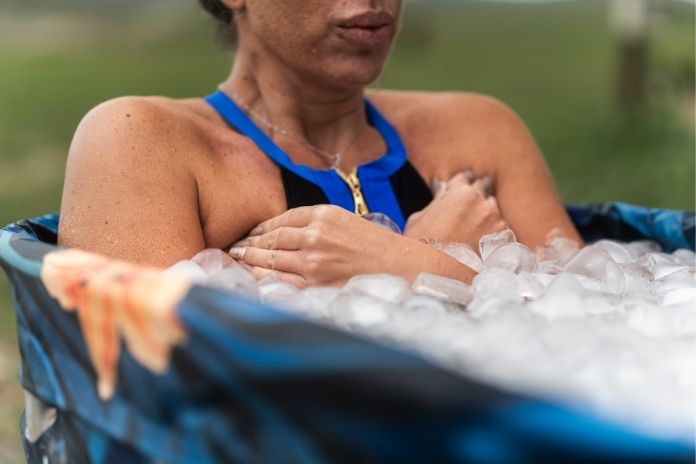
“Ice bath” or cold-water immersion (CWI) usually means sitting immersed in water under about 15°C (59°F); many practitioners use 10–15 minutes at roughly 10–15°C (50–59°F) for recovery after intense effort. That deeper, whole-body cooling delivers stronger vasoconstriction and a more pronounced anti-inflammatory effect than a shower.
Research overview:
- Systematic reviews and meta-analyses show consistent short-term reductions in muscle soreness and improved subjective recovery after CWI compared with passive rest. Hohenauer’s pooled analysis and the Cochrane-style reviews conclude CWI reduces DOMS at 24–96 hours post-exercise.
- However, the literature is mixed on performance outcomes; some trials show faster short-term recovery, while others find little effect on later strength or power. There’s also evidence that regular, repeated cold immersion can blunt some long-term training adaptations (muscle hypertrophy and strength) in resistance-trained athletes.
Benefits:
- Stronger, more reliable relief of intense muscle soreness after heavy training or competition.
- Faster reduction in core temperature, useful in heat injury situations (with medical supervision).
Drawbacks and safety:
- Ice baths are uncomfortable and pose real cardiovascular stress: the cold reflex raises blood pressure and heart rate. Prof. Mike Tipton warns about the shock response and increased risk of arrhythmias when people submerge suddenly or hold their breath; he recommends slow entry and strict time limits.
- There are rare reports of adverse events (arrhythmias, fainting, and even isolated deaths) when protocols weren’t followed or when participants had unknown cardiac vulnerabilities, so supervision and medical clearance matter for at-risk people.
Best for: athletes recovering from competition, people with significant DOMS who need faster relief, or supervised use in sports settings. Follow conservative temperature and time rules (many experts recommend starting at 10–15°C and keeping immersion under 10 minutes for beginners).
Which Works Better: Cold Shower or Ice Bath?
The short answer: it depends on your goal.
- If you need fast relief from deep muscle soreness after intense training or competition, ice baths are generally more effective than a cold shower. Meta-analyses show a clear short-term benefit for DOMS and perceived recovery with cold-water immersion.
- If your goal is daily mood, alertness, or light recovery after moderate workouts, cold showers are safer, easier, and more practical, and they still offer some measurable benefits.
One extra nuance: repeated use of ice baths immediately after resistance training may interfere with long-term muscle growth and strength gains in some situations. That’s not a reason to never use CWI, but it does mean athletes focused on hypertrophy should time their plunges thoughtfully (for example, use ice baths after competitions or very hard sessions rather than after every strength day).
Risks and Who Should Avoid Cold Exposure
Cold exposure isn’t harmless. The main risks:
- Cardiovascular stress: rapid vasoconstriction raises blood pressure and heart workload. People with heart disease or uncontrolled hypertension should avoid unsupervised ice baths.
- Arrhythmias and shock response: face immersion can trigger conflicting autonomic signals and, in rare cases, dangerous arrhythmias. Mike Tipton cautions about breath-holding and sudden immersion.
- Hypothermia, numbness, and nerve issues with prolonged or overly cold immersion.
Who should skip or get clearance:
- People with known cardiovascular disease, uncontrolled high blood pressure, or serious arrhythmias.
- Pregnant people, young children, and anyone with peripheral neuropathy or Raynaud’s disease.
Safer practice tips: always start mild, keep time short, don’t hold your breath, have an exit plan and a buddy nearby if you’re in very cold water, and check with your clinician if you have health concerns. Cleveland Clinic’s sports physician, Dr. Dominic King, advises beginners to “start low and go slow” and limit sessions to a few minutes until adapted.
Practical Protocols (what to try)
If you’re curious and healthy, start conservatively:
Cold shower (beginner): 30–90 seconds of cool to cold water at the end of your shower, focusing on steady breathing. Increase gradually to 2–3 minutes if comfortable.
Ice bath (beginner, supervised): water 10–15°C (50–59°F) for 2–5 minutes to start; advanced users sometimes use up to 10–15 minutes, but that’s not necessary for most people and raises risk. Enter slowly, control breathing, and exit if you feel dizzy or numb.
Timing: post-event or after very hard sessions for an occasional ice bath; short cold showers are fine daily for alertness and mild recovery.
Quick FAQs
Is cryotherapy better than an ice bath?
Whole-body cryotherapy (cold air chambers) shows some subjective benefits, but evidence is mixed, and exposure protocols vary. Meta-analyses point to similar short-term soreness reductions for several cold modalities; practical availability, cost, and safety often determine choice.
How often should you take ice baths?
For athletes: use them selectively (competition recovery or exceptionally hard sessions). Frequent nightly ice baths after strength training may blunt hypertrophy adaptations. For non-athletes: occasional use is fine, but daily prolonged immersion isn’t necessary.
Can cold showers build mental resilience?
Many people report improved mood and mental edge. The hormonal “shock” response, together with voluntary exposure to discomfort, can strengthen stress tolerance anecdotally; clinical trials show benefits for sickness absence and self-reported wellbeing, but more research is needed.
Should you cold-expose before or after workouts?
For performance, you generally want to avoid cold immediately before intense activity (it can blunt power and nerve conduction). After workouts, cold immersion can reduce soreness, but it should be timed carefully if muscle adaptations are the training priority.
Conclusion
Cold showers and ice baths may sit under the same “cold therapy” umbrella, but they serve different purposes. Cold showers are the everyday option, simple, safe, and accessible for most people. They can give a quick mood lift, sharpen alertness, and serve as a low-risk way to build resilience without much preparation.
Ice baths, in contrast, are a heavier tool: they shine for reducing acute muscle soreness after punishing workouts or races, and for rapidly cooling the body after extreme exertion. But they’re also far more uncomfortable, less convenient, and carry higher risks, especially for people with cardiovascular issues. Overuse may even blunt some of the training adaptations athletes work hard to build.
The smart move is to treat cold exposure like exercise itself: dose matters. Start with short, tolerable exposures, keep water temperatures conservative, and pay attention to how your body responds. If you have heart disease, circulation problems, or other health concerns, it’s best to clear it with a clinician before diving in. As Dr. Dominic King of Cleveland Clinic puts it, “Start low and go slow”, a reminder that safety should always come first.
References
- https://www.ncbi.nlm.nih.gov/books/NBK232852
- https://optimise.mfm.au/blog/cold-exposure-the-science
- https://www.hubermanlab.com/newsletter/the-science-and-use-of-cold-exposure-for-health-and-performance
- https://paleostressmanagement.com/cold-exposure
- https://examine.com/supplements/cold-exposure
- https://v3apparel.com/blogs/the-playbook/the-science-and-use-of-cold-exposure-for-health
- https://drruscio.com/cold-exposure-benefits
- https://www.researchgate.net/publication/23579701_Human_Physiological_Responses_to_Acute_and_Chronic_Cold_Exposure
- https://zoe.com/learn/cold-exposure-dr-susanna-soberg
- https://www.psychiatrypodcast.com/psychiatry-psychotherapy-podcast/episode-232-cold-exposure-for-mental-health-benefits
- https://www.vailhealth.org/news/the-invigorating-science-behind-cold-plunge-and-its-surprising-health-benefits
- https://www.uclahealth.org/news/article/6-cold-shower-benefits-consider
- https://www.npr.org/sections/health-shots/2023/10/08/1204411415/cold-plunge-health-benefits-how-to
- https://www.youtube.com/watch?v=8rHox3FGIGk
- https://mcpress.mayoclinic.org/healthy-aging/the-science-behind-ice-baths-for-recovery/
- https://nubreath.ca/blogs/news/dive-deep-into-wellness-the-science-backed-benefits-of-cold-exposure-and-cold-water-therapy
- https://www.uclahealth.org/news/article/6-cold-shower-benefits-consider
- https://bmcbiol.biomedcentral.com/articles/10.1186/s12915-023-01514-4
- https://www.lukecoutinho.com/blogs/miscellaneous/simple-guide-to-cold-plunges/
- https://pmc.ncbi.nlm.nih.gov/articles/PMC4861193/
- https://www.sciencedirect.com/topics/biochemistry-genetics-and-molecular-biology/cold
In this Article