














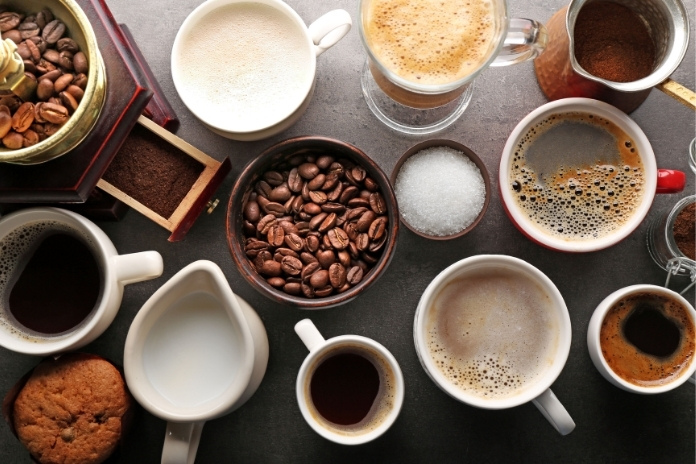
Grabbing that cup of coffee or having an energy drink instantly boosts our happiness and energy. However, have you ever thought about how long the caffeine stays in your system? Caffeinated drinks are common, and we all love having them. But it becomes essential to understand how long they stay in the body and their effect on our health.
Whether it’s your early morning coffee, your energy drink at noon, or your pre-workout supplement, caffeine is so common in our lives. In this article, we’ll understand the complete life cycle of caffeine inside your body, from your initial sip to the last flush. We will dissect the science, timeline, effects, and useful tips so you can make more intelligent, more tailored choices regarding your caffeine use.
Read More: 8 Best Low-Caffeine Pre-Workout Supplements
How Long Does Caffeine Stay in Your System?
Caffeine remains in the body for approximately 3 to 7 hours, meaning your body will take that long to rid itself of half the amount of caffeine you ingested. Therefore, if you have a cup of coffee at 2 PM with 200 mg of caffeine, you may still have 100 mg in your system at 7 PM—and possibly 50 mg still hanging around at bedtime.
But this isn’t a general number. Other factors like genetics, liver health, age, sex hormones, medications, and lifestyle can alter how fast your body breaks down caffeine.
The Caffeine Timeline: From Sip to Elimination
If you wonder about the impact of caffeine and how long it stays in your system. We will give you an idea of this. Here’s the timeline of caffeine:
- 0 to 30 minutes: Caffeine is quickly absorbed into your bloodstream via the stomach and small intestine. You may start to feel more alert, energetic, and mentally sharp.
- 1 to 2 hours: Caffeine reaches peak levels in the blood in an hour. This is when the majority of individuals experience the most potent effects, such as increased focus, increased heart rate, and decreased tiredness.
- 3 to 7 hours: This is the typical half-life period. Your body begins to metabolize caffeine and eliminate it from the liver and kidneys. Alertness decreases steadily, but stimulation may remain.
- 8 to 14+ hours: Depending on your metabolic rate, tiny amounts of caffeine can still be present in your system. This is particularly true if you are sensitive to caffeine or took a huge dose.
Read More: I Stopped Caffeine After 2 PM — Here’s How It Changed My Sleep (and Energy Levels)
Why It Affects People Differently
Not everyone has the same metabolism, hence caffeine affects each of us differently. Some individuals can have a strong espresso at night and sleep just fine, while others get wired from a green tea at lunchtime.
Key reasons include:
- Genetics: CYP1A2 gene variants affect the rate at which your liver metabolizes caffeine. ‘Fast’ metabolizers metabolize it rapidly, whereas ‘slow’ metabolizers can have prolonged effects and adverse effects such as anxiety or palpitations.
- Hormonal Changes: Estrogen decreases caffeine clearance. Thus, women using birth control pills or pregnant women may find that caffeine persists longer. It has been recently indicated that when women use oral contraceptives, their plasmatic clearance of caffeine reduces by 40%.
- Age and Liver Function: With increasing age, liver efficiency can decline, leading to slower metabolism of caffeine. Liver ailments can also prolong clearance.
- Medications: Using certain medications can impact caffeine absorption and metabolism. Medications such as fluoroquinolones, antidepressants, and oral contraceptives can affect the breakdown of caffeine.
Caffeine by Source: Not All Drinks Are Equal

Various caffeinated beverages affect your body in different ways. Here’s a comparison:
- Coffee (8 oz): A strong cup of coffee contains ~80–100 mg of caffeine. It is characterized by rapid absorption, reaching peaks in 30–60 minutes
- Energy Drinks (8 oz): A standard-size (8 oz) can or bottle of an energy drink contains ~80–150 mg of caffeine. These drinks are frequently blended with sugar and taurine.
- Black Tea (8 oz): Black tea has ~40–70 mg of caffeine content. However, the active compound, L-theanine, balances the stimulating effects of caffeine.
- Green Tea (8 oz): An 8-oz cup of green tea has a caffeine content of ~20–45 mg; drinking this leads to a more gradual increase in energy
- Soda (12 oz): Grabbing a soda can add ~30–50 mg caffeine to your diet. Soda is one of the popular caffeinated beverages worldwide.
- Dark Chocolate (1 oz): 1 oz of dark chocolate serving contains ~20 mg caffeine; mild, but cumulative
Understanding your intake from all sources, not just coffee, is important to calculate how long caffeine might stay in your system.
Signs Caffeine Is Still in Your System
Caffeine doesn’t just switch off after a few hours. There are a few signs that linger for quite some time. These include:
- There is difficulty falling or staying asleep
- A sudden increase in the heart rate.
- You feel restless or jittery.
- Digestive discomfort or acid reflux
- You get frequent urges to urinate.
- Increased anxiety at certain times.
If you’re experiencing these symptoms for several hours, long after consuming caffeine, it’s likely still active in your system.
How to Clear Caffeine from Your Body Faster
Although you can’t ‘flush out’ caffeine immediately, the following can help facilitate quicker elimination:
- Drink plenty of water, as it helps support kidney and liver function, and also aids in breaking down caffeine.
- Exercise moderately, as it promotes circulation and increases metabolism.
- Avoid nicotine and alcohol, as both tend to impact caffeine metabolism.
- Eat fiber, as high fiber helps regularize steady digestion and elimination of caffeine from our bodies.
But prevention is the best, being aware of your sensitivity and planning your consumption accordingly.
Best Time to Stop Caffeine Intake

To avoid sleep disruptions, experts recommend avoiding caffeine at least 6 to 8 hours before bedtime. For most people, that means no coffee or energy drinks after 2 PM.
Caffeine “is highly metabolized, with about 3% or less being excreted in the urine,” said Dr. Shannon Kilgore, a neurologist in Palo Alto, CA. “The half-life of the drug typically is around four to five hours, but it can range dramatically from as quickly as an hour and a half to as much as nine hours, depending on genetic factors and coadministration with other medications, including oral contraceptives, and smoking.”
“Smokers have massively increased clearance, so they will keep it around for a shorter time,” she added, noting that “pregnancy gets greatly reduced metabolism, so women need to watch how much caffeine they’re drinking.”
If you’re sensitive to caffeine or have trouble sleeping, consider stopping even earlier or switching to decaf or herbal alternatives.
When to Be Extra Cautious?
- You should be more mindful of caffeine if you:
- Have anxiety, insomnia, or heart arrhythmias
- Are you pregnant or breastfeeding?
- Use medications that alter liver enzymes
- Have increased blood pressure
In these situations, discuss safe levels and timing with a healthcare provider.
Final Thoughts: Know Your Limits
Caffeine is a useful friend if used carefully, but its half-life is longer than you might think. The important takeout? Learn about how your body processes caffeine, pay attention to where and when you’re getting it, and modify according to how it impacts your sleep, concentration, and mood.
By tuning your caffeine habits with your biology and lifestyle, you can get maximum benefit without the side effects. And that’s a habit worth brewing.
References
- https://www.goodrx.com/well-being/diet-nutrition/what-time-stop-drinking-coffee
- https://www.lindt.ca/en/your-life-with-lindt/dark-chocolate-myths-true-or-false
- https://www.onepeloton.com/blog/caffeine-how-long-kick-in-wear-off
- https://pmc.ncbi.nlm.nih.gov/articles/PMC4682602
- https://pmc.ncbi.nlm.nih.gov/articles/PMC1884408
- https://www.sciencedirect.com/science/article/pii/S2772417424000104
In this Article