














Do you ever wonder what kind of workout routine is followed by athletes? There is something that makes it different from the way normal people exercise. The truth is, athletes train to move better, not just look good. Their workouts are about speed, coordination, and explosive strength that translates into action, sprinting across a field, jumping higher, or changing direction in a split second.
This kind of training is a blend of raw power with full-body control. You’re not just doing sets and reps. You’re moving towards building a body that can react fast, generate force quickly, and stay strong under pressure.
This article provides a full-body workout for the athlete for speed and power. It blends plyometrics, strength training, sprint training, and stability of the core. Whether you do field sports, CrossFit, or wish to have more athletic training, this program helps you perform and move like an actual athlete.
Read More: How to Train Like an Olympian: Tips for Non-Athletes
What Makes Athlete Conditioning Different?

Athlete-type conditioning emphasizes how effectively your body performs when subjected to actual movement demands. Here’s what makes it different:
It incorporates explosive exercises that enable you to produce force in a short duration. It builds acceleration, deceleration, and direction-shifting ability. Movements occur along various planes, enhancing balance and coordination. The aim is to build functional strength and not aesthetics.
These exercises blend classic strength training with sprint drills, jumping, and core stability to develop balanced athletic performance.
Key Components of an Athlete’s Conditioning Workout
Every session is broken down into the five most essential training blocks that lay the foundation for speed, strength, and functional movement.
Dynamic Warm-Up (5 to 10 minutes)
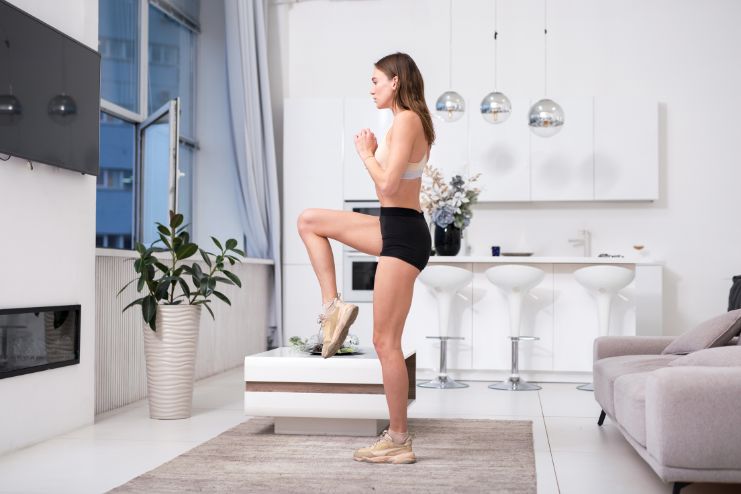
Your warm-up should put your body in motion, get your joints loose, and activate your muscles. This is how:
- High Knees:
Start jogging in place, bringing your knees up toward your chest as high as possible. Pump your arms in the same sync. You must maintain a tall posture and stay on the edges of your feet. You can practice high knees for 30 seconds.
- Leg Swings:
Hold a wall or stable object for balance. Swing one leg back and forth like a pendulum. Do this for 10 swings, then turn and swing side to side, and repeat with the other leg.
- Lateral Lunges:
To do lateral lunges, step out sideways and bend your stepping leg, and keep the other leg straight. Push your hips back and keep your chest up. Come back to center and repeat on the other side.
- Shoulder Circles:
In shoulder circles, you hold your arms out to your sides. Make small circles, then gradually larger circles. Move forward for 20 seconds, then backward for 20 seconds.
Mobility and Activation Drills
- Hip Flexor Pulses:
Step into a forward lunge, lower your back knee a little toward the ground, and lightly pulse up and down with your core muscles braced. Alternate sides after 20 seconds.
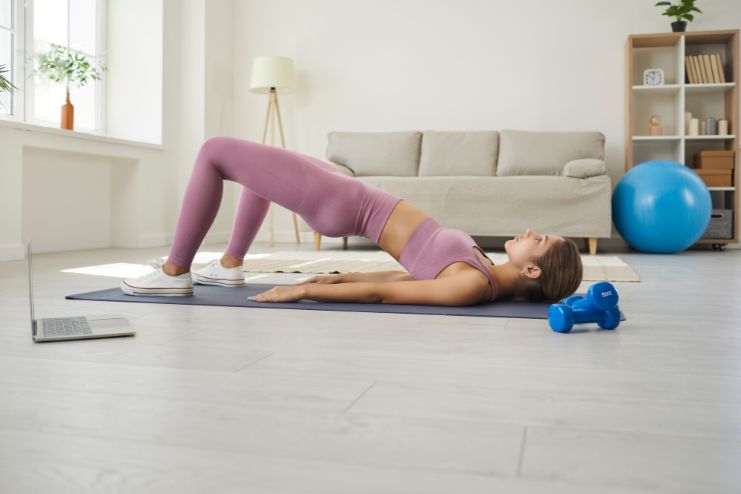
- Glute Bridges:
Lie on your back with your knees bent. Press through your heels to lift your hips. Squeeze glutes at the top for a couple of seconds, then slowly lower. Repeat for 10 reps.
- Wall Angels:
Stand against a wall with your arms, upper back, and lower back in contact with the surface. Bring your arms up and down in a snow angel movement while in contact with the wall. Do this wall angel 8 to 10 times.
Power Block (Plyometrics)
This exercise builds explosive strength by targeting the fast-twitch fibers in muscles. Use maximum effort in every movement, prioritizing crisp execution over volume.
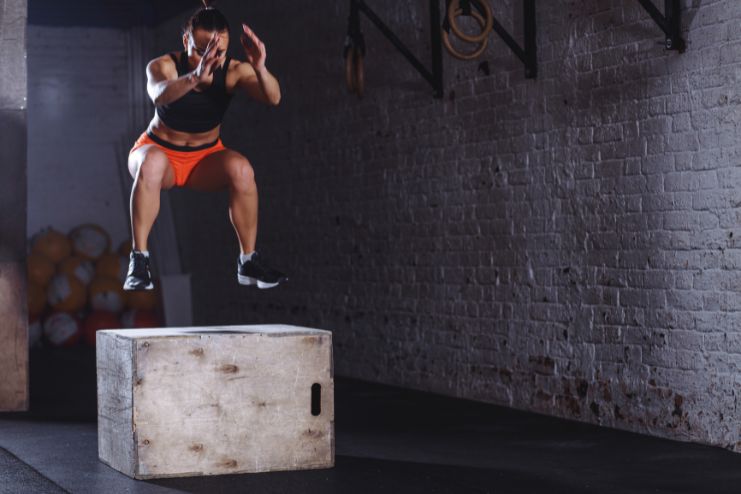
- Box Jumps:
Stand in front of a solid box or platform. Lower into a quarter squat, swing your arms, and jump up onto the box. Land softly with slightly bent knees. Step down from it. Perform box jumps 3 to 4 sets of 3 to 5 reps.
- Broad Jumps:
Start with feet shoulder-width apart. Lower into a squat and leap forward as far as possible, landing with control. Reset between each rep. Do 3 sets of 5 broad jumps.
- Medicine Ball Slams:
Hold a medicine ball overhead. Rise onto your toes, then drive the ball downward with your arms and core. Catch it on the bounce or reset. Repeat for 3 sets of 6 to 8 slams.
- Split Squat Jumps:
Start in a lunge posture with one foot leading. Jump up and switch legs in the air, landing in a lunge with the other foot leading. Keep your upper body erect and repeat for 3 sets of 5 reps per leg.
Rest between sets so that each movement is explosive and technically sound.
Strength Block (Full-Body Compounds)
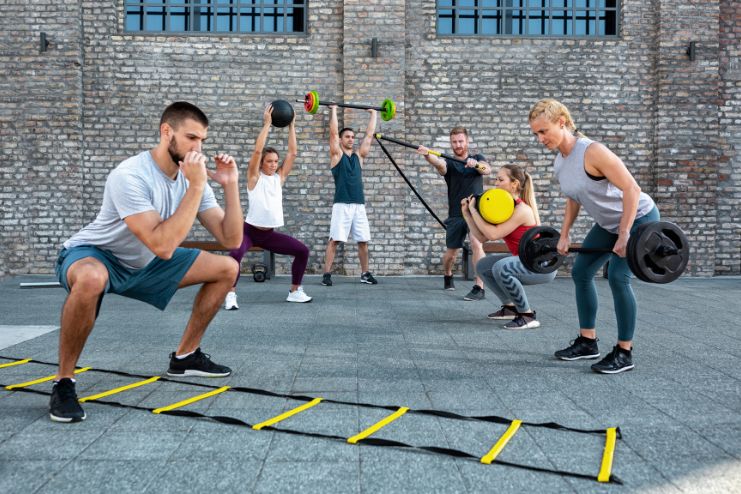
This is where you put serious power. Use moderate to heavy weights and emphasize moving with power and control.
- Trap Bar Deadlift:
Stand within the trap bar with hip-width feet. Grip the handles, engage your core, and press through your heels to stand tall. Lower the bar by hinging at your hips. Keep your back flat at all times. Do 4 sets of 3 to 5 reps of trap bar deadlift for best results.
- Front Squat:
Hold a barbell in front of your shoulders, with your chest up and your elbows high. Squat down to below parallel at the hips, then stand up. Keep your core tight during the movement. Do 4 sets of 3-5 reps.
- Pull-Up:
Hang from a bar with an overhand grip. Pull yourself up until your chin is above the bar. Lower with control. If needed, use assistance bands. Do 4 sets of as many quality pull-up reps as possible.
- Barbell Row:
Grip a barbell with your hands at shoulder width. Hinge your hips forward so that your torso is at a 45-degree angle. Pull the bar down to your lower ribs, hold, and slowly return to the top. Do 4 sets of 5 reps.
- Push Press:
Grasp a barbell at shoulder level. Bend slightly at the knees, then extend the bar overhead by pushing off your legs and arms. Lock out at the top and lower the bar in control. Repeat 4 sets of 3 to 5 reps.
Rest 90 to 120 seconds between sets.
Read More: Zone 2 Cardio: Why Everyone’s Talking About This Low-Intensity Workout
Speed and Agility Block
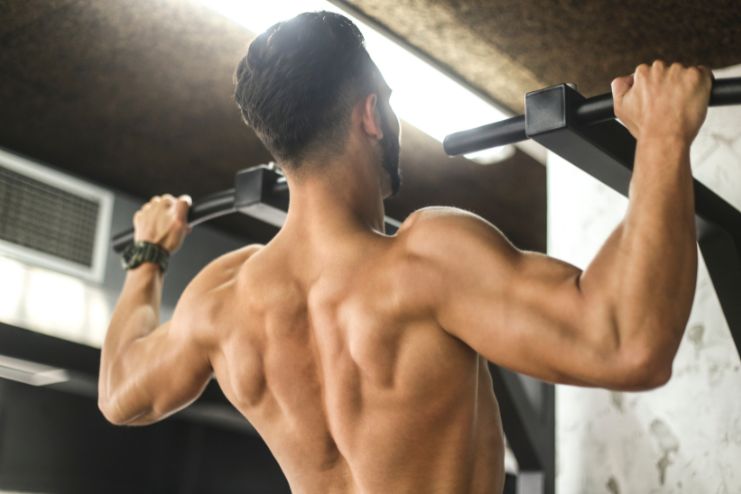
This segment enhances your sprint mechanics, reaction time, and capacity to travel in any direction rapidly.
- Sled Push:
Load a sled of moderate weight. Lean forward, have your arms out in front, and push through your legs for 10 to 20 yards. Push in short, rapid steps. Perform 4 rounds.
- Cone Drills:
Space cones in a zigzag or T pattern. Run around each cone, cutting, shuffling, or backpedaling based on the drill. Keep eyes up and knees bent. Perform 3 to 4 rounds.
- Ladder Footwork:
Use an agility ladder for patterns such as two-feet-in-each-box, lateral shuffles, or in-and-out footwork. Do quick, light steps. Run 3 times through the ladder per pattern.
- Short Sprints:
Create a 10 to 20-yard space. Sprint all out, then back off walking to recover. Do 4 to 6 all-out sprints per sprint.
This block should have you feeling fast, not tired.
Core and Stability Finisher
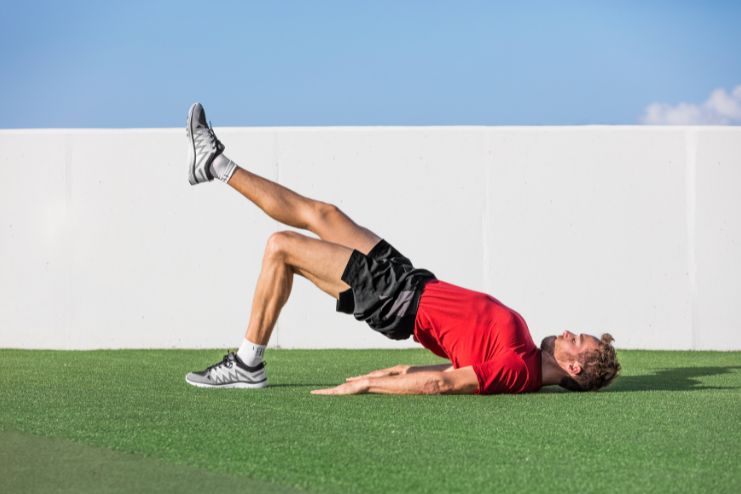
Finish off your session with core exercises that stabilize your spine and enhance power transfer through your torso.
- Pallof Press:
Anchor a resistance band at chest height. Stand to one side of the anchor, hold the band in both hands, and press it straight out in front of your chest. Hold for a few seconds, resisting rotation, then bring it back in. Do 3 rounds of 10 presses per side.
- Dead Bugs:
Lie on your back with arms and legs up in the air. Extend one leg and the other arm out towards the floor while holding your core tight. Come back to the center and switch sides. Perform 3 sets of 10 reps of dead bugs on each side.
- Plank-To-Row:
Get into a high plank position and hold a dumbbell in each hand. Row one dumbbell up to your waist, keeping your hips firm, and then lower and switch sides. Do 3 sets of 8 to 10 reps on each side.
- Single-Leg Glute Bridge:
Lie on your back with one foot flat on the ground and the other leg extended. Lift your hips off the ground by pushing through your heel that is on the ground. Rest, then slowly lower down. Alternate legs after every set. Do 3 sets of 8 reps of single-leg glute bridge per leg.
Read More: Best Recovery Compression Boots for Athletes
Training Guidelines

- Train 2 to 3 times a week. Have at least one full day of rest in between sessions so you can recover.
- Prioritize quality over quantity. Monitor your jump height, sprint time, or weight you lift with proper form.
- Focus on the quality of movement, not the quantity. These sessions should be challenging for your nervous system, not exhaust your energy.
Who Should Try This?
This program is suitable for:
- Amateur athletes looking to sharpen their performance
- Weekend warriors who enjoy powerful, purposeful training
- CrossFit enthusiasts or team sport players
- Anyone who wants to move better, feel stronger, and train with intent
If you’re new to training, build a basic strength foundation before starting this plan.
Benefits Beyond the Gym

Athlete conditioning not only improves physical fitness, but it also creates quicker response time, more acute coordination, and more efficient movement. Your joints become more stable and stronger. Your nervous system is more responsive. These exercises promote longevity and decrease your chances of injury.
Athletic training in this manner makes you feel more athletic in daily life, whether playing with your children, hiking a trail, or racing to catch a bus.
Final Thoughts
Athlete-style workouts are not just about getting physically big. They condition your body to move with intention, strength, and agility. You’ll be faster, stronger, and more able in all directions.
This isn’t a workout program. It’s a performance system that unlocks your body’s potential. Follow it, train hard, and you’ll notice the difference on the field, in the gym, and everywhere in between.
References
- https://www.onnit.com/academy/how-to-do-the-single-leg-glute-bridge-like-a-pro/
- https://www.aroleap.com/blogs/exercises/push-press
- https://www.youtube.com/watch?v=vCrxLztl2-M&t=117
- https://www.menshealth.com/uk/how-tos/a61885316/dead-bug-exercise/
- https://classpass.com/movements/plank-row
- https://www.menshealth.com/fitness/a39039778/trap-bar-deadlift/
- https://www.muscleandstrength.com/exercises/front-squat.html
- https://www.netmeds.com/health-library/post/box-jumps-full-body-workout-benefits-variations-and-step-by-step-guide-to-mastering-them
In this Article