














The Pilates method is renowned for its adaptability, designed to accommodate individuals of varying fitness levels through a comprehensive range of exercises. This article explores intermediate-level Pilates moves that will take practitioners beyond the fundamentals.
While beginner exercises lay the groundwork, intermediate activities raise the bar in terms of difficulty, fostering growth and refinement. These exercises not only improve strength and flexibility but also help you develop a deeper connection with your body, enhancing awareness and promoting holistic well-being.

Expert Choice: Best At-Home Yoga Studio
Experience over 2,400 world-class yoga classes from the comfort of your home. YogaDownload offers expert-led programs and flexible membership options for every fitness level.
*Purchases through this link support our research at no extra cost to you.
1. Criss-Cross
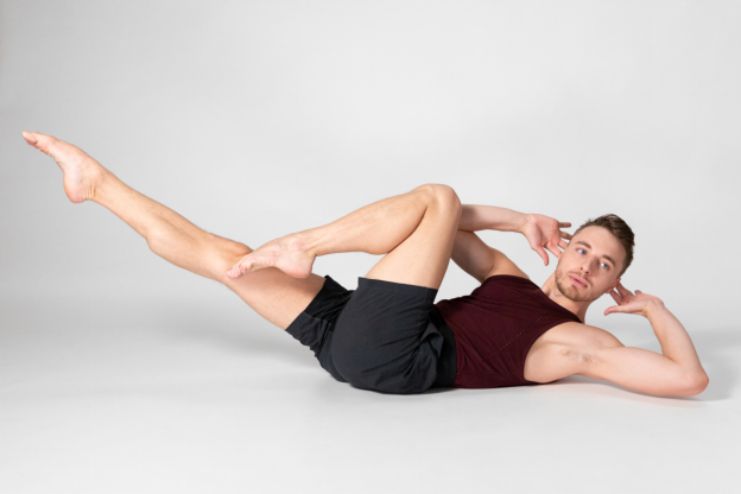
Target Areas: Obliques and core strength
The Criss-Cross is a fundamental exercise that sculpts the obliques(R) while strengthening your core. This dynamic workout engages multiple muscle groups simultaneously through controlled twists and reaches.
Technique Focus
- Alignment: Keep your neck relaxed over your shoulders, elbows open, and shoulders elevated
- Breathing: Exhale as you twist, inhale as you return to center
- Control: Maintain proper form throughout the movement
Modifications
- Beginners: Start with limited range of motion, gradually increase
- Advanced: Hold poses longer or work deeper twists
Benefits
Beyond waist toning, the Criss-Cross challenges spinal mobility and stability while developing a strong, supple core. This exercise enhances strength while bringing balance and alignment to your practice.
Also, Read: The Power of Pilates: Daily Routines for Strength and Flexibility
2. Double Leg Stretch
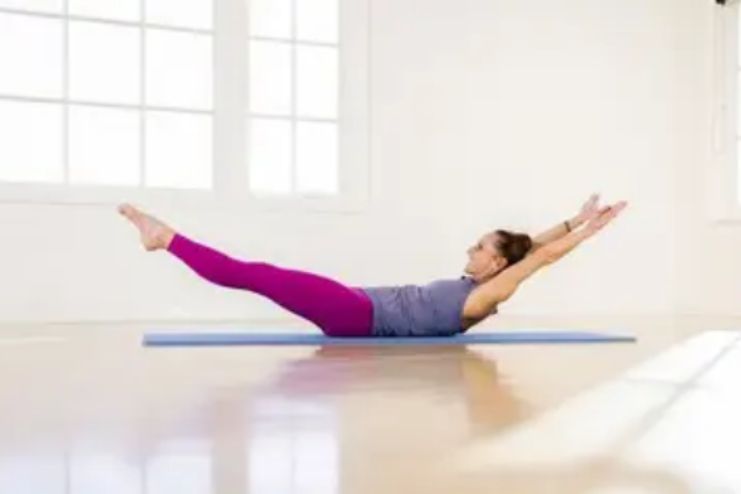
Target Areas: Abdominal muscles and core stability
The Double Leg Stretch is an energizing move that stimulates the abdominals and challenges core stability (R). This dynamic exercise serves as a cornerstone for intermediate practitioners, requiring both strength and precision.
Technique Focus
- Starting Position: Lie on your back with arms extended overhead and legs stretched out
- Movement: Bring knees to chest while raising arms overhead, then extend both out
- Breathing: Inhale to prepare, exhale forcefully as you extend limbs
- Core: Maintain solid core engagement throughout
Modifications
- Beginners: Perform fewer repetitions or keep legs slightly bent
- Advanced: Extend limbs further or add resistance
Benefits
This exercise enhances muscle tone while developing core strength and coordination. It improves stability and postural alignment, and consistent practice builds body awareness, enabling graceful, efficient movement in daily life.
3. Swan Dive
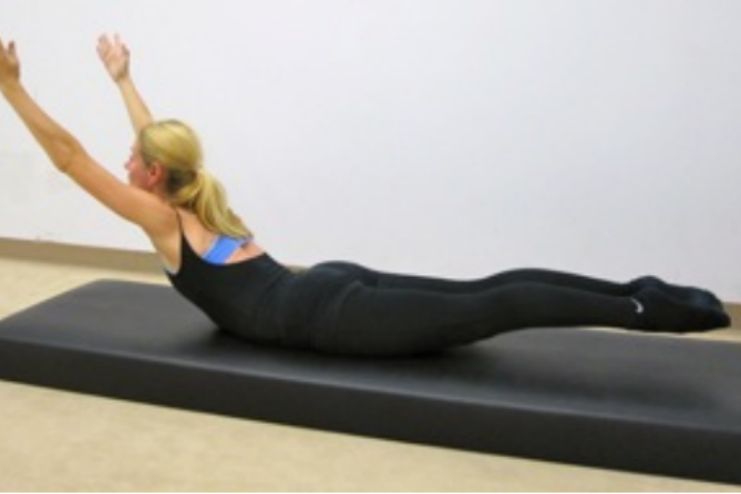
Target Areas: Back extensors and spinal mobility
The Swan Dive is designed to strengthen back extensors and increase spinal mobility(R). This beautiful exercise serves as a gateway to improved back strength and resilience.
Technique Focus
- Starting Position: Lie prone with arms extended overhead
- Movement: Lift chest off ground while raising arms forward
- Breathing: Inhale to lift, exhale to control descent
- Alignment: Keep spine lengthened throughout the movement
Modifications
- Beginners: Start with fewer lifts and gradually increase range of motion
- Advanced: Lift higher or incorporate resistance bands
Benefits
The Swan Dive strengthens back extensors and fosters spinal flexibility, creating a foundation for healthy spine function. Regular practice reduces tension and discomfort while instilling vitality and well-being.
Expert Choice: Best At-Home Yoga Studio
Experience over 2,400 world-class yoga classes from the comfort of your home. YogaDownload offers expert-led programs and flexible membership options for every fitness level.
*Purchases through this link support our research at no extra cost to you.
4. Side Plank
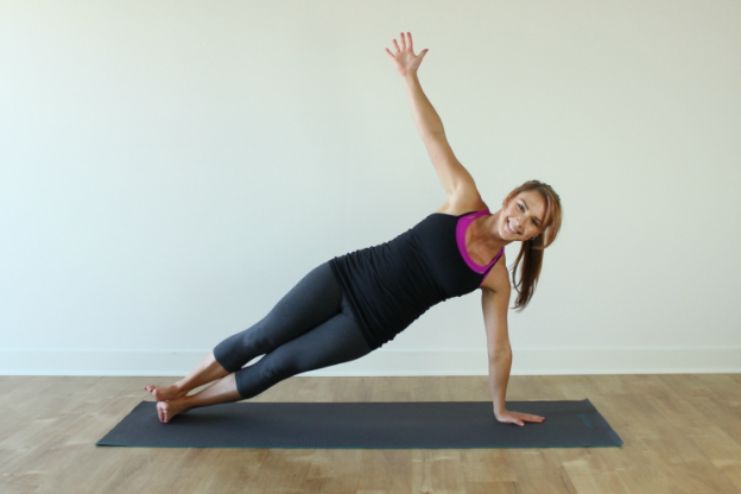
Target Areas: Obliques, shoulders, and hips
The Side Plank is a dynamic pose that activates the obliques, shoulders, and hips with precision. This exercise showcases the power of stability and strength.
Technique Focus
- Position: Lie on your side, prop up on forearm with elbow under shoulder
- Alignment: Create straight line from head to heels
- Engagement: Lift hips off mat using core muscles
- Stability: Maintain position with control
Modifications
- Beginners: Bend bottom knee or lower hips slightly
- Advanced: Lift top leg or reach top arm overhead
Benefits
Side Plank builds considerable core strength and stability, enhancing muscle tone across the spine and shoulders. It develops mental toughness and promotes mindful movement patterns.
Also, Read: Top 5 Pilates Balls for Core Strengthening and Rehabilitation
5. Corkscrew
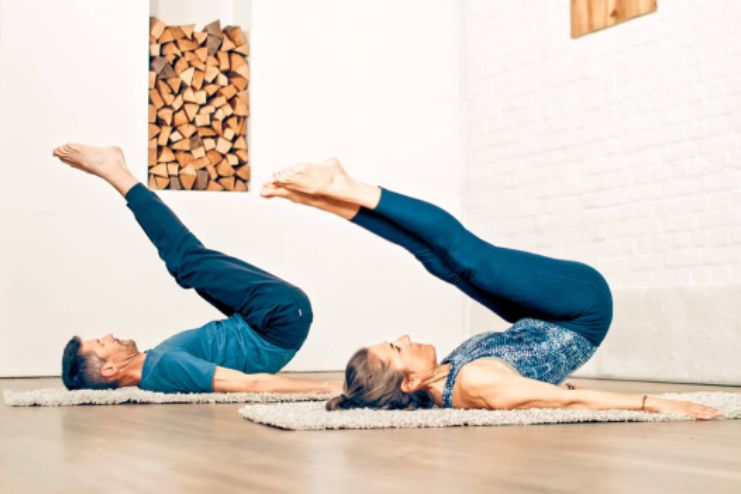
Target Areas: Core stability and spinal mobility
The Corkscrew is an advanced move that challenges limits and promotes full-body control. This dynamic exercise targets core stability while improving spine mobility.
Technique Focus
- Starting Position: Lie supine with arms out to sides, legs raised toward ceiling
- Movement: Lower legs to one side, rotate in circular motion like a corkscrew
- Breathing: Exhale when twisting, inhale when returning to start
- Control: Maintain core engagement throughout
Modifications
- Beginners:Start with smaller movements
- Advanced:Add ankle weights for resistance
Benefits
The Corkscrew enhances spinal flexibility and develops core strength, leading to better body control and coordination. Consistent practice strengthens the mind-body connection, facilitating fluid, graceful movement.
6. Saw
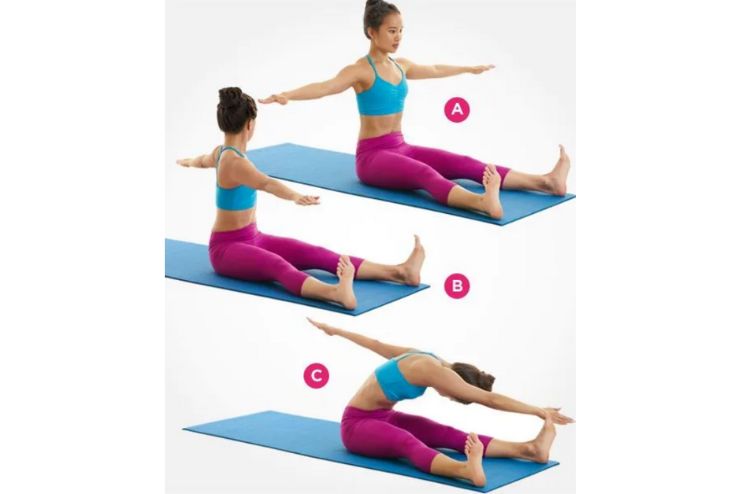
Target Areas: Obliques, hamstrings, and spinal rotators
The Saw promotes a balanced blend of strength and flexibility, specifically targeting the obliques, hamstrings, and spinal rotators (R).
Technique Focus
- Starting Position: Sit with legs in wide stance, arms extended to sides
- Movement: Rotate torso toward one foot, reach opposite arm toward pinky toe
- Breathing: Inhale to sit tall, exhale completely while twisting and reaching
- Alignment: Keep both hips planted firmly on ground
Modifications
- Beginners: Start with narrower leg position and smaller twists
- Advanced: Gradually increase range of motion as confidence builds
Benefits
Beyond muscle toning, the Saw enhances spinal mobility, improves hamstring flexibility, and promotes overall postural alignment. Regular practice cultivates inner harmony and enables graceful movement through life.
7. Swimming
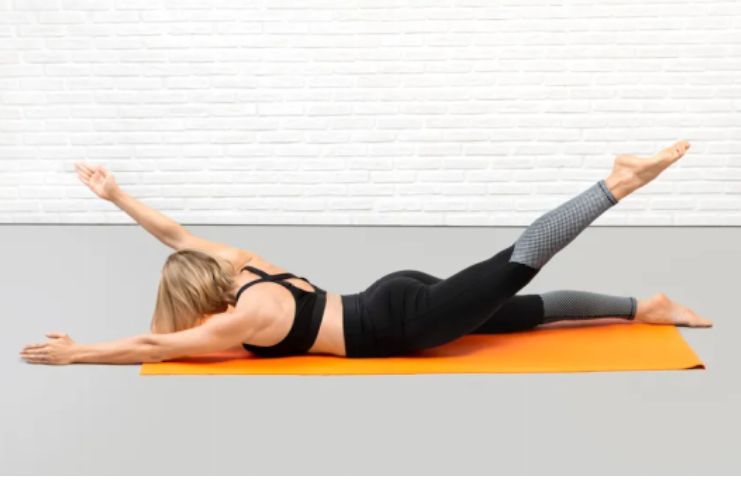
Target Areas: Back extensors and postural alignment
Swimming is designed to strengthen back extensors and improve postural alignment(R), resulting in a sturdy and balanced body.
Technique Focus
- Starting Position: Lie prone with arms overhead, legs slightly off floor
- Movement: Alternately raise and lower opposing arms and legs rhythmically
- Breathing: Inhale as you rise, exhale as you descend
- Form: Keep shoulders relaxed, neck long, core strong
Modifications
- Challenge Variations: Increase tempo, amplitude, or duration for more intensity
Benefits
Swimming develops back extensors, improves spinal mobility, and increases body awareness. It creates a stronger mind-body connection and builds a resilient, well-balanced physique. Regular practice develops vigor and well-being, enabling you to face life’s challenges with grace.
Also, Read: 10 Step Pilates for Beginners
Conclusion
To sum up, intermediate Pilates movements provide a means of accessing improved bodily and mental health. These poses push practitioners beyond the fundamentals, encouraging strength, flexibility, and body awareness. Include these movements in your Pilates practice to achieve previously unattainable levels of flexibility and strength.
Always pay attention to your body, use appropriate techniques, and get advice from a certified Pilates instructor. Embrace the process of change and evolution as each session moves you one step closer to being a more resilient, well-rounded version of yourself.
References
- https://complete-pilates.co.uk/criss-cross-exercise/
- https://pilatesology.com/the-pilatesology-encyclopedia/the-criss-cross/
- https://www.pilatesclub.de/en/pilates-exercise-criss-cross/
- https://www.lyfta.app/exercise/dvojno-raztezanje-nog-80i
- https://gethealthyu.com/exercise/double-leg-stretch/
- https://www.powerpilates.com/encyclopedia/?a=47
- https://complete-pilates.co.uk/pilates-swan/
- https://www.verywellfit.com/how-to-do-pilates-swan-2704683
- https://us.physitrack.com/home-exercise-video/pilates-swan-dive-level-1
- https://www.verywellfit.com/how-to-safely-progress-your-side-plank-exercise-4016853
- https://www.healthline.com/health/side-plank
- https://www.sportskeeda.com/health-and-fitness/corkscrew-pilates-tips-technique-correct-form-benefits-common-mistakes
- https://www.pilatesclub.de/en/pilates-exercise-the-saw/
- https://www.verywellfit.com/pilates-mat-exercise-swimming-2704711
- https://www.pilatesclub.de/en/pilates-exercise-swimming/
- https://www.spotebi.com/exercise-guide/pilates-swimming/
In this Article