














Our mornings often set the stage for the whole day, and how you start could be key. A few mindful minutes of movement can shift our energy entirely if we feel rushed, lethargic, or even overwhelmed first thing in the morning.
A 10-minute morning yoga routine to initiate your day is one of the most straightforward yet most effective methods of reawakening your body and mind if you frequently experience stiffness or soreness in the mornings. This straightforward routine will help relax your body and prepare you for the day.
This brief morning yoga sequence is ideal for beginners, as it stimulates blood circulation and concentrates energy. The poses will help you feel fit and flexible throughout the day, not only in your mind, body, and spirit, but also in your physical strength and body length.
“A morning yoga routine can serve as a perfect way to gradually warm and awaken the mind and body after a restful night’s sleep, preparing you for whatever the day might have in store,” says Jessica Matthews, DBH, E-RYT 500, award-winning yoga educator and author of Stretching to Stay Young.
It is a modest daily habit that has the potential to bring about significant, lasting changes in your health and well-being.
Read More: From Yoga to Diet: Natural Strategies to Manage Asthma Effectively
10 Minute Morning Yoga
1. Tadasana
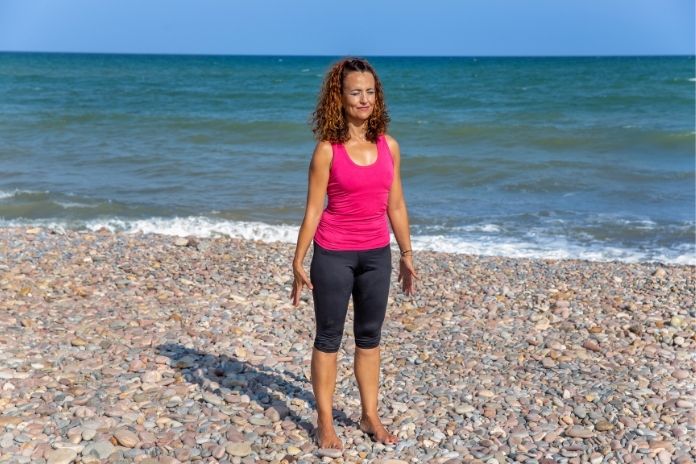
- Assume the Mountain Pose as your initial position.
- Firmly plant your feet on the ground, ensuring that you apply pressure to all four corners of each foot.
- Reach for the floor by extending your arms down alongside your body.
- Engage your core by drawing your abdominals in and lifting them.
- Hold the pose for 5-8 breaths, getting yourself ready to go deeper and also to calm your brain.
2. Urdhva Hastasana (or Upward Salute)
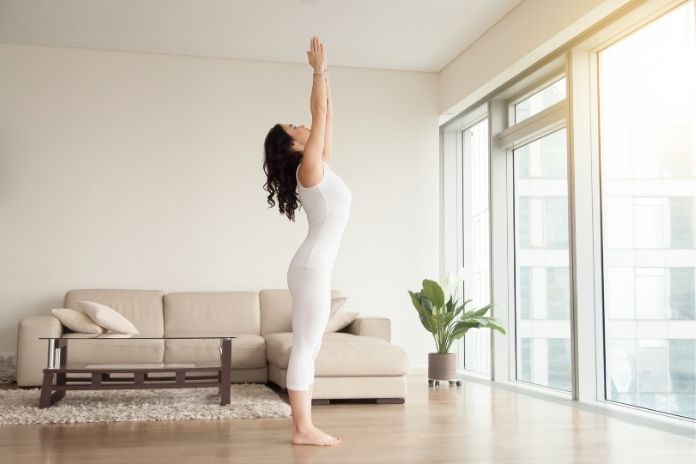
- Begin by assuming the Mountain Pose.
- Lift your arms overhead and place your palms together firmly.
- Let your shoulders relax down.
- Activate your triceps to stabilize and strengthen.
- Keep your legs strong, and engage your abdominals.
- Hold for a total of 5 – 8 breaths.
Read More: Why Athletes Swear by Yoga Nidra for Faster Recovery
3. Bridge Pose
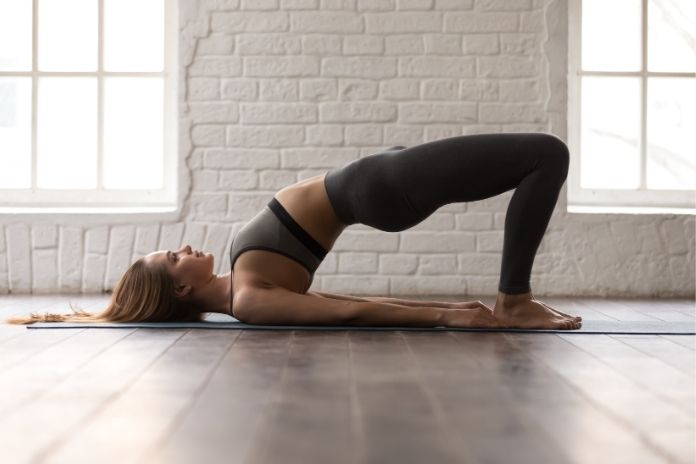
- Position yourself on your back with your knees over your ankles.
- Maintain a hip-distance between your feet.
- Lengthen your limbs and extend them toward your ankles.
- Inhale to elevate the pelvis toward the ceiling.
- Keep your pelvis elevated and place your head, neck, and shoulders on your mat. (To safeguard your neck, refrain from gazing towards your right or left.)
- Slowly descend to the initial position after exhaling.
4. Cat/Cow Posture
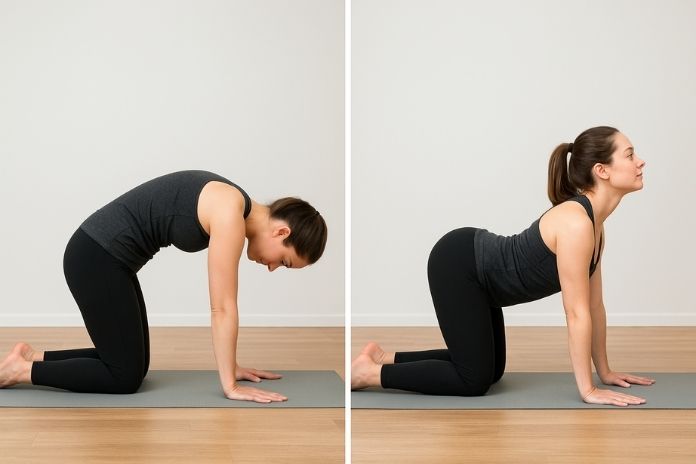
- Position yourself on all fours. Place your shoulders above your wrists and your hips above your knees.
- Draw your abdomen toward your spine and neutralize your spine.
- Inhale to achieve the cow pose, which involves lifting your head between your shoulder blades and opening up your torso. Think about contracting your pelvis and shoulders towards each other.
- Exhale into the cat pose by pulling your pelvis toward your sternum and rounding your spine. Draw your jawline towards your torso.
- Continue executing the movements to mobilize your vertebrae.
5. Crescent Lunge Modification
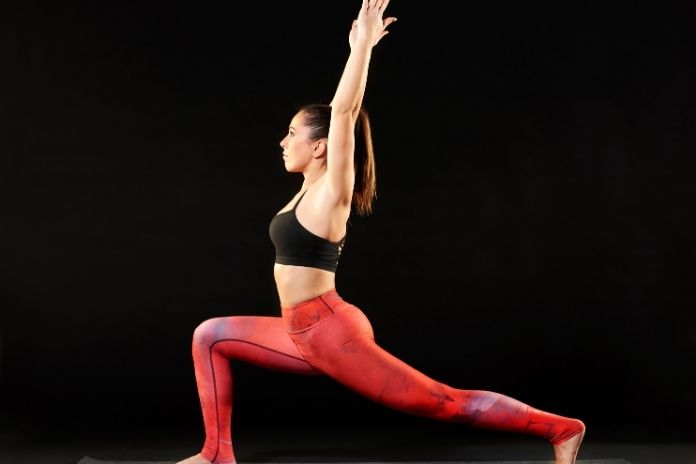
- Start on all fours
- Step your right leg forward between your forearms and extend your left foot behind you.
- Sweep your arms above your head, keeping your biceps by your ears, and inhale. Sink your pelvis to the ground. Ascend to your back knee.
- Letting your right arm fall to the side of your body, exhale, and extend your left fingertips above your head. Push your hips forward while working on the left side to increase the stretch in your hip flexors.
- Return to all fours by passing through the center.
- Change to the opposite side, reaching the right arm upward while moving the left foot ahead.
Read More: What Is Somatic Yoga? A Beginner’s Guide to This Gentle Movement Practice
6. Twisted Child’s Posture
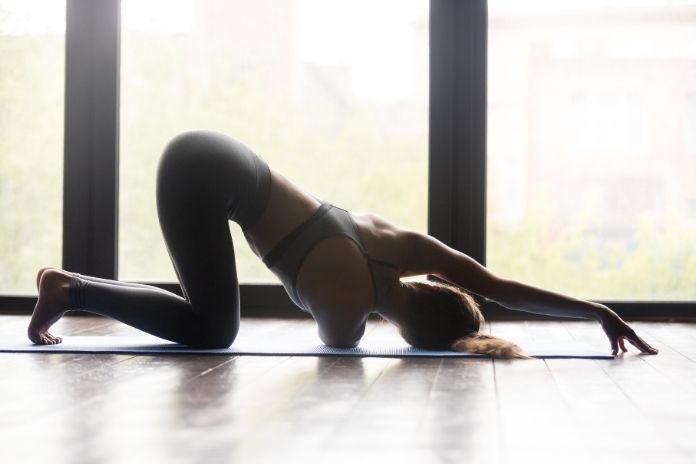
- Start in tabletop position.
- Place your legs hip-distance apart and touch your big toenails together.
- Draw your midsection down to the mat, sink your pelvis toward your heels, and extend your arms forward (optional: wrap your hands around your heels).
- Breathe in while lifting your right arm upward. While breathing out, rotate the body and thread your right arm beneath your left arm.
- Unthread your right arm with the next inhale.
- Repeat the movements on the left side by exhaling.
- Back to child’s pose with both arms extended.
7. Plank to Downward-Facing Dog
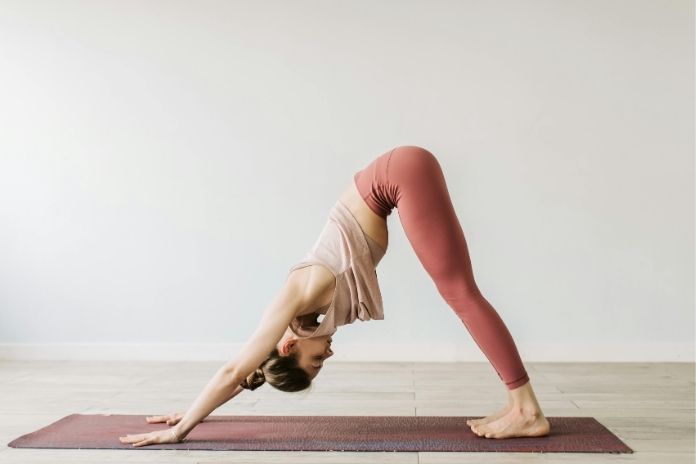
- Position yourself in a plank position, with your shoulders stacked over your forearms, your spine extended, and your legs straightened behind you.
- As you raise your hips toward the ceiling, straighten your arms and direct your torso toward your quadriceps, forming a pyramid shape with your body.
- Attempt to lower your heels toward the mat, even if they do not make contact with the floor.
- There is an option to transition between plank pose and downward-facing dog to limber up your shoulders.
Read More: Chair Yoga for Seniors: Simple Moves to Improve Strength and Flexibility
Tips to Make Your Morning Yoga Habit Stick
It’s not difficult to create a sustainable yoga practice. If you keep it simple, repeatable, and fun, it can become part of your day.
Set a Time: One of the most critical aspects of creating a successful morning yoga practice is setting a time to practice. Choose a time that suits you and incorporate yoga into your daily schedule and routine.
Keep a Mat Out: Being able to see your mat or have it out serves as a reminder when you walk by. Additionally, having your mat out reduces some of the friction during setup, allowing you to get started quickly.
Get Up Early: When you practice yoga first thing in the day, you have already accomplished something, and you can practice yoga before you get distracted or busy for the rest of the day.
Start Short, Build Longer: It is much easier to commit to a short routine. When you are feeling comfortable with a 10-minute morning yoga practice, you want to go to 15 or 20 minutes to access more benefits.
Be Consistent: Staying consistent is key to building a solid morning yoga habit—commit to just a few minutes daily. Consistency is a primary key to creating your practice and also developing a habit.
Yoga offers numerous types of physical and mental benefits, including increased energy, enhanced focus, and greater relaxation.
Read More: 8 Surprising Benefits of Laughter Yoga: How Humor Can Enhance Health and Well-Being
Conclusion
It doesn’t have to be complicated or time-consuming to begin your day with yoga. It just takes ten minutes of morning yoga to revitalize your body, soothe your mind, and create a excellent vibe for the rest of the day.
You’ll see little but significant improvements if you practice every day, even for only a week. You’ll have more energy in the mornings, be able to concentrate better at work, and feel more balanced throughout the day.
This routine’s accessibility, requiring no studio, equipment, or prior expertise, is its most significant feature. All you have to do is commit yourself every morning. The secret to long-lasting success is consistency, regardless of your level of experience or if you’re getting back into the mat.
-
Apr 2017Written by Tiru Dehariya
-
Sep 2025Updated by Ankita
References
- https://www.yogabody.com/10-minute-morning-yoga-flow/
- https://www.doyou.com/a-10-minute-morning-yoga-sequence-for-beginners/
- https://www.aarp.org/videos/health/fitness/6145867902001/
- https://morningyogashakeup.xyz/post/p5.html
- https://www.acefitness.org/resources/author/76/jessica-matthews/
- https://oneyogathailand.com/10-easy-steps-to-establish-a-yoga-habit-with-a-daily-routine/
In this Article