











You step on the scale a few days before your period and pause. The number is up two… maybe four pounds. Your jeans feel tighter, your stomach feels heavy, and you wonder if you’ve suddenly gained fat overnight. The confusing part? You haven’t changed your diet, your exercise routine hasn’t slipped, and nothing else about your habits has shifted.
Here’s the reassurance most people don’t hear clearly enough: pre-period weight gain is common, temporary, and rarely fat gain. What’s happening is a normal, predictable mix of hormone-driven water retention, subtle shifts in digestion, and fluctuations in appetite and energy that naturally occur across the menstrual cycle.
Understanding the biology behind these changes makes them far less alarming. You can learn to anticipate them, manage bloating and discomfort, and avoid unnecessary stress or extreme dieting. This guide breaks it all down—what’s normal, what might signal a problem, and practical strategies that actually help you feel lighter and more comfortable during your period.
Is It Normal to Gain Weight During Your Period?

Yes. For most people who menstruate, weight gain around their period is normal. Clinical research consistently shows that body weight can fluctuate anywhere from two to five pounds throughout the menstrual cycle, with the most noticeable changes occurring in the days leading up to menstruation.
Nearly everyone with a regular cycle experiences some degree of fluctuation. Interestingly, the increase in weight often begins before bleeding starts, during the luteal phase when hormones like progesterone peak, rather than during the heaviest days of your period. Once menstruation begins, weight typically normalizes within a few days as hormone levels adjust and fluid balance stabilizes.
Pay attention to patterns rather than single-scale readings. If you notice that your weight rises and falls predictably during the same window each month, that’s a clear sign that these changes are hormonally driven, not a reflection of overeating or metabolic issues.
What Actually Causes Period-Related Weight Gain?
Period-related weight gain isn’t random; predictable changes in hormones, digestion, and appetite drive it. Understanding these factors helps you see why the scale can rise before your period without it reflecting fat gain.
Hormonal Shifts and Water Retention
Hormones are the biggest driver of premenstrual weight changes. During the late luteal phase of the menstrual cycle, both estrogen and progesterone begin to decline. These hormonal shifts affect how your body regulates fluids and electrolytes. Lower estrogen levels, in particular, lead to increased sodium retention and reduced fluid clearance by the kidneys.
The result is temporary swelling in soft tissues, which can add several pounds to the scale in the days leading up to menstruation. Research published in The Journal of Women’s Health confirms that water retention alone can explain noticeable premenstrual weight fluctuations, even when calorie intake remains stable.
Read More: Drink These 5 Smoothies to Ease Period Symptoms and Boost Hormonal Health
Slower Digestion and Gut Changes
Progesterone doesn’t just affect the uterus; it also slows gastrointestinal motility. When progesterone is high in the luteal phase, food moves more slowly through the intestines, which can lead to constipation, bloating, gas, and a feeling of fullness.
According to Mayo Clinic guidance on premenstrual syndrome, hormone fluctuations in the week or two before your period often lead to water retention and abdominal bloating, which can cause both temporary increases in scale weight and a feeling of heaviness around the waist.
Appetite and Cravings (The Serotonin Link)
Hormonal shifts also influence appetite and cravings. Estrogen helps regulate serotonin, the neurotransmitter responsible for mood and hunger signals. As estrogen declines before your period, serotonin activity drops, making cravings, especially for carbohydrates and salty foods, more pronounced. Appetite cues become stronger as the brain seeks quick energy.
Research published in Appetite shows that premenstrual increases in calorie intake are usually modest and short-lived, rarely enough to cause meaningful fat gain. True fat gain requires a sustained caloric surplus over time, not brief hormonal fluctuations.
Water Weight vs. Fat Gain: How to Tell the Difference
Understanding the difference between water weight and fat gain is key to avoiding unnecessary stress or extreme dieting around your period. Rapid changes on the scale are often misinterpreted as fat accumulation, but most premenstrual weight fluctuations are temporary and hormonally driven.
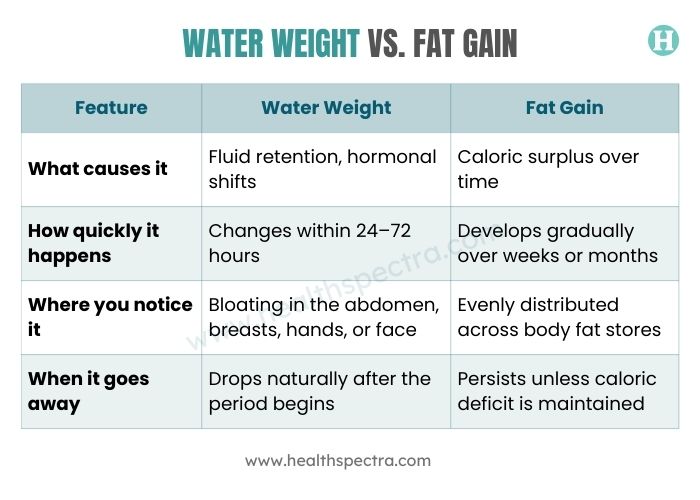 Biologically, gaining two to five pounds of fat in just a few days would require thousands of calories beyond normal intake, a scenario that almost never happens accidentally.
Most premenstrual weight changes are temporary water retention, which resolves naturally once hormones stabilize. Recognizing this pattern helps you avoid unnecessary worry and focus on strategies that actually improve comfort and well-being during your cycle.
Read More: What To Eat (And Avoid) During Periods
When Does Period Weight Gain Start and End?
For most people, weight changes follow a consistent pattern.
- Starts: Mid-to-late luteal phase (about 7–10 days before your period)
- Peaks: One to two days before bleeding
- Resolves: Within 3–5 days after menstruation begins
This timeline aligns with hormonal shifts, particularly falling estrogen and progesterone and rising prostaglandins, which also contribute to cramping and inflammation.
If weight gain resolves on this schedule, it’s part of a normal menstrual rhythm.
Should You Weigh Yourself During Your Period?
If the numbers on the scale affect your mood or behavior, it’s often best to skip weighing yourself during your period. Daily weigh-ins in the luteal phase can distort your perception of progress, trigger unnecessary dietary restriction, and increase frustration or self-criticism.
Many clinicians suggest weighing yourself at the same point in your cycle each month, or during the follicular phase after your period ends, when hormone-driven fluctuations have stabilized. Rather than focusing on short-term scale changes, it’s more helpful to track progress through energy levels, strength gains, or how your clothes fit throughout the cycle.
Long-term trends are what truly matter; temporary premenstrual weight shifts are normal and shouldn’t drive stress or decisions about your body.
Why Workouts Feel Harder (and Why That’s Okay)
It’s completely normal to feel slower, weaker, or less motivated in the days leading up to your period. Several physiological changes during the luteal phase contribute to this temporary dip in performance.
Lower estrogen levels can reduce endurance efficiency, while sleep quality often declines, leaving you feeling more fatigued. Bloating, water retention, and subtle changes in joint laxity can also make you feel heavier or less comfortable.
Tamara Hew-Butler, who is Associate Professor of Exercise Physiology at Wayne State University, explains that women and those who menstruate tend to have lower energy levels during the second half of the menstrual cycle, known as the luteal phase, which occurs during days 15 to 28.
Despite these challenges, research in Frontiers in Physiology shows that temporary reductions in performance during this phase do not compromise long-term fitness gains. Adjusting your workouts, whether by scaling intensity, taking an extra rest day, or choosing gentler forms of movement like yoga or walking, does not undo progress.
In fact, it supports recovery and allows your body to perform optimally when hormone levels shift again. Understanding that these fluctuations are normal can help you approach your workouts with patience and flexibility, reducing frustration while maintaining consistency over time.
What Helps Reduce Bloating and Water Retention (Without Extremes)

Hydration may sound counterintuitive when your body feels puffy, but drinking enough water actually helps reduce water retention. Adequate fluid intake signals the kidneys to release excess sodium, supports digestion, and gradually eases bloating.
The key is consistency; sip water steadily throughout the day rather than trying to chug large amounts all at once, which can make you feel heavier.
Gentle movement also plays a crucial role. Activities like walking, light cycling, or yoga stimulate lymphatic drainage, improve gut motility, and relieve abdominal pressure. You don’t need high-intensity workouts to see relief; steady, moderate movement over time is far more effective for easing bloating than occasional intense exercise.
Sodium balance matters more than restriction. Completely cutting salt can backfire by increasing aldosterone levels, which actually worsens fluid retention. Instead, aim for consistent sodium intake and avoid sudden spikes from highly processed foods, which can exacerbate bloating and puffiness.
Fiber can support digestion, but timing and type are important. During the luteal phase, excessive or abrupt increases in fiber can worsen bloating. Focus on easily digestible options like cooked vegetables and soluble fiber sources, introducing them gradually rather than dramatically increasing intake all at once.
What usually doesn’t help are aggressive short-term measures. Drastic calorie restriction can elevate stress hormones, which in turn increase water retention. Over-exercising can aggravate inflammation and fatigue.
Diuretics or “detox” products may provide temporary relief, but they often lead to rebound water retention and are not recommended without medical supervision. Quick fixes tend to make symptoms worse in the following cycle rather than better.
When Period Weight Gain Isn’t Normal
While most premenstrual weight changes are benign and temporary, certain patterns should prompt medical evaluation. You should consult a healthcare provider if you experience:
- Sudden weight gain of more than 8–10 pounds
- Persistent swelling that extends beyond your period
- Severe pain
- Shortness of breath
- Rapid edema
- or new symptoms appearing later in life
These warning signs may indicate underlying conditions such as thyroid disorders, polycystic ovary syndrome (PCOS), or other hormonal imbalances that can alter normal cycle-related weight fluctuations.
Identifying these conditions early ensures proper management and helps distinguish between normal premenstrual changes and patterns that require medical attention. Regular monitoring and professional guidance provide reassurance and prevent unnecessary worry while keeping you in tune with your body’s normal rhythms.
The Practical Takeaway
Weight gain during your period is temporary, hormonally driven, and completely normal. It’s a natural result of water retention, slower digestion, and subtle shifts in appetite, not a reflection of fat gain, laziness, or a loss of progress. Understanding this distinction is key to approaching your cycle with perspective rather than panic.
The most effective response isn’t correction or restriction, it’s accommodation. Focus on consistent hydration, gentle movement, balanced meals, and self-care while your body goes through these predictable changes. Light exercise, nutritious food choices, and adequate rest help you feel more comfortable, but trying to “fight” the scale rarely works and often increases stress.
When you step back and look at long-term trends instead of daily fluctuations, the temporary premenstrual weight gain loses its power. Over the course of weeks and months, these small, cyclical changes are minor blips in an otherwise consistent pattern. By understanding the biology behind your cycle, you can stay confident, reduce anxiety around the scale, and navigate your period with ease and reassurance.
Frequently Asked Questions
How much weight do you gain during your period?
Most people notice a weight increase of two to five pounds in the days leading up to their period. This gain is primarily due to fluid retention caused by hormonal shifts, rather than fat accumulation. Swelling in soft tissues, mild bloating, and changes in digestion all contribute to the temporary rise on the scale. Once menstruation begins, this weight usually resolves naturally within a few days.
Is period bloating the same as weight gain?
Bloating can make your stomach feel tight and your body feel heavier, but it’s not the same as gaining fat. The scale may reflect this temporary water and digestive buildup, which is completely reversible. Hormones, slower gut motility, and sodium or carbohydrate intake influence period bloating. Recognizing it as fluid-related helps prevent unnecessary worry or extreme dieting.
Can PMS cause real weight gain?
Short-term PMS symptoms do not lead to true fat gain. Most premenstrual weight changes are the result of fluid retention, gastrointestinal changes, and mild fluctuations in appetite. Even if you notice your weight creeping up for a few days, it usually drops back to baseline once your period begins. True fat gain requires a sustained caloric surplus over time, not brief hormonal shifts during the luteal phase.
Should I change my diet during my period?
Making small, thoughtful adjustments for comfort can be helpful, such as prioritizing hydration, balanced meals, and easy-to-digest foods. Extreme restrictions or crash diets, however, are unnecessary and may actually worsen bloating or fatigue.
Focusing on consistent, nourishing eating patterns throughout the cycle is far more effective than reacting to short-term scale fluctuations. Eating for comfort and stability helps your body navigate the hormonal changes without adding stress.
References
- Nutrisense. (n.d.). Period weight gain: Why it happens and what to expect. Nutrisense.
- Flo Health. (n.d.). Weight gain before and during your period. Flo.
- Vinmec International Hospital. (n.d.). Why do women gain weight erratically before and after the menstrual cycle? Vinmec.
- Felix. (n.d.). Is it normal to gain weight on your period? Felix Health.
- Cleveland Clinic. (n.d.). Do you gain weight when you’re on your period? Cleveland Clinic Health Essentials.
- Samphire Neuro. (n.d.). Do you gain weight on your period? What you need to know.
- Clue. (n.d.). Do you gain weight on your period? Here’s what to know.
- Holland & Barrett. (n.d.). Is it normal to gain weight during your period?
- For Hers. (n.d.). Weight gain during your period. Hers.
- New Hope OB-GYN. (n.d.). Why you can gain weight during PMS.
- The London Obesity Clinic. (n.d.). Weight changes around your menstrual period.
- Times of India. (n.d.). Reasons why you gain weight during your period.
- Frontiers in Physiology. (2024). [Article on menstrual cycle–related physiological changes]. Frontiers in Physiology.
- Live Science. (n.d.). Exercise on your period: What science says.
- National Center for Biotechnology Information. (2023). [Article on menstrual cycle and weight or metabolism]. PubMed Central.
- Mayo Clinic. (n.d.). Premenstrual syndrome (PMS): Symptoms and causes
- PubMed. (2023). [Study related to menstrual cycle and weight changes]
- Cleveland Clinic. (n.d.). Why your weight fluctuates day to day. Cleveland Clinic Health Essentials.
In this Article