













If your back aches by 3 p.m., your shoulders feel tight after scrolling, or you catch yourself slouching on the couch every night, you’re not alone.
Modern life isn’t built for good posture. We spend hours at desks, in cars, on planes, and hunched over our phones. Over time, that constant forward lean puts real stress on your spine, weakens key muscles, and quietly sets the stage for chronic back and neck pain. Prolonged sitting is associated with increased risk of low back pain (OR=1.42) in sedentary workers.
The good news? You don’t have to “just live with it.”
Today’s posture improvement devices are smarter, more comfortable, and backed by real science. From wearable posture trainers to ergonomic supports designed for home and office use, the right tools can help retrain your muscles, relieve tension, and make sitting and standing feel natural again.
A 2019 systematic review of posture wearables found that biofeedback devices can measure spinal angles with reasonable accuracy and support real-time cueing, though long-term user adherence requires further validation.
In this guide, we’ll break down nine of the best posture improvement devices of 2026, plus practical tips for remote and hybrid workers who want less pain and more energy throughout the day. Whether you’re trying to fix years of slouching or simply prevent future problems, small changes can make a big difference.
Let’s straighten things out.
A quick note before you dive in: while the devices in this guide can meaningfully support better posture and spinal comfort, they work best as complements to regular movement, strengthening exercises, and professional care, not as replacements.
If you have an existing spinal condition, recent back injury, disc herniation, osteoporosis, or are recovering from surgery, consult your doctor or physical therapist before using any brace, belt, or traction device.
Read More: 12 Best Posture Correctors and Back Support For Better Health
At-a-Glance Comparison of Ergonomic Essentials
Fuel Your Focus
Ergonomic Essentials Comparison
| Product | Key Features & Benefits |
|---|---|
| 🧍 Fit Geno Back Brace Posture Corrector |
Encourages upright posture and shoulder alignment during sitting or standing |
| 📱 Upright GO 2 Premium Posture Trainer and Tracker |
Provides real-time posture feedback with vibration alerts and app-based tracking |
| 💺 Ergonomic Office Chair Adjustable Headrest and Backrest |
Supports the spine and lower back during prolonged sitting |
| 🖥️ Seville Classics Desk Standing Desk |
Converts a standard desk into a height-adjustable sit-stand workstation |
| 🚲 Hadulcet Mobile Desk Standing Desk |
Enables flexible sitting and standing with built-in power access and mobility |
| 🌀 TriggerPoint GRID Foam Roller |
Helps release muscle tension and improve mobility through myofascial release |
| 💪 Rolflex Muscle Roller Muscle Roller |
Delivers controlled, deep pressure for targeted muscle recovery |
| 🎗️ FEATOL Back Brace Support Belt |
Provides lower-back support in everyday activities |
| ⚖️ Lumbar Support Belt Decompression Back Belt |
Provides lower-back support and offers flexibility of compression when necessary |
1. Fit Geno Back Brace Posture Corrector
Good posture means sitting or standing upright, with your head in a neutral position and your shoulders back. This position preserves your spine’s natural curve and relieves strain on your ligaments and muscles.
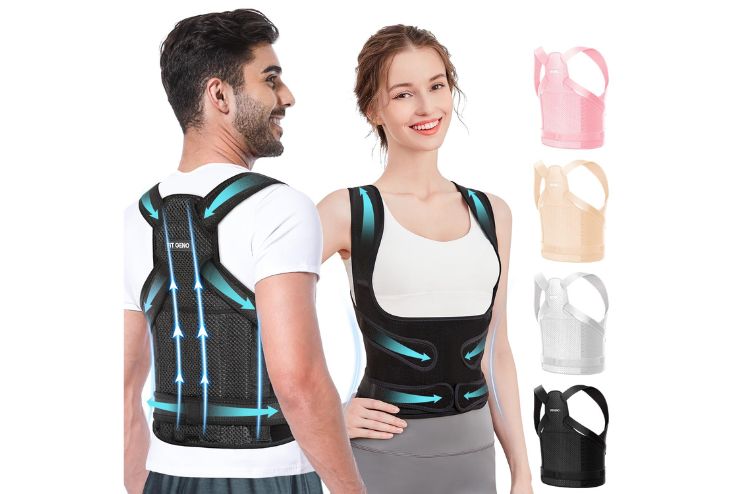
The Fit Geno Back Brace Posture Corrector helps you:
- Maintain good posture by repositioning your shoulders and spine.
- Pull your shoulders back and hold your body in a neutral position using adjustable straps and a supportive harness.
- Stay aware of your posture with physical feedback throughout the day.
All posture correctors aim to correct the muscular imbalances that result from spending a lot of time in fixed, unhealthy positions. The muscles in the upper back, such as the middle trap and rhomboids, tend to overstretch, while the pectorals (the muscles across the front of the chest) tend to tighten.
Correctors help reactivate underused muscles and give them a reference point for their proper position. This mechanism is well-described in peer-reviewed literature.
How long should you wear it? Physical therapists generally recommend limiting use to a few hours per day, working up gradually from 20–30 minute sessions. Wearing a brace all day can cause your back and core muscles to become dependent on external support, which may weaken them over time.
Think of the corrector as a training tool: the goal is to build muscle memory so you maintain good posture on your own, not to wear it permanently. According to the Hospital for Special Surgery, the best outcomes come from pairing any posture corrector with targeted core and back strengthening exercises.
Who should use caution: People with scoliosis, structural spinal conditions, or acute back injuries should consult a clinician before using any over-the-counter brace. These devices are not medical-grade orthotics and are not designed to treat structural conditions.

Fit Geno Back Brace Posture Corrector
We recommend Fit Geno Back Brace Posture Corrector an adjustable posture support brace that helps align spine, relieve shoulder and back strain, and improve posture comfortably.
*Purchases through this link support our research at no extra cost to you.
2. Upright GO 2 Premium Posture Corrector Trainer & Tracker
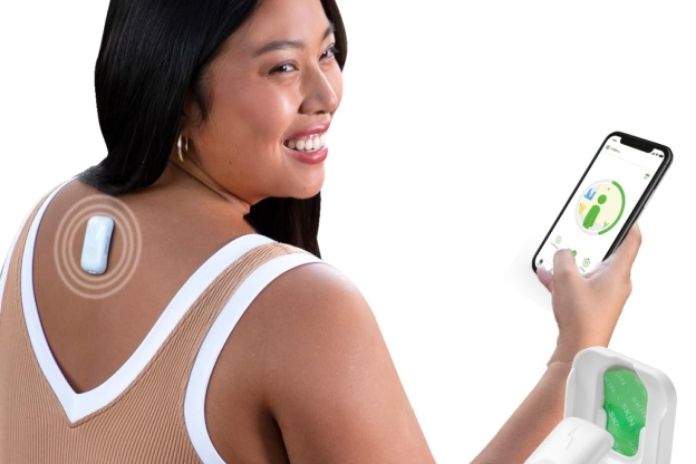
The Upright GO 2 Premium Posture Corrector Trainer and Tracker is one of the most notable smart posture devices of 2026, designed to fit naturally into your daily routine.
- It’s a compact, portable device that uses motion sensors and a smartphone app to train your body toward better posture.
- You wear it discreetly on your upper back; it vibrates gently as soon as you start to slouch.
- This real-time feedback builds postural awareness without relying on a physical brace.
- The app, available for both iOS and Android, lets you build customized training plans with adjustable sensitivity, vibration strength, and session length.
The device’s tracking feature also monitors your posture behavior throughout the day without always alerting you, giving you a clearer picture of your long-term patterns through multi-sensor data.
By building regular posture awareness, the Upright GO 2 can help strengthen back and core muscles, support better circulation, and improve overall musculoskeletal comfort. Some users report improvements within a few weeks of consistent use, though individual results vary.
A 2019 systematic review found that wearable biofeedback posture devices can reduce time spent in poor spinal positions, though most studies reviewed were small-sample prototypes requiring more long-term validation.

Upright GO 2 Premium Posture Corrector Trainer & Tracker
We recommend Upright GO 2 Premium Posture Corrector Trainer & Tracker a strapless wearable device that vibrates when you slouch, helping improve posture through real-time feedback and app-based tracking.
Check Price on Amazon
*Purchases through this link support our research at no extra cost to you.
3. Ergonomic Office Chair with Adjustable Headrest and Backrest
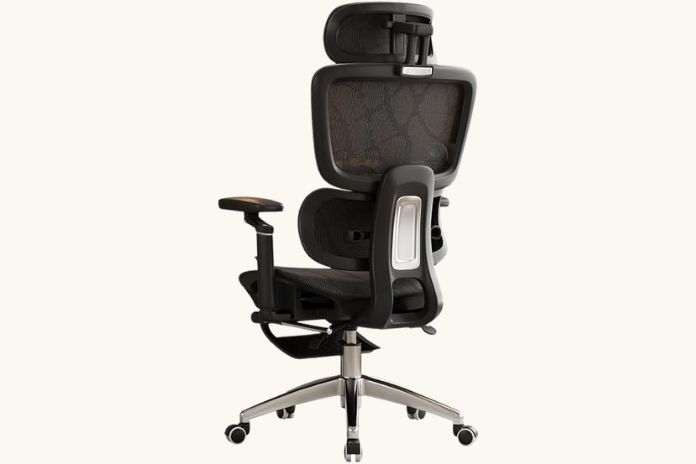
This ergonomic office chair is designed to support long hours of sitting with adjustable comfort and posture-focused features.
- An ergonomic office chair offers fully customisable adjustments that let users fine-tune seat height, headrest angle, backrest position, and armrests, helping maintain a more neutral spine alignment throughout the day.
- The chair’s adaptive lumbar support automatically goes well with the natural curve of the lower back, providing dynamic support no matter how you sit and reducing strain on the lower spine.
- Provides a 120° tilt and three lock-in recline positions, plus adjustable tension control, users can find a comfortable, supportive angle that works for focused tasks or relaxed breaks.
- The rotatable and height-adjustable armrests further enhance ergonomic comfort by allowing your arms to rest in a natural position.
- The chair is built to support up to 400 pounds.
This chair combines durable construction with flexible comfort, making it a strong choice for home offices, hybrid workstations, or dedicated workspace setups where long-term posture and comfort matter.

Ergonomic Office Chair
We recommend Ergonomic Office Chair with adjustable headrest, backrest, and adaptive lumbar support, designed for long-hour comfort, improved posture, customizable recline, and durable build.
*Purchases through this link support our research at no extra cost to you.
Read More: 10 Best Posture Support Products for Work: Ergonomic Must-Haves
4. Seville Classics Standing Desk
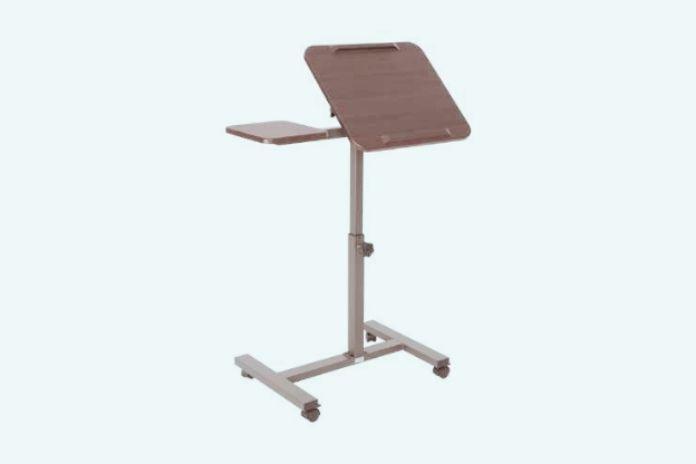
The Seville Classics AIRLIFT Height Adjustable Desk Converter is an ergonomic solution for today’s flexible workspaces. It works as a sit-stand desk converter, laptop station, study table, or movable workstation for home or office use.
- Its AIRLIFT gas spring technology offers smooth height adjustment, letting you switch from sitting to standing in seconds.
- It promotes better posture, reduces neck and back strain, and motivates you to stay more active during long work hours.
- The spacious work surface accommodates laptops, monitors, keyboards, notebooks, and other essentials.
- The sturdy steel frame and wooden top are built to last, giving you the support you need throughout the workday.
- Its compact footprint makes it ideal for small rooms, apartments, dorm rooms, or shared workspaces. It’s also quick to assemble.
- It’s a great fit for students, remote workers, professionals, and creatives who need a flexible workspace.
Easy to clean and built for daily use, this desk converter fits the growing trend toward ergonomic furniture that supports healthier, more dynamic work habits. A randomized controlled trial found that workers using sit-stand desks significantly reduced their sitting time and reported lower neck and shoulder pain, along with improved vitality and self-rated work performance.

Seville Classics Standing Desk
We recommend Seville Classics Standing Desk a height-adjustable workstation that promotes ergonomic sitting or standing, improving posture and comfort while offering stable support and space-saving design.
*Purchases through this link support our research at no extra cost to you.
5. Hadulcet Adjustable Standing Computer Desk
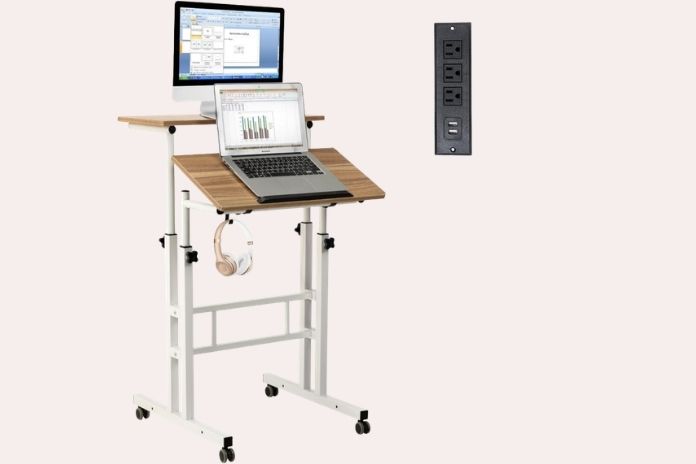
The Hadulcet Mobile Standing Desk is a versatile, next-generation workspace designed for dynamic work environments.
- Works well with under-desk treadmills or as a standalone work surface.
- Includes multiple USB ports, an extra power outlet, and a dedicated tablet slot to keep cables tidy and devices connected while you work or relax.
- A wide height-adjustment range allows smooth transitions from sitting to standing.
- Supports better posture and may reduce neck and back strain after long work hours.
- Built with sturdy steel and durable MDF, suitable for multiple monitors and other devices.
- Equipped with rubber wheels for easy mobility between rooms.
- Can serve as a rolling workstation, artist table, laptop stand, or creative surface at home, school, or the office.
Easy to assemble and built to last, this rolling desk represents the broader shift toward workspaces that prioritize movement, ergonomics, and adaptability.
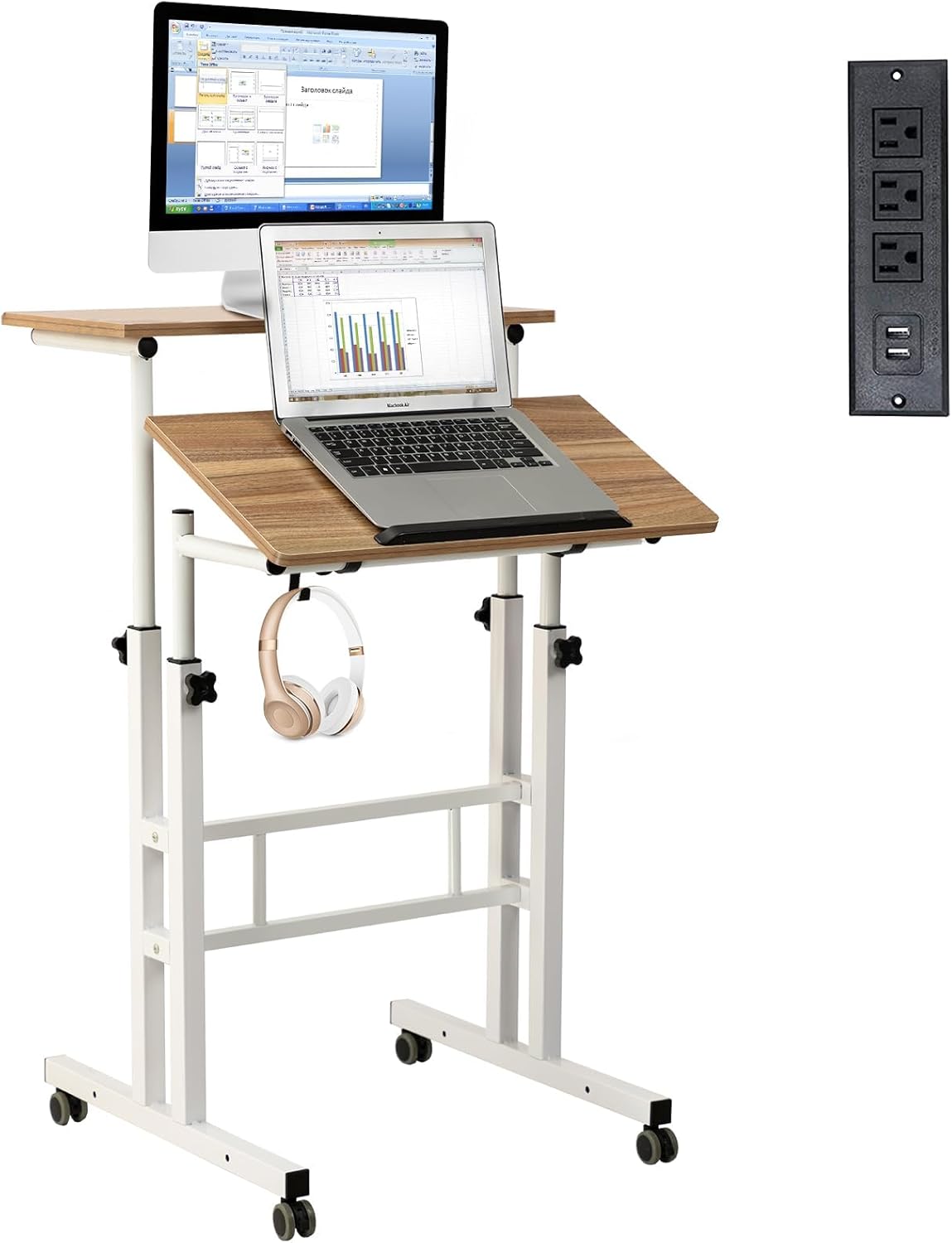
Hadulcet Adjustable Standing Computer Desk
We recommend Hadulcet Adjustable Standing Computer Desk a height-adjustable mobile workstation with built-in power outlets, wheels, and spacious desktop for ergonomic sitting or standing use. It improves posture and productivity.
*Purchases through this link support our research at no extra cost to you.
6. TriggerPoint GRID Foam Roller
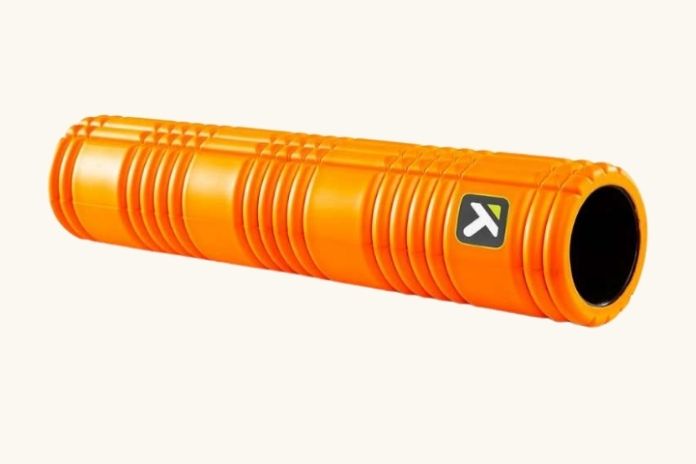
Foam rolling is a popular form of self-myofascial release (SMR). It can improve your joint range of motion and help reduce muscle tightness, inflammation, and discomfort. A systematic review found that SMR with a foam roller has short-term effects on increasing joint range of motion without negatively affecting muscle performance.
The TriggerPoint GRID Foam Roller is a professional-grade muscle recovery tool suited for fitness and physical therapy routines.
- Works for pre-workout warm-ups, post-workout recovery, yoga sessions, or physical therapy exercises at home or in the gym.
- The patented GRID surface mimics the feel of a massage therapist’s hands to target tight muscles and trigger points effectively.
- Helps improve blood circulation, increase flexibility, boost mobility, relieve muscle soreness, and ease stiffness.
- The EVA foam construction is firm on the outside and hollow on the inside, providing comfort during deep tissue work.
- At 13 inches long, it’s easy to take to the gym, office, or when traveling.
- Suitable for rolling out the back, legs, calves, glutes, shoulders, and IT band.
- Ideal for athletes, runners, office workers, and fitness enthusiasts of all levels.
- Durable and easy to clean, built for daily use.
Beginner-friendly and part of the growing self-care and recovery movement, this roller is a practical tool for anyone dealing with the physical effects of long sitting hours or intense training.
Are there any risks? Foam rolling is generally safe for healthy adults. Experts advise against rolling directly over a bone fracture, open wound, or area of acute inflammation. If you have deep vein thrombosis, myositis ossificans, or osteomyelitis, consult your doctor before using a foam roller. Roll slowly and avoid rolling directly over the spine’s bony prominences.

TriggerPoint GRID Foam Roller
We recommend TriggerPoint GRID Foam Roller a multi-density foam roller with textured surface and hollow core to relieve muscle tightness, improve circulation, and enhance recovery.
*Purchases through this link support our research at no extra cost to you.
Read More: Top 10 Anti-Aging Wellness Products to Support Cellular Health
7. Rolflex Muscle Roller
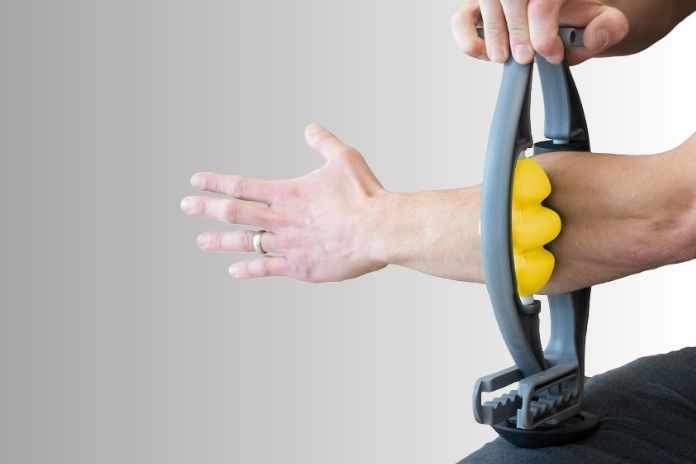
The Rolflex Muscle Roller is an advanced muscle recovery tool designed for deep-tissue work and targeted mobility training.
- Suitable for pre-workout warm-ups, post-workout recovery, physical therapy sessions, or daily muscle relaxation at home or in the gym.
- Its leverage-based design allows you to apply controlled deep pressure on tight muscles without straining your hands or wrists.
- Helps improve circulation, reduce muscle soreness, increase flexibility, and support faster recovery after intense workouts or long hours of sitting.
- A high-density foam roller insert provides effective myofascial release while staying durable and comfortable.
- The ergonomic frame makes it easy to target calves, hamstrings, quads, the IT band, arms, shoulders, and other hard-to-reach muscle groups.
- Portable and compact, convenient for travel, gym bags, or office use.
- Suitable for athletes, runners, physical therapy patients, and desk workers looking to maintain muscle health and prevent injury.
- Built with sturdy materials for long-lasting daily use and easy cleaning.
Beginner-friendly yet powerful, the Rolflex reflects the growing focus on smart, self-directed recovery tools for active and sedentary lifestyles alike.

Rolflex Muscle Roller
We recommend Rolflex Muscle Roller a leverage-based deep-tissue massager designed to apply adjustable pressure, target trigger points, and relieve muscle tension for faster recovery and improved flexibility.
*Purchases through this link support our research at no extra cost to you.
8. FEATOL Back Brace Support Belt
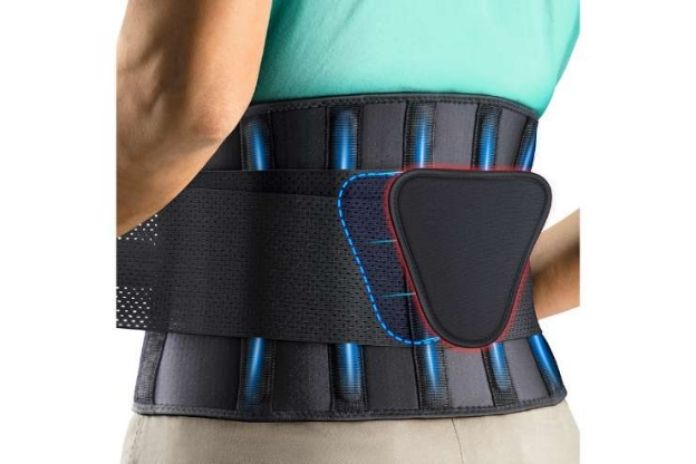
FEATOL’s Lumbar Support Belt with Adjustable Straps is a comfortable back support tool that relieves back pain and helps you maintain a straighter posture during daily activities.
- Works best in work settings, during exercise, when lifting objects, or any time you need back support for extended periods of sitting.
- Designed to relieve muscle fatigue and pain from back strain, sciatica, or minor back problems.
- Made with lightweight, breathable materials for comfortable extended wear without irritation. Its wide compression zone targets the core area for better lumbar support.
- Designed for both men and women, suitable for office workers, athletes, or anyone who needs daily back support.
- Easy to wear, adjust, and use regularly.
- A systematic review and meta-analysis found that non-rigid lumbar supports reduced disability (effect size −0.54) and pain (−0.29) compared to standard management in patients with non-specific low back pain.
Important usage note: lumbar belts are best used as a short-term support tool during periods of activity or discomfort, not as an all-day preventive measure.
A Cochrane Review found moderate evidence that lumbar supports are not more effective than no intervention for preventing low back pain in otherwise healthy people.
For those with sub-acute low back pain, however, some randomized controlled trials have shown meaningful improvements in function and pain levels. As with posture braces, long-term use without accompanying exercise can lead to back muscle deconditioning over time.

FEATOL Back Brace Support Belt
We recommend FEATOL Back Brace Support Belt an adjustable lower-back support with removable lumbar pad and reinforced stays for compression, posture support, and relief from strain during daily activities.
*Purchases through this link support our research at no extra cost to you.
9. Lumbar Support and Decompression Back Belt
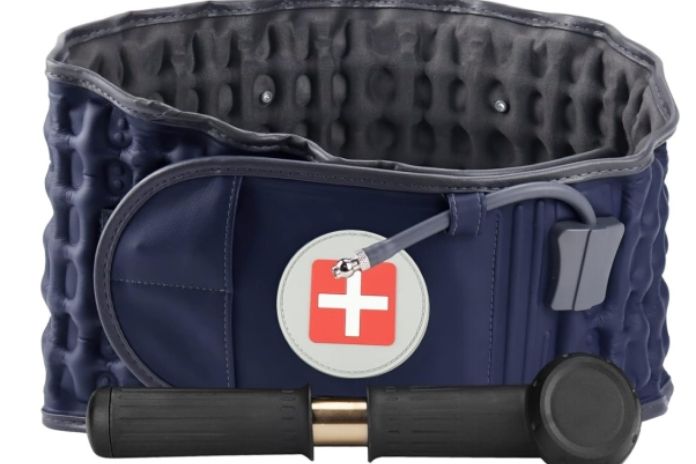
The Lumbar Support and Decompression Back Belt with Traction Support is a contemporary lumbar tool designed to reduce lower back pressure and support spinal alignment during daily activities.
- Can be worn to work, while walking, during physical training, or for long periods of sitting to support the lower back.
- Features an inflatable system focused on gently stretching the spine to reduce disc pressure and relax surrounding muscles.
- Designed to reduce lower back pain, stiffness, fatigue, and discomfort from poor posture or prolonged sitting.
- Includes adjustable straps for a snug fit across a range of waist sizes.
- Made with breathable, lightweight material for extended, comfortable wear.
- Supports core stability and proper posture during lifting, standing, or sitting.
- Lightweight and easy to use at home, the office, the gym, or while traveling.
- Suitable for office workers, drivers, athletes, and anyone who needs extra lower back support.
- Durable and easy to maintain.
A word of caution on inflatable traction devices: while spinal decompression products like this can offer short-term relief for some users with lower back pain, they should not be used by people with osteoporosis, spinal fractures, spinal instability, or an aortic aneurysm, as traction can worsen these conditions.
If you have a diagnosed spinal condition, consult a physician or physical therapist before using any inflatable or traction-style belt. Used correctly and for brief periods, these devices can be a helpful complement to rest and movement, but they are not a substitute for professional treatment of serious back conditions.

Lumbar Support and Decompression Back Belt
We recommend Lumbar Support and Decompression Back Belt an inflatable lumbar traction belt with adjustable air columns that decompress the spine, provide 360° support, and help relieve lower back pain.
*Purchases through this link support our research at no extra cost to you.
Read More: Is Cold Weather Making Your Back Pain Worse? Here’s What You Need to Know
Ergonomic Tips for A Hybrid Workplace
Remote and hybrid work arrangements offer real flexibility, but they also often mean makeshift setups that add stress to your body’s musculoskeletal system. With a few smart ergonomic habits and the right gear, remote workers can improve their comfort, productivity, and physical health.
Posture Basics
Good posture starts with a well-adjusted chair. Choose one that supports your lower back and lets you place your feet flat on the floor or on a footrest, with your knees at roughly a 90-degree angle. If your chair doesn’t have built-in lumbar support, a small cushion or rolled towel placed at your lower back can help.
Try to periodically check in on your posture by relaxing your shoulders and sitting upright, which helps ease neck and lower back strain during long work hours.
A 2012 randomized trial found that adjustable ergonomic chairs reduced musculoskeletal symptoms like back and neck pain in office workers over 12 weeks, outperforming standard chairs.
Workspace Setup
Most remote workers adapt kitchen tables or tight corners into workstations, so how you arrange height and equipment really matters. Your chair and desk should let your elbows rest at roughly a right angle, with your forearms parallel to the floor while you type.
Keep wrists neutral and straight, and position your keyboard close enough that you don’t have to reach. If space is tight, consider an external keyboard, a height-adjustable desk, and a monitor riser to improve alignment.
Your monitor should sit at roughly arm’s length away, with the top of the screen at or just below eye level. A screen that’s too low forces your chin down and strains your neck, while a screen that’s too high causes you to tilt your head back.
Lighting also matters: position your screen to avoid glare from windows or overhead lights, which can cause you to lean forward or crane your neck to see clearly.
These small workspace details make a meaningful difference in neck and upper back posture over the course of a workday.
“The human body isn’t designed for prolonged sitting in front of screens. Yet that’s exactly what millions of us are doing for 8+ hours daily, often with far less ergonomic support than we had in traditional offices,” says Dr. Anthony John Kell, D.C, a workplace wellness expert based in the United Kingdom.
Movement Matters
Remote work often removes the natural movement built into a traditional workday, such as walking to meetings, commuting, or moving between floors. Long, uninterrupted sitting causes stiffness, eye strain, and tired muscles.
Standing up, stretching, or taking short walks every 30–45 minutes helps improve blood flow, release tension, and counteract the effects of prolonged sitting. Research shows that back muscle strain measurably increases after 30 minutes of continuous sitting, and that active breaks with movement or stretching help reduce this accumulation.
Sit-stand desks or gentle posture reminders can support you in moving more often throughout the day.
Can you over-combine these products?
It’s worth knowing that not every device needs to be used simultaneously. A posture brace worn while sitting in an already well-adjusted ergonomic chair with a lumbar cushion may provide little additional benefit, and could even reduce the activation of the back muscles you’re trying to strengthen.
A practical approach: use your ergonomic chair and standing desk as the foundation for your setup, add a lumbar belt or posture corrector during specific high-risk activities (long drives, heavy lifting, extended screen sessions), and use foam rollers as a recovery tool after demanding periods, not continuously alongside every other device.
FSA/HSA eligibility: Some ergonomic support products, including lumbar support belts, posture correctors, and back braces, may be eligible for purchase with a Flexible Spending Account (FSA) or Health Savings Account (HSA) if recommended by a healthcare provider.
Eligibility depends on whether the product is considered a medical device under IRS guidelines. Check with your FSA/HSA administrator or a licensed healthcare provider before purchasing to confirm coverage.
Since home workspaces vary so much from person to person, hybrid ergonomics isn’t about perfection. It’s about adaptability. Through mindful posture, thoughtful space setup, and the right supportive gear, you can work more comfortably and sustainably, wherever your workday takes you.
Conclusion
Good posture is more than just sitting up straight. It’s the foundation of back health, comfort, and overall well-being. In today’s screen-heavy, largely sedentary lifestyle, supporting your posture has never been more important.
Fortunately, today’s back health technology makes it easier to maintain proper alignment throughout the day. Smart wearables, ergonomic furniture, and recovery tools put meaningful support within reach for most people.
By building the right tools into your daily routine, especially if you work from home or travel frequently, you can take real steps toward better back health and posture. Small, consistent changes to your ergonomic setup can have a lasting impact on how you feel, both at your desk and away from it.
One final note: none of the products in this guide are substitutes for professional medical care if you’re dealing with chronic, severe, or worsening back or neck pain. If your symptoms persist despite lifestyle changes, worsen over time, or are accompanied by numbness, tingling, or weakness in your limbs, see a physician, physical therapist, or orthopedic specialist.
These tools are best thought of as preventive supports and comfort aids, not treatments for underlying medical conditions.
FAQs
Q. Do posture improvement devices really work for back pain relief?
A.Posture devices help improve alignment and reduce muscle strain caused by poor sitting habits. When used consistently alongside movement and strengthening exercises, they can ease posture-related back and neck discomfort. However, the research on posture correctors specifically is mixed.
A 2019 review found limited high-quality evidence to recommend posture-correcting shirts as a primary treatment for musculoskeletal pain. Biofeedback wearables show more promise for building postural awareness.
Q. Are smart posture devices safe to use every day?
A. Most smart posture devices are safe for daily use and rely on gentle vibration alerts rather than physical force. They work best as short training tools rather than all-day supports. Physical therapists generally recommend building up use gradually and pairing any device with active posture exercises.
Q. What are the best posture improvement devices for hybrid or remote workers?
A. Ergonomic chairs, adjustable standing desks, and wearable posture trackers work well together for home offices. Each targets a different aspect of posture and movement: the chair supports your spine during seated work, the standing desk encourages position changes, and the tracker builds awareness of your habits throughout the day.
Q. Can posture gadgets replace exercise or physical therapy?
A. No. Posture gadgets support better habits but cannot replace targeted exercise or professional care. Long-term posture improvement depends on strengthening the core and back muscles that hold your spine in proper alignment. If you’re dealing with an ongoing injury or chronic pain condition, work with a physical therapist or clinician alongside any device you use.

References
- Simpson et al., “The Role of Wearables in Spinal Posture Analysis: A Systematic Review,” BMC Musculoskeletal Disorders, 2019
- PMC Meta-Analysis, “Association between sedentary behavior and low back pain,” 2022
- Bontrup et al., “Low back pain and its relationship with sitting behaviour,” Applied Ergonomics, 2019
- Tsubota et al., “Effects of a Workplace Sit–Stand Desk Intervention on Health and Productivity,” PMC, 2021
- Dockrell et al., “Sit-stand workstations and impact on low back discomfort,” PubMed, 2019
- Cheatham et al., “The Effects of Self-Myofascial Release Using a Foam Roll,” Journal of Strength and Conditioning Research, 2015
- Grabow et al., “Expert Consensus on the Contraindications and Cautions of Foam Rolling,” PMC, 2021
- De Carvalho et al., “Effect of office chair design features on lumbar spine posture,” Ergonomics, 2023
- Moeck et al., “Non-rigid lumbar supports for the management of non-specific low back pain,” ScienceDirect, 2020
- van Duijvenbode et al., “Lumbar supports for prevention and treatment of low back pain,” Cochrane Review, 2008
- Filingeri et al., “Active Breaks Reduce Back Overload during Prolonged Sitting,” PMC, 2024
- Grundy, K., & Armitage, M. (2025, January 23). Do posture correctors work? GoodRx.
- Rodriguez, C. M., PT, DPT, OCS, Cert MDT. (2021, March 8). Do posture correctors work? Plus expert tips on how to use them. Hospital for Special Surgery.
- Herman Miller. (n.d.). Ergonomics in the workplace: Office chairs.
- University of Pittsburgh Office of Public Safety & Emergency Management. (n.d.). How to choose an ergonomic chair.
- Davis, N. (n.d.). Foam roller benefits, risks, and how to. Healthline.
- The Standing Desk. (2022, September 30). The history and rise of modern standing desks.
- Millard, E. (2022, April 7). What is a foam roller and how to use it? Nike.
- REI Co-op. (n.d.). How to use a foam roller. REI.
- van Niekerk, S. M., Louw, Q. A., & Hillier, S. (2012). The effectiveness of a chair intervention in the workplace to reduce musculoskeletal symptoms. A systematic review.
In this Article