














Over the past few months, I found myself casually asking some of my friends a simple yet revealing question: “What do you do at night to actually unwind?” I wasn’t digging for productivity hacks or the latest beauty rituals. I was genuinely curious about how people, real people, were navigating the quiet chaos that often settles in at night: the racing thoughts, the anxiety, the inability to truly switch off.
To my surprise, most of them didn’t recommend expensive supplements, sleek sleep gadgets, or elaborate 10-step wind-down routines. What kept coming up, over and over again, was something so simple I nearly brushed it off: nighttime journaling.
But they weren’t talking about journaling in the traditional, diary-entry, pages-of-raw-emotion kind of way. This was different. It was short, intentional, and structured, a mix of gratitude reflection and worry-dumping, done just before bed. A kind of emotional reset that cleared their minds and settled their nervous systems.
The more I listened, the more intrigued I became. This small nightly ritual was quietly transforming the way they experienced rest. It wasn’t just helping them fall asleep; it was improving the quality of their sleep and reducing the mental weight they carried into the next day.
This article is a collection of their stories, what they tried, how they felt, what worked, and what didn’t. And maybe, just maybe, it’s a habit that might work for you too.
The Struggle: Poor Sleep and Chronic Stress

Across nearly every conversation, I heard the same confession: “I don’t stay up late on purpose; my mind just won’t stop.”
Most of the people I spoke with weren’t struggling with clinical insomnia or diagnosed anxiety. They were functioning adults juggling jobs, relationships, responsibilities, but beneath it all, they were overwhelmed, overstimulated, and mentally burnt out. And yet, somehow, unable to rest.
Here’s what many of them described, almost word for word:
- Lying awake, replaying unfinished tasks or to-do lists.
- Mentally rehashing awkward conversations from earlier in the week.
- Feeling tightness in the chest or restlessness in the legs.
- Waking up multiple times and immediately checking the time.
- Starting the next day already feeling behind or emotionally overloaded.
One friend put it perfectly: “It’s like my body wants rest, but my brain still thinks it’s on the clock.” Another said, “I’m asleep, technically, but my mind’s been running marathons all night.”
The more I listened, the more I realized this wasn’t just individual restlessness, it was a widespread pattern. A loop. And right at the center of it was a persistent tug-of-war between stress and sleep, a cycle that too many of us are stuck in without even realizing it.
Read More: What Happens When You Don’t Sleep For Days?
Understanding the Loop: Why Stress and Sleep Are So Closely Tied
They weren’t wrong to suspect that stress was interfering with their sleep. Nearly every expert agrees: stress hormones like cortisol keep the body alert, even when it’s time to rest. And when sleep quality drops, it becomes harder to manage everyday stressors, creating a self-reinforcing cycle.
Most of them experienced these common signs of this loop:
- Racing thoughts as soon as the lights go out.
- Trouble falling or staying asleep.
- Low energy during the day.
- Shortened attention span or increased irritability.
- Feeling emotionally raw or overwhelmed without knowing why.
And the worst part? Trying to fix it often made it worse. They’d try to force relaxation, creating rigid sleep routines that only added more pressure.
Why Typical Sleep Tips Weren’t Enough

Every person I spoke to had, at some point, tried the usual sleep strategies, the kind we’re all told should work:
- Cutting off caffeine after 2 PM.
- Wearing blue-light blocking glasses in the evening.
- Using meditation apps like Calm or Headspace.
- Trying lavender oils, chamomile tea, or melatonin.
- Charging their phone in another room overnight.
These habits weren’t useless; most people admitted they helped create a more sleep-friendly environment. But when it came to actually feeling rested, they fell short. The issue wasn’t just the lighting or the screens or the sounds. It was internal.
The real culprit was the mental clutter: the constant stream of worries, the unresolved thoughts, the planning for tomorrow that began before today had ended. The brain just wouldn’t shut off.
That’s when a few of them, almost accidentally, stumbled into something surprisingly effective. Not a supplement, not another app, but a practice. Nighttime journaling. Not as a productivity hack or a way to track progress, but as a quiet, grounding emotional ritual. A gentle moment to unload the day and signal to the brain: You’ve done enough. You can rest now.
The Game-Changing Habit: A Nighttime Journaling Ritual

Here’s where their stories really began to align.
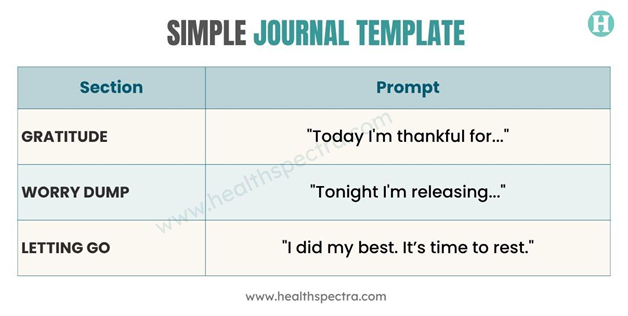
Rather than traditional journaling or goal-setting, most had landed on a simple three-part ritual, something that took less than five minutes but created a profound shift in their mental state. It wasn’t about being a great writer. It was about gently processing the day in a way that helped them release it.
Here’s how they broke it down:
1. Gratitude: Each night, they wrote down three small things they were thankful for. Nothing dramatic or deep, just quiet moments of good.
- “Sunlight on my face this morning.”
- “Made it to yoga even though I didn’t feel like it.”
- “A kind message from my colleague.”
This simple shift in attention, from what went wrong to what went right, helped calm their nervous systems. Several said it made their body feel more grounded, more willing to rest.
2. Worry Dump: Next came the unfiltered part. A space to offload thoughts without fixing them. No structure. No judgment. Just release.
- “I’m nervous about the deadline this week.”
- “I didn’t call Mom and feel guilty.”
- “I don’t know if I handled that meeting well.”
The goal wasn’t to solve anything. It was to stop carrying it. And oddly enough, putting it down on paper gave permission to stop replaying it in their minds.
3. Close and Let Go: Finally, they’d write one closing line, something that gently marked the day as complete.
- “I did my best. It’s time to rest.”
- “This day is done.”
- “I am safe and I am enough.”
Then they’d physically close the notebook. That small act became a signal, a boundary between the noise of the day and the quiet of the night.
It wasn’t magic. It was mindfulness. And for many, it was the first real pause their minds had felt in a long time.
 The Science Behind Why It Works

Curious to understand why this simple habit was helping so many people, I dug into the research, and it turns out, there’s real science behind what they were doing.
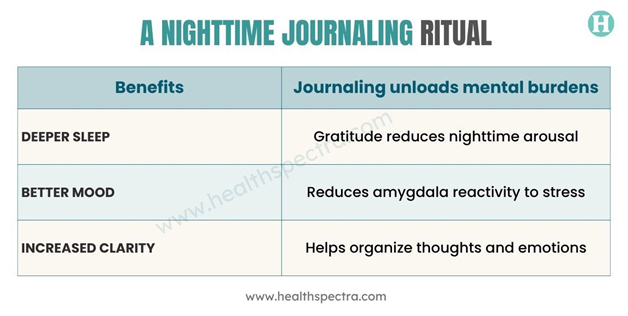
- Journaling Helps Offload Thoughts: A 2018 study in the Journal of Experimental Psychology found that people who wrote down upcoming tasks before bed fell asleep significantly faster. The act of writing reduces the brain’s urge to mentally rehearse or hold on to information, freeing up space for rest.
- Gratitude Lowers Stress Levels: Practicing gratitude activates the parasympathetic nervous system, which is known as the body’s “rest and digest” mode. This shift helps lower cortisol, the primary stress hormone, making it easier to fall asleep and stay asleep.
- Expressive Writing Reduces Cortisol: Even just a few minutes of emotional or expressive writing has been shown to reduce cortisol levels. This not only helps lower stress but also improves the quality of sleep, making it deeper and more restorative.
- It Calms the Default Mode Network (DMN): The DMN is the part of the brain that lights up when we’re daydreaming, overthinking, or stuck in a loop of rumination. Journaling helps dial down this mental chatter, creating the quiet necessary for real rest.
Turns out, the quiet ritual of nighttime journaling isn’t just emotionally helpful, it’s biologically smart, too.
 READ MORE: Effect of Sleep Disorders on Mental and Physical Health
The Benefits They Noticed Within Weeks

Every friend I spoke to who stuck with the practice for more than a week described noticeable improvements:
- Falling asleep faster: Several went from 1–2 hours of tossing to falling asleep in 15–30 minutes.
- Sleeping through the night: Many mentioned fewer wake-ups and deeper, uninterrupted sleep.
- Feeling calmer in the morning: Mornings became less reactive and more reflective.
- Increased emotional resilience: Daytime stressors felt more manageable, even when schedules were packed.
Want to Try It? Here’s How to Start Tonight
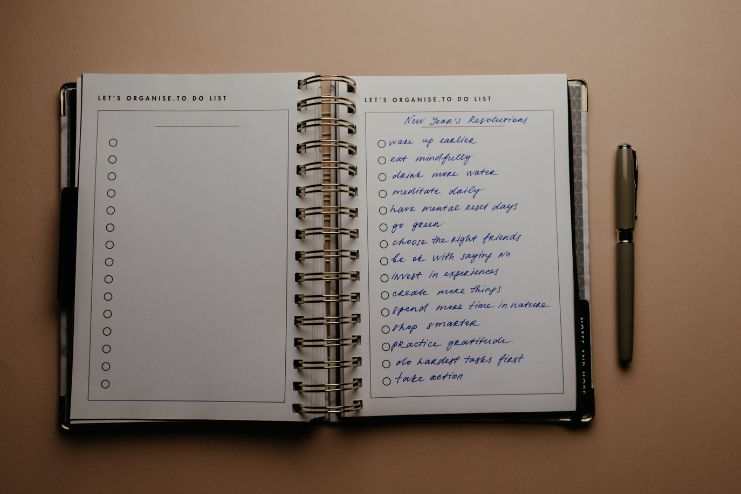
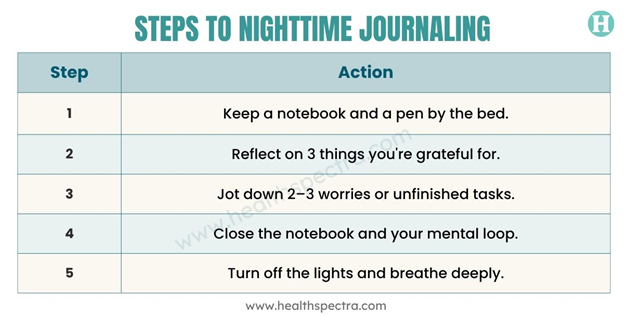
If you’re curious, here’s a beginner-friendly way to start, based on what worked for them:
- Keep a notebook and pen by your bed. Avoid your phone.
- Spend just 5 minutes, no pressure to write a novel.
- Use their simple template:
- Today I’m grateful for…
- Tonight I’m releasing…
- I did my best. It’s time to rest.
- Do it right before lights out, make it the last thing you do.
- Be consistent, not perfect; the power is in the repetition.
 READ MORE: 12 Scientifically Proven Tips on How to Have Better Sleep at Night
Bonus Tweaks That Made a Difference
While journaling was the cornerstone, a few minor additions made the habit even more powerful:
- Dimming the lights an hour before bed: This helped signal to my body that it was time to wind down.
- Drinking a cup of calming herbal tea: Chamomile or lemon balm, worked wonders.
- Two minutes of deep breathing: After journaling, I’d lie back and take 10 deep belly breaths.
Final Thoughts
In every conversation I had, one thing became abundantly clear: people weren’t struggling because they didn’t know what to do. They were struggling because they were carrying too much into the night. Thoughts left unspoken. Tasks left undone. Feelings left unprocessed. And no amount of herbal tea or blackout curtains could quiet a mind that never got the chance to let go.
What surprised me wasn’t that journaling helped, but how simple it was. Five minutes. Three parts. No performance. No pressure. Just a chance to put the day to rest.
This wasn’t about becoming more productive or checking off another self-care box. It was about creating a gentle boundary between the chaos of the day and the quiet we’re all craving at night. It was about reminding yourself that your thoughts matter, but they don’t need to follow you into your dreams.
We live in a time where stress is normalized and burnout is brushed off. But the people I spoke with weren’t trying to fix themselves. They were trying to feel human again. To reclaim something small but powerful at the end of their day: peace.
So if sleep has become another thing you struggle to get right, maybe it’s not about doing more. Maybe it’s about doing one small thing with intention. Opening a notebook. Putting your day on the page. And finally, closing it, knowing that for tonight, it’s enough.
You’re enough. And that’s a good place to begin again tomorrow.
References
- https://www.sleepfoundation.org/insomnia/stress-and-insomnia
- https://pmc.ncbi.nlm.nih.gov/articles/PMC3538178/
- https://www.medicalnewstoday.com/articles/322994
- https://www.bcm.edu/news/how-stress-can-affect-your-sleep
- https://www.webmd.com/sleep-disorders/ss/slideshow-sleep-bad-night
- https://www.mayoclinic.org/healthy-lifestyle/adult-health/in-depth/sleep/art-20048379
- https://www.nbcnews.com/better/health/how-get-through-day-no-sleep-ncna850781
- https://www.healthline.com/health-news/lack-of-sleep-affects-fat-metabolism
- https://www.nature.com/articles/d41586-025-00964-w
- https://vanillapapers.net/2019/11/13/journaling-tips/
- https://dayoneapp.com/blog/journaling-habit/
- https://www.pocketmindfulness.com/night-journal/
- https://medium.com/illumination/how-i-faced-the-power-of-small-tweaks-you-can-too-47d48f4708e0
In this Article