
















Greek yogurt is a thick, creamy breakfast staple that most people are already familiar with and that’s now available in nearly every grocery store.
However, Skyr is a more recent competitor in the high-protein cultured dairy market.
Skyr, pronounced “skeer,” is an Icelandic dairy product that resembles Greek yogurt in appearance and flavor but differs somewhat in a few critical ways that affect its nutritional value. These variations affect everything from nutrition to taste.
This article explains the difference between Greek and Skyr yogurt in terms of digestion, flavor, texture, protein content, and calories, and when one may be the superior option.
Read More: Is Flavored Yogurt Healthy? What to Know Before You Buy
What Is Skyr—and How Is It Different From Greek Yogurt?
Skyr: The Ancient Superfood of Iceland
Skyr’s origins in Icelandic culture date back more than a millennium. Skyr is classified as cheese because of the manufacturing process, even though it is often eaten as a yogurt, despite its similar appearance and flavor to Greek yogurt.
Skim milk is heated, fermented with living organisms, and then strained even more thoroughly than Greek yogurt to create skyr. The end product is a naturally fat-free, ultra-thick, mildly sour dairy product that has gained popularity as a modern health food.
“Think of Skyr as the Nordic cousin of Greek yogurt—thicker, slightly milder, and naturally lower in fat,” says Maggie Michalczyk, RD, registered dietitian and nutrition writer.
Greek Yogurt: A Traditional Mediterranean Treat
For centuries, Greek yogurt has been a problem solver and part of the traditional Mediterranean diet of Greece. Greek yogurt is made up of straining ordinary yogurt to remove most of the whey, which is primarily water and the milk sugar lactose.
The result? A classic, this “dipped” yogurt is thick, luscious, and richer in protein.
Greek yogurt was once produced from sheep’s milk, but these days it is made from cow’s milk instead. The straining process, which gives it its rich texture, concentrates the protein and probiotics.
Skyr vs Greek Yogurt Nutrition: How Do They Compare?
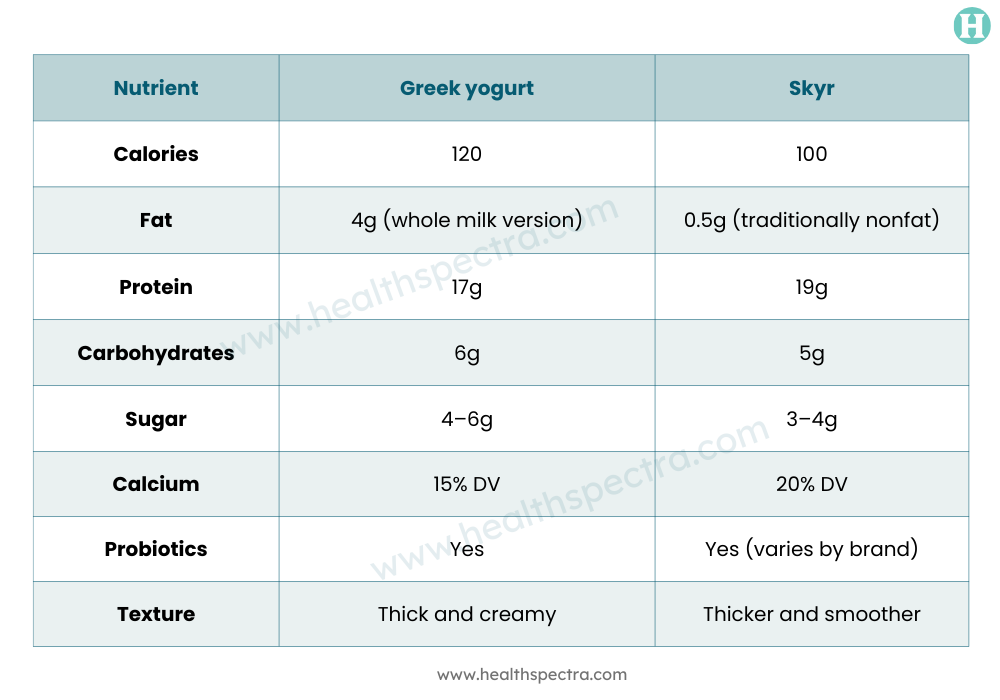
Let’s do a side-by-side nutritional comparison. The average for 170g (about 6 ounces) of plain, unsweetened cow’s milk variants is as follows:
Which Has More Probiotics: Skyr or Greek Yogurt?

Probiotics are living, beneficial bacteria that support a balanced gut microbiome, boost immunity, and improve digestion. Both Greek yogurt and skyr are good sources of these beneficial bacteria.
However, the specific strains of probiotics can vary from one brand to another, depending on the cultures used during fermentation. Greek yogurt is traditionally produced using Lactobacillus bulgaricus and Streptococcus thermophilus.
On the other hand, Skyr is frequently grown with different kind of strains, like Bifidobacterium species. Checking the label is especially very crucial for consumers interested in probiotics, as these tiny variances may affect digestive comfort and potential health benefits.
Skyr vs Greek Yogurt for Digestion and Lactose Sensitivity
Cow’s milk, which contains lactose, is used to make both Skyr and Greek yogurt. However, the skyr process produces a product that usually contains less lactose than regular yogurt.
The production of skyr involves a lengthy straining process where parts of the liquid whey, the part of the milk that lactose tends to reside, are removed, losing almost 90% of the lactose, so many brands of skyr may be suitable for the mildly lactose-intolerant.
Both skyr and Greek yogurt may also be easier to digest because they contain live probiotic bacteria. These helpful microbes can digest lactose in the gut, which may further improve tolerance. While people sometimes say that Skyr has a bit less lactose than Greek yogurt, that all depends on the brand and serving size, not the style.
Read More: Think Yogurt Has the Most Probiotics? Try These 8 Equally Good Sources
Taste and Texture: Why Skyr Feels Different From Greek Yogurt

Though often used interchangeably, there are subtle differences in the flavors and textures of the two:
- Greek yogurt: Creamy, rich, sour, and tangy. The amount of fat in it determines whether it’s thick or smooth.
- Skyr: Even smoother and thicker, with a natural sweetness and a less tangy finish.
With a mild flavour, skyr is excellent for adding to smoothies, dolloping on pancakes, or enjoying with fruit, whereas the tang of Greek yogurt is more suited to savoury salads, dressings, marinades, and dips.
Skyr vs Greek Yogurt for Bone Health and Calcium
Skyr contains a slightly higher concentration of calcium, which is very essential for maintaining healthy teeth and bones as well as proper nerve function.
Skyr maintains somewhat higher calcium levels than Greek yogurt because producers use more milk and remove less whey relative to the final yield.
The amount of calcium in a serving of Skyr is approximately 20%. In comparison, the amount contained in a serving of Greek yogurt is approximately 15%. Skyr thus offers a minor nutritional advantage to individuals who are concerned with maintaining bone health or preventing osteoporosis.
Health Benefits

Eating yogurt, notably Greek and Skyr yogurt, has numerous health advantages. There have been no studies specifically examining Skyr, and most yogurt research does not distinguish among the various varieties.
Because Greek yogurt and Skyr are so similar, their health benefits are identical. Among the primary benefits of yogurt are:
Healthy Digestion: Probiotics, which support a healthy gut microbiota and aid in digestion, are present in both Greek and Skyr yogurts (if the yogurt was not pasteurized after culturing; look for “Live and active cultures” on the label).
Weight Control: By promoting a sense of fullness, full-fat yogurt may help lower total calorie intake. The high protein content helps you feel fuller, even if you buy low-fat or non-fat Skyr or Greek yogurt. However, higher-fat yogurt or Skyr tends to be more satisfying.
Blood Sugar Control: By delaying digestion and avoiding sharp increases in blood sugar, the increased protein content of Greek yogurt and Skyr helps to control blood sugar. Because whole-milk Greek yogurt or Skyr contains healthful fat that also helps reduce glucose surges, it may further support blood sugar control.
Decreased Cancer Risk: There is evidence that fermented dairy products, such as Greek yogurt and Skyr, reduce the chances of developing many types of cancer. Consuming fermented milk has been consistently linked to lower risk of colorectal and breast cancer, according to a big systematic review of 108 studies.
Read More: How Yogurt Can Help Soothe Your Acid Reflux Naturally
Some Advice on Consuming Greek Yogurt and Skyr

Greek yogurt and skyr have a subtle, mild, slightly tangy taste, and skyr is often a bit heavier, thicker, and richer. That rich creamy texture makes them very versatile as meals, snacks, or desserts.
Some amazing uses:
Protein-Rich Parfait: Arrange fresh, creamy Greek yogurt or skyr on top of berries, almonds, and seeds.
Dips and Dressings for Salads: Serve as a foundation for creamy dips and dressings, such as green goddess or ranch.
Extra Creamy Mac and Cheese: Add more creamy mac and cheese to your cheesy spaghetti recipe to make it lighter and creamier.
Elevate your Pasta Sauce: Blend it with your preferred tomato sauce to add protein and a creamier texture.
Improve your Soups: To make your blended soups creamier, use half-and-half instead of milk.
A Swap for Sour Cream: An alternative to sour cream is to drizzle Greek yogurt or skyr over tacos, burritos, nachos, or spicy chili.
Read More: Top 9 Yogurt Benefits for Skin and Hair: A Complete Guide
Conclusion
Greek yogurt and Skyr might look nearly similar in the grocery store, but if you know the subtle differences, you can select the right one for your stomach, nutrition, and taste preferences. Both are rich in probiotic, strained, high-protein staples that help restore gut balance and provide lasting fullness and health.
Your experience with either one or the other may vary due to differences in lactose content, probiotic strains, texture, and taste. To some, the undeniably richer, sharper palate of Greek yogurt appeals, but the more mildly tangy, thicker sour milk of Skyr appeals to others.
Choose whichever best suits your priorities: avoiding lactose, improving digestion, maximising protein intake, or whatever else.
References
- Cambria Glosz, RD. (2025, February 14). Skyr vs Greek yogurt: Which is healthier?
- Stephanie Kay. (2023, February 28). Skyr vs Greek yogurt: Which is healthier?
- Ganesh. (2025, November 10). Greek yogurt vs. Skyr: What’s the healthier choice?
- Arla Foods. Skyr vs Greek yogurt.
- Crowley, M. (2023, May 24). Skyr vs Greek yogurt: What’s the difference?
- Nutritional Count of Skyr and Greek Yogurt
In this Article