














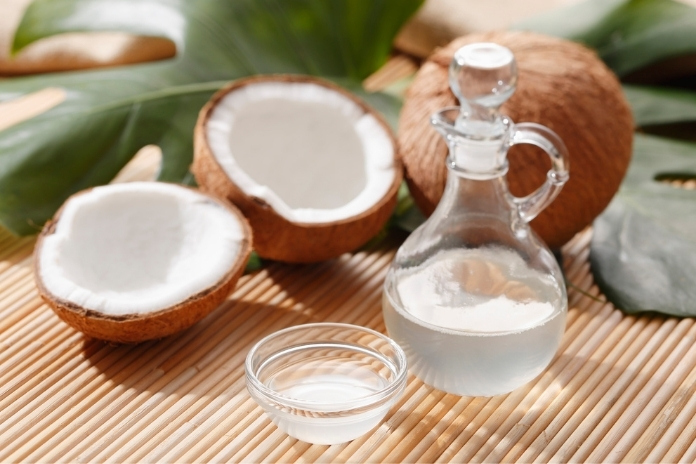
Coconut oil has built a cult following over the past decade, praised as a natural moisturizer, cooking fat, and even a supposed superfood.
Walk through any grocery aisle or scroll through wellness content online, and you’ll see it marketed as everything from heart-healthy to miraculous. But behind that shiny reputation lies a lot of confusion, especially when it comes to what’s actually inside the jar.
Here’s the thing: not all coconut oils are created equal. The terms refined and unrefined aren’t just marketing fluff; they describe how the oil is extracted, how much processing it undergoes, and what that means for its flavor, stability, and nutrition.
These differences can change how it performs in your kitchen, how it feels on your skin, and even how it influences your cholesterol profile.
So before you toss a jar into your cart because it says “cold-pressed” or “organic,” it helps to know what those words really mean. This article breaks down the science and sourcing behind each type, what studies actually say about coconut oil and heart health, and how to use it wisely, whether you’re frying, baking, or moisturizing.
Key Differences Between Refined and Unrefined Coconut Oil
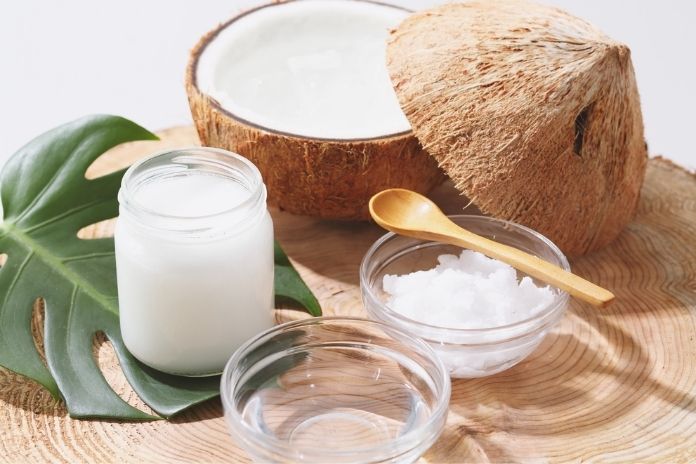
While both refined and unrefined coconut oils come from the same source, they’re quite different once you look past the label. The way each is processed affects its flavor, nutrient profile, cooking performance, and even how long it lasts in your pantry.
Understanding these differences can help you choose the right type for your needs, whether you’re frying, baking, or using it for skincare.
Here’s how they compare across key factors:
1. Processing
- Refined: Made from copra (dried coconut meat) that’s cleaned up through refining, bleaching, and deodorizing—sometimes with mild heat or chemicals. This process removes impurities, flavor, and part of its antioxidant content.
- Unrefined: Made from fresh coconut meat, pressed without high heat or solvents. This keeps more nutrients, flavor, and the creamy coconut aroma intact.
2. Taste & Aroma
- Refined: Has a neutral flavor and scent, which makes it versatile for cooking, where you don’t want a coconut taste.
- Unrefined: Offers a distinct coconut aroma and flavor, ideal for recipes that embrace that tropical note, like curries, desserts, or smoothies.
3. Smoke Point & Cooking Use
- Refined: Higher smoke point of about 400–450°F (204–232°C), making it suitable for high-heat cooking such as frying or searing.
- Unrefined: Lower smoke point of around 350–375°F (177–190°C), better for medium-heat cooking, baking, or using raw.
4. Shelf Life & Stability
- Refined: More shelf-stable, since processing removes compounds that could spoil or oxidize.
- Unrefined: Contains more natural compounds that may oxidize faster, so it should be stored in a cool, dark place and used within the manufacturer’s recommended time frame.
5. Antioxidants & Minor Nutrients
- Refined: Loses many polyphenols and antioxidants during processing, resulting in fewer beneficial plant compounds.
- Unrefined: Retains more antioxidants and phytonutrients, which contribute slightly to its potential health benefits and richer flavor.
Dr. Kapila Seneviratne, a researcher in the field, notes that refining coconut oil reduces its total phenol content, which includes antioxidants like caffeic acid, catechin, and ferulic acid. These compounds are present in higher quantities in unrefined oils and contribute to the oil’s antioxidant properties.
In short, Refined coconut oil wins on versatility and stability, while unrefined coconut oil keeps the edge on natural aroma and antioxidant content. The right choice depends on whether you prioritize neutral cooking performance or nutrient-rich purity.
Nutritional Comparison of Refined vs Unrefined Coconut Oil

On paper, refined and unrefined coconut oils look the same, with the same calories, fat, and saturated fat, because both come from coconut meat.
The differences are in subtle nutrients, flavor, and heat stability. Refining removes some antioxidants and polyphenols, while virgin oil retains them, affecting taste, cooking performance, shelf life, and potential health benefits.
Here’s a quick comparison:
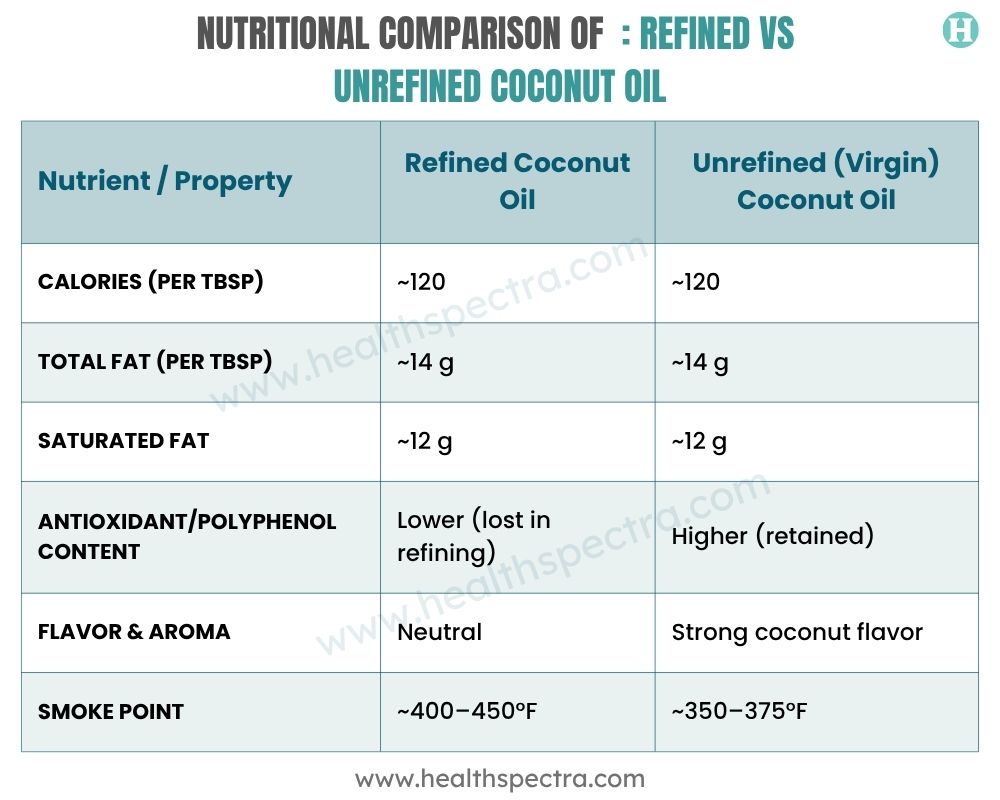 Short summary: The macronutrient profile (calories, fats) is essentially the same. The main differences are in flavor, smoke point, and minor phytonutrients (polyphenols/antioxidants), which are higher in unrefined oil.
Which Is Healthier? How to Choose the Right Coconut Oil for You

When people ask which coconut oil is healthier, they’re really asking: healthier for what? The answer changes depending on whether you’re cooking, chasing nutrients, or using it for skin and hair.
Here’s a simple decision map that balances culinary use and health priorities.
For Cooking
If you cook at high heat, frying, roasting, or searing, refined coconut oil is the safer choice. Its higher smoke point (400–450°F) means it can handle more heat before breaking down into harmful oxidation products.
Unrefined oil, with its lower smoke point, is more likely to burn and produce off-flavors or free radicals.
For Nutrition and Antioxidant Intake
When it comes to nutrient preservation, unrefined (virgin or cold-pressed) coconut oil comes out ahead. It retains more polyphenols, vitamin E, and other plant compounds, which contribute mild antioxidant effects.
These compounds don’t turn coconut oil into a “superfood,” but they do make it a better choice if you’re using it in smoothies, raw desserts, or salad dressings where heat won’t destroy those benefits.
For Skin and Hair
Here’s where unrefined coconut oil really shines. Studies show that virgin coconut oil supports skin hydration, barrier repair, and mild antimicrobial effects. It’s widely used as a natural moisturizer, hair mask, and makeup remover. The refining process removes some of these beneficial compounds, so the unrefined oil is generally more effective for topical use.
Read More: Say Goodbye to Wrinkles: How Coconut Oil Can Reverse the Signs of Aging
For Heart Health
This is where the hype needs context. Both refined and unrefined coconut oils are very high in saturated fat, about 90%, far higher than olive or canola oil. Research shows coconut oil tends to raise LDL (bad) cholesterol, even if it slightly increases HDL (good) cholesterol too.
A large meta-analysis found that coconut oil consumption raises LDL more than non-tropical vegetable oils, which can increase cardiovascular risk over time. The American Heart Association still advises limiting saturated fat overall.
In summary:
- For high-heat cooking – Refined.
- For flavor and nutrients – Unrefined.
- For skin and hair – Unrefined.
- For heart health – Neither; use sparingly and opt for unsaturated oils when possible.
Shopping tips:
- Choose organic, cold-pressed virgin oil when buying unrefined oil.
- Read labels: avoid products listing “partially hydrogenated” (trans fats).
- Look for RBD on refined oil labels if you specifically want refined.
- If price matters, refined coconut oil is usually less expensive than virgin.
Health Benefits of Coconut Oil (Applies to Both Types)

When evaluating coconut oil, it helps to break down the benefits into what’s supported by lab/clinical evidence and what remains speculative.
What the evidence supports
- Medium-chain triglycerides (MCTs): Coconut oil contains medium-chain fatty acids (notably lauric acid). MCTs are metabolized differently from long-chain fats; they’re more rapidly absorbed and can be used for quick energy and, in some contexts, induce mild ketosis. Some trials show MCTs may modestly improve weight management or cognitive metrics in specific populations, though high-quality, large trials are limited.
- Lauric acid’s antimicrobial properties: Lauric acid and its derivative monolaurin have shown in vitro antimicrobial activity against certain bacteria, fungi, and some viruses. This partly explains traditional topical uses and anecdotal oral applications (like oil pulling). However, laboratory antimicrobial effects don’t always translate to clinically meaningful benefits in people.
- Skin and hair benefits: Randomized trials and dermatology reviews support virgin coconut oil as an effective emollient and skin barrier protector for dry skin and mild eczema; it can be comparable to mineral oil as a moisturizer. Topical use is widely supported by dermatological literature.
What to treat cautiously
- Heart disease risk: Coconut oil is approximately 90% saturated fat. Saturated fats raise LDL cholesterol in many people, and higher LDL is a well-established risk factor for cardiovascular disease. Systematic reviews and expert statements advise limiting saturated fat intake and preferring unsaturated plant oils (olive, canola). Some trials suggest coconut oil raises LDL more than unsaturated vegetable oils.
Takeaway: Coconut oil does have useful properties, quick energy from MCTs, lauric acid’s antimicrobial activity, and topical skin benefits, but its saturated-fat content means it should be used with awareness and moderation, especially for people with heart disease risk factors.
What Experts and Studies Say
Experts don’t see coconut oil as a miracle or a menace, just something to use with context. Research shows it has benefits for skin and certain niche uses, but it can raise LDL cholesterol when eaten in large amounts. Here’s what key studies and health organizations actually say about its effects on heart health, skin, and cognition.
- Circulation review: The authors reported that coconut oil increases LDL cholesterol compared with unsaturated oils and recommended caution when using coconut oil in place of heart-healthy plant oils.
- AHA Presidential Advisory: Recommends lowering saturated fat intake and replacing it with polyunsaturated fats to reduce cardiovascular disease risk. While coconut oil contains medium-chain fatty acids, its overall saturated profile means it should not replace unsaturated oils as the heart-healthy option.
- Dermatology and moisturizer RCTs: Found virgin coconut oil was as effective as mineral oil for improving dry skin and had additional antimicrobial and barrier benefits, supporting its topical use.
- MCT and cognition reviews: MCTs, present in coconut oil, can induce mild ketosis and may offer cognitive benefits in certain populations (e.g., mild cognitive impairment), but evidence is still limited and context-specific. Clinical dosing and formulation (isolated MCT oil vs plain coconut oil) matter.
Conclusion
Unrefined (virgin or cold-pressed) coconut oil retains more antioxidants and natural flavor, making it ideal for low-heat cooking, raw recipes, or topical use on skin and hair. Its coconut aroma and nutrient content are preserved because it undergoes minimal processing.
Refined (RBD) coconut oil, on the other hand, is more heat-stable and neutral-tasting, which makes it better suited for high-heat cooking, frying, or baking where coconut flavor isn’t desired. Its longer shelf life and higher smoke point add to its versatility in the kitchen.
From a health perspective, both types are high in saturated fat. Studies show they can raise LDL cholesterol compared with unsaturated vegetable oils, so it’s best to use them sparingly. For routine cooking and long-term heart health, prioritize unsaturated oils like olive, canola, or nut oils.
FAQs About Coconut Oil
Is unrefined coconut oil better for cooking?
For low-temperature cooking and for flavor, yes, unrefined is better. For high heat, no: choose refined or, better, an unsaturated oil with a high smoke point.
Does refined coconut oil lose nutrients?
Refining reduces polyphenols and certain heat-sensitive compounds, so refined oil has fewer antioxidants than virgin oil. Macronutrients (calories, saturated fat) are essentially unchanged.
Which is better for skin and hair, refined or unrefined?
Unrefined (virgin) coconut oil is better supported by dermatological research as a moisturizer and skin barrier protector.
Is coconut oil healthier than olive oil?
No, not for heart health. Olive oil is rich in monounsaturated fats and has strong evidence for cardiovascular benefits. Coconut oil is mostly saturated fat and can raise LDL cholesterol compared with unsaturated oils. For overall heart health, choose olive oil.
How much coconut oil should you eat daily?
There’s no universal “safe” amount, but because coconut oil is high in saturated fat, many experts recommend keeping saturated fat to ≤6–10% of daily calories (AHA suggests 5–6% for those needing LDL lowering).
For a 2,000-calorie diet, that’s roughly 11–13 grams of saturated fat per day. One tablespoon of coconut oil already provides around 12 grams of saturated fat, so use it sparingly within total daily fat limits.
References
- https://healthybuddha.in/blog/magazine-blog/differences-between-coconut-virgin-coconut-oil-which-is-better
- https://www.bestoilmillplant.com/Related-Posts/different-between-cold-pressed-coconut-oil-and-refined-coconut-oil.html
- https://en.wikipedia.org/wiki/Coconut_oil
- https://www.cocotherapy.com/blogs/blog/part-2-differences-between-virgin-refined-and-unrefined-coconut-oil
- https://www.bestoilmillplant.com/Related-Posts/different-between-cold-pressed-coconut-oil-and-refined-coconut-oil.html
- https://advaitliving.com/blogs/nutrition/how-to-choose-a-high-quality-coconut-oil
- https://www.hollandandbarrett.com/the-health-hub/food-drink/food/coconut/different-types-of-coconut-oil/
- http://virginoildecococreme.com/types-classifications-of-coconut-oils/
- https://healthybuddha.in/blog/magazine-blog/differences-between-virgin-and-coldpressed-coconut-oil-at-hb
- https://www.eatingwell.com/article/7948060/difference-between-refined-and-unrefined-coconut-oil/
- https://gramiyaa.com/blogs/news/how-to-choose-high-quality-coconut-oil
- https://www.centrafoods.com/blog/virgin-vs-extra-virgin-coconut-oil-whats-the-difference
- https://thrivemarket.com/blog/refined-vs-unrefined-coconut-oil
- https://standardcoldpressedoil.com/difference-between-cold-pressed-coconut-oil-and-virgin-coconut-oil
- https://wildlyorganic.com/pages/information-on-coconut-oil-processes
- https://www.quora.com/I-have-read-that-coconut-oil-is-solid-at-room-temperature-Why-is-the-coconut-oil-that-I-buy-not-solid
- https://houseofveda.com/blogs/articles/cold-pressed-virgin-coconut-oil-vs-coconut-oil
In this Article