















Last week, while strolling through the grocery store, the milk aisle caught my attention. The variety of milk that we get these days is amazing. Now, the milk is very different from what we usually get in the classic carton. We have oat and almond alternatives to protein-rich innovations; the dairy aisle has become a laboratory of modern nutrition.
Out of all the options, ultra-filtered milk has proved to be the strongest contender. It is high in protein, low in sugar, and easier to digest than traditional milk, it’s been trumpeted.
This is not a plant-based beverage or synthetic substitute; rather, it is real cow’s milk, technologically refined to better match today’s health-conscious choices. That is the reason why most people, including athletes and busy professionals, are drawn to it.
But how much healthier is it, really? Is the extra cost justified? In this article, let’s explore what makes ultra-filtered milk different, its benefits, and whether it deserves a place in your fridge.
Read More: Does Milk Hydrate Better Than Water? What Science Actually Says
What Is Ultra-Filtered Milk & How Is It Made?
Ultra-filtered milk is essentially regular cow’s milk at its core, but transformed through a process called ultrafiltration, a type of membrane filtration used in modern food processing.
During this process, milk is passed through semi-permeable membranes that work like microscopic sieves. These membranes filter out water, lactose (milk sugar), and even smaller molecules. However, they still hold onto the larger components like proteins, calcium, and other basic minerals.
The result is a thicker, creamier milk that naturally has more protein and calcium per ounce and less sugar and lactose. It still tastes like real milk-smooth, slightly sweet, and rich-but in a denser texture with a nutritional edge.
This process does not change the type of proteins, namely, casein and whey, naturally present in milk, but increases their concentration; hence, ultra-filtered milk is especially attractive for those who want to maximize nutrition per calorie.
Fairlife, Horizon High Protein Milk, and Ultra Milk are some of the popular brands available in plain and flavored versions within the U.S. market. Some go a step further by being lactose-free, which is achieved through the addition of the lactase enzyme that breaks down remaining lactose post-filtration.
In other words, ultra-filtered milk is still dairy, but it’s prepared to deliver more of what’s good-protein, calcium, and less of what some people struggle with, namely sugar and lactose.
How Ultra-Filtered Milk Compares to Regular Milk — Nutritional Profile

To decide if it’s worth the hype, we need to look beyond labels and compare the numbers. Here’s how ultra-filtered milk compares to regular milk.
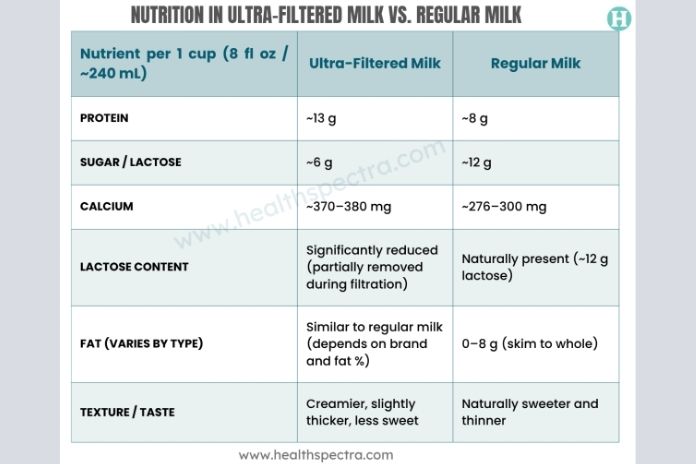 There is a clear difference. The ultra-filtered milk has 50–60% more protein and about half the sugar of traditional milk. Most of the sugar is removed due to lactose removal, which does not compromise the creaminess or taste of the milk since many brands use a small amount of lactase to maintain mild sweetness.
The amount of calcium and potassium is also high. It is typically 20–30% higher than in standard milk. Since calcium supports bone density and muscle function, ultra-filtered milk is particularly useful for children, older adults, and athletes.
Additionally, the higher protein-to-calorie ratio makes it ideal for those who want to manage their weight or regulate their blood sugar levels. Ultrafiltration and ultra-pasteurization also result in longer shelf stability, up to three months unopened, in some products. This is a good option for households seeking convenience.
The downside? Price. Ultra-filtered milk can be 1.5 to 2 times more expensive than traditional milk because of its specialized production process. For many consumers, the question isn’t about nutrition but whether the cost is worth the benefit we get.
Read More: 9 Benefits Of Cold Milk – That you were not aware of!
Potential Benefits — Who Might Gain the Most?

Ultra-filtered milk has a unique nutritional profile that benefits certain lifestyles and health goals.
Higher Protein Support
Protein is crucial for building and repairing tissues, making enzymes, and lean muscle mass. For athletes, active individuals, or those following a high-protein diet, ultra-filtered milk provides an easy and excellent source of protein in one’s daily diet, eliminating the need for shakes or powders.
Each cup contains nearly 13 grams of complete protein, rich in both casein (slow-digesting) and whey (fast-digesting) proteins, making it a better option for muscle recovery.
Lower Lactose and Sugar for Sensitive Digestion
Lactose intolerance affects millions of adults, creating symptoms such as bloating, gas, and discomfort following regular dairy intake. Ultra-filtered milk reduces lactose content by up to 66-67%, improving tolerance for those sensitive but not fully intolerant.
Other brands take this further by adding lactase enzyme to make their products fully lactose-free. This makes ultra-filtered milk a bridge between traditional dairy and non-dairy alternatives. All this while maintaining the nutritional benefits of milk without the common digestive issues.
Better Blood Sugar Impact and Satiety
Additionally, due to its increased protein and lower sugar content, ultra-filtered milk has a reduced glycemic response compared to regular milk. This helps prevent blood sugar spikes and keeps you full for a long time.
For people with type 2 diabetes or insulin resistance, the improved ratio of protein to sugar can help regulate energy levels throughout the day. Also, the slower digestion of protein helps individuals feel full for longer, indirectly contributing to weight management goals.
Good Source of Calcium and Bone-Health Nutrients
Ultra-filtered milk naturally retains more calcium, magnesium, and phosphorus than regular milk. These minerals are important for building good bone and muscle health. Consuming ultra-filtered milk may help promote bone density, particularly in children and adolescents, as well as in older adults.
Adding vitamin D to some of these versions further helps in the absorption of calcium, thereby promoting healthy bones. Especially for post-menopausal women, ultra-filtered milk can be a useful dietary addition.
Other Functional Benefits
Improved texture and taste: Ultra-filtered milk is usually described by consumers as creamier and smoother.
- Enhanced Versatility: Can be used in smoothies, protein coffee, overnight oats, or baking, especially since it doesn’t curdle as easily.
- Reduced Waste: Longer shelf life means less spoilage compared to traditional milk.
Adding to the list of benefits, the shelf-life of ultra-filtered milk deserves a spot, too. Talking about the same, Cassandra Padula Burke, RDN, LD, registered dietitian nutritionist, triathlon and running coach, and owner of Catalyst Performance Lab in Maryland, adds, “It also lasts longer than regular milk, up to 45 days compared to about 17 to 24 days for regular milk, due to the removal of more bacteria during the filtration process. That longer shelf life makes it a great option if you don’t go through milk quickly,”
Considerations and Limitations — What to Be Aware Of

While ultra-filtered milk has some clear benefits, it isn’t perfect. Here are the key factors to consider before you make the switch:
It’s More Processed:
Ultra-filtration and ultra-pasteurization are industrial processes that change milk’s natural composition to concentrate nutrients. While safe and effective, some traditionalists argue that over-processing may change the taste and bioavailability of certain compounds. Those who prefer less processing may view ultra-filtered milk as less “natural.”
It’s More Expensive:
One major issue, though, is the price. The ultra-filtered milk can be nearly double the cost of regular milk due to extra steps involved in filtration and the use of special equipment. For big families or those on a tight budget, this could make it a luxury item rather than a staple.
Not Suitable for Milk Allergies:
Despite having less lactose, ultra-filtered milk still contains the very same milk proteins-casein and whey. These are responsible for allergic reactions. Anyone with a confirmed milk allergy should avoid it altogether, as filtration does not remove allergenic proteins.
Environmental and Ethical Considerations:
Production practices do tend to differ between brands. Some people also argue that increased energy is required during the ultrafiltration process, and the prevalence of plastic packaging is associated with extended shelf-life products. If sustainability is your primary goal, consider brands that utilize recyclable packaging or source their milk from ethical dairy farms.
Limited Long-Term Research:
Most of the evidence on ultra-filtered milk has focused on its composition and short-term health effects. However, there are just a few long-term studies that have explored whether better nutrient ratios translate into improved health outcomes over years of consumption.
If you already get enough protein and calcium in your diet, you might not notice a major difference by merely switching to ultra-filtered milk. It’s not a magic upgrade.
How to Choose and Use Ultra-Filtered Milk Wisely

If you’re considering adding ultra-filtered milk into your routine, here’s how to make the most of it:
- Read the Label Carefully: Look for “ultra-filtered milk” in the ingredient list. If you’re lactose-sensitive, ensure that the product is labeled as “lactose-free.” Steer clear of flavored kinds if you’re monitoring sugar intake.
- Strategic Use: Replace regular milk in smoothies, coffee, cereal, or baking recipes with extra protein without compromising taste. It’s highly useful after the workout or before bed for muscle recovery.
- Compare Brands: Certain brands add extra sweeteners or stabilizers. Opt for plain or lightly sweetened for the cleanest profile and best results.
- Balance Cost As Per Need: If you lack protein, regular milk remains a healthy and affordable choice. Ultra-filtered milk works best as a targeted upgrade, not an everyday necessity.
- Store Properly: Although it has a long shelf life, refrigerate immediately after purchase and consume within a week of opening for optimal quality.
- Have Perspective: Ultra-filtered milk supports balanced eating, but true nutrition comes from a variety of foods. No single food replaces the need for a diverse, whole-food diet rich in fruits, vegetables, and grains.
Read More: 11 Side Effects Of Almond Milk- That May Cause Serious Health Issues
Key Takeaway
Ultra-filtered milk is a smart option for making dairy more nutrient-dense and accessible to meet modern dietary needs. Its high protein, low sugar, and lactose content make it a strong choice for athletes, lactose-sensitive people, and those merely looking for a premium option.
It’s not naturally better for everyone, though. For many, regular milk remains a wholesome option, offering similar nutrients at a lower cost. The best option for you depends on your health goals, digestive health, and budget.
In short, ultra-filtered milk is an upgrade, not a replacement. It’s a well-designed option that combines performance, protein, and convenience all in one glass.
However, let’s not forget: health doesn’t come from one product. Regardless of whether it is regular, ultra-filtered, or plant-based milk, it all comes down to real-life eating habits: balance, variety, and frequency.
Frequently Asked Questions
1. Is ultra-filtered milk lactose-free?
The answer is yes, but not always. Although it has less lactose than regular milk, only products labeled “lactose-free” are fully safe for people with lactose intolerance.
2. Is ultra-filtered milk an alternative to regular milk for children?
Yes, it is healthy for kids, but with more calcium and protein than regular milk; mix it with regular dairy or other good sources of calcium for variety and balance.
3. Is ultra-filtered milk better than ordinary milk for weight loss?
It indirectly helps by increasing satiety and controlling blood sugar levels, although weight loss remains dependent on a person’s overall calorie balance and diet quality.
4. Does ultra-filtered milk provide calcium and protein to the same extent as regular milk?
Yes, it is even slightly better in terms of nutrient density. It’s rich in both essential nutrients.
5. Is ultra-filtered milk safe for people with diabetes?
Generally, yes. With its lower sugar and higher protein content, it tends to be a stable choice for maintaining a good blood glucose range. Unsweetened versions are best.
References
- https://www.self.com/story/ultra-filtered-milk-protein?utm_source=chatgpt.com
- https://thebalancednutritionist.com/is-fairlife-milk-healthy/?
- https://pmc.ncbi.nlm.nih.gov/articles/PMC10261746/
- https://www.thebullvine.com/news/what-is-ultrafiltered-milk-benefits-process-and-nutritional-value-explained/
- https://extension.sdstate.edu/what-ultra-filtered-milk-product
In this Article