













Every cough, sneeze, or fever in a baby can be alarming for new parents. Can newborns catch strep? Strep throat is a common bacterial infection in children, most often affecting those between the ages of five and fifteen, according to the Centers for Disease Control and Prevention (CDC). While it is uncommon in newborns, it can still occur.
When strep throat does happen to a newborn, it often looks very different from how it does in older kids and adults. Since a newborn’s immune system is still developing, signs and symptoms of infection may be more subtle and nonspecific.
Babies cannot complain of strep throat, but they may exhibit symptoms such as fever, irritability, and poor feeding. Parents who understand these types of distinctions are better prepared to recognize potential concerns early and respond with calm, appropriate care.
Read More: 7 Effective Apple Cider Vinegar for Sore Throat Remedies to Get Faster Relief
What Is Strep Throat?
Group A Streptococcus (Strep A) is the cause of strep throat, which leads to a painful sore throat, swollen tonsils, red spots on the roof of the mouth, and a fever higher than 100.4°F. Although these are not common in newborns, symptoms may exhibit as fever, poor appetite, and irritability.
This infection is easily spread by touching unwashed hands or contaminated surfaces, by sharing utensils, food, or toys with a child who has a strep infection, and by the droplets that fly when a sick individual coughs or sneezes. Schools and daycare centres are familiar places for strep, as young children are often in close contact with one another.
Can a Newborn Actually Get Strep Throat?
“Infants can get strep throat, but it’s extremely rare,” says Dr. Sarah Terez Malka, MD, a pediatrician with Duration Health, a health and medication resource for travelers. “Most babies have protective antibodies and immunity from their moms. Additionally, an infant’s tonsils are smaller, making it more difficult for strep bacteria to grow and cause illness,” Malka explains.
While strep throat is rare among kids under 3, it becomes more common between ages 5 and 15. “Younger and older children who are in contact with children in that age range may have a higher risk of strep if they’re exposed by a sibling,” Malka adds. However, viruses rather than bacteria are responsible for the majority of strep throats in infants and young children.
How Newborns Might Be Exposed to Strep
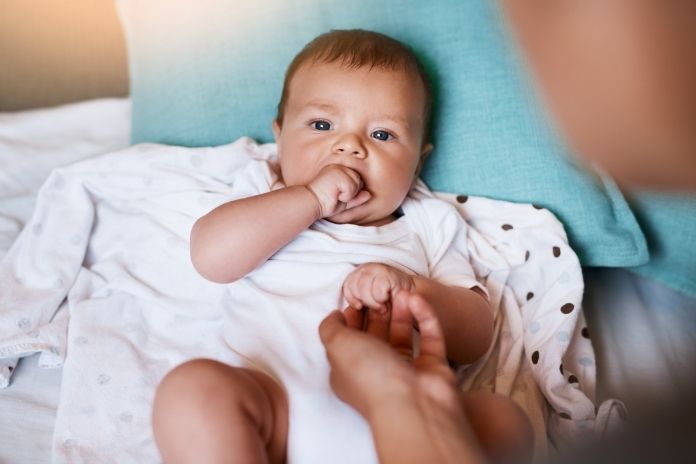
Babies most commonly encounter strep bacteria through close, frequent, and intimate contact with others. These children or adults would be subjects of a sore throat and would almost always expose the baby during feeding, comforting, or holding. Avoiding intimate contact is sometimes difficult, especially when the infected person is the primary caregiver and the baby is totally dependent on adults for their care.
The primary way that strep throat spreads is by respiratory droplets. Tiny bacterial droplets can move through the air or land on the infant’s skin, clothing, or other adjacent surfaces when an infected person coughs, sneezes, speaks close, or kisses a newborn. The bacteria may then enter the body through the mouth or nose.
Read More: 20 Home Remedies for Sore Throat That Work Miraculously
Symptoms of Strep or Strep-Related Infection in Newborns
Diagnosis of strep throat can be tricky with little ones in most cases, since they can’t tell you where it hurts. Here are some common signs:
Fever: The first noticeable symptom is frequently a high or persistent temperature (over 100.4°F). The answer to the common question new parents have about infant fever and whether to be concerned is straightforward. If your baby appears lethargic or has a fever that lasts more than 24 hours, visit a pediatrician right away.
Irritability and Fussiness: Babies who have strep throat may cry more, be restless, or refuse to eat or drink.
Red or Swollen Throat: Redness and swelling of the tonsils or throat may be present in an infant, although they are more challenging to detect.
Tonsil White Patches: A bacterial infection may be indicated by white or yellow patches on the tonsils or in the throat.
Congestion or a Runny Nose: These symptoms can indicate a cold, but they can also accompany strep throat in newborns.
Swollen Lymph Nodes: Look for any sore or swollen lymph nodes in the neck, as these may indicate an infection.
Why Strep Throat Looks Different in Babies

Since babies can’t complain of pain or trouble swallowing, strep throat can be particularly tricky in infants. Babies behave differently when sick than when healthy. Unlike older children or adults, who can complain of a scratchy throat or pain after eating, you often have to hunt for another telltale sign that something is wrong in infants, who are typically unable to describe classic symptoms like strep throat.
Babies’ infections frequently manifest as a widespread disease rather than localized symptoms. An infant may appear especially irritable, feed poorly, sleep more than usual, or appear less responsive due to throat pain. Other possible symptoms include fever, vomiting, or altered breathing patterns.
Read More: Raw Honey For Sore Throat – All You Need To Know
How Doctors Evaluate a Newborn for Strep
A strep test, which involves taking a throat swab, is typically used to diagnose strep throat. If the test results are positive, your pediatrician will recommend appropriate treatment options. The CDC warns that, though the widely used rapid strep test detects the great majority of strep cases, if the test is negative but your doctor believes your child has strep throat, they will send the swab for additional testing for GAS bacteria. The findings may take several days.
The American Academy of Pediatrics (AAP) states that children under 3 years old don’t usually need testing for a sore throat because strep throat is uncommon in infants and toddlers.
Instead, testing is only necessary when there is a high suspicion of the condition. Furthermore, unlike in older children, strep throat typically does not result in long-term consequences in infants and toddlers.
Treatment: What Happens If Strep Is Suspected or Confirmed
Oral antibiotics such as penicillin, amoxicillin, or cephalosporin (or azithromycin or clindamycin in case of allergies) are typically prescribed for children with a positive strep test.
Although strep throat usually resolves on its own, taking antibiotics might speed healing by a few days and prevent rheumatic fever. This dangerous complication can cause heart problems that last a lifetime.
According to the CDC, school-going children and adolescents are more susceptible to rheumatic fever than adults. To avoid any issues, your pediatrician will often recommend a 10-day course of antibiotics, but many children may feel better much sooner.
What Parents Should Do If a Newborn Is Exposed to Strep

When attempting to prevent disease, specialists advise implementing proper hygiene practices, as respiratory droplets can carry the GAS bacterium, which causes strep throat in children. It focuses on showing caregivers the appropriate ways to care for and handle the newborn:
- Wash their hands properly.
- Avoid sharing utensils, food, or beverages with someone who is ill.
- Don’t put anything in their mouths or touch their face.
- Cover their sneezes and coughs.
- When someone has strep throat, stay away from them until they have had antibiotics for at least 24 hours and are fever-free.
- When ill, stay at home to prevent spreading the illness to others.
While it’s difficult to see a newborn unwell, you can take comfort in knowing there are effective ways to keep your baby healthy and comfortable. Contact your pediatrician if you have any specific questions about strep in infants and children.
Read More: 15 Home Remedies For Laryngitis – Get Rid Of Scratchy Throat
When to Call the Doctor or Seek Emergency Care
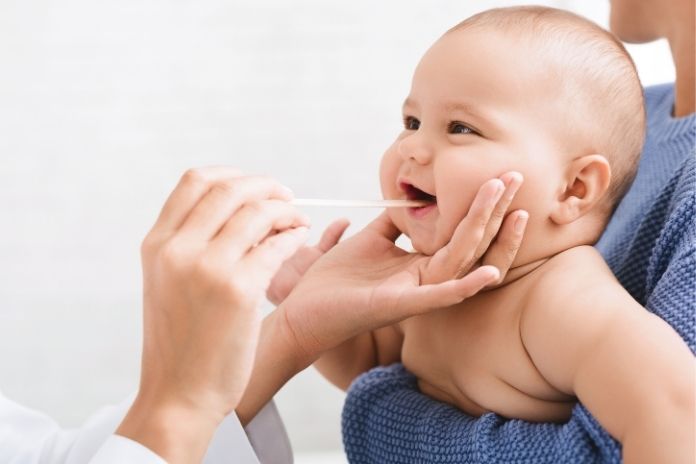
Long-term problems of strep throat include heart valve troubles and kidney concerns. Visit a doctor if your child shows any of the following symptoms of strep throat:
- Worsening or new symptoms.
- Dehydration symptoms include lethargy, dry lips and mouth, not sobbing when crying, and urinating less frequently than every six hours.
- Having trouble breathing.
- Unable to swallow, they could even spit out their own drool or saliva.
- Cannot completely open their mouth.
- Persistent fever.
- Muffled voice like swallowing a hot potato.
- Stiffness or swelling of the neck.
Conclusion
The fact that newborns rarely have strep throat can reassure anxious parents. Rare does not imply harmless, though. Because a newborn’s immune system is still growing, illnesses that do occur in young toddlers can worsen more quickly than in older children. Hence, prompt care and early awareness are crucial.
Newborns rarely have distinct or well-defined symptoms, unlike adults. Signs may be subtle and easy to miss, including changes in eating, unusual fussiness, drowsiness, or trouble maintaining normal body temperature. Without medical assistance, it may be challenging to determine the cause of these nonspecific symptoms. Therefore, caregivers should never disregard a newborn’s symptoms.
References
- Northwoods Pediatric Center. What happens if an infant gets strep throat
- Burgert, N., M.D., FAAP. (2016, October 15). Can infants get strep throat?
- Aggarwal, N. (2023, December 11). Can babies get strep throat?
- Pinnacle ENT Associates. (2022, September 29). Can my baby or toddler get strep throat?
- Cedars-Sinai. Group B streptococcus infection in newborns
- Children’s Hospital of Philadelphia. (2023, January 10). Is it strep throat? Tips for recognizing and treating strep throat
In this Article