













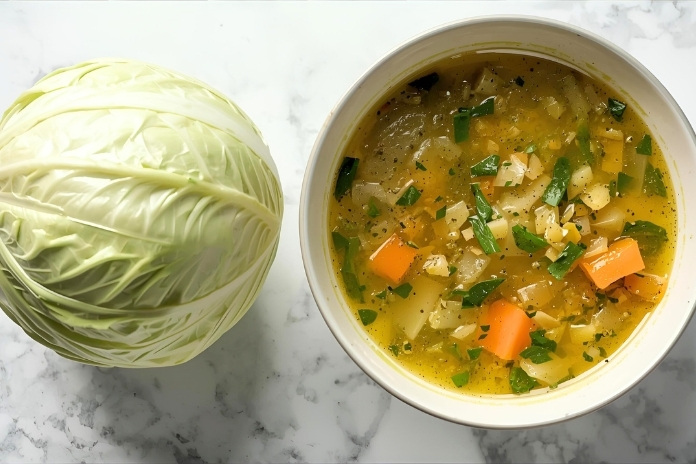
The cabbage soup diet is renowned for being one of the fastest “reset” regimens for individuals seeking to lose a few pounds quickly.
Although the diet’s precise beginning is uncertain, some people believe it began in the 1950s. Homemade cabbage soup has always formed the core of this eating plan. Over the decades, the diet has been known under various names, earning it the nickname “Dolly Parton Diet” during the 1980s.
It can, according to promoters, help people lose up to 4.5 kilos (10 pounds). Nutritionists quickly remind us that we’re primarily losing water, which we may readily regain once we start eating more balanced meals.
The cabbage soup diet focuses on very few calories, plenty of fiber, and minimal fat intake. By eating fewer items and consuming more fiber-rich soups, the diet aims to reduce your caloric intake. The anticipated daily caloric intake for the seven days of the program is between 1000 and 1200 kcal.
You may get the benefits of the cabbage soup diet without compromising your general health if you approach it with reasonable expectations and follow through with a balanced eating plan.
Read More: Balancing Act: Tips for Creating a Well-Rounded and Healthy Diet Plan
Cabbage Soup Diet Plan (7-Day Breakdown)
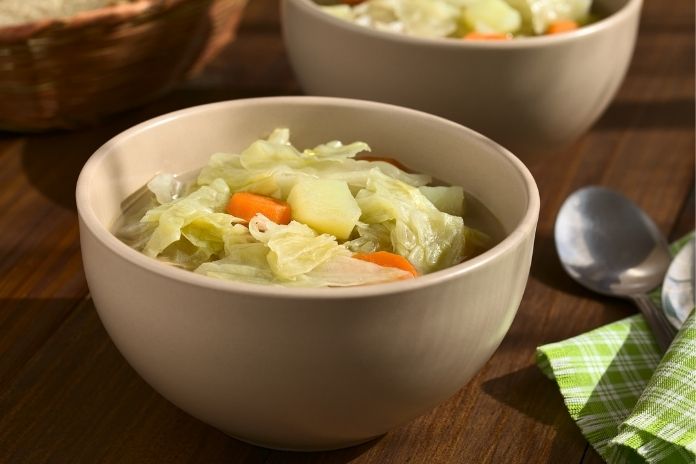
Centered on unlimited servings of cabbage soup alongside selected complementary foods, this diet is typically practiced over a continuous seven-day period. Here is an example of a schedule:
Ingredients:
- Eight cups of veggie broth
- One sliced yellow onion
- Three minced garlic cloves
- 4 cups of cabbage into 1-inch pieces
- Two sliced carrots
- Two sliced celery stalks
- Kosher salt to taste
- Half a teaspoon of black pepper, coarsely ground
- Half a teaspoon of oregano, dry
- Half a teaspoon of dried basil
- Diced tomatoes (28 ounces; do not drain)
Instructions:
- Stir well after adding the chopped tomatoes, oregano, basil, cabbage, carrots, celery, onion, garlic, and vegetable broth.
- After bringing to a boil, lower the heat and simmer for at least 20 minutes, or until the carrots and cabbage are soft.
- You may change up the recipe for cabbage soup by using water, bone broth, or chicken broth for the vegetable stock. You can use red cabbage; however, most people usually prefer white cabbage.
- You can also include bell peppers, spinach, zucchini, or any other non-starchy vegetable (except potatoes). Select low-sodium canned tomatoes and low-sodium broth if you’re managing your salt intake.
Here’s the Cabbage Soup Diet meal plan for a week:
Day 1: Any fruit, excluding bananas, and cabbage soup.
Day 2: Raw or cooked cabbage soup together with any other non-starchy vegetable.
Day 3: Fruit and other non-starchy veggies together with cabbage soup.
Day 4: Skimmed milk without fat, as many as around eight bananas, and a generous amount of cabbage soup.
Day 5: Cabbage soup, a can of tomatoes, or up to six whole tomatoes, and up to 20 ounces of steak, chicken, or fish.
Day 6: Unlimited beef (or chicken or fish) and non-starchy vegetables, along with cabbage soup.
Day 7: Non-starchy vegetables, brown rice, unsweetened fruit juice, and cabbage soup.
Benefits of the Cabbage Soup Diet

The promise of rapid weight loss is one of the primary reasons the cabbage soup diet remains a popular choice.
- Before switching to a low-calorie diet, medical experts may advise extremely low-calorie diets, such as the very low-calorie ketogenic diet, for 4–12 weeks under a doctor’s supervision. Individuals may have notable short-term improvements in metabolic health and weight loss.
- A small 2021 trial assessed how a very low-calorie diet affected blood sugar control and cardiovascular risk in obese individuals. Even though the diet period is too brief to result in noticeable changes in body fat, the results indicate that very low-calorie, short-term diets can temporarily reduce insulin resistance.
- The cabbage soup diet also includes plenty of fruits and vegetables, offering high fiber content while staying low in calories.
- Because you need to purchase inexpensive soup components and a few basic things, the diet is also less expensive to follow than other fad diets.
The prospect of eating a lot of cabbage soup for a short period of time appeals to people who want a quick fix. “This diet ‘works’ merely because it’s super restrictive in calories,” says Julie Rothenberg, RD, LDN, owner of JuliENERGYnutrition in Miami. “It markets itself to people who want to lose weight for a special occasion or event coming up.”
Read More: The Flexitarian Diet: Balancing Plant-Based and Animal-Based Foods
How Effective Is A Cabbage Soup Diet For Losing Weight?
Researchers have never investigated the Cabbage Soup Diet, so they cannot verify its efficacy. It is unlikely to provide long-term weight loss, even if it could produce short-term, transient weight loss.
The Cabbage Soup Diet will probably induce short-term weight loss because it is low in calories. But as soon as you quit the diet, the majority of that weight will probably return. This diet’s restricted food options make it challenging to consume enough calories to maintain your body weight.
Your body reduces your metabolic rate when you drastically cut calories to lose weight. It lowers your daily caloric expenditure. In long-term diets, this frequently results in weight loss plateaus, or times when no weight is lost.
Risks & Limitations
The disadvantages of the cabbage soup diet can exceed the advantages, even though it might help you lose a little weight.
- Stomach cramps, gas, or bloating
- Difficulties thinking or focusing
- Foggy in the head
- Headaches
- Lower in metabolism
- Loss of the muscle
- Lightheadedness or dizziness
- Losing consciousness
Our body can only burn a particular amount of fat each week. Just around 34% of the weight lost during the first week of a low-calorie diet comes from fat. Reduction of muscle mass and water weight accounts for the remaining two-thirds of weight reduction.
Your body’s rapid energy reserves, or glycogen stores, are the source of water weight. In your body, glycogen usually attaches itself to water molecules. Your body utilizes the stored glycogen as energy and excretes the excess water when you don’t consume enough calories.
However, your body will replenish those emergency supplies and regain water weight as soon as you resume a less restrictive diet.
The absence of nutrients in the cabbage soup diet is another major issue. On most days, the Cabbage Soup Diet provides no source of protein and is so limited in its food options that it is lacking in many vitamins and minerals.
Read More: Diet for Endometriosis: Foods That Help and Foods to Avoid
Conclusion
Within the seven days of the cabbage soup diet, there is a clear, detailed plan for losing weight in a fast and controlled fashion, with changes that have significance.
With inexpensive, very easy-to-prepare ingredients, along with the speed of losing water weight, which sometimes can give us a good mental reset or reassurance of accomplishment, the cabbage soup diet is appealing.
However, we unthinkingly follow this system for the most part. In that case, we need to be aware of the limitations, as a majority of what we lose in weight will likely return, and following this kind of eating pattern for considerable lengths of time can interfere with our nutrient intake, result in calorie imbalance, or lead to rebound gain.
The cabbage soup diet may provide short-term motivation for losing weight, but we must view it as a step toward long-term success rather than a panacea for sustained weight loss.
A significant part of maintaining what we achieve will be to follow the cabbage soup diet with another balanced eating plan that includes lean protein, whole-grain carbohydrates, fruits, and vegetables, along with regular physical activity and sufficient hydration.
References
- https://www.bbcgoodfood.com/health/weight-loss/what-is-the-cabbage-soup-diet
- https://health.usnews.com/wellness/food/articles/cabbage-soup-diet
- https://divascancook.com/wonder-soup-recipe-weight-loss-soup-7-day-diet-cabbage-soup/
- https://www.thespruceeats.com/one-week-cabbage-soup-diet-3061110
- https://www.healthline.com/nutrition/the-cabbage-soup-diet#what-it-is
- https://www.medicalnewstoday.com/articles/cabbage-soup-diet#how-it-works
- https://www.medicalnewstoday.com/articles/cabbage-soup-diet#health-risks
- https://www.everydayhealth.com/diet-nutrition/cabbage-soup-diet.aspx
- https://www.julienergynutrition.com/
In this Article