












You had it drained, and it came back. Maybe you had it drained again or went through surgery. And there it is, that familiar soft lump near your ankle or on the top of your foot, reappearing like it never left.
Foot ganglion cyst recurrence is one of the more frustrating realities in musculoskeletal medicine. Not because it’s untreatable, but because most first-line treatments address the symptom rather than the source.
A recurrent foot ganglion almost always means the root of the cyst, the narrow stalk connecting it to a joint or tendon, was left intact. And an intact stalk means an intact mechanism for the whole thing to start over.
This article breaks down why ganglion cysts recur, what the data show about recurrence rates across different treatments, and which choices actually change the odds of it not coming back.
Read More: 13 Remedies For Ganglion Cyst For Faster Recovery
What Exactly Is a Foot Ganglion Cyst?
A ganglion cyst is a benign, fluid-filled sac that forms adjacent to a joint or tendon sheath. It’s not a tumor in any meaningful clinical sense. It doesn’t become cancerous. But it is persistent, and understanding why starts with understanding its anatomy.
The cyst itself contains a thick, gelatinous fluid, a form of synovial mucin, produced by the joint or tendon lining. The sac is connected to the joint capsule or tendon sheath by a narrow joint capsule stalk, sometimes called a pedicle. This stalk is the mechanical link between the joint’s internal environment and the cyst cavity sitting outside it.
Foot ganglion cysts form most commonly on the dorsum (top) of the foot, around the ankle, and on the plantar surface (sole). They can arise from joint irritation, repetitive stress, or low-grade trauma that destabilizes the joint capsule and allows fluid to track outward. Once the pathway is established, fluid accumulates, and the cyst grows.
Most are asymptomatic until they reach a size where pressure becomes uncomfortable, particularly in a shoe. Some can cause burning or tingling when pressed on a nearby nerve.
Why Do Foot Ganglion Cysts Keep Coming Back?
The “Balloon and Stalk” Problem
This is the core mechanism behind nearly all foot ganglion cyst recurrence. Think of the cyst as a balloon and the stalk as the tube connecting it to an air supply. Draining the balloon deflates it. But the tube remains. Pressure in the joint eventually re-inflates the cyst through the same pathway.
Aspiration removes the fluid inside the cyst wall. It does nothing to the wall itself, the stalk connecting it to the joint, or the one-way valve mechanism that allowed fluid to accumulate in the first place.
Dr. Steven J. Lee, MD, explains the underlying mechanism directly: “When they occur around the joint, it is thought that they occur because of a one-way valve mechanism whereby joint fluid can exit the joint, but cannot return into the joint, thereby causing fluid to accumulate as a cyst outside of the joint.”
Incomplete Surgical Excision
Surgery solves the balloon-and-stalk problem only when the entire cyst complex is removed: the sac, the stalk, and a small cuff of the adjacent joint capsule stalk tissue at the origin point. Leave any portion of the pedicle behind, and the residual synovial lining can regenerate the cyst from the same base.
According to StatPearls at NCBI, failure to resect the pedicle, its capsular attachments, and part of the capsule is directly associated with high postoperative recurrence timeline rates. This isn’t a surgical complication in the traditional sense. It’s a technique issue, one that varies significantly by surgeon experience and anatomical access.
In the foot specifically, cysts on the plantar surface or near deep tendon structures are harder to access completely. The anatomy is more confined, the dissection more technically demanding, and the margin for error smaller than with dorsal wrist ganglions, where the literature is most developed.
Other Causes of Recurrence
Satellite cysts are a less commonly discussed but real contributor to ganglion cyst presentations that keep coming back. Some ganglia have multiple small pockets or secondary sacs branching from the main cyst body. If those aren’t identified and excised during surgery, they become the source of what looks like recurrence but is an incompletely treated primary disease.
Repetitive mechanical stress on the affected joint, particularly in active individuals or those whose work requires prolonged standing and walking, can also drive new cyst formation from residual synovial lining even after technically complete excision. The joint environment hasn’t changed. It produces the stimulus that created the cyst in the first place.
Hyaluronic acid buildup in the synovial fluid is the biochemical driver of cyst content. In joints under repeated stress, this accumulation is ongoing, which is part of why younger, more active patients have higher ganglion cyst recurrence rates than older or more sedentary ones.
Aspiration vs. Surgery: Which Has the Lower Recurrence Rate?
Which has the lower recurrence rate: aspiration or surgery? This is the question most patients ask, and the data offer direction but not certainty. Aspiration is less invasive but carries a much higher recurrence rate. Surgery is more involved but generally offers better long-term control.
Aspiration (Needle Drainage)
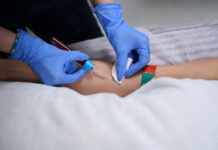
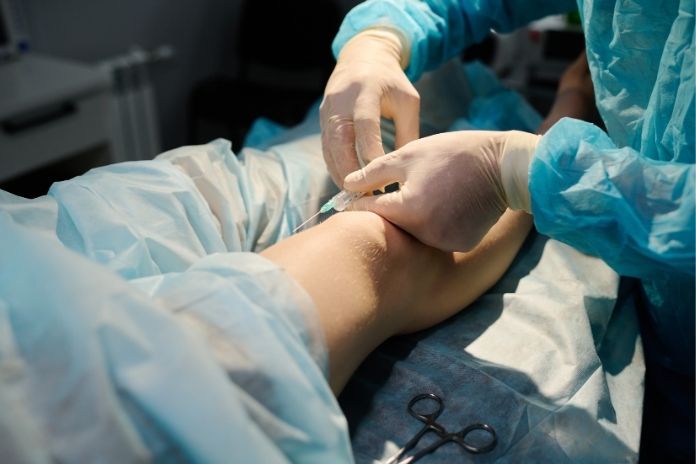
Ganglion cyst aspiration is the most commonly performed first-line intervention because it’s quick, minimally invasive, and can be done in a clinic setting with a local anesthetic. What it doesn’t do is address the stalk, the wall, or the mechanism.
Recurrence rates after plain aspiration are high. A systematic review published in PMC comparing treatment modalities for dorsal ganglion cysts found aspiration recurrence rates as high as 72% across included studies, with high variability between series. Plain aspiration without adjunct treatment is essentially a temporary measure.
The success rate with this approach runs around 61 to 87% in clinical series, compared to 38 to 45% for aspiration alone. It’s a reasonable first step for a symptomatic cyst, particularly in patients who want to avoid surgery, but it’s not a reliable long-term solution.
Aspiration with steroid injection improves those numbers somewhat. Triamcinolone acetonide injected into the cyst cavity after drainage reduces local inflammation and may inhibit fluid reaccumulation.
Open Surgical Excision
Surgery for foot ganglion cyst removal involves excising the entire cyst complex through an open incision, removing the sac, stalk, and a cuff of the adjacent joint capsule. When done completely, it’s the most definitive treatment available.
A randomized controlled trial published in PMC found surgical excision had a success rate of 94.4% at one-year follow-up when the entire stalk was removed, compared to 61.1% for aspiration plus steroid injection.
A large retrospective series published in PMC examining 628 patients after open excision found an overall recurrence rate of 3.8%, substantially lower than the pooled 20% reported in earlier smaller series.
The variability in reported recurrence rates, ranging from 1 to 50% across published literature, almost entirely reflects differences in surgical technique and surgeon experience rather than fundamental limitations of the procedure itself.
Arthroscopic Surgery (Keyhole Technique)
Arthroscopic excision offers smaller incisions, potentially less soft tissue disruption, and faster return to activity than open surgery. Open vs. arthroscopic excision isn’t a simple better-or-worse comparison. For dorsal ganglions accessible by arthroscopy, recurrence rates of 8 to 30% have been reported, largely comparable to open excision in experienced hands.
For foot ganglions, particularly plantar or deep tendon-adjacent cysts, arthroscopic access is technically more limited. The decision between open and arthroscopic approaches for foot ganglion treatment options depends heavily on cyst location, size, and the surgeon’s specific training and experience.
What the Research Says About Long-Term Results
Most postoperative recurrence timeline data places the highest risk window between 6 and 12 months after treatment. Recurrences presenting after two years are uncommon but not unheard of, particularly in cases where satellite cysts were missed or residual stalk tissue remained.
The multiple-aspiration approach deserves a mention. Some series report improved long-term resolution when aspiration is repeated two or three times, with combined success rates approaching 80% after three procedures in motivated patients who prefer non-surgical management.
This works for some people, particularly those with smaller, less complex cysts. It’s not a substitute for surgery when the cyst is plantar, large, or causing nerve compression symptoms. Success rates after surgery correlate most strongly with two variables: complete stalk excision and surgeon volume.
Series from specialist hand and foot surgeons consistently report lower recurrence than series from general orthopedic practices. For a recurrent foot ganglion specifically, where the anatomy is more confined and the access more technical than a dorsal wrist cyst, that difference is meaningful.
Factors That Influence Recurrence Risk
Location is the most reliable predictor of difficulty. Plantar ganglions and cysts originating from deep tendon structures around the ankle have higher ganglion cyst recurrence rates than dorsal foot cysts, simply because complete excision requires more precise dissection in a more anatomically confined space.
Age and activity level affect both initial formation and recurrence. Younger, more physically active patients put more cumulative mechanical stress on affected joints. Even after a technically successful excision, continued high-load activity can drive new cyst formation from residual synovial lining in ways that appear to the patient identical to recurrence.
Surgical technique is the most modifiable risk factor. Complete excision of the stalk at the joint capsule origin, including a small cuff of adjacent capsule tissue, is the technical requirement that separates low-recurrence outcomes from high-recurrence ones. This is not universally achieved, particularly in surgeons with limited experience in foot and ankle ganglion excisions.
How to Reduce the Chances of a Ganglion Coming Back
The single most impactful decision is surgeon selection. For a recurrent foot ganglion or a first-presentation cyst in a technically challenging location, an orthopedic foot and ankle specialist or a hand surgeon with documented experience in ganglion excision is a materially different choice than a general orthopedic surgeon doing occasional cyst cases.
Protective padding and orthotics during recovery and beyond are practical tools for reducing mechanical stress on the treated joint. For plantar cysts in particular, offloading pressure from the surgical area while the capsule heals reduces the likelihood that residual synovial lining will be driven toward new cyst formation by early return to full activity.
Avoiding repetitive friction or pressure over the surgical site during recovery is worth treating as a clinical instruction, not just a precaution. The joint capsule repair needs time to scar down without ongoing mechanical disruption.
Patients are advised to return promptly if swelling or a soft lump reappears and not to assume the sensation is post-surgical swelling without clinical evaluation, since early recurrence caught promptly is easier to address than one that has had months to re-establish.
Follow up if anything returns. A soft lump appearing within the first year after surgery isn’t necessarily a true recurrence, but it needs to be evaluated rather than monitored at home. Early re-intervention on a recurrence is consistently more successful than late re-intervention.
Read More: 10 Best Metatarsal Foot Pads For Support and Comfort
Key Takeaway
Foot ganglion cyst recurrence comes down to one underlying problem: the stalk. Treatments that don’t address the stalk don’t solve the problem. They delay it. Ganglion cyst aspiration remains a reasonable first step for a symptomatic cyst, particularly with aspiration and steroid injection added. It’s quick, carries minimal risk, and resolves the immediate discomfort.
The ganglion cyst recurrence rate with aspiration alone is 50 to 70%, which makes it a temporary measure rather than a definitive one for most patients.
How to prevent ganglion cyst recurrence after surgery comes down to complete excision, appropriate recovery, reducing mechanical stress on the treated area, and returning for evaluation if anything reappears. The ganglion cyst keeps coming back, an addressable pattern. It just requires the right intervention, done correctly, the first time.
Frequently Asked Questions
1. Why does my ganglion cyst keep coming back after draining?
Because draining only removes the fluid. The cyst wall and the joint capsule stalk connecting the cyst to the joint remain intact. As long as those structures are in place, the one-way valve mechanism that fills the cyst can refill it. This is the core reason foot ganglion cyst recurrence is so common after aspiration.
2. What is the recurrence rate for ganglion cyst surgery?
With complete excision of the stalk and adjacent capsule by an experienced surgeon, recurrence rates run 4 to 20% in published series. Surgeon experience is the strongest predictor. Incomplete excision, particularly of the stalk origin, pushes rates toward the higher end of published ranges.
3. Is arthroscopic surgery better than open surgery for foot ganglion cysts?
Not categorically. Open vs. arthroscopic excision outcomes are broadly comparable in experienced hands for accessible cysts. For plantar foot ganglions and deep tendon-adjacent cysts, open surgery may allow more thorough excision. The surgeon’s specific experience with foot ganglion anatomy matters more than the technique used.
4. How long after surgery can a ganglion cyst come back?
Most postoperative recurrences present within 6 to 12 months. Recurrences after two years are less common. A soft lump appearing in the first year after surgery warrants clinical evaluation rather than watchful waiting.
5. Does aspiration with steroid injection work better than plain aspiration?
Yes, modestly. Aspiration with steroid injection reduces the recurrence rate compared to aspiration alone, with some series reporting success rates of 60 to 87% versus 38 to 45% for plain aspiration. It remains a non-definitive option but is a reasonable first approach before considering surgery.
6. What foot ganglion treatment options exist beyond aspiration and open surgery?
Arthroscopic excision, repeated aspiration, and observation are the primary alternatives. Observation is appropriate for asymptomatic cysts since up to 50% resolve spontaneously. Arthroscopic excision is an option for accessible cysts for surgeons with appropriate training. There is no evidence-based role for sclerotherapy or other injectable treatments for foot ganglions outside of research settings.
References
- American Orthopaedic Foot & Ankle Society. (n.d.). Ganglion resection. FootCareMD.
- Cluts, L. M., & Fowler, J. R. (2022). Factors impacting recurrence rate after open ganglion cyst excision. Hand, 17(5), 937-941. https://pmc.ncbi.nlm.nih.gov/articles/PMC8984732/
- Hijlkema, M., et al. (2023). Treatment of primary dorsal wrist ganglion: A systematic review. Journal of Wrist Surgery.
- Khan, P. S., Hayat, H., & Bhatti, A. B. (2011). Surgical excision versus aspiration combined with intralesional triamcinolone acetonide injection plus wrist immobilization therapy in the treatment of dorsal wrist ganglion: A randomized controlled trial. Indian Journal of Plastic Surgery.
- Lee, S. J. (n.d.). Ganglion cyst. StevenJLeeMD.com
- Pendleton, A. M., & Fowler, J. R. (2022). Recurrence after ganglion cyst excision. PMC.
- Shah, A. A., Hayat, H., & Ahmad, M. (2019). Comparison of aspiration followed by intra-lesional steroid injection and surgical excision in management of dorsal wrist ganglion. Journal of Orthopaedic Surgery and Research
- Ankle & Foot Centers of America. (n.d.). Ganglion cyst (foot).
- Austin Foot & Ankle Specialists. (n.d.). Ganglion cyst.
- Balance Health. (n.d.). What is ganglion cyst & when is it a problem?
- Celebration Foot & Ankle Institute. (n.d.). What are the causes, symptoms, and treatment of ganglion cysts?
- Cleveland Clinic. (n.d.). Ganglion cyst.
- Fla Foot & Ankle. (n.d.). Foot ganglion cyst.
- Foot Health Facts. (n.d.). Ganglion cyst.
- FootDocShep. (n.d.). What is a ganglion cyst?
- Healthdirect Australia. (n.d.). Ganglion cyst.
- Herald Scholarly Open Access. (n.d.). Ganglion of the foot and ankle: Imaging and pathological findings, differential diagnosis, and operative management.
- Laguna Woods Podiatry. (n.d.). Ganglion cysts: What are they and how are they treated?
- Mayo Clinic. (n.d.). Ganglion cyst: Symptoms and causes.
- Podiatry Hotline. (n.d.). What causes a ganglion cyst on your foot and ankle?
- Rotherham Foundation Trust Hospital. (n.d.). Ganglion cyst
- To Healthy Feet Podiatry. (n.d.). What is a ganglion cyst and how is it treated?
In this Article