



















You finish a long workday, shut your laptop, and there it is again. A dull pressure at the base of your skull. Sometimes it creeps behind your eyes. Sometimes it wraps around your temples like a tightening band. You stretch, blink, take a sip of water, and hope it fades. Maybe it does. Maybe it doesn’t. So you blame the screen. Or stress. Or dehydration. You pop a painkiller and keep going.
Here’s the thing. Most of these headaches aren’t coming from your eyes or your brain. They’re coming from your neck. Hours of leaning toward a screen, shoulders creeping upward, and your head drifting forward put enormous strain on the muscles and joints that support your skull.
Those tissues were never meant to hold that position all day. As they fatigue, they tighten. As they tighten, they pull on nerves and connective tissue that refer pain upward into your head. What you feel as a headache is often a neck problem in disguise.
This is what people mean by a posture headache. It’s one of the most common and most misunderstood sources of head pain in people who work at desks, use laptops, or spend hours on their phones. It isn’t random. It’s driven by muscle overload, cervical strain, and subtle alignment shifts that build quietly hour after hour.
The good news is that this kind of headache is not permanent. You don’t need a new chair, a standing treadmill, or a lifetime of medication. You need to change how your body holds itself and give those overworked muscles a chance to reset.
This article breaks down why desk posture triggers neck-driven headaches, how to spot the pattern in your own body, and how a realistic three-day reset can calm the muscles involved and stop the cycle before it becomes your new normal.
The Hidden Link Between Poor Posture and Headaches

Most people think headaches come from the head. They blame stress, dehydration, or too much screen time. So they take painkillers and keep going. What they miss is that a huge number of daily headaches don’t start in the brain at all. They start in the neck and shoulders. When you sit at a desk or stare at a phone, your body slowly drifts forward.
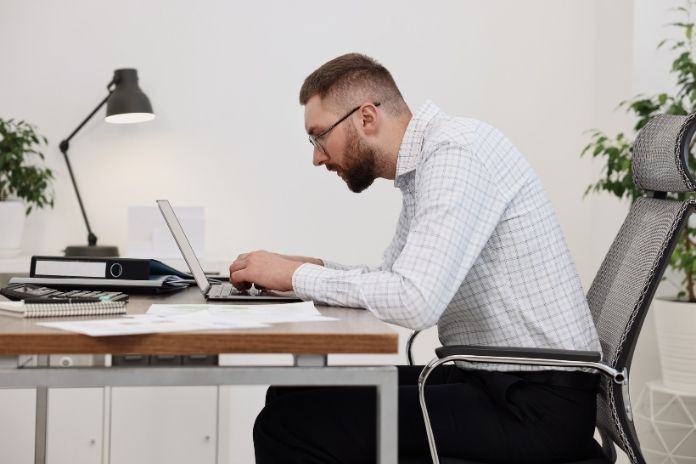
Your head moves in front of your spine. Your shoulders round. Your upper back stiffens. That shift turns your head into a heavy lever that your neck muscles have to hold up all day. At first, it just feels tight. Over time, that tension turns into pressure, aching, and headaches that seem to come out of nowhere. This is the mechanical story behind posture headaches. No mystery. Just physics and muscle fatigue.
Why Your Neck Muscles Hold the Tension
Your head weighs about 10 to 12 pounds. In a healthy posture, that weight stays stacked directly over your spine, where deep stabilizing muscles can support it efficiently. But when your head drifts forward, that balance disappears. The farther your head moves out in front of your body, the harder your neck muscles have to work just to keep it from falling.
One inch forward nearly doubles the load on your neck. Two to three inches, which is common during phone or laptop use, can force your neck to manage the equivalent of 25 to 30 pounds all day long.
Dr. Andrew Bang, a physician at Cleveland Clinic, puts this strain into perspective: when the head tilts forward about 30 degrees, the neck can feel like it is supporting close to 40 pounds. Hold that position for hours, and that is when tension, pain, and headaches begin to show up.
That extra load lands mostly on a small group of muscles at the base of the skull and along the tops of the shoulders, especially the upper trapezius, levator scapulae, and suboccipital muscles. These muscles are not built for constant heavy holding. When they are forced to do this for long periods, blood flow drops, metabolic waste builds up, and nearby nerves become irritated.
What this really means is that tightness turns into pain over time. That pain often travels upward into the head, creating pressure, eye discomfort, and a band-like sensation people recognize as a tension headache.
How Screen Time Changes Your Spine
Screens themselves are not the problem. Being still in the same position is. When you sit for long periods with your head slightly forward, the muscles in your neck and upper back stay engaged.
Research shows that extended screen use is linked with changes in neck posture and increased muscle activity. One study found that holding the head forward while working at different screen heights significantly increased neck extensor muscle activity and altered posture over time, contributing to fatigue in the cervical muscles.
This sustained neck flexion, the posture where your chin drifts toward your chest, forces the cervical muscles to stay engaged the entire time you are on a screen. They never get a break. In another study, sustained forward-tilt posture while using a smartphone was shown to affect cervical spine stability and is associated with discomfort and neck pain symptoms.
That continuous strain reduces blood flow, drops oxygen delivery, and lets metabolic waste build up in muscle fibers. Over time, those fibers become more sensitive and reactive. Small movements start to hurt, and the muscles remain partially contracted instead of relaxing.
This chronic fatigue and low-grade inflammation in the tissues that support your head help explain why headaches often worsen as the day goes on and ease when you lie down or move around.
The Tension Headache Pattern
Multiple clinical studies link forward head posture (FHP) with neck pain and cervicogenic headaches, a type of headache that originates from the neck rather than the head itself. In one cross-sectional study of adults with FHP, over half were found to also have cervicogenic headaches, and their posture measurements were significantly different from those of people without these headaches.
Posture-related headaches follow a clear pattern. The pain usually starts at the base of the skull or in the upper neck. From there, it travels upward, often wrapping around the temples or settling behind the eyes. The sensation is dull, tight, heavy, or pressing rather than sharp or throbbing.
These headaches are often mistaken for stress headaches, dehydration, or eye strain. In reality, they are referring to pain from overloaded neck muscles. When those muscles are strained all day, they send pain signals that the brain interprets as head pain. Once you fix the posture and muscle tension, the headaches become far easier to control.
Common Desk Habits That Cause Neck-Based Headaches

Posture headaches rarely come from one big mistake. They build slowly, from small habits that feel harmless in the moment but stack up across days, weeks, and years.
A low laptop screen forces your chin to drop and your head to drift forward. That tiny tilt increases the load on your neck every minute you stay there. Leaning in when you’re focused does the same thing. You don’t notice it because your eyes are locked on the screen, but your muscles are quietly working overtime just to keep your head upright.
As Dr. Erik Peper, professor at San Francisco State University, explains, when the head juts forward even slightly, the muscles of the neck and upper back have to work much harder just to hold it up. Those repeated positions, looking down, leaning in, and holding a phone, gradually overload the muscles and set the stage for stiffness, tension, and head and neck pain.
Then there are the unconscious habits. Resting your chin in your hand while reading. Cradling the phone between your shoulder and ear. Hunching your shoulders as you type. Clenching your jaw when you concentrate. Each one adds tension to the same muscles that are already overworked, quietly pushing them closer to irritation.
Stillness makes it worse. Sitting in one position for hours reduces blood flow to the neck and shoulder muscles. They receive less oxygen. Waste products build up. The tissue stiffens and becomes sensitive. By the end of the day, even a small movement can feel like it is pulling on a tight, exhausted knot.
Sleep often finishes the job. A pillow that pushes your head too far forward or lets it fall to the side keeps those muscles under stress all night. Instead of recovering, they stay partially contracted. You wake up already tight, already loaded, and already closer to a headache before the day has even started.
These habits don’t hurt right away, which is why people ignore them. But layered together, they slowly turn your neck into an overworked support beam. Eventually, it pushes back the only way it can, with pain that shows up in your head.
Read More: Avoid These 5 Common Posture Mistakes at Your Desk Job
The 3-Day Posture Reset Plan
This isn’t a miracle cure. It’s a reset. The goal is to quiet irritated muscles, bring your head and spine back into a healthier relationship, and teach your nervous system that it no longer has to brace all day. Think of it as rebooting your posture habits so your body can stop running on strain.
You are not trying to fix years of wear in three days. You are interrupting the pattern that keeps your neck locked and your headaches coming back.
Day 1: Awareness and Release
Focus: notice the strain and let the muscles breathe.
Most people have no idea what their posture actually looks like. So start there. Take a side profile photo of yourself sitting at your desk, the way you normally do. Don’t correct it. Just notice. In most cases, the head is drifting forward, the shoulders are rounded, and the upper back is slumped. That visual alone is often enough to change behavior.
Now you start calming the tissues that have been overworked. You are not trying to force anything to stretch. You are trying to tell tight muscles that they are no longer in danger.
Chin tucks gently to wake up the deep neck muscles that hold your head back over your spine. Upper trapezius stretches let the shoulders drop away from the ears. Chest openers undo the forward hunch that keeps pulling your neck out of place.
Heat is your friend here. Ten to fifteen minutes on the neck and upper back increases circulation and helps wash out the chemical byproducts of muscle fatigue. If things feel inflamed or hot, alternate heat with brief cold.
Hydration matters more than people realize. Muscles that are even slightly dehydrated become more irritable and more likely to spasm. Adding magnesium-rich foods like leafy greens, beans, and nuts supports relaxation at the cellular level.
Throughout the day, set a timer every thirty minutes. When it goes off, roll your shoulders, gently move your neck, and take a few slow breaths. These micro resets keep your muscles from slipping back into a rigid hold.
Day 2: Realignment and Mobility
Focus: put your body back into a neutral position.
Once the muscles are less angry, you can start changing the mechanics that caused the problem. Your screen should be at eye level so you are not constantly tipping your head down. Your chair should support your lower back so your upper spine is not forced to collapse. Feet flat on the floor. Elbows near ninety degrees. These are small changes, but they dramatically reduce the load on your neck.
Now you add light strength and mobility work. Scapular retractions train your shoulder blades to sit back and down instead of creeping toward your ears. Wall angels improve upper back movement, so your neck does not have to compensate. Seated chin-nods build endurance in the deep stabilizers that keep your head upright.
This is important. Weak postural muscles fatigue quickly, which is why tension keeps coming back. A well-conducted clinical trial found that neck-strengthening and endurance exercises led to greater reductions in headache intensity than stretching alone.
In that study, people doing strengthening and endurance training for 12 months saw headache levels drop far more than those who only did stretching, showing that building muscle support matters for long-term relief.
Take posture breaks every hour. Two minutes is enough. Stand up. Move. Reset. This is also a good time to dial back caffeine and alcohol. Both increase dehydration and nervous system tension, which can make tight muscles more reactive.
Read More: Daily Mobility Routine for People Who Sit Too Much
Day 3: Strengthen and Sustain
Focus: keep the gains from slipping away.
By day three, the goal shifts from correction to prevention. Add five to ten minutes of gentle mobility or yoga focused on the neck, shoulders, and upper back. You are not chasing flexibility. You are teaching your body to move smoothly and share the load across multiple muscles instead of dumping everything into your neck.
Sleep matters now more than ever. A pillow that keeps your neck in a neutral position can dramatically reduce morning stiffness. Stomach sleeping twists the neck for hours and keeps the problem alive, so avoid it if you can.
Breathing also plays a bigger role than most people realize. Shallow chest breathing pulls in the neck and shoulder muscles. Slow diaphragmatic breathing lets them relax. A few minutes of deep, calm breathing can noticeably lower background tension.
Finally, start tracking what actually triggers your headaches. Hydration, screen time, stress, sleep, posture. When you write it down, patterns appear fast. And once you see the pattern, you can stop it before the pain starts.
This three-day reset is not about perfection. It is about breaking the loop that keeps your neck tight and your head hurting, then giving your body the tools to stay out of that loop.
Read More: From Desk to Dream: 5 Stretches to Undo the Damage of Sitting All Day
When a Desk Headache Might Mean Something More
Not every headache that starts at your desk is simply a posture headache. While most tension around the neck and shoulders is benign, some signs signal something more serious, and it’s important to recognize them early.
If the pain is severe, progressively worsening, or does not respond to posture adjustments and gentle movement, it deserves medical attention. Don’t ignore headaches that suddenly feel different from your usual pattern, or that resist the strategies that normally provide relief.
Pay attention to accompanying symptoms. Numbness, tingling, weakness, or changes in vision can indicate nerve involvement or other neurological concerns. A history of head or neck injury, whether recent or years old, can also increase risk, as can a personal or family history of chronic migraine or vascular conditions.
According to guidance from the Mayo Clinic, headaches that present with neurological symptoms, sudden onset, or a change in pattern should always be evaluated by a healthcare professional. Early assessment can rule out serious conditions and prevent complications.
For posture-related headaches specifically, physical therapists and neurologists are often the most helpful specialists. Physical therapists can assess your alignment, muscle strength, and movement patterns, then create a targeted program to relieve tension and prevent recurrence.
Neurologists can rule out underlying neurological issues and determine if the headache overlaps with migraine or other primary headache disorders. Recognizing when a headache is more than just a desk problem ensures you get the right care and avoids letting a treatable condition worsen over time.
Key Takeaway
Your desk isn’t the enemy. Your body isn’t broken. Most posture headaches aren’t a sign of serious damage; they’re simply your neck’s way of saying it’s been overworked. The problem isn’t your work; it’s the way your body has been positioned while doing it.
A posture headache is a signal, not a sentence. It tells you which muscles are overloaded, which joints are misaligned, and where your nervous system has been holding unnecessary tension. Listening to these signals and responding with intention is far more effective than pushing through the pain with medication or ignoring it altogether.
Small, consistent corrections, such as adjusting your screen height, practicing micro-movements, strengthening postural muscles, and taking brief posture breaks, can make a significant difference. Even just three focused days of awareness, release, and realignment can interrupt the cycle and give your neck a chance to reset.
Long-term relief comes from forming habits, not relying on miracles. Maintaining mindful posture, incorporating movement, supporting your muscles with proper ergonomics, and paying attention to sleep and stress ensures that your neck stays strong, resilient, and pain-free.
You don’t need a fancy chair, expensive devices, or endless pills. You need to realign, reset, and give your body the support it was built for. When you do, your neck and your head will thank you.
References
- Active Health Solutions. (n.d.). The link between posture and headaches.
- Active Posture. (n.d.). Can your posture be the secret cause of your headaches?
- Anderson Health. (n.d.). The connection between posture and headaches.
- BackFit Health. (n.d.). The link between poor posture and chronic headaches.
- Banner Health. (n.d.). The link between tension headaches and posture.
- Capstone Physical Therapy & Fitness. (n.d.). The connection between posture and headaches.
- Cleveland Clinic. (n.d.). How to avoid tech neck [Podcast].
- Dr. Bigby, J. (n.d.). The connection between posture and headaches.
- Dr. Forest, T. (n.d.). How poor posture can cause tension headaches.
- Get Back 2 Health. (n.d.). Can bad posture cause headaches and fatigue?
- Healthwise Chiropractic. (n.d.). Does bad posture lead to headaches?
- Mayo Clinic. (n.d.). Headache: When to see a doctor.
- Millennium Post. (2019). Poor posture at work may cause fatigue, spinal injury.
- News Medical. (n.d.). Body posture and migraines.
- Northbridge Chiropractic. (n.d.). The link between headaches and posture.
- PubMed. (2003). Effect of head posture on neck muscle activity (PMID: 12745683).
- PubMed. (2010). Effectiveness of neck-specific exercise in headache reduction (PMID: 20461336).
- PubMed. (2024). Forward head posture and cervicogenic headache (PMID: 41070580).
- Roseville Blair Chiropractic. (n.d.). The hidden link between posture and headaches.
- Romanian Journal of Neurology. (2022). The complex interplay between posture and headaches.
- ResearchGate. (n.d.). The complex interplay between posture and headaches.
- Shop Etalon. (n.d.). Link between posture and chronic headaches.
- Strive Rehabilitation. (n.d.). The connection between posture and chronic headaches.
- Tennessee Spine Center. (n.d.). Correlation between headaches and poor posture.
- Winter Park Disc Center. (n.d.). Understanding posture headaches.
In this Article