













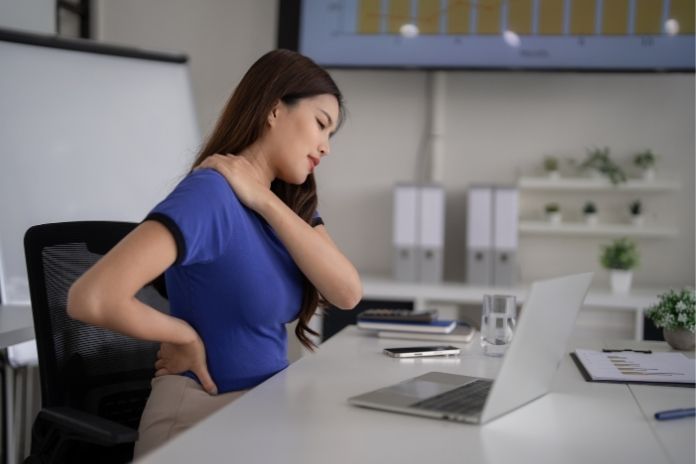
Have you ever had a dull ache in your lower back after a hectic week or noticed your shoulders creeping up toward your ears? You’re not imagining it. Extended deadlines and mentally stressful conditions affect not only your mood but also your body. The back is one of the most vulnerable areas where stress leaves its imprint in the form of posture changes and muscle strain, without you even noticing.
In fact, around 76% of adults report having at least one physical symptom related to stress, such as back pain or tense muscles, according to the American Psychological Association (APA). It indicates how emotions affect physical well-being.
But why does stress often target the back? The answer lies in the close connection between the mind, muscles, and your spine. As you read the article, you’ll discover how emotional stress can affect your back and what you can do to find lasting relief.
Read More: 15 Low-Stress Jobs for People With Anxiety (That Can Still Be Rewarding)
The Mind-Body Link Between Stress and Back Pain
Your body records both the physical and the emotional stress without distinguishing between the two.
Beyond conscious awareness, it stores intense experiences not only in memory but also in muscles, the nervous system, and even cells. This connection between life experiences and physical health explains how trauma can shape daily functioning, relationships, and overall well-being.
Your Body “Keeps Score” of Emotional Strain
As neuroscience has demonstrated, trauma is imprinted throughout our bodies, not just our brains. When the nervous system gets overwhelmed, it goes into survival mode. If that survival gear is not released, your body continues to act as if it is in danger long after the original event has passed.
Over time, this persistent stress response can lead to muscle tension, reduced circulation, and low-grade inflammation, particularly in the neck, shoulders, and lower back, setting the stage for chronic pain.
The Feedback Loop
Prolonged stress doesn’t just cause pain; it changes how you perceive it. If we perceive physical outcomes, positive or negative, as arising solely from physical actions like exercise, sleep, and nutrition, we overlook the critical ‘invisible’ variable of perception. The way we choose to perceive stress, effort, and sleep determines our approach to life and our body’s recovery.
It’s why your recovery is as much about what your brain thinks is happening than about what you’re actually doing. When your brain feels safe, you heal; when it doesn’t, no amount of good nutrition and good sleep will help; your healing slows.
Unresolved emotional stress may keep pain signals active even after tissues begin to heal, creating a loop where the stress intensifies pain and pain further increases stress. Addressing both the physical and the emotional health is key to breaking this kind of cycle.
The Science Behind Stress-Induced Back Pain
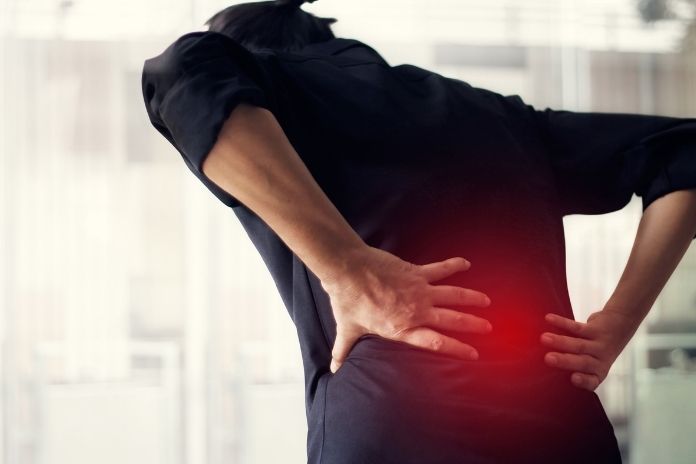
Stress triggers the fight-or-flight response, a natural reaction to complex conditions. The body produces substances such as cortisol and adrenaline in preparation for an immediate stress response, which may be beneficial in the short term but is dangerous in the long term, especially to the musculoskeletal system.
Muscle spasm is also another significant effect of stress that can result in spine disorders. Muscles can get tense due to stress. These include the neck and back muscles.
Stress can even lead to back pain. Stress also reduces blood flow to the spine. It can result in the spine needing oxygen and nutrition. Inflammation is also a factor that affects the development of pain. It can even get worse when the spine lacks circulation.
Stress also makes the body more alert, increasing its sensitivity to pain signals. When the nervous system is overstimulated, even minor spinal problems can seem much worse, producing a vicious cycle that makes managing back pain more difficult.
How to Tell If Your Back Pain Is Stress-Related
Tackling the root cause of back pain triggered by stress can be made simpler by recognizing the triggers associated with it. These are everyday lifestyle habits related to back pain and stress:
Bad Posture: One of the primary causes of bad posture is extended periods of sitting and standing in the stressful positions of the back. Another cause is stress, which often worsens the condition by triggering an involuntary change in posture.
Emotional Triggers: Feeling anxious, irritated, or overloaded can make a person’s muscles more prone to tension and back pain.
Sedentary Behaviors: The muscles that support the spine may become weaker and more painful if one does not exercise regularly, particularly during stressful periods.
Sleep Disturbances: Stress often affects sleep quality, thus robbing the body of healing time for its muscles and spine.
Workplace Stress: Excessive effort, poor posture, and poor ergonomics can all cause back strain in high-pressure settings.
Read More: How Minimalism Can Reduce Stress and Boost Mental Clarity
Practical Ways to Break the Stress–Pain Cycle
To cope with stress-related lower back pain, you may adopt techniques. The following are a few tips:
Relaxation and Mindfulness: Mindfulness can relax your muscles and reduce stress hormones. Deep breathing and meditation are two mindful techniques that will reduce the level of anxiety present in your body and mind.
Regular Exercise: Yoga, swimming, or even going for a walk may help to relax tense muscles. Endorphins and other mood chemicals rise with exercise.
Stretching and Massage: Targeted stretching improves blood flow and flexibility and can be a beneficial technique for relieving tense muscles. Massage therapy reduces muscle trigger points, neck pain, and overall tension.
Therapy & Counseling: When your symptoms cause physical pain, talking to a therapist can help you emotionally. Cognitive-behavioral therapy (CBT) effectively treats patients and delivers proven results. The latter is particularly effective for back pain brought on by emotional stress.
Getting Enough Sleep: Sleep is essential for recovery. Insufficient sleep raises your body’s cortisol stress levels, which can exacerbate your anxiety and pain.
Ergonomic Work Setup: A poorly designed workstation can worsen stress-related pain. Purchasing an ergonomic chair, keeping good posture, and taking regular breaks can all significantly reduce discomfort at work.
“Stress and back pain are closely linked,” said fellowship-trained spine expert Dr. Robert MacLachlan. He added, “By addressing stress through healthy habits, relaxation techniques, and physical activity, you can break the cycle of tension and discomfort.”
The Impact of Stress on Spine Health
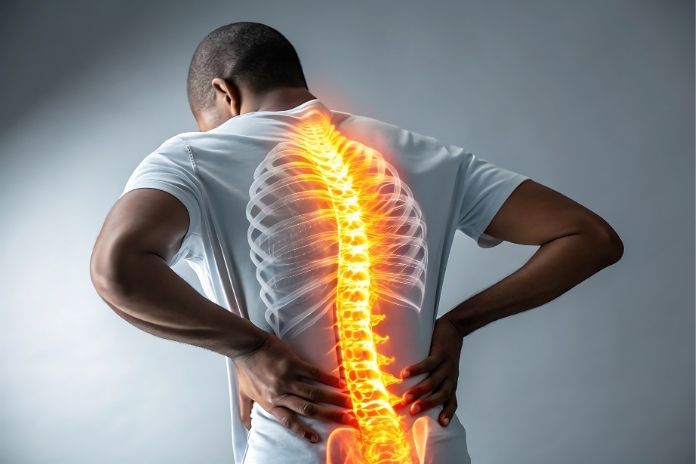
Long-term stress can harm your spine and tighten your muscles. Prolonged stress can result in:
- The spinal joints are more inflamed
- Decreased blood supply to the spinal cord
- Due to inactivity, the core muscles become weaker
- Bad posture when working long hours or sitting down
These stress-related consequences increase the spine’s vulnerability to injuries and muscular soreness.
When to Seek Professional Help

You can manage stress-related lower back pain at home. However, it is essential to know when to seek professional help to get proper treatment for your condition. You should visit a doctor for stress-related lower back pain if you experience:
- Pain that persists or gets worse despite self-care measures
- Your arms or legs may feel weak, tingly, or numb
- Severe discomfort following a trauma or injury
- Loss of control over one’s bowels or bladder, which may indicate a significant underlying illness
In complex situations, it may be necessary to draw on more than one field of study. To determine a treatment plan that works for you, you should talk to physical therapists, psychiatrists, chiropractors, and pain specialists.
Read More: What Not to Do Before a Stress Test: Doctor-Approved Preparation Guide
Conclusion
A discomfort in your back is not always a medical issue, but often an indication of how your body responds when subjected to persistent stress. Persistent stress causes your muscles to become tight, your posture to become poor, and your nerves to become more sensitive to pain stimuli.
You can successfully interrupt the stress-pain cycle by reducing physical tension, decreasing your stress response, promoting mental well-being, and making healthy lifestyle choices.
References
- Wake Spine & Pain Specialists. Is your back pain from stress?:
- Advanced Spine and Pain. (2025, February 28). How Stress Impacts Back Pain: A Mind-Body Connection.
- Houston Physicians’ Hospital. (December 10, 2023). Exploring the correlation between stress and back pain.
- Ask the Doctors. (2025, May 12). Stress can play factor in new back pain.
- Southwest Chiropractors. (2025, February 21). Mind-body connection: How stress and anxiety affect back pain.
- Mainstay Medical. Stress and back pain: How do they affect each other?
- Hinge Health. (2025, July 22). What’s the chronic pain cycle? Tips to start feeling better.
- North Lakes Pain Consultants. (2025, June 3). The link between stress and chronic pain: How to break the cycle.
- William, Deardorff. (5 April, 2016). Stress-related back pain.
- Black Hills Orthopedic & Spine Center. How stress affects back pain.
- Lotus Therapy & Counselling Centre. Stored trauma: Understanding how your body keeps score.
- Straeter, S. The body keeps score: How suppressed emotions manifest as physical illness.
- Aypexmove. (2025, May 19). Mind-Body Feedback Loop: What You Think Changes What You Feel.
In this Article