














You add an exfoliating acid to your routine expecting smoother texture, brighter skin, and fewer breakouts. Instead, your face stings, flakes, or suddenly looks worse. That moment is where most people get confused about acids and where the mandelic acid vs. glycolic acid question usually starts.
Choosing the wrong acid can lead to unnecessary sensitivity, breakouts, or long-term barrier issues. Choosing the right one can quietly improve texture, tone, and clarity over time without drama.
This article breaks down how mandelic and glycolic acids work, what each is best for, who should avoid which, and how to use them safely based on real dermatology-backed evidence.
Chemical Basics: What Sets Mandelic and Glycolic Acid Apart
Both mandelic acid and glycolic acid are alpha-hydroxy acids (AHAs) that exfoliate by loosening dead skin cells. Dermatologists recommend both for everything from gentle toners to professional peels.
Alpha hydroxy acids all work on the same principle, but the speed and intensity at which they act can mean the difference between healthy renewal and ongoing irritation. These acids work by loosening the bonds between dead skin cells so they shed more evenly. This improves texture, unclogs pores, and supports cell turnover. Where mandelic acid and glycolic acid differ is not in what they do, but in how aggressively they do it.
Choosing between mandelic acid and glycolic acid isn’t about which exfoliant is “better.” It’s about how much stress your skin can actually tolerate. They behave very differently on your skin, and choosing the wrong one can lead to irritation, barrier damage, and even increased pigmentation.
The Key Difference: Molecular Size
Glycolic acid has the smallest molecule of all AHAs, allowing it to penetrate quickly and work aggressively. That means faster results, but also higher risk of burning, irritation, and barrier damage, especially for sensitive skin.
Mandelic acid has a larger molecule that penetrates slowly and exfoliates in a controlled, surface-level way. This makes it gentler and more forgiving, though results take longer to appear.
According to dermatology research, penetration speed directly affects irritation risk. Slower penetration improves tolerance; faster penetration increases inflammation potential.
Exfoliation Strength and Speed
Mandelic acid exfoliates gradually. Improvements in texture and tone build steadily with minimal disruption to the skin barrier.
Glycolic acid exfoliates faster and more aggressively. Results may appear sooner, but the margin for error is smaller.
WebMD explains that glycolic acid is an alpha-hydroxy acid (AHA) that works by removing the top layers of dead skin cells and helping reverse signs of sun damage on your skin. That chemical exfoliation is why stronger glycolic acid solutions are used by dermatologists in professional chemical peels; they more aggressively clear away surface skin to improve texture and tone.
What this means in real use
- Mandelic acid: slower results, easier long-term use.
- Glycolic acid: faster results, higher risk if overused.
Irritation Risk and Sensitivity
This is where most people feel the difference.
Mandelic acid has a lower risk of redness, stinging, and post-inflammatory hyperpigmentation, particularly in sensitive or melanin-rich skin.
Glycolic acid carries a higher irritation risk, especially when layered with other actives or applied to a compromised barrier.
A ScienceDirect review shows irritation severity increases as molecular size decreases, which explains glycolic acid’s stronger reaction profile.
Sensitivity profile
- Mandelic acid: lower sting, lower pigmentation risk.
- Glycolic acid: higher sting, higher inflammation risk.
Neither is universally better. The right choice depends on your skin’s tolerance, pigmentation risk, and how much disruption your barrier can realistically handle.
- Mandelic acid: slower, gentler, more forgiving.
- Glycolic acid: faster, stronger, less forgiving.
When Mandelic Acid Might Be the Better Choice
Sensitive or Reactive Skin
If your skin stings easily, flushes, or reacts unpredictably, mandelic acid is usually the safer option. Its slower penetration minimizes sudden pH shifts, which reduces inflammation and barrier stress. Mandelic acid is often tolerated by people who cannot handle glycolic or lactic acid.
Why it works here
- Slower penetration lowers irritation risk.
- Reduced barrier disruption improves consistency.
- Fewer flare-ups mean better long-term results.
Darker Skin Tones and Pigmentation Risk
Post-inflammatory hyperpigmentation occurs when irritation triggers excess melanin production. Because mandelic acid causes less irritation, it’s frequently preferred for deeper skin tones or anyone prone to dark marks after acne or exfoliation.
Clinical dermatology reviews and safety assessments note that larger-molecule AHAs like lactic and mandelic acid penetrate more slowly and are less irritating, making them more suitable for sensitive skin and conditions prone to inflammation and pigmentation issues.
Lower irritation means lower risk of rebound pigmentation.
Beginners to Chemical Exfoliation
If you’re new to acids, mandelic acid offers a forgiving learning curve. It allows your skin to adapt gradually while still delivering visible improvements in texture and tone.
Start with lower-strength acids and ease into stronger exfoliants, especially if you haven’t used chemical exfoliants before. They note that alpha hydroxy acids can irritate skin, and that one way to minimize that risk is to begin with products that have lower concentrations of AHAs and give your skin time to adapt by using them less often at first.
Why beginners benefit
- Fewer mistakes lead to fewer setbacks.
- Skin learns to exfoliate without panic responses.
Acne-Prone and Congested Skin
Mandelic acid is oil-soluble enough to penetrate pores while remaining gentle on the surface. This makes it useful for acne that’s driven by congestion rather than inflammation.
It can help improve:
- Mild to moderate acne.
- Congested pores.
- Rough or uneven texture.
Mandelic acid can reduce acne lesions while preserving the skin barrier, which is critical for long-term acne control.
Slow, Steady Skin Improvements
If your goal is even tone, subtle brightness, and smoother texture without peeling, downtime, or disruption, mandelic acid fits better.
One recent overview of skincare guidance stresses that exfoliating less often and easing into actives helps your skin’s natural barrier stay intact and reduces irritation, which in turn makes it easier to stick with a routine over time instead of dealing with reactions that force you to stop or slow down.
Best suited for
- Maintenance-focused skincare.
- Barrier-first routines.
- People who value consistency over speed.
“Mandelic acid is an alpha hydroxy acid made from bitter almond,” says Dr. Jaishree Sharad, Celebrity Dermatologist & Author of Skin Rules. Your skin will love mandelic acid because, besides its impressive list of benefits, it will also adjust to your skin without disrupting your skin’s comfort.
“It is an AHA with a large molecule. Hence, it penetrates slowly into the skin without causing irritation. Hence, it rarely causes reactions or rashes,” shares Dr Sharad.
When Glycolic Acid Might Be the Better Choice
You Want Faster, More Dramatic Results
Glycolic acid excels at visible resurfacing. Because it penetrates deeply, improvements often appear sooner.
It’s especially effective for:
- Dull skin.
- Rough texture.
- Early fine lines.
- Sun damage.
The tradeoff is a smaller margin for error.
Your Skin Is Resilient and Non-Sensitive
If your skin tolerates retinoids, vitamin C, and exfoliants without flaring, glycolic acid may be appropriate. This isn’t about toughness. It’s about how quickly your barrier recovers after stress.
Signs your skin may tolerate glycolic acid
- Minimal redness after activities.
- Fast recovery from exfoliation.
- No history of pigment rebound.
Stubborn Hyperpigmentation or Uneven Texture
Glycolic acid accelerates cell turnover more aggressively, which can help fade persistent discoloration faster when used correctly.
A clinical study found that topical glycolic acid can improve signs of photoaging, such as rough texture, fine wrinkles, and even some lightening of age spots, with measurable changes in skin histology after treatment. That’s direct evidence that glycolic acid isn’t just talked about in theory; it’s been tested in controlled settings for its effects on photoaged skin.
Faster fading also increases irritation risk if misused.
You’re Consistent With Aftercare
Stronger exfoliation increases photosensitivity. Glycolic acid works best when paired with disciplined aftercare.
This includes:
- Daily broad-spectrum sunscreen.
- Adequate hydration.
- Barrier-supportive moisturizers.
Without these, irritation and rebound pigmentation become far more likely.
Bottom Line
- Mandelic acid prioritizes tolerance, consistency, and barrier safety.
- Glycolic acid prioritizes speed, resurfacing, and visible change.
The best acid is the one your skin can handle consistently without paying for it later.
Read More: 7 Best Glycolic Acid Skincare Products for Radiant, Smooth Skin
Risks, Side Effects, and What to Watch Out For
Exfoliating acids can improve skin when used correctly, but they can just as easily create problems when pushed too hard. The risks aren’t about the ingredient itself. They’re about how often it’s used, what it’s paired with, and how well your skin barrier is supported. Understanding the downside of each acid helps you avoid the most common mistakes.
Mandelic Acid: Potential Downsides
Even gentle acids are not risk-free. Mandelic acid is better tolerated, but misuse can still cause issues, especially in already compromised skin.
Possible side effects
- Mild dryness.
- Subtle peeling.
- Temporary sensitivity.
These effects are more likely when mandelic acid is overused, layered with other exfoliants, or applied alongside retinoids without proper spacing.
Mandelic acid still increases sun sensitivity, which makes daily broad-spectrum sunscreen non-negotiable.
If mandelic acid is derived from bitter almonds, patch testing is advised for individuals with nut allergies. Most modern cosmetic formulations are synthetic, but caution is still reasonable.
Glycolic Acid: Higher Reward, Higher Risk
Glycolic acid delivers faster results, but the tradeoff is a higher likelihood of irritation. This is where most over-exfoliation damage occurs.
Common side effects
- Redness.
- Burning or stinging.
- Peeling.
- Skin barrier disruption.
When glycolic acid is overused, the consequences often extend beyond temporary irritation.
Signs of over-exfoliation
- Increased breakouts.
- Heightened sensitivity to previously tolerated products.
- Post-inflammatory hyperpigmentation.
Dr. Susan Mayou, consultant dermatologist at the Cadogan Clinic, explains that glycolic acid works by dissolving the intercellular glue that holds your skin cells together. “This results in the exfoliation of those cells – helping to remove dead skin and clear pores,” she says.
Mayou adds: “This helps brighten the skin’s appearance, as light reflects better off a smooth skin surface, giving a more youthful and more radiant appearance.”
Key Takeaway
- Mandelic acid carries fewer risks but still demands sunscreen and restraint.
- Glycolic acid offers stronger results but punishes overuse quickly.
In both cases, irritation is not a sign of effectiveness. It’s a sign that the skin barrier is being overwhelmed.
How to Choose Based on Your Skin Type and Goals
Choosing the right AHA isn’t about chasing the strongest option. It’s about matching the acid to how your skin reacts, recovers, and holds onto pigment. Skin type, barrier strength, and your tolerance for downtime matter more than trends or concentration percentages.
Think of this as risk management for your face. The goal is progress you can sustain, not results that force you to stop exfoliating altogether.
Sensitive, Reactive, or First-Time Exfoliant User
If your skin stings easily, flushes, or reacts unpredictably, mandelic acid is the safer starting point. Its slower penetration allows your skin to adapt without triggering inflammation.
Best choice
- Mandelic acid.
Why
- Lower irritation risk.
- Easier barrier adaptation.
- Fewer flare-ups during the adjustment phase.
Darker Skin or Prone to Hyperpigmentation
Skin that produces melanin easily is more vulnerable to post-inflammatory hyperpigmentation when irritated. Minimizing inflammation is key.
Best choice
- Mandelic acid.
Why
- Gentler exfoliation reduces pigment-triggering inflammation.
- Lower risk of rebound dark spots after breakouts or irritation.
Acne-Prone but Easily Irritated Skin
If you deal with breakouts but react quickly to actives, balance matters more than intensity. Over-exfoliation can worsen acne by damaging the barrier.
Best choice
- Mandelic acid.
- Glycolic acid only with caution and reduced frequency.
Why
- Mandelic acid helps unclog pores without inflaming active breakouts.
- Glycolic acid may help stubborn congestion, but it increases irritation risk if overused.
Dull, Sun-Damaged, or Uneven Skin Tone
When dullness, rough texture, or sun damage are the primary concerns, faster cell turnover can be beneficial.
Best choice
- Glycolic acid.
Why
- Deeper penetration accelerates resurfacing.
- More effective for visible texture and tone correction.
Resilient Skin Seeking Faster Results
If your skin tolerates retinoids, vitamin C, and exfoliants without lingering redness or sensitivity, it may handle glycolic acid well.
Best choice
- Glycolic acid.
Why
- Stronger exfoliation produces quicker visible change.
- Suitable for skin with good barrier recovery.
Minimal Downtime, Gradual Improvement
If you prefer subtle progress without peeling, redness, or recovery time, gentler exfoliation is the smarter route.
Best choice
- Mandelic acid.
Why
- Easier to maintain long-term.
- Lower risk of barrier disruption.
- Better consistency with fewer setbacks.
Sample Skincare Routine Suggestions
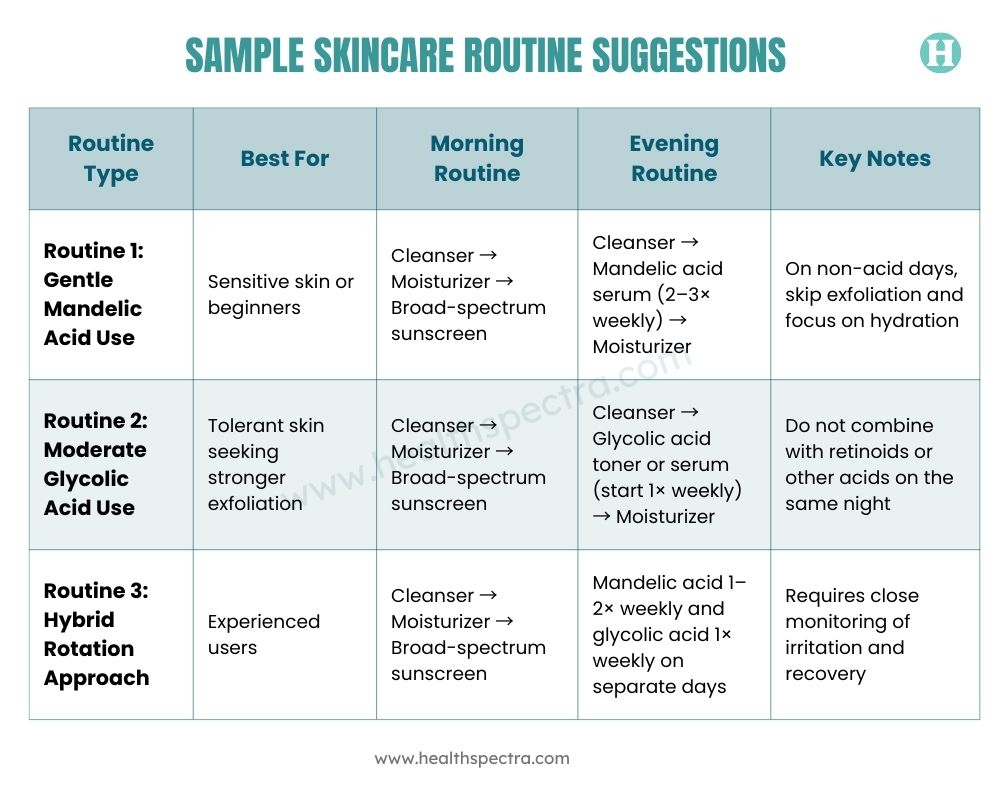 How you use an acid matters as much as which acid you choose. Frequency, timing, and what you pair it with determine whether exfoliation strengthens your skin or quietly wrecks your barrier. These sample routines show how mandelic acid and glycolic acid can fit into real-life skincare without unnecessary irritation.
All routines assume a basic, fragrance-free cleanser and a barrier-supportive moisturizer.
These routines are frameworks, not rules. Skin tolerance can change with weather, stress, hormones, and other active ingredients. If irritation shows up, reduce frequency before changing products. Consistent sunscreen use is non-negotiable with any acid routine.
Exfoliation should feel controlled, not intense. When acids are used with intention, less often delivers better results over time.
Read More: How to Build a ‘Skinimalist’ Routine Without Sacrificing Results
Conclusion: No Universal Best, Only What’s Best for You
The debate around mandelic acid versus glycolic acid misses the point when it asks which one is better in absolute terms. Skincare doesn’t work that way. What matters is how an ingredient behaves on your skin, not how aggressively it performs on paper.
Mandelic acid earns its place through restraint. It exfoliates slowly, respects the skin barrier, and lowers the odds of irritation, rebound breakouts, or post-inflammatory pigmentation. For sensitive skin, deeper skin tones, or anyone prioritizing long-term consistency over instant change, that reliability matters more than speed.
Glycolic acid, on the other hand, is about impact. Its small molecular size allows it to penetrate deeply and trigger faster visible resurfacing. Used correctly, it can improve texture, tone, and early signs of aging more quickly. Used carelessly, it can undo months of progress in a few nights. That’s why glycolic acid demands discipline, sunscreen compliance, and recovery time.
The right choice comes down to compatibility. Your skin type, how reactive you are, your pigmentation risk, and how consistently you protect your skin during the day all matter more than concentration percentages or product hype. Stronger is not better if your skin can’t recover from it.
When exfoliation is working, it doesn’t announce itself. There’s no burning, no excessive peeling, no constant redness. Just smoother texture, clearer tone, and skin that behaves better over time. Quiet progress is real progress. And that’s the goal worth choosing for.
References
- The Pink Foundry. (n.d.). Skin acids: A complete guide.
- Eucerin. (n.d.). Best acids for skin.
- SkinCareCRL. (n.d.). 9 common skin acids.
- OnSkin. (n.d.). Skin acids: The top ones every skincare lover should know.
- Dermatica. (n.d.). Which is the right acid for my skin?
- Yes Madam. (n.d.). Face acids: Types and benefits.
- IPSY. (n.d.). Acids for skin.
- WebMD. (n.d.). Glycolic acid.
- Cleveland Clinic. (n.d.). Glycolic acid: Benefits, uses, and side effects.
- Avid Organics. (n.d.). Glycolic acid benefits: The ultimate guide.
- Health.com. (n.d.). What is glycolic acid and how does it work?
- Prequel Skin. (n.d.). Mandelic acid in skincare.
- Be Minimalist. (n.d.). Mandelic acid for skin:
- The multi-tasking AHA with minimal irritation.
In this Article