














Dairy is one of those foods that keeps entering health debates again and again. One week, milk is called “nature’s perfect food,” and the following week someone online claims that dairy is the root of inflammation, acne, bloating, and everything in between. The confusion mainly comes from the way people mix personal intolerance with scientific evidence.
So instead of repeating what is already written everywhere, “dairy is good for calcium,” “some people can’t digest lactose (milk sugar),” “fermented foods are healthy,” this article breaks down what dairy and inflammation studies genuinely show, without diet war language and without the usual predictable lines.
What Inflammation Actually Is (and Why It Matters)
Before calling any food “inflammatory,” it helps to understand what inflammation really means scientifically. Inflammation is never a villain; as Dr. Jacek Hawiger, M.D., Ph.D., notes, it is a biological response. Your body uses inflammatory molecules to fight infections, repair tissues, and maintain an active immune response.
And, trouble begins only when inflammation becomes chronic, silent, low-grade, and long-term. This type is linked to conditions like heart disease, diabetes, joint pain, and even metabolic problems.
Foods can influence this low-grade inflammation, but very few foods have a universal effect. Dairy is one of the foods where individual variability is high. Let’s look at what science has found so far.
What the Research Says – Does Dairy Cause Inflammation?

1. Large Reviews Show Dairy Is Not Inflammatory for Most People
This is the part that surprises many. When researchers track inflammatory markers after dairy intake, the results are surprisingly steady. None of these markers goes much higher. In many cases, markers slightly go down.
One thing most people don’t realise: dairy is studied extensively, more than many “healthy trending foods.” And across these dairy and inflammation studies, healthy individuals and people with metabolic issues show mostly neutral responses.
So if someone tolerates dairy well, dairy inflammation research doesn’t label it inflammatory.
2. Fermented Dairy (Yogurt, Kefir, Cheese) May Have Anti-Inflammatory Effects
Yogurt, kefir, and naturally aged cheese show a unique pattern in research; they tend to reduce inflammatory markers in both healthy individuals and people with metabolic syndrome.
This is not just because of probiotics (good gut bacteria).
The interesting part is not the probiotics, that’s what everyone repeats online. The real change is in the breakdown of the protein. Fermentation produces peptides that appear to calm inflammatory pathways, at least in moderate amounts.
3. Full-Fat vs Low-Fat Dairy – Does It Matter?
Older health advice pushed low-fat versions, but newer reviews don’t show clear benefits.
In fact, the unique fatty acids in dairy fat (C15:0, C17:0) may have anti-inflammatory behaviour of their own. It doesn’t mean everyone should suddenly switch to full-fat, but it does mean fat alone is not the problem.
Low-fat products also come with another issue: people often pair them with sugar, such as flavoured yogurts, sweetened milk drinks, etc. That confuses the conversation, because inflammation might come from the sugar, not the dairy itself.
4. Dairy and Heart Health – Updated Evidence
Contrary to popular belief a decade ago, dairy, especially yogurt and cheese, does not appear to increase markers of heart inflammation. Some studies even show neutral or slightly protective effects.
The key shift: heart health risk is no longer judged only by “saturated fat means bad.”
Researchers now evaluate:
- Effect On Inflammatory Biomarkers
- Lipid Particle Size
- Metabolic Flexibility
- Gut Microbiome (Gut Bacteria Community)
- Overall dietary pattern
In these contexts, dairy does not behave like a harmful pro-inflammatory food for the general population.
When Dairy Can Be Inflammatory (Specific Groups Only)

Inflammation from dairy is real, but limited to specific situations.
1. Lactose Intolerance
“Lactose intolerance is not typically a dangerous condition; it’s more of a discomfort,” says Dr. Phillip Simpson, a family medicine physician. When your body doesn’t produce enough lactase enzyme, undigested lactose ferments in the gut.
This leads to:
- Gas
- Bloating
- Cramping
These lactose intolerance symptoms are not immune inflammation. They are involved in digestive fermentation. But most people mix the two.
2. True Dairy Allergy (Casein or Whey)
This is the rare group where dairy is genuinely inflammatory. A true allergy activates the immune system and can cause:
- Hives
- Swelling
- Gi Distress
- More serious reactions in severe cases
This is more common in children but can persist.
3. A1 vs A2 Milk Sensitivity
A1 beta-casein (common in regular milk) may release a peptide called BCM-7 during digestion.
A2 milk, buffalo milk, goat milk, and sheep milk may feel gentler for these people.
Note: This is not a universal problem; it affects a small subgroup, but for them, inflammation can appear as:
- Cramps
- Mucus Formation
- Fatigue After Dairy
- Loose stools
4. Acne and Skin Flares
Skincare communities label dairy as “inflammatory,” but research shows nuance:
- Skim milk is more strongly associated with acne
- Full-fat milk and cheese show weak or no associations
- Fermented dairy often shows no link
Acne is not classic inflammation like CRP elevation; it’s more of a hormone–IGF–1 (growth-related hormone) interaction.
5. People With Irritable Gut or Gut Imbalances
If your gut lining is irritated, dairy, especially high-lactose milk, may worsen symptoms.
But yogurt, kefir, and aged cheese often remain tolerated because of lower lactose and different fermentation chemistry.
Different Types of Dairy and How They Affect Inflammation
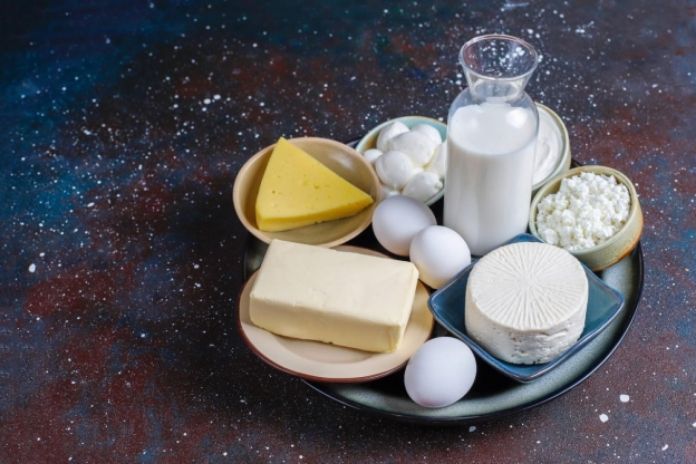
1. Milk
Milk’s inflammatory potential depends on:
- Lactose tolerance
- A1 vs A2 protein sensitivity
- Fat percentage
- Whether consumed alone or with other foods
Whole milk is often neutral in its effect on inflammation; skim milk may spike insulin more quickly in some people.
2. Cheese
Cheese behaves differently because:
- Fermentation changes proteins
- Lactose is mostly removed
- Fat is released more slowly
Hard cheeses are naturally very low in lactose. Many studies show that cheese has either neutral or mild anti-inflammatory effects, especially aged cheese.
3. Yogurt and Kefir
These two usually get the best response. The fermentation process reduces lactose, and the proteins get broken down enough to be gentler on digestion. Many people who “cannot take milk” can still take curd without trouble.
4. Butter and Ice Cream
Butter is almost pure fat; protein content is too low to cause immune reactions. The problem with butter is purely the total saturated fat intake, not inflammation.
Ice cream is more about sugar load than dairy impact.
Read More: 5 Homemade Recipes That Can Replace Your Priciest Supplements
How to Tell If Dairy Is Inflammatory For You
Your personal reaction matters more than any trend.
Symptoms to monitor:
- Bloating
- Gas
- Skin Breakouts
- Headaches
- Congestion
- Joint discomfort
How to test: You don’t need a complicated elimination diet. A simple three-step method is enough:
Step 1: Separate Lactose vs Protein
Try lactose-free milk for 5–7 days.
- If symptoms disappear → lactose issue.
- If symptoms stay → suspect protein sensitivity.
Step 2: Shift to Yogurt/Curd and See How the Body Reacts
If you tolerate this → not dairy-sensitive, just milk-sensitive.
Step 3: Test A2 Dairy
If A1 sensitivity is the issue, A2 milk or buffalo milk will feel noticeably lighter. This structured approach prevents unnecessary dairy restriction.
Read More: Is Dairy Really Bad for Your Gut? Here’s What The Science Says
Health Benefits of Dairy (When Tolerated)
Dairy comes with several meaningful advantages:
- High-quality protein with a full amino acid profile
- Calcium that is more bioavailable than most plant sources
- Bioactive peptides created during fermentation
- Nutrients like vitamin B12, riboflavin, zinc
- Gut-supportive compounds in fermented varieties
When tolerated well, dairy is one of the easiest ways to maintain nutrient density without overcomplicating the diet.
Read More: How to Build an Anti-Inflammatory Morning Routine
Who Should Limit or Avoid Dairy
Dairy restriction is reasonable only for:
- Confirmed milk allergy
- Severe lactose intolerance
- A1-sensitive individuals
- People whose acne clearly worsens with skim milk
- People with active gut inflammation (temporary reduction helps)
Removing dairy “just because someone online said it’s inflammatory” is unnecessary.
Read More: 7 Reasons Women Are Quitting Dairy—And What They’re Eating Instead
Best Anti-Inflammatory Dairy Choices
If you want dairy but with minimal inflammation potential, these options consistently perform well:
- Plain yogurt (no added sugar)
- Kefir
- Aged cheese
- A2 milk or buffalo milk
- Full-fat yogurt instead of skim
These foods naturally have fewer components linked with digestive distress.
When Dairy Isn’t the Problem – Other Foods That Commonly Trigger Inflammation

Many people assume dairy is the culprit when the actual issue is another food category.
Common triggers include:
- Excessive sugar
- Processed meat
- Refined grains
- Alcohol
- Ultra-processed packaged foods
- Excessive seed oils in processed snacks
Compared to these, dairy, especially fermented products, occupies a relatively neutral or positive place.
Final Thoughts
Dairy is complex, not because it is dangerous, but because the human response varies. Research doesn’t show it as an inflammatory food for the general population. The actual problem lies in personal tolerance, specific protein sensitivity, lactose handling, and gut health.
The decision is simple: if dairy suits you, it can be part of a balanced anti-inflammatory diet. If it doesn’t, the reason is usually identifiable and specific.
FAQs
1. Is all dairy inflammatory?
No. Research shows neutral to beneficial effects for most people. Only specific groups react.
2. Is cheese inflammatory?
Most cheeses are low in lactose and often neutral or mildly anti-inflammatory.
3. Does switching to A2 milk help?
If you are sensitive to A1 beta-casein, A2 milk feels easier on digestion.
4. Is yogurt better than milk for inflammation?
Often yes, due to fermentation-derived peptides and improved gut interactions.
5. If dairy makes me bloated, should I remove it completely?
Not immediately. First, identify whether the issue is lactose intolerance, protein intolerance, or sensitivity to a specific dairy type.
References
- Bouzid, Y., Chin, E., Spearman, S. S., Alkan, Z., Stephensen, C. B., & Lemay, D. G. (2023). No Associations between Dairy Intake and Markers of Gastrointestinal Inflammation in Healthy Adult Cohort. Nutrients, 15(16), 3504–3504.
- Choi, Y., Kim, N., Song, C.-H., Kim, S., & Dong Ho Lee. (2024). The Effect of A2 Milk on Gastrointestinal Symptoms in Comparison to A1/A2 Milk: A Single-center, Randomized, Double-blind, Cross-over Study. Journal of Cancer Prevention, 29(2), 45–53.
- Hu, M.-J., Tan, J.-S., Gao, X.-J., Yang, J.-G., & Yang, Y.-J. (2022). Effect of Cheese Intake on Cardiovascular Diseases and Cardiovascular Biomarkers. Nutrients, 14(14), 2936.
- Lamarche, B., Astrup, A., Eckel, R. H., Feeney, E., Givens, I., Krauss, R. M., Legrand, P., Micha, R., Michalski, M.-C., Sabita Soedamah-Muthu, Sun, Q., & Kok, F. J. (2025). Regular-fat and low-fat dairy foods and cardiovascular diseases: Perspectives for future dietary recommendations. American Journal of Clinical Nutrition.
- Milk intake correlates with increased risk of acne in women. (2005). BMJ : British Medical Journal, 330(7505)
- Moosavian, S. P., Rahimlou, M., Saneei, P., & Esmaillzadeh, A. (2020). Effects of dairy products consumption on inflammatory biomarkers among adults: a systematic review and meta-analysis of randomized controlled trials. Nutrition, Metabolism and Cardiovascular Diseases.
- Telkkälä, A., Sinikumpu, S., & Huilaja, L. (2025). Etiology of Adult Female Acne–Systematic Review. Health Science Reports, 8(5).
- Venn-Watson, S., Lumpkin, R., & Dennis, E. A. (2020). Efficacy of dietary odd-chain saturated fatty acid pentadecanoic acid parallels broad associated health benefits in humans: could it be essential? Scientific Reports, 10(1).
- Warsewicz, H., Rejman, K., Laskowski, W., & Czeczotko, M. (2019). Milk and Dairy Products and Their Nutritional Contribution to the Average Polish Diet. Nutrients, 11(8), 1771.
- Zhang, X., Luo, Q., Guan, X., Tang, Y., Chen, X., Deng, J., & Fan, J. (2023). Effects of fermented dairy products on inflammatory biomarkers: A meta-analysis. Nutrition, Metabolism, and Cardiovascular Diseases : NMCD, 33(3), 471–482.
In this Article