















Weight gain is often described as a calorie issue. However, there are quite a few people who find that they gain weight without increasing their food intake, decreasing their physical activity, or changing their daily routine. It’s like the clothes that used to fit well now seem tighter, the weight increases gradually, and there is no change in the amount of food eaten.
In such situations, the problem is not willpower. Most of the time, it is caused by concealed reasons for weight gain, especially nutrient imbalances that alter the body’s calorie utilization without necessarily increasing the calorie intake.
These vitamin deficiencies and weight gain patterns do not result in sudden health problems. Rather, they gradually interfere with the body’s metabolic efficiency, hormone signaling, muscle energy production, stress response, and fluid regulation. After some time, the body consumes fewer calories, stores more fat, and holds more water even if the intake stays the same.
When you understand nutrient imbalances that affect weight gain, it changes your perspective from restriction to correction. Most of the time, when deficiencies are eradicated, the metabolism gets back to normal naturally.
Read More: Do You Absorb Nutrients Better on an Empty Stomach? Here’s What Experts Say
How Nutrient Imbalances Affect Metabolism (The Science in Simple Terms)
Metabolism is all the chemical reactions that happen in the body to convert the food that we eat into energy that the body can use. These reactions use vitamins and minerals as cofactors, which means that the burning of calories cannot happen properly without them.
If the body is deficient in minerals and metabolism is disrupted, it will go into a conservation mode that is meant to ensure survival, not leanness.
Even with mild nutrient deficiency, weight gain may result in:
- Lower resting metabolic rate. Thus, it reduces the baseline calorie burn.
- Reduced mitochondrial efficiency indicates that cells produce less energy from the same food.
- Increased fat storage, especially visceral fat.
- Lower spontaneous movement, which may include changes in posture, walking speed, and fidgeting.
- Altered hunger hormones cause increased cravings without real hunger.
These changes help us understand that slow-metabolizing nutrients cause gradual weight gain without an increase in food intake.
Why “Normal” Blood Tests Can Be Misleading
Most of the micronutrients are active inside the tissues, not the blood. Serum levels can look normal while intracellular function may be impaired. That is why micronutrient imbalance symptoms may appear long before the labs get flagged.
Key Nutrient Imbalances That Can Cause Weight Gain Without Eating More
1. Vitamin D Deficiency — Inflammation, Cortisol, and Fat Cell Behavior
Vitamin D is a hormone that affects insulin sensitivity, immune response, and fat cell differentiation. Low levels of vitamin D are strongly associated with vitamin D deficiency and weight gain, particularly central obesity.
Deficiency causes the body to signal for more inflammation and cortisol activity. Cortisol that is elevated causes metabolism to be shifted to fat storage and muscle breakdown, a major factor behind nutrient imbalances and weight gain. Lack of energy also leads to a decrease in daily movement, which again results in a slowdown of the metabolism.
2. Magnesium Deficiency — Insulin Resistance, Sleep Disruption, and Stress Weight
Magnesium is necessary for more than 300 enzymatic reactions, among which are glucose metabolism and muscle relaxation. Magnesium deficiency metabolism disruption worsens insulin resistance, thus it becomes easier to store fat even if the same meals are consumed.
Besides, low magnesium impairs deep sleep. Poor sleep leads to an increase in cortisol and appetite hormones, directly linking magnesium deficiency to cortisol and weight gain, especially belly fat.
3. Iodine Deficiency — Subclinical Thyroid Suppression
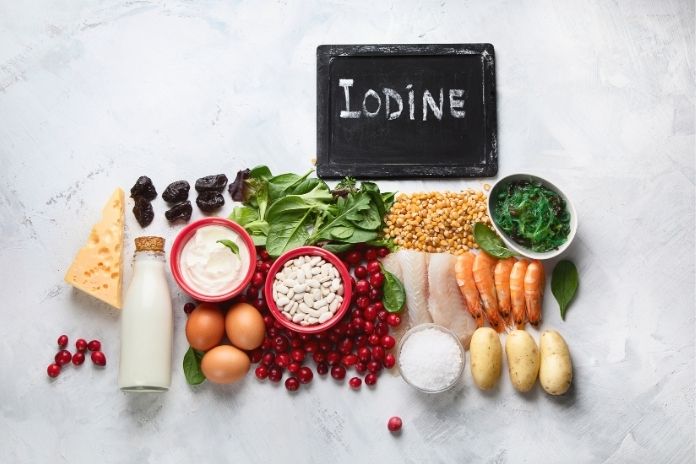
The thyroid controls the rate of calories burned. Iodine helps the thyroid to make hormones.
Mild iodine deficiency is not always the cause of hypothyroidism. However, it can still lead to a slower metabolic rate. This results in tiredness, feeling cold, constipation, and gradual weight gain without eating more. Thus, iodine deficiency is one of the most significant but hidden causes of weight gain.
4. Iron Deficiency — Reduced Energy Output, Not Appetite Changes
Iron is the one that supports oxygen delivery and mitochondrial ATP production. A drop in iron levels makes the person less resistant and less efficient in the muscles.
Furthermore, iron deficiency can cause a decrease in non-exercise activity thermogenesis (NEAT). The calories are burned through normal daily activities. Such a reduction in energy output is what leads to nutrient deficiency and weight gain, even when the diet is unchanged.
5. Vitamin B12 Deficiency — Slowed Fat Metabolism and Low Drive
Vitamin B12 is necessary for fatty acid oxidation, the production of red blood cells, and the function of the nervous system. Lack of B12 makes the person tired. Consequently, the metabolic rate, physical activity, and motivation all go down.
Additionally, low B12 can influence your mood and cognition, which in turn decreases movement further, resulting in gaining weight without eating more.
6. Omega-3 Fatty Acid Deficiency — Inflammation and Appetite Dysregulation
Omega-3s regulate inflammation, insulin sensitivity, and leptin signaling. When the consumption is low, the body is full of the inflammatory markers linked to obesity.
Leptin signaling disruption leads to a lack of satiety and an increase in cravings as well as stress eating. This inflammatory system contributes to metabolic slowdown causes rather than to calorie excess.
7. Zinc Deficiency — Thyroid Conversion and Hunger Control
Zinc is an essential component for the process of converting the inactive thyroid hormone (T4) into its active form, T3. This limited zinc results in lowered metabolic rate as well as disruption of hunger regulation.
Insufficient zinc can worsen insulin resistance and inflammation, which links the mineral deficiencies and metabolic dysfunction that lead to slow weight gain.
8. Potassium Imbalance — Fluid Retention and Blood Sugar Instability
Potassium regulates intracellular fluid as well as glucose absorption. When the levels are low, the body holds water, which is mistaken for fat gain.
Potassium imbalance also makes the body less responsive to insulin, which in turn leads to tiredness and craving. These are common micronutrient imbalance symptoms that people are unaware of.
9. Selenium Deficiency — Impaired Thyroid Hormone Activation
Selenium is the element that activates the thyroid hormones and is a protector of the thyroid tissue. When the selenium content is low, the conversion of hormones is slowed down. Thus, the metabolic rate is lower, and nutrient imbalances and weight gain are facilitated.
Read More: Top 7 Healthy Snacks on the Go: Portable and Nutrient-Rich Foods and Snack Options
How Subtle Nutrient Imbalances Cause Weight Gain (Even With the Same Calories)

This is where nutrient imbalances and weight gain become clear. The scale increases not because more calories are consumed, but because the body burns fewer calories and stores more of what it already receives.
1. Reduced Thyroid Output Lowers Baseline Calorie Burn
The thyroid determines the metabolic “idle speed.” A slight drop in thyroid hormone production or activation can result in daily energy expenditure by several hundred calories.
Moreover, this slowing down of the metabolism can take place without the presence of abnormal TSH levels. Hence, a lot of people are informed that their thyroid is “normal” while they still experience weight gain without eating more.
2. Elevated Cortisol Shifts Calories Toward Fat Storage
The deficiency of micronutrients puts the body under physiological stress. As a result, cortisol increases to provide blood sugar and energy needed by the body.
Cortisol that is elevated for a long time:
- Helps the body store fat.
- Assists in the accumulation of abdominal or visceral fat.
- Helps in breaking down the muscle tissue.
Cortisol and weight are closely linked. In times of stress, it becomes difficult to get rid of unwanted fat.
3. Lower Muscle Efficiency Reduces Daily Energy Expenditure
Iron and B12 deficiencies result in a lack of oxygen delivery and decreased ATP production to muscle cells. Oxygen and energy are in short supply, so the muscles will be less efficient. The output of the muscles becomes:
- Shorter endurance times
- Reduced gait velocity
- Decreased ability to maintain posture
- Less frequent unconscious movements
Reduced non-exercise activity thermogenesis (NEAT) is an important mechanism through which nutrient deficiencies promote weight gain.
4. Poor Sleep Alters Appetite and Fat Storage Hormones
Sleep disturbances caused by micronutrient imbalance result in increased production of ghrelin (hunger hormone) and decreased production of leptin (satiety hormone). The hormonal shift, even without eating more, leads to fat storage and worsening of insulin resistance.
Poor sleep is among the most overlooked causes of metabolic slowdown.
5. Impaired Blood Sugar Control Promotes Fat Storage
The reduction of insulin sensitivity leads to glucose being stored as fat rather than being used for energy. This metabolic inefficiency is the reason why people with micronutrient imbalance are often found to be overweight even if they eat modestly.
Signs You May Have a Nutrient Imbalance Causing Weight Gain

Weight gain caused by a micronutrient imbalance is rarely the only symptom. Most of the time, it is accompanied by a low-grade symptom pattern that points to metabolic dysfunction.
Energy & Metabolism Signals:
- Persistent tiredness that is not relieved by sleep and rest.
- Feeling of physical and mental “slowness.”
- Decreased endurance for the performance of daily activities.
Thermoregulation & Circulation:
- Cold hands and feet.
- Being cold even in warm places.
- Low body temperature at rest.
Cognitive & Mood Changes:
- Brain fog and focus difficulty.
- Irritability, anxiety, and low mood.
- Reduction in motivation to move and exercise.
Fluid & Digestive Changes:
- Bloating and unexplained water retention.
- Puffiness of the face and stomach.
- Slow digestion or constipation.
Hair, Skin & Nails:
- Hair thinning or increased hair loss.
- Nail brittleness and nail ridging.
- Dry and dull skin.
Weight Pattern Red Flags:
- Incremental weight gain occurs, although eating habits remain the same.
- Weight gain that is mainly around the belly.
- Difficulty in losing weight, even with calorie control.
These patterns strongly point to weight gain causes rooted in nutrient imbalances rather than mere overeating.
Read More: 5 Nutrient Deficiencies Common in Women Over 35
When to Get Tested — And Which Tests Actually Matter

Testing with a purpose is the key to pinpointing vitamin deficiencies that cause weight gain:
- Vitamin D (25-OH)
- Complete Iron Panel with Ferritin
- Vitamin B12 + methylmalonic acid
- Thyroid panel (TSH, free T3, and free T4)
- Magnesium RBC
- Zinc and selenium
- Omega-3 index
Typical labs are far from being capable of detecting early nutrient imbalances and weight gain.
How to Fix Nutrient Imbalances Safely (Without Guessing)
1. Identify Before Supplementing
Random supplementation, in particular, iodine or selenium, may make metabolic problems even more severe.
2. Food-First Approach
- Vitamin D sources include fortified foods and oily fish.
- Magnesium sources such as kale, spinach, nuts, seeds, and whole grains.
- Iodine sources are Iodized salt and a limited intake of seaweed.
- Iron sources include lentils, beans, tofu, and beef.
- Omega-3 sources such as chia seeds, walnuts, flax, and mackerel.
3. When Supplements Make Sense
Opt for supplementation when prescribed. You can try:
- Vitamin D during the cold season or when deficient.
- Magnesium glycinate for alleviating sleep and stress.
- Iron only if it is confirmed that there is a deficiency.
- Omega-3 supplements for inflammation control.
4. Lifestyle Habits That Improve Absorption
- Stress relief
- Good digestive health
- Movement of the body
- Regular sleep schedule
Red Flags: When Weight Gain Needs Medical Evaluation
Here are a few red flags that you must address in case of rapid weight gain:
- Very rapid weight gain, i.e., more than 5 lbs in a single week.
- Swelling of the face, legs, or belly.
- Irregular menstrual cycles.
- Loss of a substantial amount of hair.
- Extreme fatigue or lack of strength.
- Memory loss, difficulty concentrating, or a constant depressed mood.
These may be symptoms of thyroid disease, anemia, electrolyte imbalance, or endocrine disorders.
Conclusion
Weight gain due to nutrient imbalances is among the most overlooked explanations of unexplained fat gain. Such deficiencies silently lower metabolic efficiency, change hormones, and reduce energy output without any increase in calories.
Most of the time, correcting vitamin deficiencies leads to weight loss. It also has the effect of invigorating one’s energy, mood, and thyroid function, as well as metabolic balance. Learning about these concealed factors of weight gain changes the focus from restriction to replenishment. Thus, it is supportive of long-term, sustainable weight health.
References
- https://doi.org/10.3390/nu15092046
- https://pmc.ncbi.nlm.nih.gov/articles/PMC10255419/
- https://doi.org/10.1530/EJE-19-0967
- https://pmc.ncbi.nlm.nih.gov/articles/PMC7019700/
- https://doi.org/10.29328/journal.apps.1001050
- https://www.pharmacyscijournal.com/journals/apps/apps-aid1050.php
- https://www.wth.org/blog/when-your-thyroid-is-out-of-whack/
- https://doi.org/10.1093/ndtplus/sfr163
- https://pmc.ncbi.nlm.nih.gov/articles/PMC4455825/
- https://pmc.ncbi.nlm.nih.gov/articles/PMC6020734/
In this Article