
















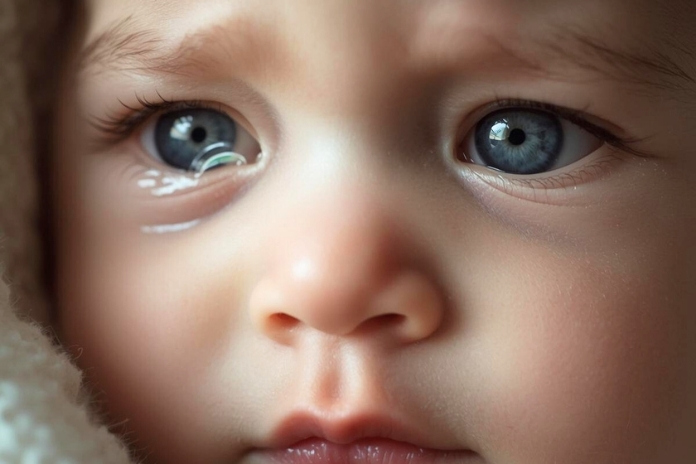
If your baby’s eyes appear to be glossy, teary, or have a constant ‘water’ appearance, it is normal to get worried. You can get even more concerned if the baby has watery eyes despite not crying. Watering eyes in babies is the most common problem that pediatricians are approached with. In most cases, it is quite normal.
A baby’s tear ducts are still maturing in the first couple of months of life. Thus, tears are not always discharged in an appropriate way. As a result, lashes get wet, tears overflow, or small crusts may form near the inner corner of the eye. All of these might feel scary, but generally not harmful.
However, you may need to take care if the watering continues for a long time, especially in one eye, or if the watering is accompanied by redness or discharge. It may be a case of irritation, allergies, or an infection such as conjunctivitis.
This article talks about the causes, the user-friendly care at home, and the red flags indicating the need to consult a doctor.
How the Tear System Works in Babies

When we understand how the tear ducts in babies function, it is easier to understand why watery eyes are common.
Tiny Tear Ducts = Big Overflow
Infants are equipped with underdeveloped, small tear ducts, which are like very small drainpipes that might not even be fully open. Hence, even normal tear production can be too much for the ducts. The tears, instead of being drained into the nose, are accumulated in the corner of the eye and spill over the eyelid.
In many newborns, the ducts are still partially closed, and the opening is a gradual process. That is the reason why pediatricians often reassure parents that these signs are ‘normal for age’.
Most Kids Outgrow It
Nearly all children get over the problem of tear drainage by the first year of birth. When the ducts become wider and open, tears start draining properly. This is when the watering of the eyes stops.
This knowledge helps parents to figure out safe tear overflow situations and those that require a doctor.
Read More: Nasal Aspirator for Baby: How It Works, When to Use It & Top Picks
Common Causes of Watery Eyes in Babies
Here are the main reasons why your infant’s eyes may be tearing. These can range from normal causes to situations in which you may need a doctor’s advice.
1. Blocked Tear Duct (Most Common Cause)
As many as 6% of newborns have a blocked tear duct in their eye. Globally, the leading cause of a baby having watery eyes is the blockage of the tear duct or nasolacrimal duct obstruction. In some cases of newborns, the duct may be very narrow, partially blocked, or even closed by a thin membrane that has not yet been opened.
How It Looks:
Parents observe a few things when their baby has watery eyes. These include:
- Tears that are always visible in the eye
- One eye is watering more than the other
- Very wet or shiny eyelashes
- Light crusting after sleeping or in the morning
- Intermittent sticky discharge
If there is no blockage in the tear duct, it usually gets better by the time the child turns one. However, some children may experience flare-ups when having a cold or nasal congestion. This makes the drainage even more difficult.
2. Eye Irritation
The sensitivity of the eyes of babies can result in watery eyes. Even the tiniest irritants could trigger an increase in tearing.
Some of the irritants may be:
- The wind
- The dust
- Detergent leftovers on the clothing
- Pet dander
- Smoke can also be a factor, even if it is secondhand smoke coming from clothing
You must take care and see if:
- Are you using perfumes or room sprays?
- Have you introduced a new shampoo or a bath product?
- Dry indoor heating or air conditioning may be the cause.
In such situations, the eye tears as a protective mechanism. Children often experience that the tearing gets better once the irritant is removed or avoided.
3. Mild Cold or Congestion
You may also see the watery eyes of your baby if they have a stuffy nose, a runny nose, or a mild cough. When the tear ducts lead to the nose, and the nose is blocked or inflamed, the tears get obstructed. That’s why they overflow.
Such tearing:
- Often comes and goes away.
- It is more visible while feeding or sleeping.
- Gets better when the congestion is cleared.
This is one of the most temporary and absolutely harmless reasons for tearing in infants.
4. Allergies (Less Common in Babies Under 6 Months)
Real allergies hardly ever happen in very young children, but older infants may develop tearing as one of the allergic symptoms. In that case, if the watery eyes are accompanied by itching, sneezing, or seasonal patterns, the allergies may be the reason.
As parents, you may notice:
- Both eyes start watering.
- The child is rubbing or scratching the eyes.
- Symptoms occur when outdoors, near pets, or during pollen-heavy seasons.
When you suspect an allergy, consult a physician immediately.
5. Conjunctivitis (Pink Eye)
Pink eye, or conjunctivitis, occurs when the thin layer covering the white of the eye gets inflamed. The symptoms may be viral, bacterial, or allergic conjunctivitis in infants, and each one of them has a different treatment.
You may look for certain symptoms such as:
- Redness or pink discoloration
- Discharge that is yellow or green
- After sleep, eyelids that are stuck together
- Fussiness
- Swelling of eyelids
- Tearing that doesn’t relieve
Conjunctivitis is infectious and usually requires a medical consultation, especially in the case of newborns.
6. Ingrown Eyelash or Eyelid Irritation
On rare occasions, an eyelash may grow inward, or the eyelid may slightly fold inward. This condition is known as entropion. The irritation that tearing is caused by the contact of the eyelash with the eye surface. Consequently, the eyelash triggers constant tearing.
The signs might be:
- Frequent blinking or eye rubbing
- Redness of the inner corner
- Tearing gets worse when the baby is trying to focus
Such a condition always necessitates a doctor’s check-up to prevent corneal scratches.
7. Dry Air or Winter Weather
The cold wind outdoors and the hot air inside can both cause your baby’s eyes to dry. When the eye is dry, it still produces more tears, not less. This is a situation parents often notice during the winter months or after a long stay in air-conditioned rooms.
This is generally a milder one and can be resolved by improving the moisture level.
Home Care Tips for Baby’s Watery Eyes

These parent-friendly, gentle tips are safe and can be used at home. These can bring the symptoms to an improvement stage, mainly in cases of minor eye irritation or tear duct blockage.
1. Warm Compress
One of the best methods to create conditions for tear drainage is the use of a warm compress. Warmth makes the area with the hard mucus more flexible, it increases blood flow to the region, and can help detach a blockage close to the duct opening.
How to do it:
- Take a soft, clean cloth
- Wet it with warm water
- Place it gently on the inner corner of the
2. Tear Duct Massage (Pediatrician-Guided)
Many pediatricians suggest Crigler massage as a method to facilitate the opening of the tear duct. However, it is better to learn it from a doctor demonstrating the correct technique.
Simple steps:
- Put a clean finger close to the inner corner of the eye.
- Remove a very small area of the skin, and do it with moderate pressure.
- Go down along the side of the nose.
Practice this several times during the day. It pushes the fluid through the duct and may open it partially if it is blocked.
3. Keep Eye Area Clean
Cleaning the area around the eyes promotes soothing and reduces the risk of an infection. Some simple routines can significantly help:
- Use clean, warm, and sterile water.
- Wipe from the inner to the outer corner.
- Use one cotton pad for each swipe.
- Never reuse cloth for different eyes.
Follow ‘one pad for one eye’ for optimum sanitation.
4. Protect Baby From Irritants
If environmental factors trigger your baby, try reducing the exposure:
- No cigarette smoking
- Remove pets from the bedroom
- Use detergents and soaps that are free of fragrance
- Limit the amount of dust
- Make sure the room is ventilated properly
You may opt for a humidifier that might warm the air indoors and help prevent uncomfortable dry-related tearing.
5. Manage Cold Symptoms
If congestion causes tearing, practicing these things might help breathing and will lead to less tearing from the eyes:
- Use saline drops only if the pediatrician prescribes.
- Wipe the nose before feeding and sleeping with a cotton pad.
- Put a cool-mist humidifier to work.
- Make your baby drink plenty of water.
When Watery Eyes Are Not Normal: Red Flags to Watch
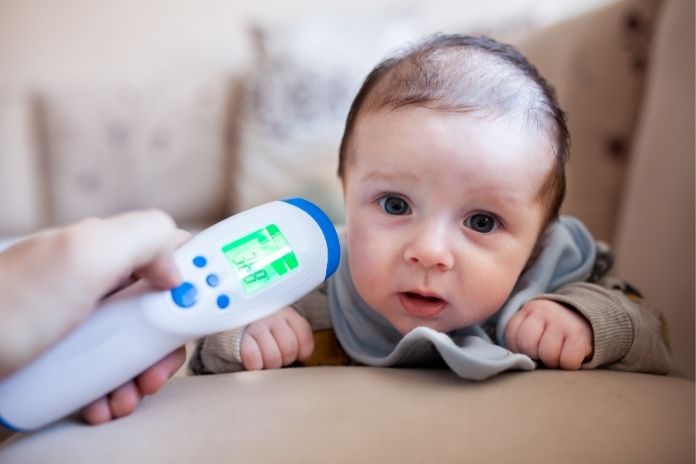
Tearing is often a minor issue. However, certain symptoms might point to a serious problem. If you notice the following symptoms, consult the pediatrician immediately:
- Discharge that is yellow or green and lasts for a long time
- Eyelid gluing together in a very frequent manner.
- Redness or swelling of the eyelids.
- Accompanying eye symptoms, fever, or swelling.
- The baby is excessively rubbing their eyes or constantly touching them.
- One eye may look bigger or swollen.
- Tearing that lasts more than 12 months.
- Extreme sensitivity to light.
Light sensitivity, in particular, may indicate that the problem lies deeper in the eye and should be checked immediately.
When to See a Pediatrician or Eye Specialist
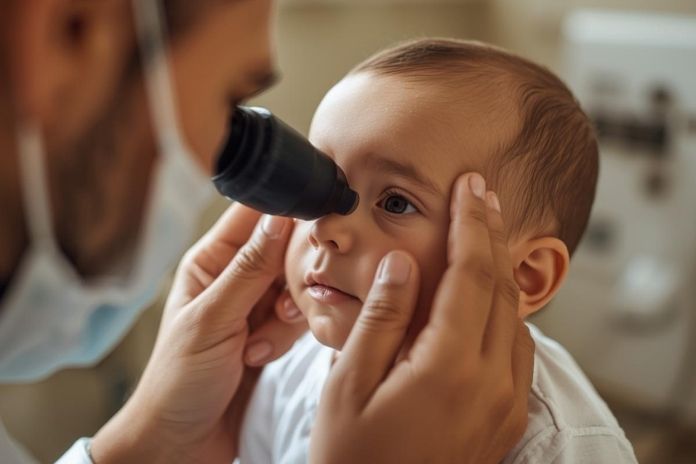
If you do not see any improvement, you should visit the doctor:
- When symptoms last more than a few weeks.
- If, by 6-9 months, a blocked tear duct still shows no signs of getting better.
- There are symptoms of an infection.
- You see eyelid malposition or irregular eyelid folds.
- Tearing is very intense and/or lasts for a long time.
- Baby gets eye infections repeatedly.
- There are issues with vision and squinting.
Young children with tearing that continues up to the toddler years or with structural concerns may be referred to a pediatric ophthalmologist.
Final Summary
The term ‘watery eyes’ might be a bit confusing when it comes to babies. However, it is still considered a normal part of newborn development. Generally, these can be caused by blocked tear ducts, mild irritation, or nasal congestion. Moreover, they usually go away as the ducts mature. Simple home care, such as warm compresses, gentle cleaning, and avoiding irritants, is enough to help relieve symptoms.
Nevertheless, tearing along with redness, swelling, discharge, fever, frequent sticking of the eyelids, or sensitivity to light should not be ignored. Early intervention keeps your baby’s eyes comfortable, healthy, and aid in development.
References
- Children’s Colorado – Eye Pus or Discharge
Children’s Hospital Colorado. (n.d.). Eye pus or discharge. - MD Searchlight – Crigler Technique for Congenital Nasolacrimal Duct Obstruction
MD Searchlight. (n.d.). Crigler technique for congenital nasolacrimal duct obstruction (Crigler technique). - Children’s Health – Allergies vs. Colds in Children
Children’s Health. (n.d.). Allergies vs. colds in children. - NCBI Bookshelf – Conjunctivitis (StatPearls)
Mitra, A., & Purohit, P. (2023). Conjunctivitis. In StatPearls. StatPearls Publishing. - Village Optical – Can Cold Weather Cause Dry Eyes?
Village Optical. (n.d.). Can cold weather cause dry eyes? - Cambridge University Hospitals – Children With Sticky and Watery Eyes Due to Failure of Tear Drainage
Cambridge University Hospitals NHS Foundation Trust. (2020). Children with sticky and watery eyes due to failure of tear drainage. - NCBI Bookshelf – Viral Conjunctivitis (StatPearls)
Tashbayev, B., & Messner, L. V. (2024). Viral conjunctivitis. In StatPearls. StatPearls Publishing. - Boston Children’s Hospital – Blocked Tear Duct (Dacryostenosis)
Boston Children’s Hospital. (n.d.). Blocked tear duct (dacryostenosis).
In this Article