













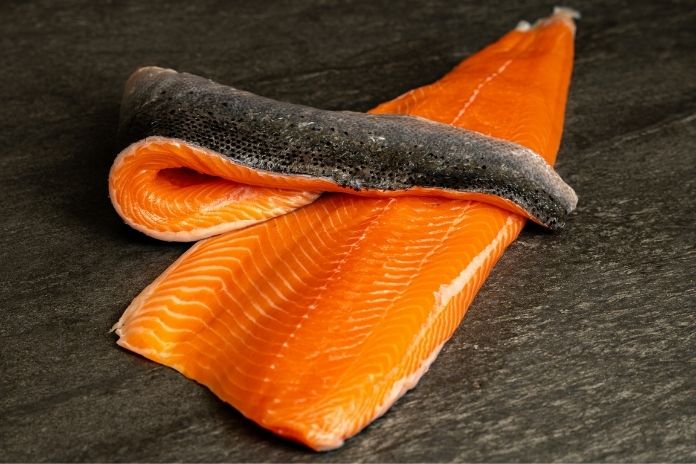
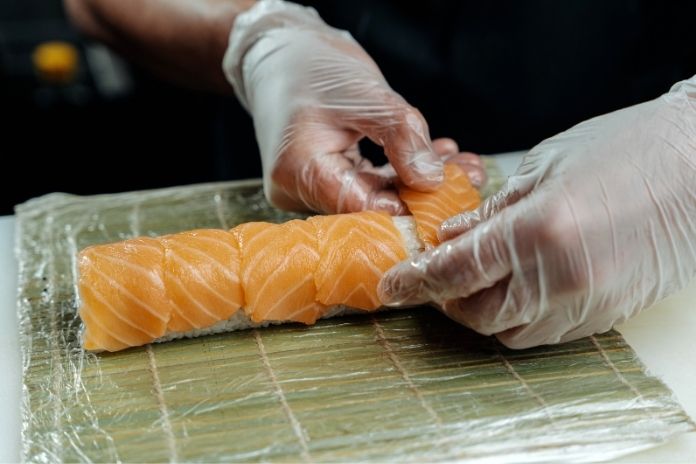
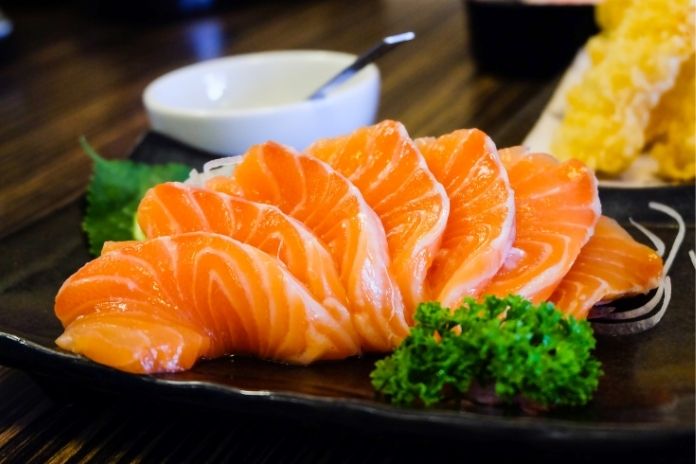
There is a good reason that salmon is the third most popular fish in the United States. It is very rich in essential nutrients, including vitamin D, selenium, omega-3 fatty acids, and other vitamins and minerals. This fish can be eaten raw (sushi or sashimi), hot (oven-roasted salmon), or cold (smoked salmon).
However, underneath its enticing, fresh, flavorful appearance lurks a serious health issue: food safety. How salmon is prepared and stored has a major impact on its safety and nutritional quality. Although people in the Pacific Islands, Alaska, Japan, and Latin America have long enjoyed serving raw salmon as poke, ceviche, and tartare, eating raw fish can cause serious adverse health effects.
This article will discuss the potential health hazards associated with eating raw salmon, examine whether it is actually safe to eat, and offer helpful advice on how to select, cook, and consume it.
Read More: Savory Heart-Healthy Salmon Salad: A Nutritious Omega-3 Boost
Is It Safe to Eat Raw Salmon?
Yes, you can eat salmon raw. But there are some concerns to take into account initially, though, and it’s not safe for everyone.
Bacteria, parasites, and other diseases or germs can be found in raw salmon. Salmon has been identified by the Food and Drug Administration (FDA) as a source of known parasites. Parasites feed on and live on their hosts, such as humans.
Wild salmon caught near Alaska and Japan may carry a particular kind of tapeworm that can grow over 30 feet long and live in the small intestine. Raw salmon can also contain Salmonella, Shigella, E. coli, hepatitis A, and norovirus.
Environmental contaminants are another concern. Traces of heavy metals, other harmful compounds, and persistent organic pollutants (POPs) may be present in raw salmon. Immune system problems, birth deformities, and cancer have all been related to POP exposure.
“Salmon is great for your heart, mental health, and muscle mass,” says Julia Zumpano, RD, LD. “Eating it just a couple of times a week can help support an active lifestyle and a healthy weight.”
Risks of Eating Raw Salmon
Bacterial food poisoning: Eating raw salmon can cause listeriosis and other bacterial food poisoning. Although Listeria monocytogenes is not a common cause of infection, it can cause serious illness if you are pregnant or have a compromised immune system.
The most common sources are salmon products that have been improperly handled or “cold-smoked” at excessively high temperatures. To be safe, avoid eating raw salmon if you belong to a group that is at high risk for foodborne infections. Even if you’re not, take extra care only to consume premium raw fish from reliable suppliers.
Anisakiasis: Anisakiasis is one of the many parasites that can infect raw salmon. Anisakiasis, commonly known as “herring worm disease,” is contracted by eating raw fish or squid contaminated with the parasite’s larvae. The parasites’ eggs or larval forms may then survive in the host’s digestive tract for a while before dying.
Fever, bloating, vomiting, and even a strong allergic reaction might be symptoms of this illness. Surgical removal of the parasite may be necessary if it persists in the patient’s gastrointestinal tract for an extended period.
Sushi-Grade vs Regular Salmon — What’s the Difference?
Not all salmon is the same when it comes to raw salmon. The most significant difference is in the processing, freezing, and handling of the fish, which determines whether it is safe to consume raw.
The way sushi-grade salmon is processed to guarantee food safety is the most significant difference between it and common salmon. Chefs must prepare sushi-grade salmon carefully to eliminate or reduce parasites and disease-causing microorganisms present in raw fish. Cooking regular salmon destroys these germs or parasites, but raw salmon demands additional food safety precautions:
Control of Parasites: If salmon is consumed raw, it can harbor parasites such as Anisakis (seal worm), which can infect people. Suppliers either use fish grown without parasites or freeze the fish to remove parasites, making salmon safe for sushi.
To kill parasites in raw seafood, the FDA advises flash-freezing at -31°F (-35°C) for 15 hours or freezing fish at -4°F (-20°C) for at least 7 days. The FDA requires that most wild-caught fish, including wild salmon intended for raw consumption, be frozen to make them sushi-safe.
Bacterial Safety: Sushi-grade salmon is handled to avoid bacterial contamination and parasites. To keep the fish below 40°F (4°C) and prevent bacterial growth, it is often bled, gutted, and put on ice as soon as it is harvested. Because you won’t be using heat to eliminate microorganisms when eating raw fish, as you would with cooked fish, clean handling and cold storage are essential.
On the other hand, processors may not handle “regular” salmon — which is meant to be cooked — with the same level of care. They might store it at slightly higher temperatures or for a bit longer during processing.
Inspection and Quality Control: To detect signs of parasites and quality issues, experienced suppliers carefully inspect sushi-grade salmon. Chefs use only the finest cuts from the highest-quality fish for sushi-grade selections. The regular salmon filets used for cooking do not always receive this close an inspection.
Read More: 6 Types of Fish That Naturally Boost Your Vitamin D Levels
Is raw salmon safe to consume after freezing?
Be certain that the salmon has been flash frozen to get rid of parasites and to prevent the formation of bacteria in the flesh if you choose to eat it raw. The good news is that manufacturers widely use this procedure, as stated on the label. Numerous fish products marketed in supermarkets, eateries, and sushi bars are flash-frozen.
This process guarantees that these foods are handled, transported, and cooked safely. Sushi shops must use fish that have already been flash-frozen to eliminate parasites. Freezing will make your raw salmon fish safer, but it’s not always the solution.
Fish must be refrigerated at -4°F (-20°C) for at least seven days to destroy the parasites. Your freezer may not be that cold. If you don’t know your freezer’s temperature, do not freeze any raw fish yourself to kill parasites.
Nutritional Benefits of Salmon
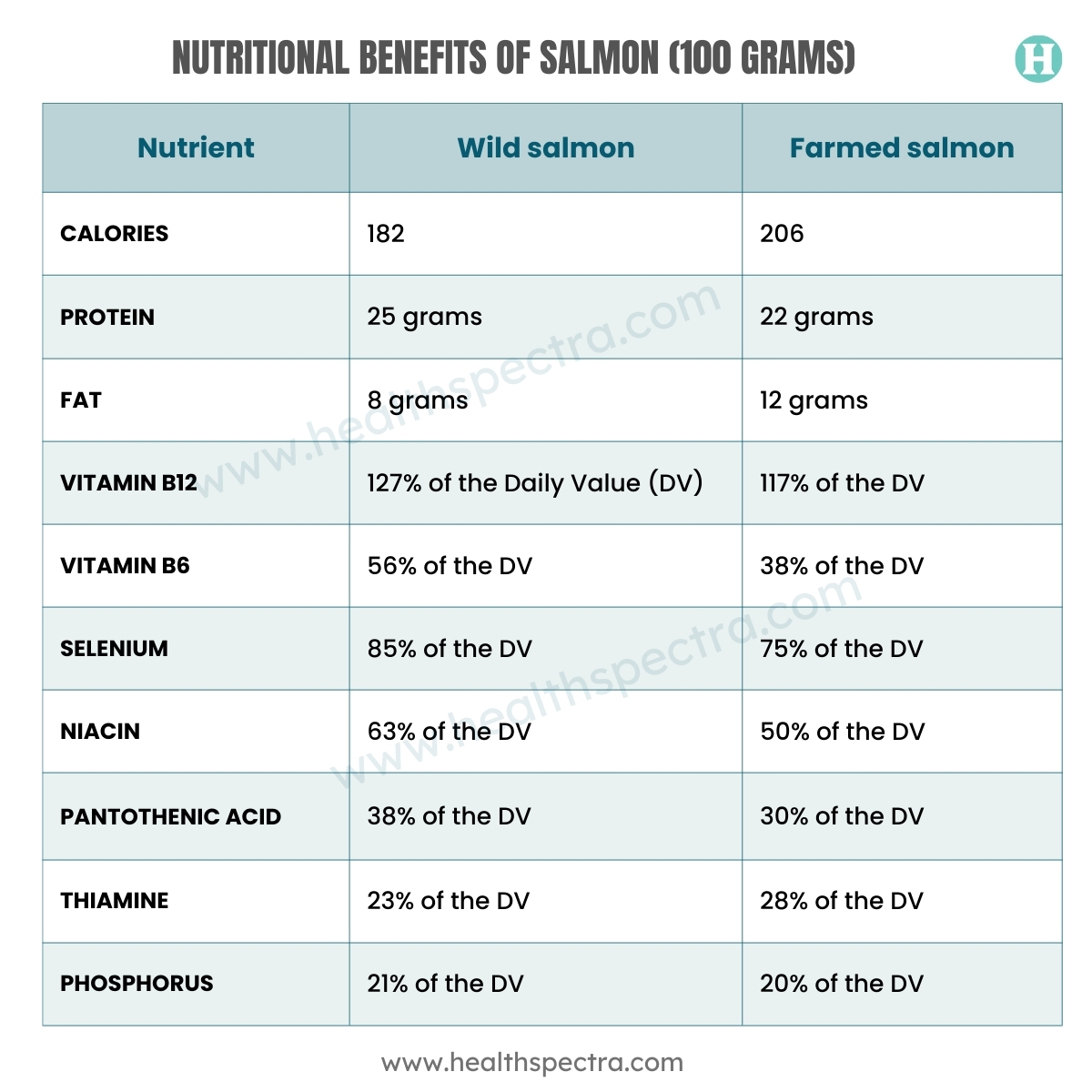
One of the most nutrient-dense foods you can eat is salmon, whether it’s eaten raw in sushi or grilled on the grill. A deeper look at the nutritional content of 3.5 ounces (100 grams) of cooked wild or farmed salmon is provided below:
 Who Should Avoid Eating Raw Salmon
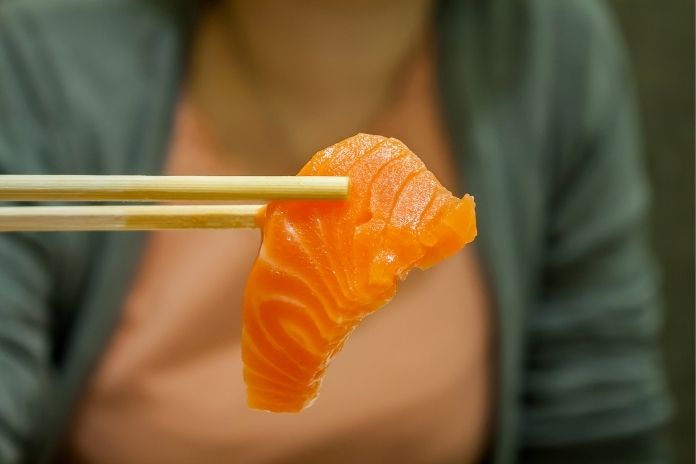
While raw salmon offers great flavor and nutrition, not everyone can safely eat it. Certain groups are at greater risk of the foodborne illnesses caused by bacteria or parasites in raw or undercooked seafood.
Some more susceptible groups are children, the elderly, pregnant women, and people who have low immunity. If you are receiving treatment for HIV, liver disease, diabetes, cancer, or transplant surgery, your immune system will be compromised.
The safest option for these groups is to eat fully cooked salmon, which contains the same vitamins and nutrients as raw salmon but poses fewer health hazards.
Read More: 8 Common Side Effects of Fish Oil Supplements
Conclusion
Around the world, raw salmon has become all the rage, from fancy sushi dishes to bright poke bowls. They are an excellent source of nutrition for a well-balanced diet, and they taste terrific. The flesh is delicious and very creamy. However, there is a straightforward fact that emphasises the charm of raw foods: how you buy, store, and cook them makes all the difference.
Before eating raw salmon, you have to trust that it is delicious. Trusting it means trusting the fish’s quality, how it was handled, and your attention to safety factors. If you choose wisely and handle it properly, you can eat it safely and enjoy it too.
References
- https://www.medicinenet.com/what_kind_of_salmon_is_safe_to_eat_raw/article.htm
- https://www.tasteofhome.com/article/can-you-eat-raw-salmon/
- https://greatist.com/eat/can-i-eat-raw-salmon
- https://www.fda.gov/media/80637/download
- https://health.clevelandclinic.org/is-it-safe-to-eat-raw-fish
- https://searhc.org/the-health-benefits-of-salmon/
- https://mowisalmon.us/top-health-benefits-of-eating-salmon/
- https://www.health.com/nutrition/too-much-raw-fish
In this Article