













The Journey After Nasal Polyp Surgery
Now that your nasal polyp surgery is done, things will slowly start feeling different. Breathing may become easier, your sense of smell may begin to return, and that constant “blocked” or heavy feeling in your head should start to reduce. But here’s the truth most people miss: the surgery fixes the blockage, not the root cause.
Post-surgery for nasal polyps is the time when the real work begins. Nasal polyp recovery is not just waiting for wounds to heal; it is also about helping your nasal passages rebuild properly and staying one step ahead of the inflammation that caused those polyps in the first place.
This article will take you through what really happens after nasal polyp removal – how recovery feels week by week, what’s normal (and not), and how to prevent nasal polyps from coming back.
By the end of this, you’ll know all these things clearly about endoscopic surgery (ESS) post-op care guidelines:
- What to expect in each phase of recovery.
- How to care for your nose properly (beyond the usual “steroid nasal spray after surgery” advice).
- Which habits help your sinuses heal stronger, not just cleaner.
- Why some people keep getting polyps back – and how to break that cycle.
What Happens After Nasal Polyp Surgery?
1. Immediate Recovery (0–7 Days)
The first few days can feel like you still have the same blockage. However, it might not be polyps coming back. It’s just swelling, crusts, and sometimes packing material placed by the surgeon. Mild bleeding, pink discharge, or nasal stuffiness is common.
Some people describe it as a “cold that won’t blow out.” The delicate inner lining is raw and needs quiet time to start healing.
You may have a nasal packing if your surgeon used one, which is usually removed in a few days. Breathing starts to improve once swelling goes down, which usually happens after the first week.
Tip: Keep your head slightly elevated while sleeping. It helps swelling drain out naturally instead of collecting inside.
2. Short-Term Healing (1–4 Weeks)
This is the complex middle period. Your ENT specialist may clean out these crusts during follow-up visits. These appointments can prevent scar tissue and trapped infection.
Your sense of smell usually starts to return by week 3 or 4. But if you notice thick yellow-green discharge, worsening headache, or pain around the eyes, you must speak to your healthcare provider.
Pro Tip: Keep a small humidifier near your bed. A moist environment helps your nasal lining heal faster and reduces dryness or bleeding.
3. Long-Term Recovery (1–3 Months)
By now, the tissue inside your sinuses is repairing itself. This is when routine care becomes more important than medicine.
Studies show full mucosal recovery takes 6–12 weeks. During this time, saline rinses and steroid sprays help reshape the inner lining properly, preventing abnormal tissue regrowth.
If you skip this phase thinking “I feel fine now,” you’re unknowingly setting up the ground for recurrence. Post-surgery nasal polyps often recur months before you notice symptoms again.
What’s Normal vs. What’s Not After Surgery
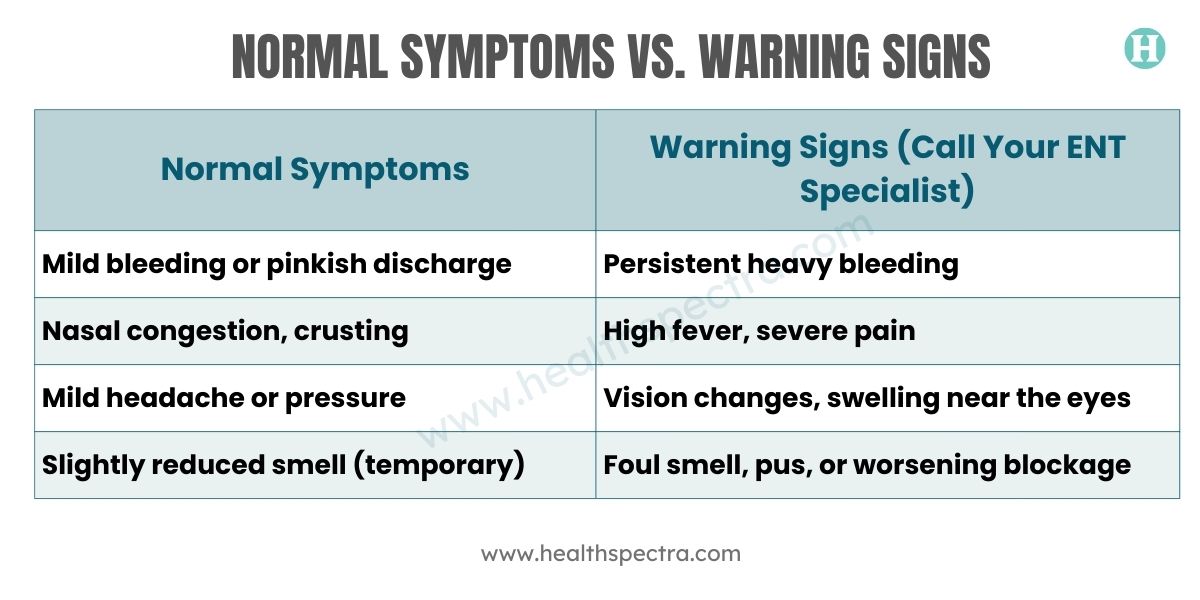 The difference between “normal healing” and “something wrong” often lies in duration and intensity. If any symptom feels stronger than the day before, visit your nearest healthcare provider immediately.
Read More: Can You Train Your Nose to Smell Again? The Science of Smell Therapy
Essential Post-Surgery Care Steps
1. Nasal Saline Irrigation (Twice Daily)
It sounds simple, but this one habit decides how cleanly you heal.
- Saline irrigation clears mucus, reduces bacteria, and prevents crusts from hardening.
- You should start around 48 hours after surgery or as instructed by your ENT specialist.
- Use sterile saline bottles or squeeze systems like NeilMed.
- Avoid tap water unless boiled and cooled.
Research shows that daily saline rinsing improves recovery after nasal polyp surgery and significantly reduces post-op infection risk.
Do this:
Morning and evening, stand over a sink, lean forward, and rinse gently through each nostril. You’ll feel instant relief once swelling reduces with nasal irrigation after surgery.
2. Topical Nasal Steroid Sprays
Start around one week post-operation, when your surgeon advises you. Fluticasone or mometasone sprays reduce inflammation that triggers the formation of new post-surgery nasal polyps.
They’re not merely an ancillary treatment – they are your shield against recurrence of nasal polyps. Long-term use under supervision can reduce recurrence by up to 60%.
- You can begin around one week post-operation, when your surgeon advises you. Fluticasone or mometasone sprays reduce inflammation that triggers the formation of new polyps.
- Angle your head slightly, point the spray outward rather than straight up, and inhale gently. Many people use nasal sprays incorrectly, causing much of the medication to hit the nasal septum and go to waste.
3. Oral Medications (Short Term)
You might get a prescription for antibiotics to prevent infection or a short steroid course to reduce inflammation. Follow your dose schedule exactly since skipping or overusing can delay healing.
Avoid self-medicating later if symptoms return. Sometimes, what feels like “sinus pressure” is just dryness or allergy irritation.
4. Activity Guidelines
For at least 10–14 days:
- Avoid bending, heavy lifting, or running.
- Avoid hot showers, saunas, and dusty environments, as they may trigger bleeding.
- Sleep with your head slightly elevated.
These measures sound small, but pressure changes from bending or heat can reopen healing tissue.
5. Follow-Up Appointments
Cleaning appointments (debridement) may sound unpleasant, but they are crucial to prevent post-surgery nasal polyps. They prevent crusts from trapping bacteria and forming scar tissue.
Typically, every 1–2 weeks for the first month, then monthly for the next three months. These clean-ups help your surgeon monitor healing and spot early recurrence.
Read More: Are You Breathing Wrong? How Mouth vs. Nose Breathing Impacts Your Health
How to Prevent Nasal Polyps from Coming Back
Now comes the long-term care. Surgery clears the infection, but prevention keeps the problem from returning. Research also shows that recurrence rates after sinus surgery can reach 12–77% in 10 years if inflammation is not controlled.
1. Long-Term Anti-Inflammatory Therapy
Your sinuses are prone to chronic inflammation. Continuous nasal corticosteroids or biologic injections like Dupilumab after nasal polyp surgery, Mepolizumab, or Omalizumab help control that.
Biologics work by calming your immune system’s overreaction, not suppressing it completely. They’ve shown remarkable results in reducing recurrence and restoring smell in severe cases.
A study shows that biologic therapy improved smell and reduced recurrence by over 70%. These are not “stronger medicines”. They are smarter ones, which target the root cause of the disease rather than the symptoms.
2. Manage Underlying Conditions
Post-surgery nasal polyps don’t grow randomly – they’re often linked to asthma, allergies, or aspirin-exacerbated respiratory disease (AERD).
Managing these properly after nasal polyp removal keeps the upper and lower airway inflammation balanced. Treating asthma or allergic rhinitis is part of nasal polyp management, not separate.
3. Keep Up Nasal Hygiene
Once the endoscopic sinus surgery recovery is complete, keep saline rinsing daily – just like brushing teeth. It’s not only for the surgery period; it’s long-term maintenance.
Regular rinsing clears allergens, dust, and pollutants before they can trigger inflammation again. Avoid smoking areas, air fresheners, and chemical sprays that irritate the nasal lining. Even small exposure can add up over time.
4. Diet and Lifestyle Modifications
No food “cures” post-surgery nasal polyps, but diet quality influences inflammation.
- Foods rich in omega-3s, such as fish and flaxseed
- Fruits and vegetables are high in antioxidants
- Limit sugar, processed foods, and excess dairy if you are prone to congestion.
Hydration keeps mucus thin and sinuses ventilated. Even mild dehydration thickens mucus, blocking air flow.
Stress also plays a subtle role in nasal polyp recurrence prevention. Chronic stress heightens inflammatory pathways, so regular physical activity and quality sleep are part of the prevention plan.
5. Routine ENT Check-ups
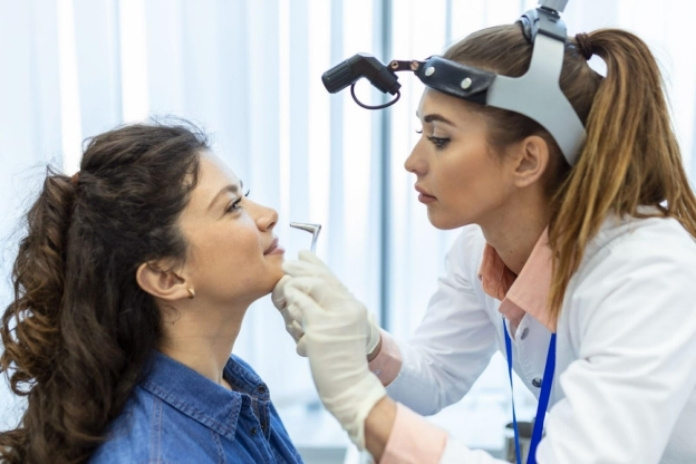
Even after complete nasal polyp surgery recovery, schedule endoscopic exams every 6–12 months. It’s easier to treat tiny recurrences early than to wait for another full-blown blockage.
People with asthma or AERD should be especially regular and careful about aftercare for nasal surgery since the recurrence risk is higher for them.
Read More: 14 Remedies To Restore Loss Of Taste And Smell – Regain It The Natural…
Final Thought
Nasal polyp surgery gives back what chronic inflammation quietly takes away: clean breathing, clear senses, and peaceful sleep. But that gift lasts only as long as you continue the aftercare.
The combination of daily saline rinses, long-term steroid maintenance, and regular medical monitoring transforms surgery results into a permanent reset.
Healing the nose after surgery is not only about removing the polyps, but also about calming the invisible inflammation.
- Nasal polyp surgery recovery takes 6–12 weeks. Stay patient and consistent.
- Daily saline rinses and steroid sprays are your strongest tools during the recovery phase of nasal poly surgery.
- Don’t ignore follow-up cleanings. Regular visits are a part of the treatment.
- Keep inflammation under control with medication, diet, and lifestyle.
- Long-term care > short-term cure. That’s how this approach effectively reduces the risk of recurrence after nasal polyp removal.
References
- Chen, Y.-S., Feng, C.-Y., Su, S.-H., Wang, Y.-H., Yang, T.-H., & Lin, C.-F. (2025). Recurrence of Chronic Rhinosinusitis with Nasal Polyps After Surgery: Risk Factors, Predictive Models, and Treatment Approaches with a Focus on Western and Asian Differences. Medicina, 61(9), 1620–1620.
- Cleveland Clinic. (n.d.). Functional Endoscopic Sinus Surgery (FESS): Procedure & Recovery. Cleveland Clinic.
- Healthdirect Australia. (2022, October 13). Endoscopic sinus surgery.
- Homsi, M. T., & Gaffey, M. M. (2022). Sinus Endoscopic Surgery. PubMed; StatPearls Publishing.
- Mueller, T. C., Mehraein, N., Kehl, V., Dimpel, R., Friess, H., & Reim, D. (2025). Antiseptic wound irrigation to prevent surgical site infection after laparotomy: meta-analysis. PubMed, 9(4).
- Veterans Health Library. (2024a). After Endoscopic Sinus Surgery. Veterans Affairs.
- Veterans Health Library. (2024b). Endoscopic Sinus Surgery. Veterans Affairs.
- Walla, K., Habenbacher, M., Kay, J., Walrave, L., Günzl, P., Tomazic, P. V., & Andrianakis, A. (2025). Current diagnostic and therapeutic management of chronic rhinosinusitis with nasal polyps in Austria: insights and unmet needs from a nationwide survey. Scientific Reports, 15(1).
In this Article