














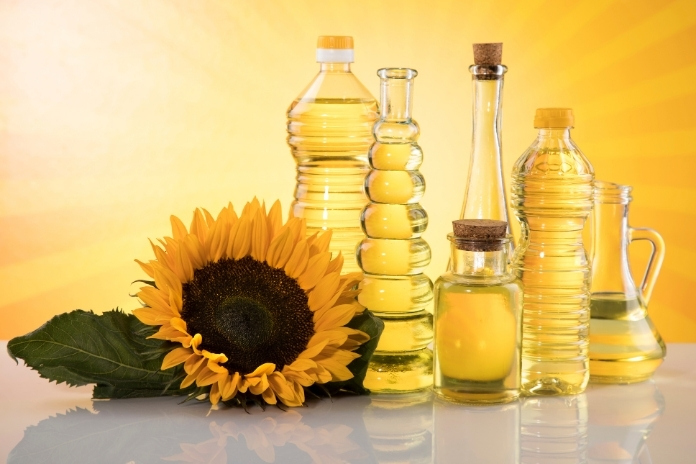
Some of us pay a lot of attention to what we eat and include in our diets. While there are a few, like me, who just go for the brands and make the purchase. Some time back, in the supermarket, I saw my friend carefully reading the sunflower oil bottle’s label. Intrigued, I decided to read too. Turns out not every sunflower oil is made the same. Surprised? Read on!
When one buys “sunflower oil,” one imagines that the contents of every bottle will be essentially the same. In reality, it describes a variety of oils derived from sunflower seeds; however, their fatty acid profile, their stability at high temperatures, and their health benefits differ greatly. These differences occur from the seed variety used. It can either be high-oleic, mid-oleic, or regular/linoleic-and how each is used in cooking and storage.
The type of sunflower oil used has few practical results:
- The relative content of monounsaturated to polyunsaturated fatty acids decides the ways to cook and the oxidative stability (resistance to rancidity) of the oil.
- The ratio of oleic acid (omega-9, a monounsaturated fat) to linoleic acid (omega-6, a polyunsaturated fat) impacts both your cooking stability and your diet’s fat balance.
- From a health perspective, oils that oxidize less when cooked may reduce the formation of damaging compounds, and the type of fats consumed. It is generally MUFA vs. PUFA vs. saturated; these impact key markers like LDL, HDL, and inflammation risk.
In this article, we’re going to understand what exactly “high-oleic” means, how it differs from “regular” sunflower oil, and the pros and cons of each. We will also know about how to pick the right one for your needs, and practical usage tips.
Read More: The Best (and Worst) Cooking Oils for Hormonal Balance and Fertility
What Are “High-Oleic” vs “Regular” Sunflower Oils?
Regular/Linoleic Sunflower Oil
Regular/ linoleic sunflower oils are often labeled simply as “sunflower oil” in many markets. This is normally the variety high in polyunsaturated linoleic acid (omega-6) and lower in oleic acid (monounsaturated). The traditional/regular sunflower oil may contain about 20% oleic acid and 60–70% linoleic acid.
Characteristics of Regular/Linoleic Sunflower Oil:
- These oils are higher in PUFAs (polyunsaturated fatty acids), contain more double bonds, and are more susceptible to oxidation under heat or storage.
- Such oils may have lower heat stability and shorter shelf life. This is particularly true when used for frequent high-heat cooking.
- The oils still contain the good unsaturated fats and vitamin E. However, when considering stability and fat profile, high-oleic versions are better and preferable.
High-Oleic Sunflower Oil – HO Sunflower Oil
This variety has been produced from sunflower seeds that were selectively bred to yield a much higher oleic acid content, often about 70–80% or higher, and much lower linoleic acid.
Characteristics of High-Oleic Sunflower Oil – HO Sunflower Oil:
High in monounsaturated fats (MUFA, oleic acid), which contain fewer double bonds. The oils have greater oxidative and thermal stability.
The oils are better suited for high-heat cooking, frying, longer shelf life, and are less prone to rancidity.
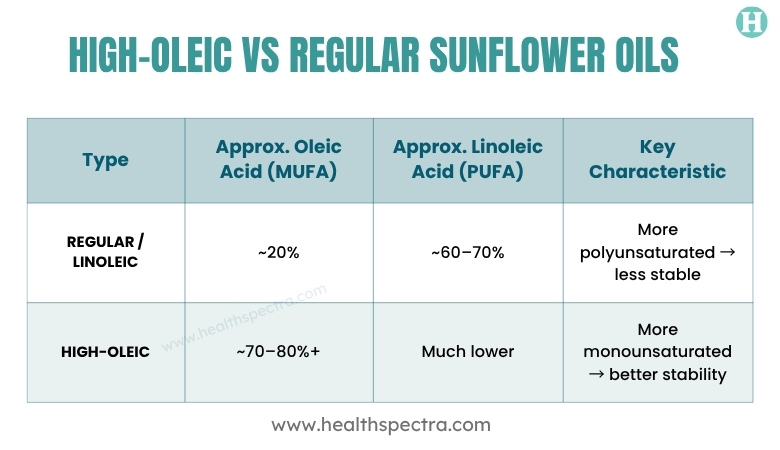
Note: Certain oils are “mid-oleic,” which fall between regular and high-oleic types.
Why High-Oleic Might Be a Better Choice

Here are a few reasons why high-oleic acids are a better choice:
Heat Stability and Oxidation Resistance
Monounsaturated fats contain oleic acid with fewer double bonds than polyunsaturated linoleic acid. This makes the oils that are majorly MUFA less prone to breaking down when heated, exposed to light, or under storage.
In simple words, for cooking, especially high-heat usages like frying, sautéing, and repeated reuse:
- The oil provides a lower risk of oil breakdown or formation of harmful compounds during use.
- There is a longer shelf life in packaged products or pantry storage.
- It performs better in both industrial and home cooking scenarios.
In short, if you do a lot of high-heat cooking, you must prefer using an oil with better oxidative stability.
Potential Health Benefits
MUFAs, of which oleic acid is a good example, are often better for heart health compared to some PUFAs, when the latter are used in excess or oxidized.
A diet rich in high-oleic sunflower oil has been shown to favorably alter LDL cholesterol, triglycerides, and coagulation factors when used instead of saturated fats.
Since high-oleic sunflower oil is more stable, or less likely to oxidize, than other less stable oils, it might therefore reduce the risk of oxidative stress in cooking.
Thus, the use of high-oleic sunflower oil has the capacity to support a better fat profile (higher MUFA, lower PUFA) and improved cooking stability, both of which may be linked with health benefits when used sensibly.
Read More: 17 Benefits of Sunflower Seeds for Better Health, Skin, and Hair
Where Regular Sunflower Oil Still Has a Role-And What to Watch
Use Case and Benefits
Regular (or high-linoleic) sunflower oil remains a valid cooking oil, as it provides the essential polyunsaturated fatty acid linoleic acid (omega-6), which is necessary in the diet and may help lower the risk of coronary heart disease when used in moderation.
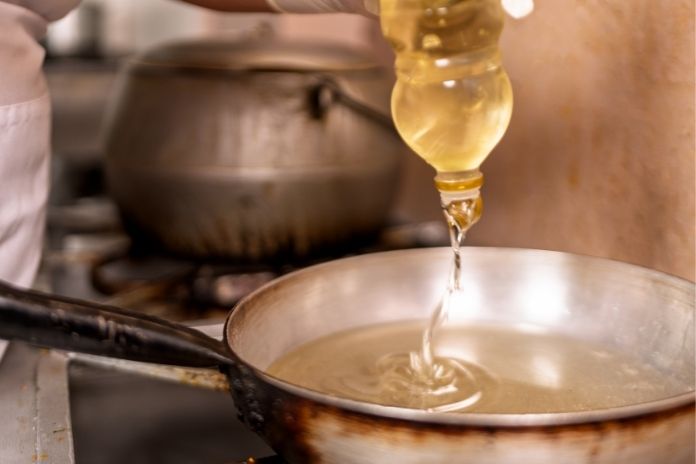
It’s often less expensive, widely available, neutral in flavor, and suitable for lower-heat cooking or dressings. You can use this sunflower oil in light sautéing, baking, or wherever a general-purpose oil is needed and exposure to high heat or reuse is limited.
Considerations/Cautions
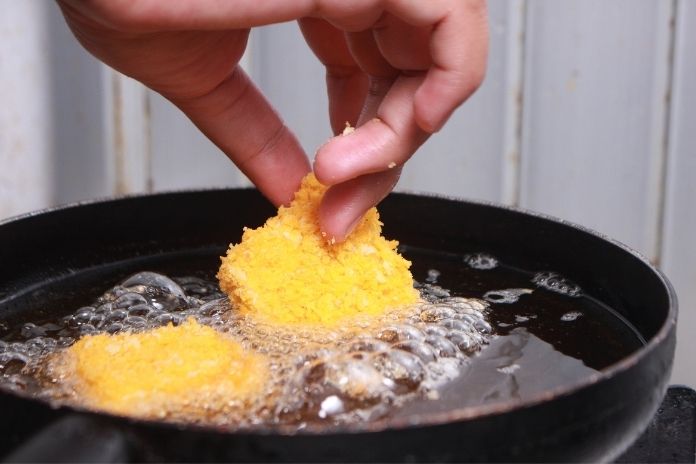
It has a higher tendency to get oxidized due to its PUFAs (polyunsaturated fatty acids), particularly linoleic acid content, especially under high heat, repeated reuse, or poor storage conditions.
- Continuous frying with PUFA-rich oils may produce harmful compounds.
- High amounts of omega-6 relative to omega-3s may lead to an imbalance in modern diets.
- If you plan more frequent deep-frying, reusing oil, or want to store oil long term, a better strategy could be using more stable oils like high-oleic sunflower oil.
In short, regular sunflower oil still has a place. However, you should use it appropriately: moderate heat, limited reuse, good storage, and the rest of your diet should balance out the omega-3s and overall fat ratio.
How to Choose the Right Sunflower Oil for Your Needs

If you wish to make sunflower oil a part of your diet, consider the following tips:
Always Check the Label:
- This is a mirror of what’s in the oil and helps us make better decisions.
- Look for words like “High-Oleic Sunflower Oil,” “HO Sunflower Oil,” or “70%+ Oleic.”
- Mostly, if it just says “Sunflower Oil,” then it is likely the regular/linoleic type.
- If the nutrition facts list the monounsaturated fat as a very high portion-say over 75% of total fat-then it’s likely high-oleic.
Consider your Cooking Method:
- For frying, deep-frying, stir-frying, or high temperatures, try to use high-oleic sunflower oil.
- For a light sauté, baking, or salad dressings, regular sunflower oil will be better, provided stored correctly.
- Consider and think about the diet and fat balance if opting for any kind of sunflower oil.
- Aim to ensure your total fat intake includes variety, including sources of MUFA, PUFA, and some saturated fats, with adequate omega-3s coming from fish, flax, or chia.
Talking about seed oils, which also include sunflower oil, Julia Zumpano, RD, LD, a registered dietician, says that occasional frying in seed oils is permissible. She adds, “It’s important to note that these oils shouldn’t be cooked at high temperatures or reused,” Zumpano cautions. “That really worsens their negative effects.”
Cost and Availability:
Costs are something that needs to be considered, and so is the availability. High-oleic sunflower oils often cost more, but their stability and health benefits may justify the difference. If budget or availability precludes high-oleic, you can still use regular; just stick to appropriate uses: lower heat, less reuse.
Storage and Usage Practices:
Store oil in a cool, dark place, tightly sealed. Avoid reusing frying oil multiple times and do not overheat beyond its smoke point.
Practical Usage Tips and Smart Substitutions
A few practical tips might help:
- Replace high-saturated-fat oils, such as palm oil or butter for frying, with high-oleic sunflower oil.
- Use the regular sunflower oil for lighter cooking; upgrade to the high-oleic for deep-frying or repeated use.
- For dressings, use regular sunflower oil or shift to extra-virgin olive oil or flaxseed oil.
- Combine strategic oils such as high-oleic sunflower oil for cooking with omega-3-rich oils, including walnut and/or flax, for salads.
- Try to avoid overheated oils and discard them after multiple uses.
- Rotate oils for variety, as no single “super oil” fits all purposes.
Read More: Important Oils For Hair Growth
Key Takeaway
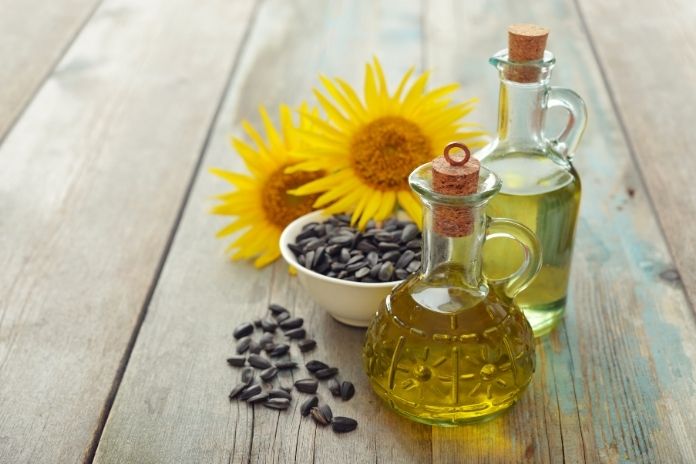
While both regular and high-oleic sunflower oils are valid cooking oils, high-oleic sunflower oil generally offers superior heat stability, better shelf life, and a more favorable fat profile (higher MUFA, lower PUFA).
Regular sunflower oil is still preferable, especially in lighter cooking and situations where its cost or availability is a better option. However, we must use it with care: keep the temperature lower, monitor the reuse cycles, and store it well.
All in all, the best oil is one that suits your cooking method and budget, and also is used appropriately within a healthy diet.
Frequently Asked Questions
How do I know if my sunflower oil is high-oleic or not?
Look for “High-Oleic Sunflower Oil” or read the nutrition label. If over 70% of total fat is monounsaturated, it should be high-oleic.
Is high-oleic sunflower oil healthier than olive oil?
Not necessarily. High-oleic sunflower oil is highly stable and boasts a fantastic fat profile. Olive oil, on the other hand, contains polyphenols and antioxidants that give it special cardiovascular benefits.
Can I use normal sunflower oil for deep frying?
Yes, but it’s less desirable because of the higher polyunsaturated fat content that’s more prone to oxidation/breakdown at high heat. If using, minimize reuse and avoid overheating.
Does the type of sunflower oil affect its smoke point?
Yes. High-oleic oils have less PUFAs and more MUFAs. Hence, they generally have better oxidative stability and are preferred when used in high temperatures.
Does switching to high-oleic oil reduce inflammation or heart-disease risk?
It may help provide a better fat profile and improve cardiovascular markers. However, changing oil alone will not prevent diseases; it’s part of an overall healthy lifestyle.
References
- https://www.centrafoods.com/blog/the-benefits-of-high-oleic-oils
- https://www.soapmakingforum.com/threads/is-my-sunflower-oil-high-oleic-or-not.75788/
- https://timesofindia.indiatimes.com/life-style/food-news/toxic-cooking-oils-to-avoid-in-the-home-kitchen/photostory/120769080.cms
- https://www.eatingwell.com/article/7822830/health-benefits-of-sunflower-oil/
- https://www.nutritionletter.tufts.edu/general-nutrition/what-is-high-oleic-sunflower-oil/
In this Article