













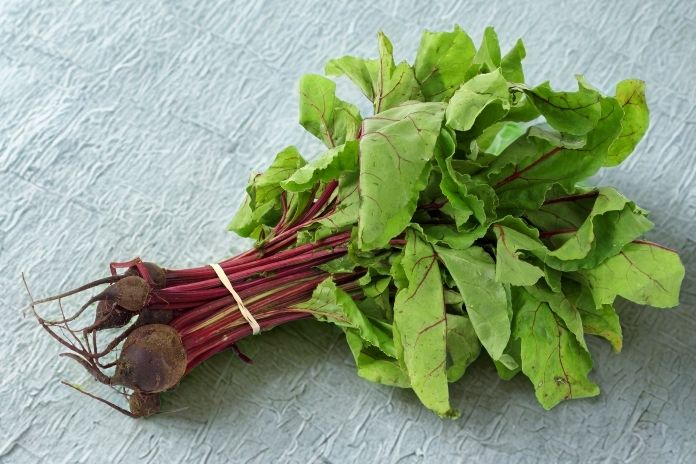
Consider carefully before throwing away the leaves that are developing from your beets. When cooked, beet greens become the softest, most tender greens you’ve ever eaten. They’re light and sweet. What about the stems? They taste far better than those of collards and kale.
They are more nutrient-dense as well. “Beet greens are some of the most nutrient-rich greens around, containing more antioxidants and other phytonutrients than the bulbous roots themselves, according to Jo Robinson, author of Eating On The Wild Side”. Beet greens are on par with kale in terms of their overall health advantages.
This article will discuss the nutritional profile of beet greens, contrast their advantages with those of the root, emphasize their remarkable health benefits, and offer simple preparation and consumption tips.
Read More: Incredible Health Benefits Of Beetroot
What’s in Beet Greens? Nutrition & Phytonutrient Highlights
Beet greens (per 1 cup cooked, about 144g) are an excellent source of vitamin K, vitamin A (in the form of carotenoids), and vitamin C. They are also a good source of copper, potassium, manganese, magnesium, iron, riboflavin, and fiber.
The greens contain some of each essential amino acid, though, like most leafy vegetables, they are not a complete protein source on their own. They do provide a notable amount of certain amino acids, including tryptophan—an amino acid the body uses to produce serotonin, a neurotransmitter that helps regulate mood and sleep.
Beet greens are particularly rich in antioxidants and carotenoids that support eye health and may help reduce inflammation. The high vitamin K content is essential for bone health and proper blood clotting. The fiber, potassium, and antioxidants in leafy greens like beet greens may contribute to heart health by supporting healthy blood pressure and cholesterol levels.
Regular consumption of leafy greens has been associated with reduced risk of certain chronic diseases. They’re also an excellent source of folate, which is especially important during pregnancy for proper fetal neural development.
Pregnant women should increase their intake of folate-rich foods like beet greens, spinach, and other leafy vegetables.
Beet Greens vs Beet Roots (and vs Some Other Greens) — What You Gain

Most people focus on beet roots, but the leaves are equally nutritious and deserve attention.
Beet Greens: Beet greens, also known as beetroot leaves, are highly nutritious and have been valued for centuries. Historically, various cultures used beet leaves both as food and for medicinal purposes, including as poultices for wounds.
Beet greens are among the most nutrient-dense leafy vegetables, providing excellent amounts of vitamin K, vitamin A (as beta-carotene), vitamin C, iron, and calcium.
One cup of cooked beet greens provides more than 100% of the daily recommended intake of vitamin K, which plays a crucial role in bone formation and maintenance.
“Vitamin K works with vitamin D to ensure that calcium finds its way to the bones to help them develop properly,” says Dr. Sherry Ross, a women’s health expert at Providence Saint John’s Health Center in Santa Monica, California.
Compared to spinach (a close relative in the Amaranthaceae family), beet greens contain comparable amounts of iron and are similarly nutritious. Beet greens also provide lutein and zeaxanthin, carotenoids that support eye health and may help protect against age-related vision problems.
Regular consumption of nutrient-dense leafy greens like beet greens may support immune function, bone health, and overall wellness due to their rich vitamin and mineral content.
Beet Roots: The beetroot (Beta vulgaris) is the taproot portion of the beet plant and is also highly nutritious. While beets come in various colors, including golden and striped varieties, the deep red table beet is most common.
Beet roots are low in calories yet rich in fiber, folate, manganese, potassium, iron, and vitamin C.
They also contain nitrates, which the body converts to nitric oxide, a compound that may help support healthy blood pressure and exercise performance. Beets provide small amounts of boron, a trace mineral involved in various bodily functions, including bone health and hormone metabolism.
Read More: Foods That Lose the Most Nutrients When Cooked (and How to Preserve Them)
Health Benefits of Eating Beet Greens
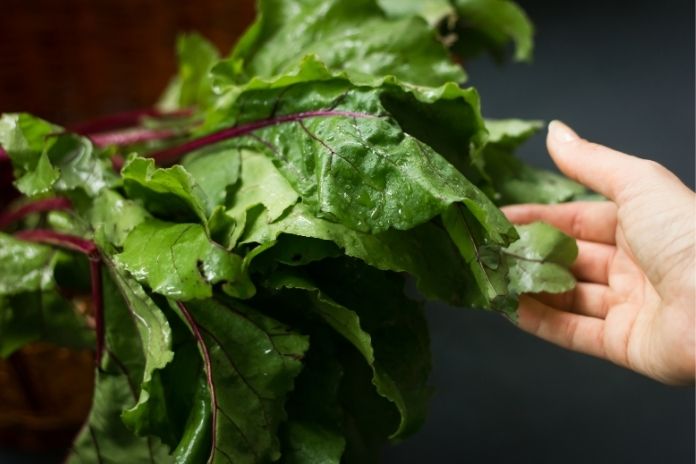
Beet greens offer numerous health benefits beyond the well-known nutritional value of beet roots. Here are science-supported reasons to include more beet greens in your diet:
- May Support Blood Sugar Management: Beet greens are low in calories and high in fiber, which can help slow the absorption of sugar into the bloodstream. Their low glycemic load makes them a nutritious choice for those monitoring blood sugar levels. However, they should be part of an overall balanced diet, not viewed as a replacement for medical management of blood sugar conditions.
- Supports Heart Health: Beet greens are rich in folate, potassium, magnesium, and fiber, nutrients that support cardiovascular health. Folate helps the body process homocysteine, an amino acid that, when elevated, is associated with increased cardiovascular risk.
- Promotes Eye Health: The lutein and zeaxanthin in beet greens are carotenoids that accumulate in the retina and may help protect against age-related macular degeneration and cataracts by filtering harmful blue light and acting as antioxidants.
- Supports Healthy Blood Pressure: The potassium, magnesium, and nitrates in beet greens may help support healthy blood pressure levels as part of a balanced diet. Potassium also plays important roles in nerve signaling, muscle contraction, and fluid balance.
- Boosts Immune Function: Beet greens provide vitamin C, vitamin A, iron, and other nutrients that support immune system function, helping your body maintain its natural defenses year-round.
- Supports Cell Function and Growth: The folate in beet greens is essential for DNA synthesis, cell division, and red blood cell formation. This makes them particularly beneficial during pregnancy and periods of growth.
How to Cook & Use Beet Greens—Practical Tips
- Wash the leaves and stems thoroughly in a large bowl of water, swishing them around to remove any dirt or sand trapped between the stem ridges. Repeat if necessary.
- Separate the stems from the leaves by cutting along the thick center rib, or fold each leaf in half along the rib and cut it away. Chop the stems and leaves separately, as the stems take longer to cook.
- Heat olive oil in a large skillet over medium heat. Add chopped garlic, shallot, or onion and sauté until softened and fragrant, about 2-3 minutes.
- Add the chopped stems to the skillet along with 1/3 cup water and a pinch of salt. Cover and cook for 4-6 minutes until the stems are tender.
- Add the chopped leaves (and a splash more water if the pan looks dry) and cook covered, stirring occasionally, for 3-4 minutes until the leaves are wilted and tender.
- Season with salt and pepper to taste. You can also add a squeeze of lemon juice or a splash of vinegar to brighten the flavors.
Other serving ideas: Add raw young beet greens to salads, blend them into smoothies, add to soups and stews, or sauté with other greens like Swiss chard or kale.
Read More: Purple Vegetables – Are They the Ultimate Anti-Aging Superfoods?
Conclusion
Beet greens are a highly nutritious and often overlooked part of the beet plant. While many people discard these greens, they’re packed with vitamins (especially K, A, and C), minerals (including iron, calcium, magnesium, and potassium), fiber, and beneficial plant compounds.
By incorporating beet greens into your meals, you can boost your nutrient intake while reducing food waste, and they’re already in your kitchen if you’re buying fresh beets. They’re versatile and easy to prepare: sauté them as a simple side dish, add them to soups and stews, toss them into salads, or blend them into smoothies.
Next time you bring home fresh beets, don’t throw away those leafy tops. With minimal effort and no extra cost, you can transform them into a delicious, nutrient-dense addition to your diet.
References
- https://www.mindbodygreen.com/articles/beet-greens
- https://permies.com/t/179942/root-crops/Beet-greens-aren-edible-good
- https://www.epicurious.com/ingredients/15-ways-to-eat-beet-greens-article
- https://redapplenutrition.com/benefits-of-beets-and-beet-greens/
- https://www.npr.org/sections/thesalt/2013/07/10/195592468/eating-on-the-wild-side-a-field-guide-to-nutritious-food
- https://alchemyacademy.world/beet-greens/
- https://www.justbeetit.com/beet-nutrition
- https://www.drsherry.com/
- https://sagemountainfarm.com/beet-greens/
In this Article