













Why Stomach Cancer Prevention Matters This November
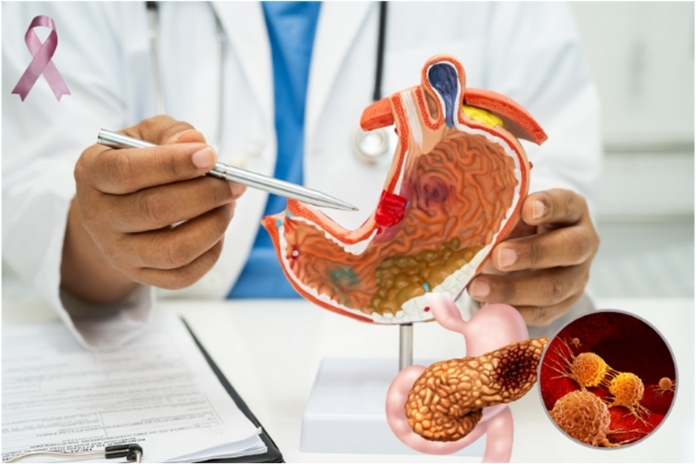
November is Stomach Cancer Awareness Month – not something that trends on social media, but it should. Around 26,000 Americans get diagnosed every year – and here’s the shocker – most of it can actually be prevented.
Sounds crazy, but doctors say it all starts with one small bacterium – Helicobacter pylori (H. pylori). Mix that with salty foods, smoking, drinking, weight gain… and boom, the risk goes up.
The thing is, this isn’t one of those “too late to do anything” cancers. It’s one where you can actually stop it before it starts.
So, instead of just sharing posts or hashtags this month, how about we actually do something that helps? This article will keep it clear – No generic “eat better” advice – just clear actions you can take this month itself.
Read More: Does Your Stomach Hurt More Often as You Get Older?
Understanding Your Personal Stomach Cancer Risk
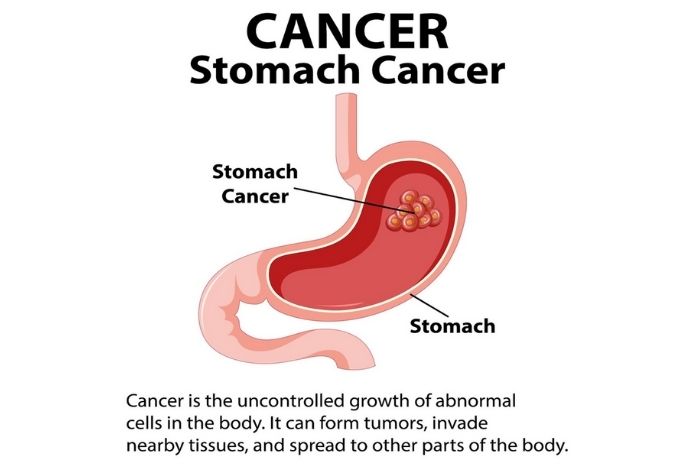
Before doing anything, first question: how much at risk are you personally?
Here’s the thing – gastric adenocarcinoma doesn’t hit everyone equally. Some factors you can’t change, but others you can.
Non-modifiable factors:
- Age (most cases appear after 65)
- Men have a slightly higher risk
- If you’re Asian, Hispanic, or Black, the risk is a little higher
- Family history – if a close relative had stomach cancer, your risk doubles or even triples
Modifiable factors:
- Helicobacter pylori infection
- Salty, processed diet
- Smoking, drinking
- Obesity or inactivity
To make this simple, take a notepad and list your risks. For each “yes,” give yourself one point:
- Do you smoke or drink often?
- Eat processed/red meat a few times a week?
- Skip veggies and fruits most days?
- Do you have long-term acidity or indigestion?
- Any family history of stomach or digestive cancers?
More than two “yes” answers? You’ve got room for improvement. The good news – every single modifiable factor you change counts.
Let’s look at some practical and real gastric cancer prevention strategies:
Strategy 1: Get Tested and Treated for H. Pylori Infection
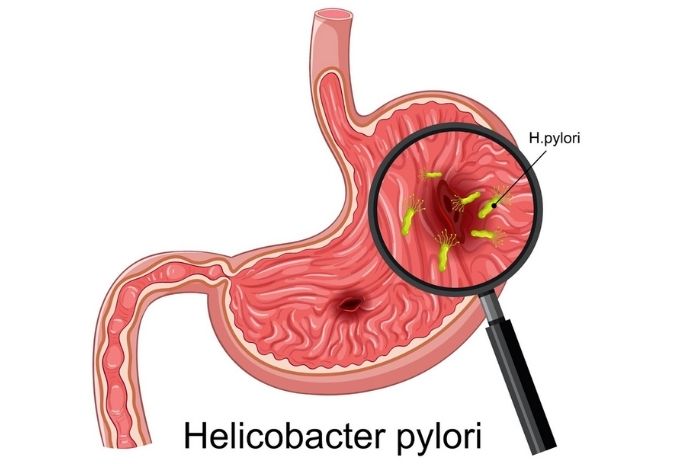
If stomach cancer had a villain, it’s H. pylori. A weird spiral-shaped bacterium that lives in your stomach lining quietly. For some, it causes ulcers; for others, it quietly increases cancer risk over the years.
Here’s the part most people miss – you can test and treat it easily.
When to get tested:
- If you have long-term acidity or indigestion
- If someone in your family had stomach cancer
- If you’ve ever had peptic ulcer disease
- Or if your doctor says you’re in a higher-risk group
Three ways doctors test it:
- Breath test: Easy, you just blow into a tube.
- Stool test: A Simple lab test from a sample.
- Endoscopy: For people with symptoms or ulcers, it gives a direct view.
If you test positive, your doctor will prescribe a 2-week course of antibiotics (usually two antibiotics plus an acid reducer). Cure rate? Over 90% if you finish the course.
After treatment, repeat the test after 4 weeks to confirm it’s gone. That’s it – one of the biggest risk factors, eliminated. Studies show this one step alone can reduce stomach cancer risk by 43%.
If only all health fixes were this clear.
Strategy 2: Eat More Like the Mediterranean People

Let’s be honest. “Eat healthy” is the most overused advice on the internet. But the Mediterranean diet for cancer prevention isn’t another trend – it’s one of the most researched stomach cancer diets globally.
You don’t need to buy imported olive oil or fancy feta cheese. You just need to eat like your grandparents probably did.
Here’s the rough idea:
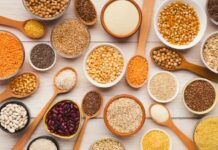
- Fruits and veggies: Take at least 5 portions in a day – oranges, spinach, cabbage, tomatoes, whatever’s in season
- Whole grains: Take brown rice, millets, oats, whole wheat, etc.
- Healthy fats: Choose mustard oil, olive oil – use minimum or no butter
- Fish or eggs: Take 2-3 times a week, swap with red meat
- Salt: keep it minimum – less pickles, sauces, instant noodles, and salted snacks
Even just 10 grams more fiber (that’s like 2 pears or a cup of beans) can reduce stomach cancer risk by 44%.
Can’t do it overnight? Start with swaps:
- Replace your white bread with whole wheat.
- Skip salted chips for fruit or curd with herbs.
- Use lemon and herbs instead of salt for flavor.
It’s not about perfection – it’s about small shifts that your stomach thanks you for later.
Read More: Top 7 Nutritional Supplements for Cancer Recovery
Strategy 3: Eliminate Tobacco and Limit Alcohol
Here’s something most people don’t realize: Smoking doesn’t just harm your lungs. In fact, it damages your stomach too.
Tobacco smoke weakens the stomach lining, due to which H. pylori stays for longer. People who smoke end up with about double the risk of getting stomach cancer. Even if you are taking treatment for the H. pylori problem, smoking reduces the effectiveness.
Alcohol, too, adds fuel. Three or more drinks daily increases your risk, and combining smoking with alcohol multiplies the damage.
If you’ve tried quitting before and failed – don’t feel bad. Most successful quitters try 4–5 times before it sticks. Use free help:
- 1-800-QUIT-NOW (U.S. hotline)
- gov
- Apps like QuitNow or MyQuitCoach
Even cutting down tobacco use by half reduces stomach cancer risk over time. Your stomach starts healing faster than you’d think.
Read More: Diet and Lifestyle Tips After a Pancreatic Cancer Diagnosis
Strategy 4: Move a Little – It Adds Up

When people think of “obesity,” they think of diabetes or heart problems. But yes, it’s linked to stomach cancer too, especially the upper part near the esophagus.
You don’t need fancy workouts. Just move. Aim for 30 minutes, 5 days a week – walk briskly, dance, garden, cycle, whatever you like.
If 30 minutes sounds too much, do 10 minutes three times a day. That works too.
Forget the scale obsession – the real win is something else. Even without reaching your “ideal BMI,” regular physical activity reduces inflammation, improves digestion, and lowers the risk of stomach cancer.
Your stomach doesn’t need perfection – it needs consistency.
Strategy 5: Know When You Need Stomach Cancer Screening
Here’s where people get confused – stomach cancer screening guidelines. There’s no routine screening for stomach cancer in the U.S. – unless you’re in a higher-risk group.
If you have:
- Family history of stomach cancer
- Lynch syndrome or hereditary cancer conditions
- Long-term gastric atrophy or pernicious anemia
- Asian descent or immigrants from high-risk countries
Doctors usually recommend an upper endoscopy for these people. It takes 10–15 minutes – a thin tube with a camera is passed through your throat to look at your stomach lining. Sounds scary? But it’s really quick and safe.
Warning signs that always deserve a doctor’s visit:
- Persistent indigestion or acid reflux
- Feeling full after small meals
- Unexplained weight loss
- Blood in stool
- Pain or discomfort after eating
If these last more than two weeks, don’t ignore them. Most stomach cancers are caught late because people “wait and watch.”
Read More: Diet and Lifestyle Tips After a Pancreatic Cancer Diagnosis
Creating Your Personalized 4-Week Stomach Cancer Prevention Plan
Information is good, but action is better. Let’s turn all this into a simple plan you can actually follow this month.
Week 1:
- Book an H. pylori test if you’ve got acidity or a family history.
- Write down your risk factors.
Week 2:
- Try one Mediterranean-style food swap per meal – fish instead of red meat, olive/mustard oil instead of butter, fruit instead of chips.
Week 3:
- Start moving – 10 minutes a day.
- Set a quit date if you smoke or drink regularly.
Week 4:
- Ask your parents or relatives about any cancer history.
- Note it down and share with your doctor.
Ongoing:
- Repeat these habits, don’t overcomplicate.
- Check in with your doctor once a year about digestion and family health.
Remember – stomach cancer prevention never means changing your whole life in just one night. It means doing one healthy and even a small thing every week that keeps your stomach cleaner, calmer, and cancer-free.
Read More: 8 Pancreatic Cancer Symptoms You Shouldn’t Ignore
The Bottom Line
Most people believe cancer is a matter of luck. But stomach cancer isn’t. It’s one of those few where awareness and small lifestyle changes can literally save your life.
This November, make it more than a health campaign.
Test for H. pylori.
Eat closer to natural.
Walk a little.
Talk to your family.
Because stomach cancer prevention doesn’t require perfection – it just needs action.
References
- https://pmc.ncbi.nlm.nih.gov/articles/PMC9322671/
- https://www.explorationpub.com/Journals/edd/Article/100543
- https://pmc.ncbi.nlm.nih.gov/articles/PMC10220541/
- https://my.clevelandclinic.org/health/diseases/21463-h-pylori-infection
- https://pmc.ncbi.nlm.nih.gov/articles/PMC9706057/
- https://pubmed.ncbi.nlm.nih.gov/35364066/
- https://pmc.ncbi.nlm.nih.gov/articles/PMC10515622/
- https://pubmed.ncbi.nlm.nih.gov/23567349/
- https://pubmed.ncbi.nlm.nih.gov/34708484/
- https://pmc.ncbi.nlm.nih.gov/articles/PMC526387
In this Article