














With the help of TikTok or other social platforms, a new wellness fad seems to emerge every week, ranging from snail mucus to mouth taping. Recently, beef tallow has become a skincare hero.
Beef tallow is a surprising substance that is gaining popularity in skincare circles as traditional cures make a comeback. This traditional fat, which our ancestors formerly utilized for cooking, skin protection, and healing, is now making a comeback as a natural moisturizer with special advantages.
Proponents of beef tallow say it works wonders in the body and on the skin—but does the hype stand up to the science? “The bottom line is, we have very little research supporting the use of beef tallow over the long term,” explains registered dietitian Elizabeth Traxler, RD, LD.
This article will cover the science, advantages, dangers, and safe applications of beef tallow.
Read More: If Sunscreen Is So Good for Your Skin, Why Do So Many People Still Skip It?
What Is Beef Tallow?
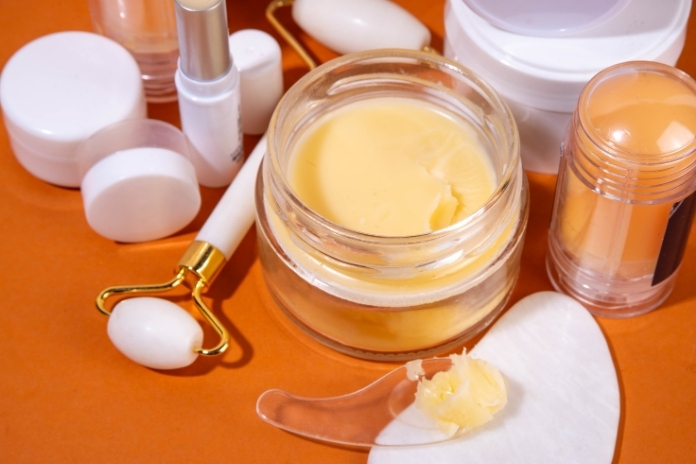
A type of lard obtained from cows, beef tallow is created by melting down animal fat. It is available in a wide range of shelf-stable forms, including oil, balms, cubes, and whipped formulas, and can be purchased at various locations, from Amazon to local natural grocery stores.
In ancient times, beef tallow was first used as a source of nourishment and as a fuel for lighting. Before concerns about the effects of saturated fats on heart health prompted fast food restaurants like McDonald’s to switch to using vegetable oils to manufacture their renowned French fries in the late 20th century, it was widely used in fast food.
As our food sources come under more scrutiny, beef tallow is once again in the news. Beef tallow is full of nutrients, too. “It contains fatty acids and vitamins, like A, D, E, and K,” says Dr. Alexandra Bowles, a board-certified dermatologist at MONA Dermatology in Cincinnati.
“It’s common for public figures and the media to seek certain foods to villainize and blame for our country’s problems with metabolic health and obesity,” says Traxler. “So people are pivoting away from seed oils back to beef tallow, but it’s important to remember that this fat source carries its own health risks.”
Potential Benefits for Skin
Here are some compelling reasons people are using it as a natural moisturizer for skin:
Long-lasting and deep moisture: Beef tallow is abundant in fat-soluble vitamins (A, D, E, and K), which provide moisture and nourishment from the inside out. It’s also extremely high in triglycerides and saturated fats that have much in common with skin lipids.
Biocompatibility with human skin: Tallow is quickly absorbed, making it less likely to clog pores due to its similarities to human sebum, and it helps protect the moisture barrier. The fatty acid composition is similar to that of sebum, which allows tallow to combine naturally within the skin’s moisture barrier.
Natural anti-inflammatory and antimicrobial properties: Assist in resolving psoriasis, eczema, and skin conditions characterized by high levels of inflammation occurring in the skin.
One source was a literature review completed in 2024 that reviewed 19 articles examining the use of tallow on human skin. The review identified oleic acid, palmitic acid, and stearic acid as the major components of tallow—all are effective in increasing fatty acid content of skin, along with simultaneous moisture.
Leaves sensitive skin protected and calm: Its antimicrobial and anti-inflammatory properties can assist with issues of dermatitis, psoriasis, and eczema. Calms itchy, dry, or cracked areas and improves skin healing.
Read More: 10 Healthy Drinks That Can Boost Your Skin & Hair Naturally
Risks and Downsides

Although tallow has some advantages, it also has drawbacks.
Tallow does not provide adequate protection for your skin against UV exposure. It will not replace sunscreen in preventing skin cancer and photoaging.
Can Clog Pores: Tallow may not be ideal for all skin types, especially those prone to acne, as it is an oily substance.
Not the Best Research: Although anecdotal evidence suggests that tallow is beneficial, there is limited reputable research investigating the benefits of tallow on skin health.
Risk of irritation: Skin irritation can occur. The FDA hasn’t approved its use in skin care products. It isn’t suitable for vegans. Then there are issues with contagious diseases, such as mad cow disease, and concerns about cleanliness.
How to Use Beef Tallow Safely

Are you looking to utilize beef tallow to its fullest potential for your skin? Here is the recommended way to use it, whether you make it yourself or purchase it:
As a daily moisturizer: Rub a small amount of beef tallow onto clean, damp skin to lock in moisture following your shower (or bath)—preferably on damp skin. Typically, applying a pea-sized amount is sufficient. To help it soak in better, warm it between your fingers first before applying it.
As a topical treatment: You can also apply beef tallow to dry patches, eczema patches, dry elbows, cracks on heels, or small cuts for the healing of skin that is cracked or irritated. It promotes healing and gives comfort. Additionally, beef tallow offers skin benefits by reducing irritation and replenishing moisture.
As a make-up remover: The emollient properties of tallow nourish the skin barrier while removing debris and make-up. Once you’ve gently massaged it to remove makeup, then meet it with a warm, moist cloth and wipe away.
As an anti-aging lip balm or night cream:Because of tallow’s vitamin-rich composition, this is an excellent nightly skin-renewing treatment. Apply a light layer at night for complete skin renewal. The substance is also very effective as a lip balm for chapped lips!
Read More: 7 Morning Habits That Could Be Damaging Your Skin Without Realizing It
Who Should Avoid Beef Tallow?
Although beef tallow is viewed as valuable by many, it is not necessarily suitable for everyone. Tallow is a rich, heavy, and thickening content, and individuals with oily or acne-prone skin may want to be cautious with it. Tallow products can occlude pores or exacerbate acne-prone skin conditions due to their occlusive properties, even in individuals who do not currently have acne or whose skin is excessively oily due to excessive sebum production.
Additionally, individuals with dietary restrictions due to ethical or religious reasons may wish to avoid beef tallow. People who observe kosher, halal, or other strict dietary laws may prefer not to use skincare products that are derived from animals.
Finally, it’s terrific if you want to avoid any animal-derived product and not a product that is a significant part of your philosophy, like vegans or vegetarians would; then tallow is absolutely not for you. You can choose plant-based options to gain beneficial moisturizing effects without the commitment of animal-based ones, such as coconut oil, cocoa butter, or shea butter, which are comparable.
Alternatives to Beef Tallow

If beef tallow does not suit your skincare routine, there are various plant-based alternatives that provide the same benefits, all of which contain no animal-derived ingredients.
Coconut oil: May likely be more comedogenic (pore-clogging) than beef tallow, although the hydration quality is fairly similar.
Shea butter: Is full of fatty acids and vitamins that are often considered the most versatile for all skin types.
Jojoba Oil: This oil most closely resembles human sebum and is suitable for nearly all skin types.
All give benefits, but none can replace a comprehensive skincare routine with proper sun protection.
Conclusion
As a moisturizer, beef tallow may offer certain advantages and be a suitable choice for individuals seeking natural skincare products. That said, beef tallow isn’t some wonder product, nor can it replace time-honored basics like sunscreen.
Still, not everyone will be a budding fan of beef tallow. People who have ethical, religious, or lifestyle reasons will likely want to go with other options that come from a plant-based source instead. And of course, for people with oily or acne-prone skin, it could be too thick a solution.
The key to remember is moderation; while beef tallow offers numerous health benefits, it should be used sparingly. Always do your due diligence by performing a patch test prior to consistent use, and try to ensure you are using a quality, grass-fed tallow. And then you can pay close attention to any responses your skin might have.
Read More: Why Your Moisturizer Isn’t Working (And How to Layer Skincare the Right Way)
FAQs
Can beef tallow help eczema?
One natural fat that has long been used to treat eczema is beef tallow. There isn’t much scientific research on its efficacy, despite some anecdotal evidence.
Is beef tallow safe for the face?
There is conflicting evidence regarding the safety of using beef tallow for the face.
Does beef tallow go bad?
Indeed, over time, beef tallow can go stale. Store it in a cool, dry place, away from direct sunlight and heat, in an airtight container. Freshness is prolonged via refrigeration, usually for up to a year.
Is it better than coconut oil?
Both coconut oil and beef tallow moisturize, but which is best for a given skin type can vary. Coconut oil absorbs quickly but can clog some pores, while tallow mimics the natural oils in skin.
References
- https://hmgsderm.com/does-the-moisturizing-cream-or-the-fat-rise-to-the-top-dermatologist-on-beef-tallow-for-skin
- https://www.nbcnews.com/select/shopping/beef-tallow-for-skin-rcna197721
- https://draxe.com/beauty/beef-tallow-for-skin-benefits
- https://www.uhhospitals.org/doctors/Traxler-Elizabeth-1659966711
- https://www.monadermatology.com/team-member/about-alexandra
- https://europepmc.org/article/MED/38910727
- https://www.everydayhealth.com/healthy-skin/beef-tallow-for-skin-what-dermatologists-think-about-the-trend
In this Article