















Most people underestimate walking. It’s often dismissed as “too easy” compared to running, cycling, or strength training. But here’s the truth: when done with structure, walking can be just as powerful, sometimes even more sustainable, for long-term health. The 6-6-6 walking routine proves exactly that.
This simple formula, six days a week, 60 minutes a day, at roughly six kilometers per hour, has caught the attention of doctors, fitness coaches, and everyday walkers alike. Why? Because it takes the guesswork out of exercise. You’re not just wandering around the block; you’re following a system that boosts cardiovascular health, burns calories, improves mood, and supports joint mobility, all without the risk of overtraining or injury.
Think about it: your heart gets stronger, your energy levels rise, and your body becomes more resilient, without the pressure of a gym membership or expensive equipment. It’s an approach that works for busy professionals, older adults, or anyone looking for a practical way to stay fit.
In this article, we’ll break down what the 6-6-6 walking routine is, why it works, and how you can start today. If you’ve ever wanted an exercise plan that’s easy to stick with yet powerful enough to transform your health, keep reading.
Quick Take: The 6-6-6 Walking Routine
Walking isn’t just about moving more; it’s about moving smarter. The 6-6-6 routine gives structure to your daily steps, turning a simple habit into a powerful tool for long-term health.
The 6-6-6 Walking Routine in a Nutshell:
- Walk 6 days a week to build consistency and keep your body active most days.
- Commit to at least 60 minutes each day, enough to reach recommended activity levels for heart health.
- Aim for 6,000+ steps daily (ideally at a brisk pace) to maximize calorie burn and cardiovascular benefits.
- Improves mood, focus, and mental clarity while reducing stress and anxiety.
- Supports joint health, balance, and mobility, making it sustainable across all ages.
- Long-term payoffs: lower blood pressure, better weight management, reduced disease risk, and longer lifespan.
What Is the 6-6-6 Walking Routine?

The 6-6-6 walking routine is built around three simple numbers that make it easy to remember and follow:
- Frequency: Walk 6 days per week.
- Duration: Commit to at least 60 minutes of walking each day.
- Step count: Aim for 6,000 or more steps on those days.
Why these numbers matter
This structure strikes a balance between accessibility and effectiveness. Walking six days a week builds consistency while still allowing one day for rest and recovery. Sixty minutes of walking ensures you meet or exceed most public health guidelines for daily physical activity.
And while 6,000 steps might sound modest compared to the common “10,000 steps” mantra, research shows that even this level of regular movement can lower cardiovascular risk, improve metabolic health, and increase longevity.
Flexible for all fitness levels
If you’re new to walking, the 60-minute target doesn’t need to happen all at once. Breaking it into smaller sessions, like three 20-minute walks or two 30-minute walks, still delivers the same health benefits. Over time, you may naturally build endurance and find longer walks easier.
Why not 10,000 steps?
The popular 10,000-step goal isn’t a magic number; it originated as part of a marketing campaign in Japan. Studies suggest that health benefits start well before 10,000. For many adults, consistently reaching 6,000 steps is enough to improve heart health, lower blood pressure, reduce diabetes risk, and keep weight in check, especially when done briskly.
Rest and recovery built in
The “six days a week” guideline also leaves room for balance. That one rest day gives your body time to recover and helps prevent burnout, making the routine sustainable long-term. It’s a reminder that good health comes from steady habits, not perfection.
Why Walking Works for Your Health

Walking might feel too ordinary to count as serious exercise, but science consistently shows it’s one of the most effective ways to improve overall health. Because it’s accessible, low-impact, and adaptable to any fitness level, walking can transform multiple aspects of your body and mind when practiced consistently.
1. Cardiovascular Health
Walking is a natural workout for your heart and blood vessels. Regular walks help lower blood pressure, improve cholesterol balance (raising HDL, lowering LDL), and support healthy circulation. It also improves how well your arteries dilate, keeping them flexible and less prone to damage. On top of that, walking helps regulate blood sugar, reducing the strain on your cardiovascular system and lowering the risk of diabetes-related complications.
Walking can help with weight control and reduce the risk of heart disease, diabetes, and more, said Dr. Kelley Pettee Gabriel, associate dean for research at the University of Alabama at Birmingham’s School of Public Health. For people with heart disease, “it’s really helpful for the management of symptoms and improving quality of life.”
2. Weight Management and Metabolism
While walking may not burn calories as rapidly as high-intensity workouts, its power lies in consistency. Daily walks contribute to steady calorie expenditure, making it easier to manage or lose weight. Combined with balanced nutrition, walking preserves lean muscle mass and enhances metabolic health. It also improves insulin sensitivity, helping prevent or manage type 2 diabetes.
3. Bone, Joint, and Muscle Health
Walking is gentle on the joints, yet it still provides enough impact to stimulate bone strength and maintain mobility. Over time, it supports joint flexibility, reduces stiffness, and lowers the risk of osteoporosis. Walking also engages key muscle groups in the legs, hips, and core, improving stability, posture, and balance, particularly important for aging adults.
4. Mental Health and Sleep
Walking doesn’t just benefit the body; it’s powerful for the mind. Regular walking reduces stress and anxiety, boosts mood through endorphin release, and improves circulation to the brain. Walking outdoors can be even more beneficial, thanks to exposure to daylight, fresh air, and a change of environment. It also helps regulate circadian rhythms, promoting better sleep quality and duration.
5. Longevity and Reduced Disease Risk
The long-term benefits are clear: more steps per day are linked to lower mortality from all causes, especially cardiovascular disease. Even modest amounts of walking, well below the traditional 10,000-step goal, are enough to make a measurable difference in life expectancy. For older adults, walking remains one of the safest and most effective ways to maintain independence and quality of life.
Key Benefits of the 6-6-6 Routine

The beauty of the 6-6-6 walking routine is that it’s built on science, not just a catchy formula. Each “6” represents an evidence-backed threshold that works together to create powerful results.
1. Consistency matters most
Walking six days a week keeps the body in a rhythm. Habits form when there’s regularity, and missing too many days in a row can easily break momentum. By giving yourself just one day off, you strike the right balance between commitment and recovery. Even if one day is lighter than others, the consistency ensures you’re avoiding long stretches of sedentary time, a major risk factor for chronic disease.
2. One hour a day pushes you above minimums
Most health guidelines, including those from the U.S. Centers for Disease Control and Prevention (CDC), recommend at least 150 minutes of moderate aerobic activity per week. With 60 minutes a day for six days, you’re not just meeting that minimum, you’re more than doubling it, at 360 minutes per week.
This surplus translates into stronger cardiovascular fitness, better weight control, and more reliable long-term benefits. In other words, you’re not just scraping by; you’re investing in a health surplus.
3. The 6,000-step sweet spot
While 10,000 steps has become the popular benchmark, research shows that you don’t need to hit that number to see meaningful gains. For older adults, benefits such as a reduced risk of heart disease and lower mortality levels tend to plateau around 6,000 to 8,000 steps per day. That makes 6,000 a realistic yet highly effective goal.
For younger adults, pushing higher does bring more advantages, but with diminishing returns. The bottom line? Hitting 6,000 daily is enough to significantly improve health and longevity, without overwhelming beginners.
A study in AHA journals found that taking 6,000-9,000 steps/day was associated with 40-50% lower risk of cardiovascular disease compared with much lower step counts.
4. Built-in flexibility and sustainability
The structure leaves room for adaptation. Can’t do 60 minutes in one go? Break it into two 30-minute sessions or three 20-minute walks. Can’t quite hit 6,000 steps yet? Work your way up gradually. The plan is demanding enough to produce results, but not so strict that it becomes intimidating or impossible to maintain. This balance of challenge and accessibility is what makes the 6-6-6 routine sustainable for the long term.
5. Aligns with what research says really works
Large-scale studies, from journals like The Lancet and resources from Harvard’s School of Public Health, keep pointing toward the same principle: frequency, duration, and moderate daily step counts drive the most significant benefits. The 6-6-6 routine doesn’t just guess at these; it directly incorporates them. That’s why doctors and health experts see it as a practical, science-backed formula rather than just another wellness trend.
“Walking has been essential to human health and survival, from the hunter-gatherer tradition to working on farms. But we’ve been living a sedentary lifestyle for the past 100 years, and it’s led to higher rates of heart disease, stroke, heart attacks, high blood pressure or hypertension, and high cholesterol,” says Hicham Skali, MD, MSc, a Mass General Brigham cardiologist who treats patients at Brigham and Women’s Hospital.
How to Start the 6-6-6 Walking Routine

The 6-6-6 routine doesn’t need expensive gear or a gym membership. All you need is a comfortable pair of shoes, some time carved out each day, and a little consistency. Here’s how to build it into your life.
1. Ease Into It
If you’re new to exercise, don’t feel pressured to jump straight into 60 minutes daily. Start with 30–40 minutes of walking on three or four days per week, aiming for around 4,000–5,000 steps. Once that feels comfortable, gradually add time and extra days until you reach the full routine.
2. Build Toward 60 Minutes
The “one hour a day” target can be done in one go, but it doesn’t have to be. Many people find it easier to break it up:
- Two 30-minute walks, morning and evening.
- Three 20-minute walks spread throughout the day (commute, lunch break, after dinner).
This flexibility makes the routine easier to stick with, especially if you’re busy or dealing with mobility issues.
3. Track Your Progress
You don’t need high-tech gadgets, but tracking steps keeps you accountable. Options include:
- A pedometer or simple step counter.
- A fitness tracker or smartwatch.
- A free smartphone app.
The goal is clear: once you’ve walked about 6,000 steps and reached around 60 minutes of total walking, you’ve hit the daily target.
4. Find the Right Pace
For cardiovascular benefits, aim for a brisk pace, fast enough that you can hold a conversation but not sing comfortably. Still, don’t underestimate the power of slower walks. Even gentle strolling contributes to your daily total, lowers stress, and keeps you moving. If possible, mix things up with varied terrain, slight hills, or occasional faster intervals to build stamina.
5. Support Recovery and Prevent Injury
Good habits around walking matter just as much as the walk itself:
- Warm up with 5–10 minutes of slow walking.
- Cool down at the end and stretch your calves, hamstrings, and quads to prevent stiffness.
- Invest in supportive shoes to protect joints and reduce fatigue.
These small adjustments make the routine sustainable in the long term.
6. Adjust When Necessary
Life, health, and weather don’t always cooperate. On very hot, cold, or rainy days, shorten your walk or spread it indoors (hallways, malls, treadmills). If you have health conditions like heart disease, lung issues, or joint problems, check with your doctor before starting. The key is adaptability, sticking with the spirit of the 6-6-6 routine even when the details need tweaking.
How the 6-6-6 Routine Matches Guidelines
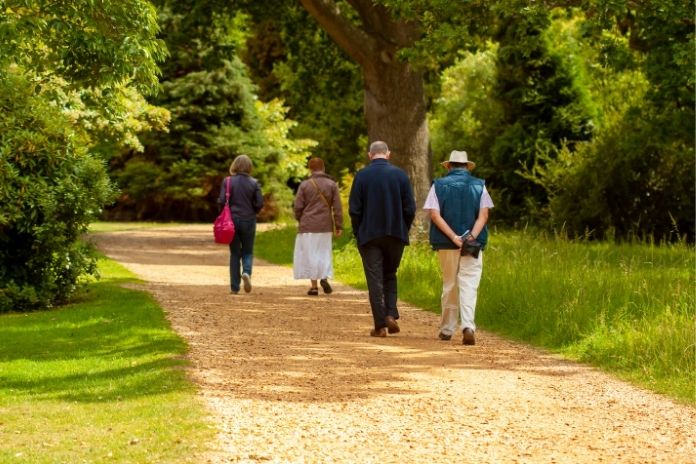
One of the biggest advantages of the 6-6-6 routine is how neatly it lines up with what health experts already recommend, while actually going a step further.
Meeting the Minimums, and Then Some
Organizations like the CDC and WHO suggest at least 150 minutes per week of moderate aerobic activity (think brisk walking) or 75 minutes per week of vigorous activity (like running). The 6-6-6 routine easily clears that bar. If you’re walking 60 minutes a day, six days a week, you’re logging about 360 minutes per week, more than double the minimum. That means you’re not just scraping by; you’re building a strong foundation for long-term health.
Daily Movement Matters
Another overlooked piece is sedentary time. Even if someone hits their 150 minutes with a couple of long gym sessions, they might still spend most of the week sitting, which carries its own health risks. The 6-6-6 structure spreads activity across almost every day, which breaks up sitting time and keeps your body consistently engaged. This makes it more protective for your heart, metabolism, and overall well-being.
Flexible Yet Effective
What’s also encouraging is that the 6-6-6 framework isn’t overwhelming. Unlike extreme fitness programs that push for unrealistic goals, this one is both achievable and forgiving. If you fall short on one day, you still rack up enough movement over the week to stay well within and beyond guideline levels.
Potential Challenges & Solutions
| Challenge | Solution |
| Time constraints | Break into shorter walks; combine walking with chores; walk during commute, lunch breaks. |
| Weather/climate | Indoor walking (mall, treadmill), protective clothing; plan mornings or evenings to avoid heat/sun. |
| Motivation drops | Find a walking buddy; use apps or step trackers; vary routes; set small goals and track progress. |
| Physical limitations (joints, pain) | Choose softer surfaces (parks, tracks), use supportive footwear, reduce pace/intensity; may need consultation. |
How Much Should You Walk Daily?
The 6-6-6 routine sets 6,000 steps as a realistic daily benchmark, but it helps to see how different step counts stack up when it comes to health outcomes. Research has shown that walking benefits kick in even at very modest levels and continue to grow as steps increase.
2,300–2,500 steps per day: Small but meaningful
Even a couple thousand steps, roughly 15–20 minutes of walking, has measurable benefits compared to being completely sedentary. Studies show this level is linked with reduced heart-disease risk, especially among older adults or people with limited mobility. For someone starting from a very inactive lifestyle, this is a powerful first step.
5,000–6,000 steps per day: Strong health protection
Once you hit around 5,000 to 6,000 daily steps, the evidence gets stronger. At this level, researchers consistently find reductions in overall mortality and cardiovascular disease. This is why the 6-6-6 framework places its target here; it’s achievable for most people and delivers a meaningful payoff in heart health, blood sugar control, and general vitality.
8,000–10,000+ steps per day: Added gains, especially for younger adults
Pushing beyond 8,000 steps per day adds further benefits, particularly for younger and middle-aged adults. More walking supports weight management, metabolic health, and long-term resilience. That said, the “extra” benefits above 10,000 steps tend to taper off, meaning you still gain plenty even if you’re consistently in the 6,000–8,000 range.
The takeaway
The sweet spot depends on age, fitness level, and lifestyle. For many older adults, 6,000 daily steps is enough to significantly reduce health risks. Younger, more active people may want to aim higher. But across the board, consistency matters more than chasing extreme numbers; walking regularly at any of these levels moves the needle in the right direction.
Conclusion: The Power of 6-6-6 Walking
The beauty of the 6-6-6 routine lies in its clarity. Six days of walking, sixty minutes at a time, and six thousand steps. This structure is simple enough to remember, flexible enough to adapt, and powerful enough to create lasting change. Unlike many fitness fads, it doesn’t demand expensive gear, gym memberships, or overwhelming time commitments. All it asks is consistency, and in return, it rewards you with stronger health, steadier energy, and a clearer mind.
Walking is often underestimated because it feels so ordinary. But ordinary doesn’t mean ineffective. When practiced regularly, walking lowers blood pressure, steadies blood sugar, helps manage weight, strengthens bones and joints, reduces stress, and even lowers the risk of early death. The 6-6-6 routine builds all of this into your life in a way that’s achievable for almost anyone, whether you’re an older adult trying to stay mobile, a busy professional squeezing in activity, or someone just starting their health journey.
Think of it as an anchor in your week. Six days of movement keep your momentum alive, sixty minutes a day ensures you cross the threshold of meaningful exercise, and six thousand steps keep you in a range where health benefits are both proven and sustainable. Over weeks and months, these numbers stop being a challenge and start becoming a natural rhythm, reshaping how you feel day to day.
At its core, the 6-6-6 routine isn’t about counting steps or minutes; it’s about reclaiming control of your health in a world that constantly pushes us toward sitting still. Each walk is a quiet act of resistance against the toll of modern living, and a promise to your future self. One day, you’ll look back and realize those steady steps didn’t just add years to your life; they added life to your years.
References
- https://timesofindia.indiatimes.com/life-style/health-fitness/fitness/the-6-6-6-walking-rule-maximizing-benefits-of-your-daily-walk/articleshow/115010694.cms
- https://www.womenshealthmag.com/fitness/a65502507/6-6-6-walking-challenge/
- https://www.foxnews.com/health/tiktok-viral-walking-routine-burns-fat-without-grueling-workouts
- https://www.kimssunshine.co.in/blog/is-the-6-6-6-walking-routine-enough-for-fitness-and-well-being/
- https://www.womanandhome.com/health-wellbeing/fitness/6-6-6-walking/
- https://www.marieclaire.co.uk/life/health-fitness/6-6-6-walking-challenge
- https://www.everydayhealth.com/fitness/can-the-6-6-6-challenge-get-you-into-the-walking-habit/
- https://www.betterhealth.vic.gov.au/health/healthyliving/walking-for-good-health
- https://www.health.harvard.edu/staying-healthy/5-surprising-benefits-of-walking
- https://www.mayoclinic.org/healthy-lifestyle/fitness/in-depth/walking/art-20046261
- https://www.nhs.uk/live-well/exercise/walking-for-health/
- https://www.arthritis.org/health-wellness/healthy-living/physical-activity/walking/12-benefits-of-walking
- https://www.healthshots.com/fitness/staying-fit/daily-walking-sleep-benefits-of-666-routine/
- https://www.womanandhome.com/health-wellbeing/fitness/6-6-6-walking/
- https://timesofindia.indiatimes.com/life-style/health-fitness/fitness/the-6-6-6-walking-rule-maximizing-benefits-of-your-daily-walk/articleshow/115010694.cms
- https://www.forbes.com/sites/bryanrobinson/2025/09/02/the-6-6-6-walking-challenge-reduces-workday-stress-and-job-burnout/
- https://www.independent.co.uk/life-style/health-and-families/workout-weight-loss-walking-steps-trend-b2809620.html
In this Article